



← Insights

Written with domain leaders.

AI changes every field it touches in different ways. These articles are co-written with people who know one of those fields from the inside.

All collaborative articles

4 articles

With Maria Singh

The Vulnerability Didn't Change. The Attacker Did.

Most organisations defer some patches and record the decision as an accepted risk. Those decisions assumed that turning a patch into a working exploit took skill and weeks. Anthropic's 2026 evaluations show a model doing it in under an hour for about $2,000 per exploit, and its September threat report describes criminals running exploit research around the clock. Here is how to rewrite the risk register.


29 Sept 2026 · 19 min read · Governance & Risk

With Chris der Kinderen

The Future of Payments and AI at the Fuel Station

The fuel station is one of the first places in retail where AI, the connected car and new payment rails meet at scale. What changes at the pump and in the shop, where the risks sit in pricing, fraud and customer data, and what operators should do in the next twelve months.

28 Sept 2026 · 17 min read · AI Strategy

With Dr. Christina Chua

How Traditional Finance and DeFi Will Integrate Over the Next Five Years

Banks, exchanges and central banks are moving money and securities onto the same programmable rails that DeFi built. By 2031 the two systems will share settlement, collateral and market mechanisms, with regulated access on top. AI arrives at the same time as customer, attacker, target and supervisor. Here is how the integration will unfold, where AI changes the risk, and what boards and regulators should do now.

26 Sept 2026 · 25 min read · Governance & Risk

With Maria Singh

What Quantum Computing Means for the Encryption Behind Your AI

No quantum computer can break today's public-key encryption yet, but the estimates of what it would take fell twentyfold in a year, and Google now targets 2029 for its own migration. AI systems rest on the same RSA and elliptic-curve cryptography: the links that carry training data, the signatures that vouch for models and the tokens that identify agents. Here is what breaks, what does not, and what boards should do now.

25 Sept 2026 · 20 min read · Governance & Risk

The collaborators

Cybersecurity and AI

Maria Singh

Vice President, The AI Collective; Founder, AISecurityLab.ai

2 articles together

Maria is a cybersecurity and AI strategy leader, Vice President of The AI Collective and founder of AISecurityLab.ai, who at T-Mobile helped cut critical vulnerabilities by 90% across more than 75,000 endpoints. Our posts together cover the security assumptions under AI programmes that are ageing fastest, from the cryptography AI systems rely on to how organisations decide which vulnerabilities to leave open.

  1. The Vulnerability Didn't Change. The Attacker Did.
  2. What Quantum Computing Means for the Encryption Behind Your AI

Wealth management and institutional sales

Dr. Christina Chua

Director, Institutional Sales, Moomoo Financial Singapore

1 article together

Christina supports institutional sales at Moomoo Financial Singapore and has spent more than ten years in financial services across private wealth, key accounts and institutional clients. Our work together looks at how regulated finance is adopting new infrastructure, and where AI changes the risk.

  1. How Traditional Finance and DeFi Will Integrate Over the Next Five Years

Fuel retail and forecourt payments

Chris der Kinderen

Project Delivery Manager APAC, Vontier

1 article together

Chris leads project delivery across Asia Pacific at Vontier, whose Gilbarco Veeder-Root and Invenco businesses supply fuel dispensers and forecourt payment systems, and has delivered forecourt technology programmes worth more than US$70 million for major oil companies in Malaysia and India. Our work together looks at how payments and AI are changing the fuel station.

  1. The Future of Payments and AI at the Fuel Station

Most of my work sits where AI meets a board's accountability. The hard questions usually come from a specific field: a security specialist's view of what a quantum computer would break, a finance view of what settlement risk means once money moves on shared ledgers, a view from security operations of what a patch deferral assumes about the attacker. I would rather write those posts with someone who has done that work than write around the gaps myself.

Each post is written by two people.

The collaborator brings the domain. I bring the governance and board view.

The evidence standard does not change.

Every claim is checked against its primary source and graded in the Evidence & Methodology table, the same as every other post on this site.

Credit is stated plainly.

Co-authors are named in the byline and linked to their own profiles. Reviewers who improve a post after publication are thanked by name at the end of it.

Terence Kok
On writing with others

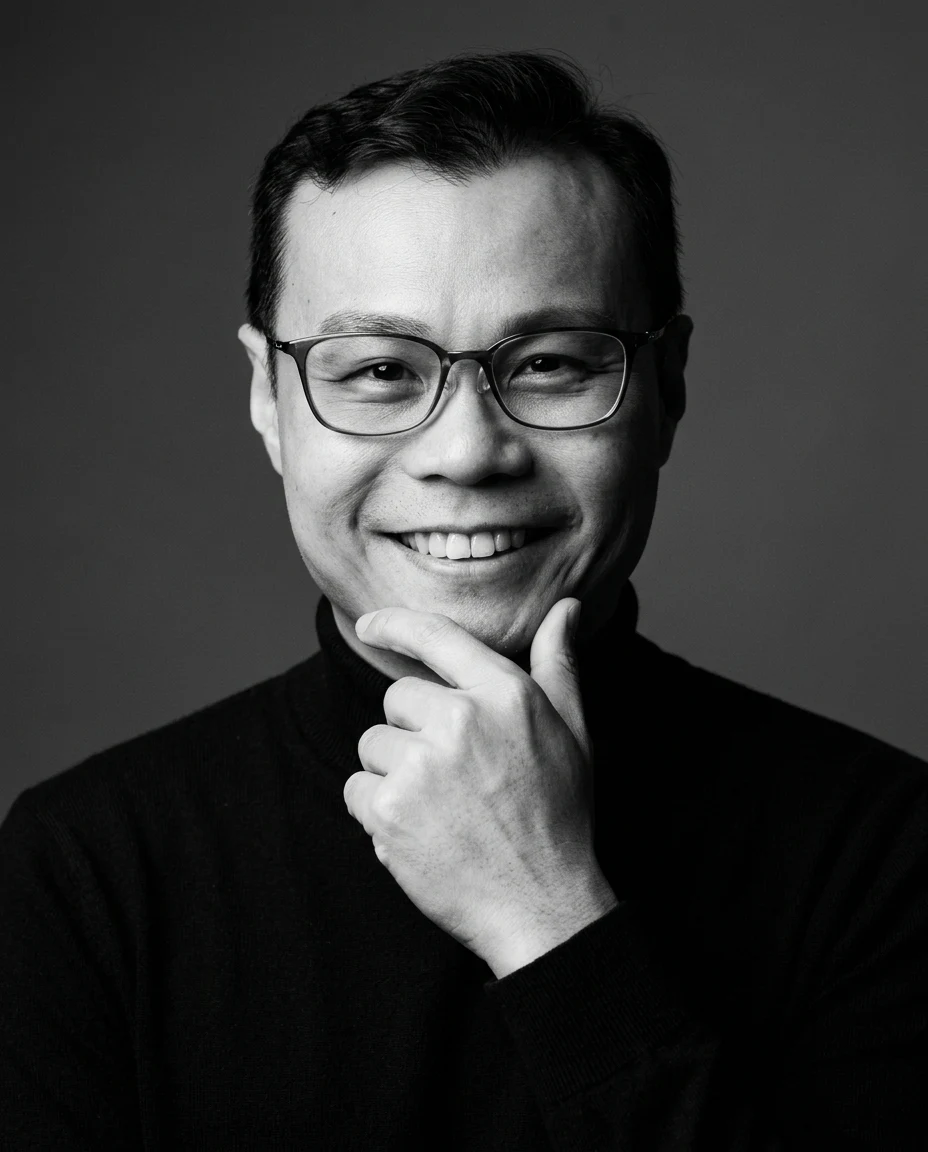
I started this section because the co-written posts came out stronger than what I would have written alone. If you lead in a field that AI is changing and you have a view the rest of us should hear, write to me. The bar is the same one I hold myself to: verified sources, plain language, and something a reader can act on.

Terence Kok

Get each co-written article when it goes live.

New essays most weeks, plus new tools as I ship them. No fluff, unsubscribe anytime.

Propose a collaboration →