
Listen to this article
Executive Summary
Voice AI has moved from experimental conversational interfaces to production-grade infrastructure, with the conversational AI market projected to grow from roughly USD 11.6 billion in 2024 to over USD 41 billion by 2030. The differentiator now is whether organisations architect it as a measurable operational asset or leave it as a disconnected pilot.
Core conclusions
- Latency, not model quality, is the practical adoption bottleneck. Human dialogue breaks down past roughly one second of delay, pushing enterprises toward edge deployment and streaming pipelines to reach sub-100ms response times.
- The architecture is shifting from general-purpose LLMs to small, domain-specific models for deterministic, auditable behaviour, especially in regulated sectors like healthcare and finance.
- High performers treat voice AI as an integrated capability tied to CRMs, EHRs, and ticketing systems, with clear governance and KPIs rather than a series of disconnected pilots. They increasingly treat responsible-AI guardrails as a performance lever, not just compliance overhead.
The inflection point, in ten slides
Save it, share it, or send it to whoever owns your voice AI roadmap.
Voice AI is therefore best understood as a foundational capability in the next wave of digital infrastructure. For high-growth regions in Asia and the Middle East, where multilingual and dialectal diversity is high, robust voice systems that support dozens of languages and variants can expand access to government services, healthcare, and education without replicating legacy, siloed automation. The inflection point has already been reached; the differentiation now lies in whether organisations architect voice as a core, measurable operational asset or allow it to remain a disconnected experiment. 2026 marks a decisive inflection point for enterprise voice AI. The technology is shifting from experimental conversational interfaces to production-grade infrastructure embedded in critical operations.
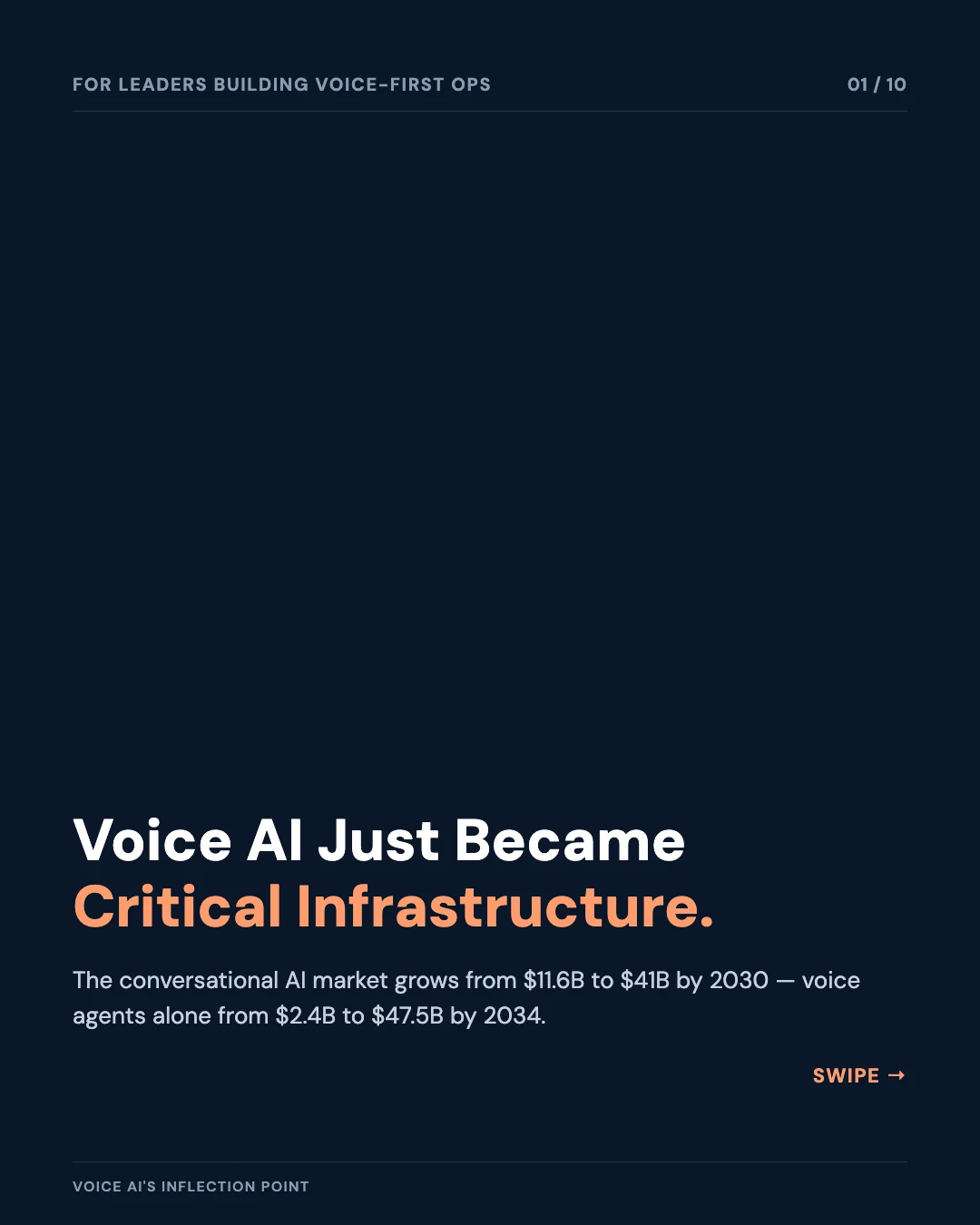
Global spending reflects this transition, with the conversational AI market expected to grow from approximately USD 11.6 billion in 2024 to over USD 41 billion by 2030, while voice AI agents alone are projected to expand from USD 2.4 billion to nearly USD 47.5 billion by 2034. This represents a structural change in how organisations architect human–machine interaction rather than incremental adoption.
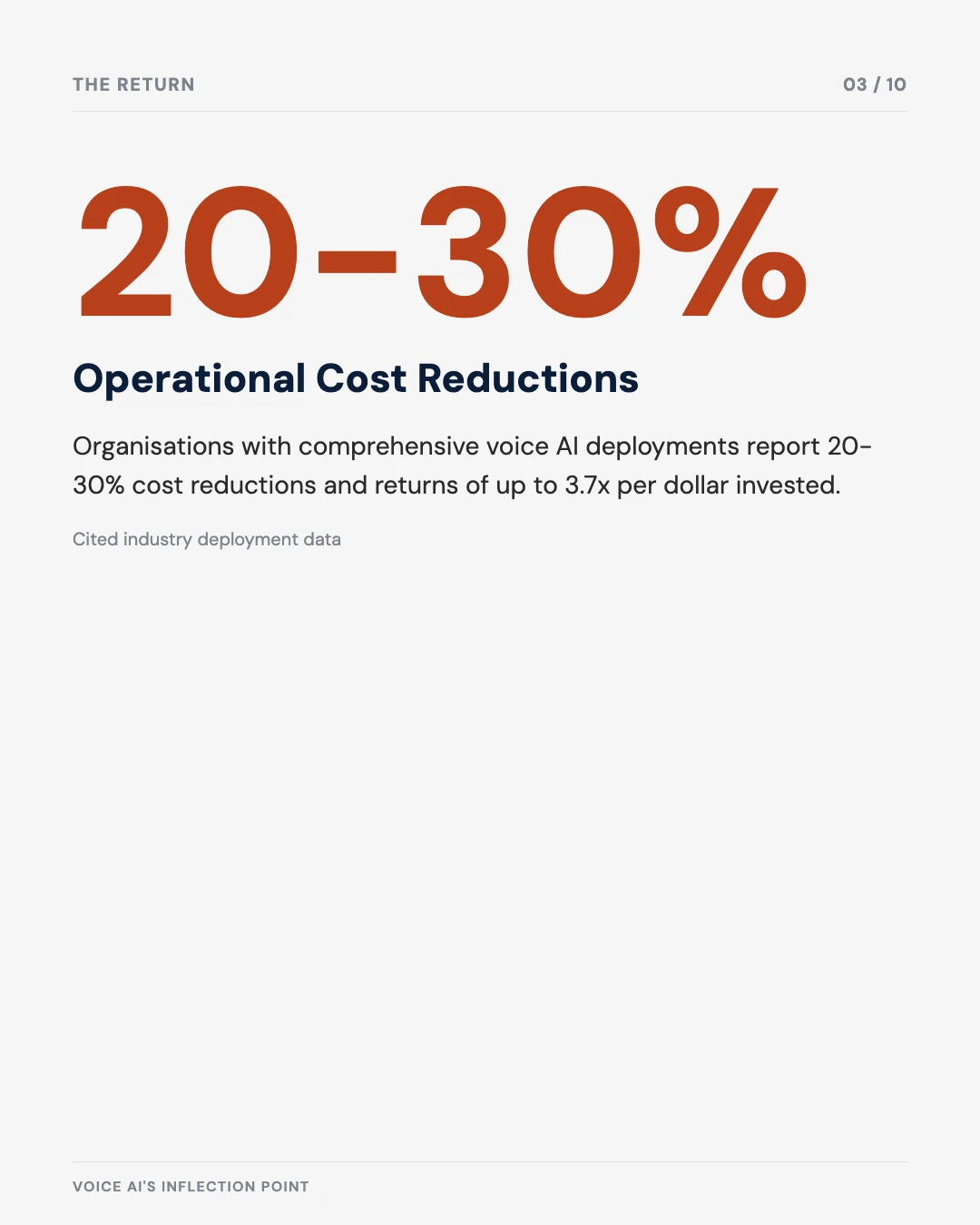
Forward-leaning enterprises are moving beyond consumer assistants such as Siri and Alexa to deploy voice AI in revenue-critical and safety-critical environments. Organisations reporting comprehensive deployments achieve 20–30% operational cost reductions and returns of up to 3.7x per dollar invested, and analysts forecast that around 40% of enterprise applications will integrate task-specific AI agents by the end of 2026, up from single-digit penetration in 2025. Financial services now account for roughly one-third of the conversational AI market, with healthcare close behind and projected to capture tens of billions in annual efficiency gains.
From general-purpose LLMs to specialised inference
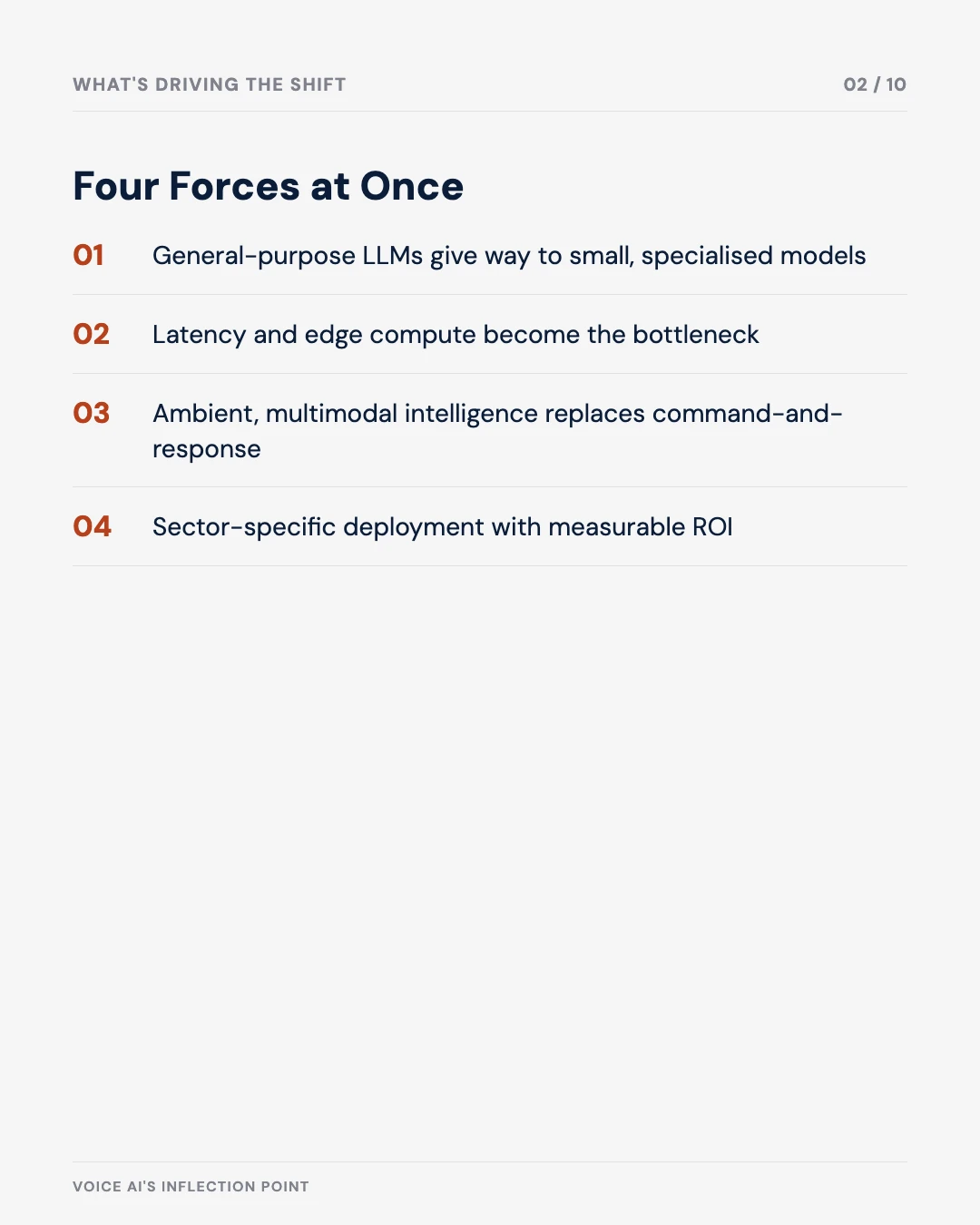
A structural shift is underway in model architecture. General-purpose large language models (LLMs) with billions of parameters are proving economically inefficient and operationally fragile for narrow, repetitive enterprise workflows. Senior AI researchers, including Meta’s Chief AI Scientist Yann LeCun, have argued that LLMs will lose dominance over the next two to four years as more efficient, grounded architectures emerge — a case I’ve made in more technical detail elsewhere.
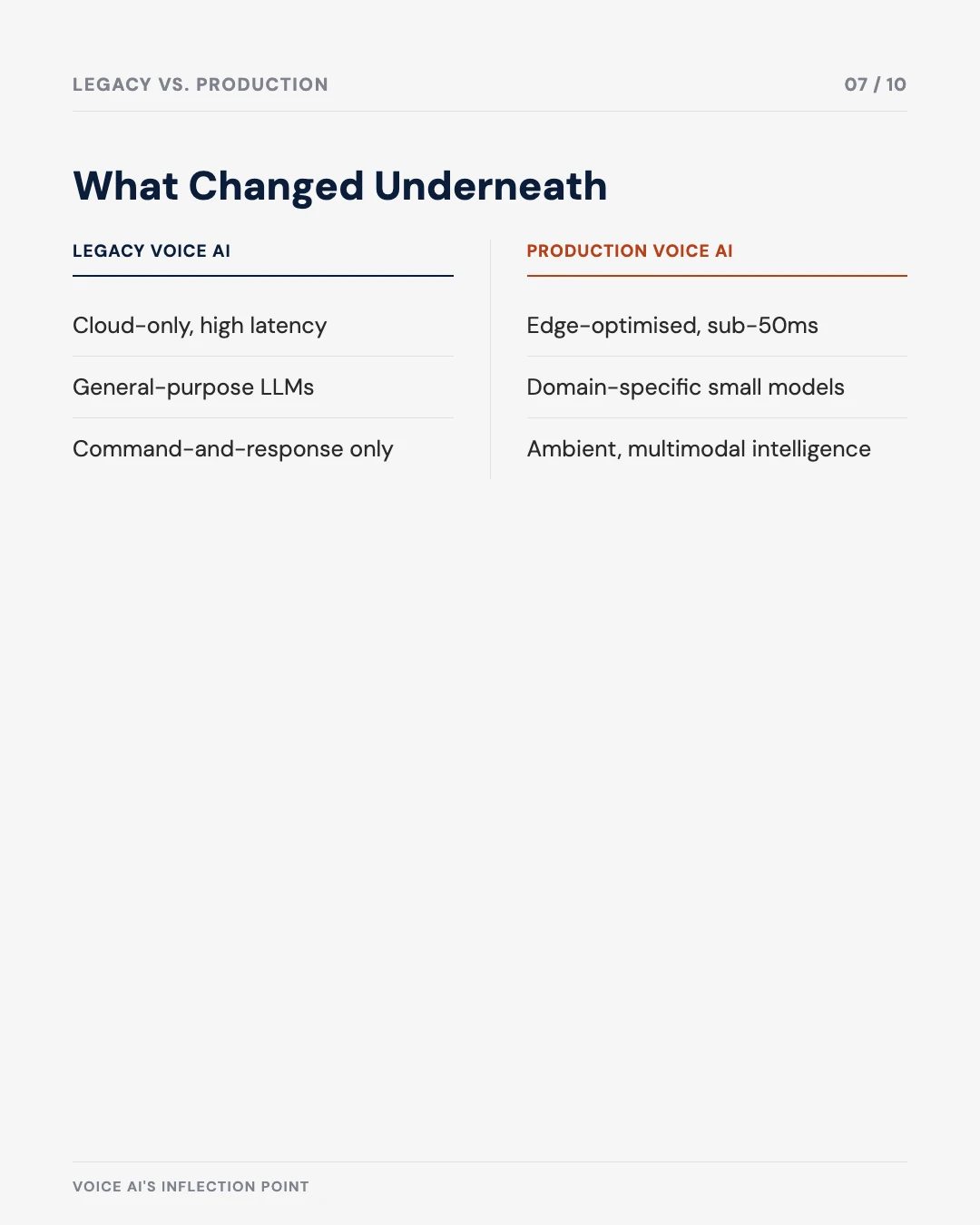
Enterprises are therefore pivoting to small language models (SLMs) trained on curated, domain-specific data. These models deliver comparable task performance while consuming less compute, enabling deployment in hybrid and on-premise environments that align with data sovereignty and regulatory requirements. For heavily regulated sectors such as healthcare and finance, deterministic behaviour (producing consistent, auditable responses to identical inputs) is now a baseline requirement rather than a desirable feature.
In parallel, world foundation models (WFMs) are extending AI beyond text. NVIDIA’s Cosmos platform offers pretrained models that simulate physical environments and generate synthetic data to train autonomous vehicles and humanoid robots. These models integrate spatial, visual, and temporal understanding, forming the foundation for Physical AI systems such as Boston Dynamics’ Atlas and Tesla’s Optimus, which learn tasks via observation rather than brittle rule-based programming.
The hardware stack is evolving accordingly. While GPUs remain central to training, inference at the edge and within embedded systems increasingly relies on application-specific integrated circuits (ASICs) such as Google’s Tensor Processing Units, which deliver higher performance per watt and reduced latency for fixed-function workloads. Companies such as Arm and Broadcom are targeting dedicated Physical AI compute, including emerging physics-based ASICs that use the dynamics of physical systems for computation to alleviate the “compute crisis” caused by rising energy demand and training cost.
Latency, edge, and ambient intelligence
Latency has become the invisible determinant of adoption. Human dialogue breaks down when response times exceed roughly one second, making many cloud-only architectures unsuitable for real-time interaction. Vendors such as Cartesia report sub‑100‑millisecond response times for speech models, approaching the threshold for natural conversation.
Latency has become the invisible determinant of adoption.
To reach this regime, enterprises are re-architecting end-to-end pipelines:
- Deploying speech, language understanding, and text-to-speech as streaming services that operate in parallel rather than in strict sequence.
- Using speculative decoding and pre-emptive response generation based on partial inputs to minimise perceived delay.
- Offloading inference to the edge in enterprise data centres, carrier networks, or customer premises equipment to remove long internet round trips.
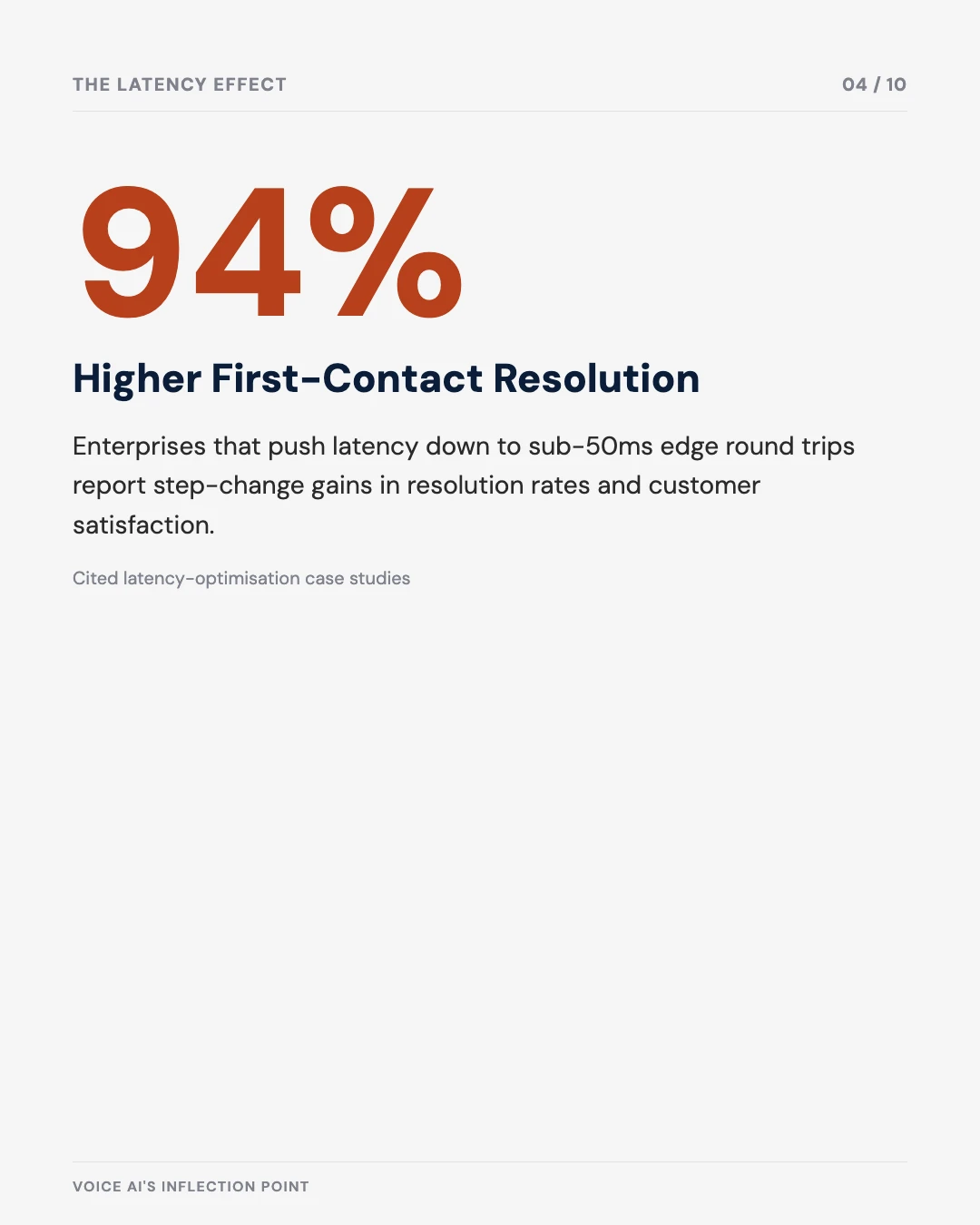
Edge deployment can reduce network latency from hundreds of milliseconds to sub‑50‑millisecond round trips, and when combined with 5G and multi-access edge computing, supports sub‑10‑millisecond latencies for mission-critical use cases. Organisations that have implemented comprehensive latency optimisation report step-change improvements in first-contact resolution, customer satisfaction, and channel adoption, with some documenting 94% higher first-contact resolution and double- to triple-digit improvements in AI channel utilisation.
Simultaneously, voice interfaces are evolving from explicit command-and-response systems into ambient intelligence. In clinical settings, “ambient clinical intelligence” listens passively to clinician–patient conversations and automatically generates structured notes inserted into electronic health records, reducing documentation time from around 12 minutes to roughly 2 minutes per encounter and cutting after-hours administrative work by approximately 30%. Hospitals report annual savings in the tens of thousands of dollars per clinician in transcription and documentation costs, alongside measurable reductions in adverse events linked to incomplete documentation.
Ambient systems must also handle complex acoustic environments. Amazon’s use of inaudible acoustic fingerprinting in television adverts to prevent unintended activation of Alexa devices illustrates the level of environmental awareness required for voice AI to operate reliably in noisy settings such as manufacturing floors or emergency departments.
Multimodal and sector-specific deployment
The most advanced platforms are moving beyond speech-to-text pipelines towards genuinely multimodal architectures. Models such as OpenAI’s GPT‑4o‑realtime-preview process audio natively, interpreting tone and emotion without an intermediate text step and enabling real-time adaptation of responses based on user affect. This reduces unnecessary escalations and supports more resilient automation in sensitive interactions.
Vendors such as ElevenLabs are adding native support for both text and voice in a single session, allowing users to shift between speaking and typing within the same interaction. This hybrid modality is particularly valuable in professional contexts where spoken language may be efficient for narrative explanation, while typed input is preferable for structured data such as identifiers, medication names, or financial details. Integrating computer vision further expands capability: systems that combine cameras and microphones can fuse gestures, facial expressions, and spatial context with speech, enabling applications ranging from surgical assistance to vehicle navigation.
Across sectors, measurable outcomes are emerging:
- Healthcare : Voice-enabled clinical documentation and patient interaction reduce clinician administrative load and enable hands-free access to records during procedures. Small practices report annual savings of USD 50,000–100,000 from automating scheduling and front‑office queries, mid‑sized providers report hundreds of thousands of dollars in savings, and large systems report multi-million‑dollar reductions in support and contact centre expenditure.
- Financial services : Voice biometrics shorten authentication to a few seconds and reduce fraud attempts by up to 30% in some implementations, while deepfake-resistant biometric algorithms are becoming mandatory as generative audio fraud increases.
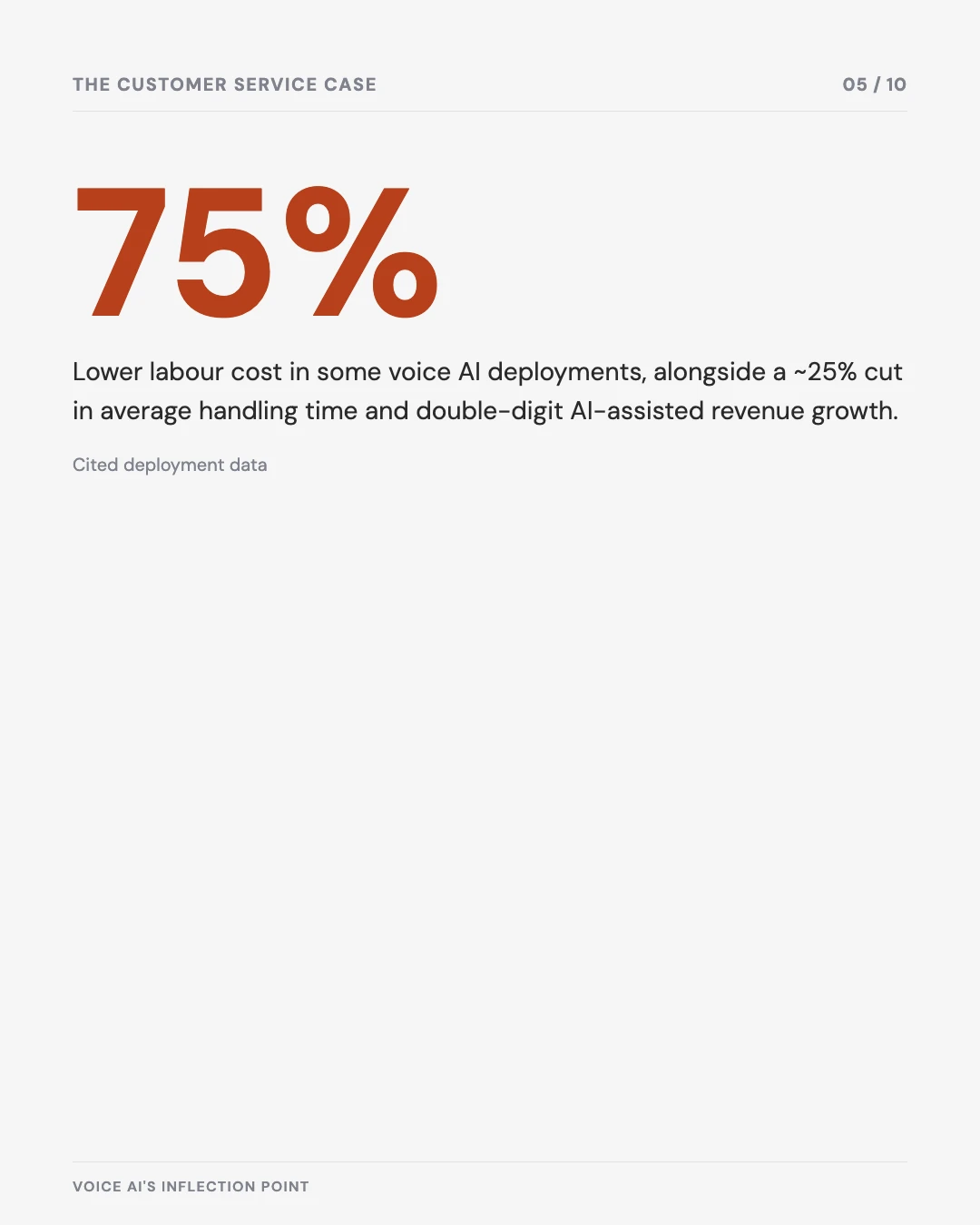
- Customer service : Voice AI is handling high volumes of concurrent calls, reducing labour cost by up to 75% in some deployments, cutting average handling time by around 25%, and improving resolution quality. Organisations report double-digit revenue growth driven by AI-assisted sales, with some examples citing over 20% uplift from better targeting and follow-up.
Challenges, governance, and strategic implications
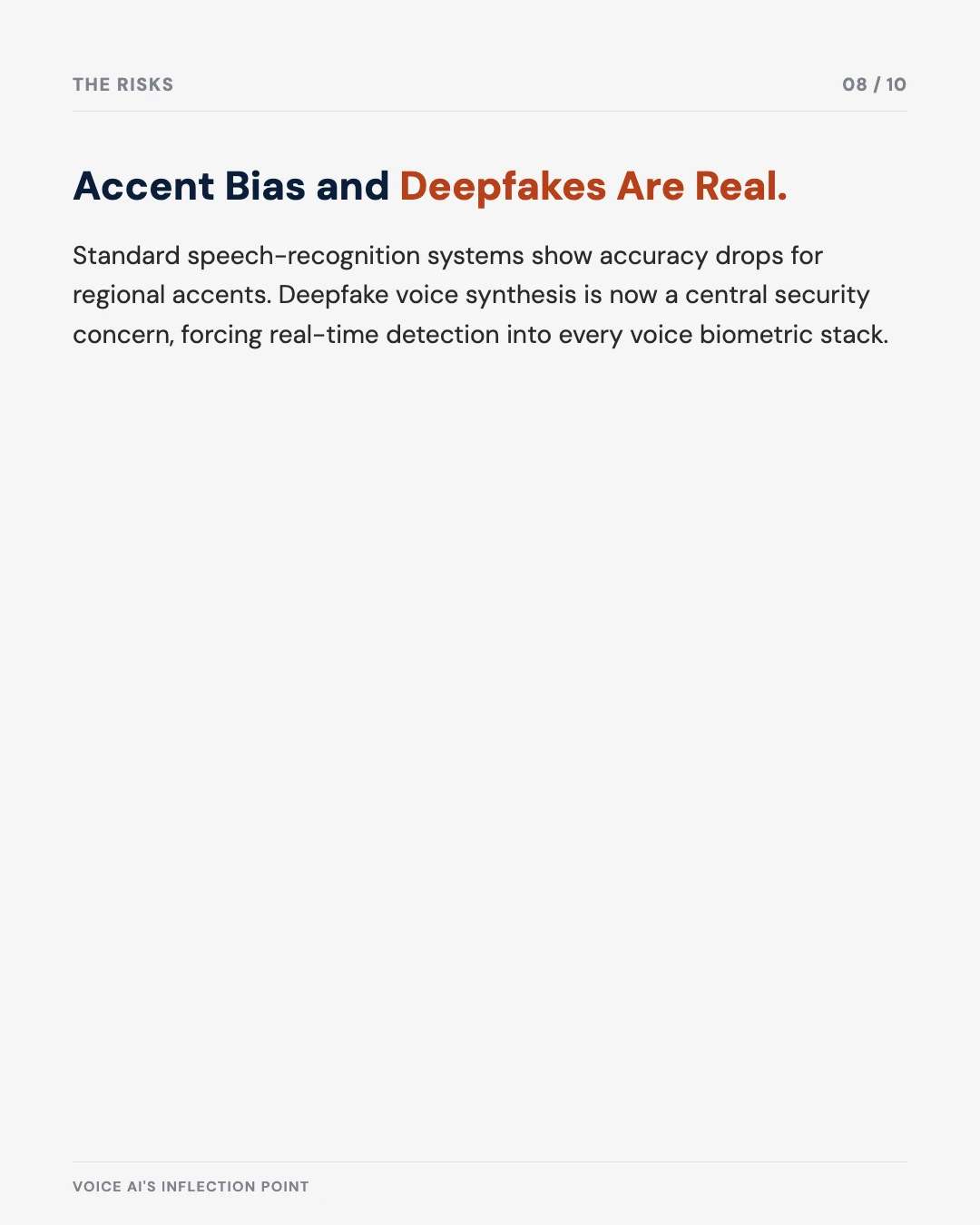
Despite progress, there are persistent challenges. Accent recognition remains a significant weakness in many automatic speech recognition systems, which are typically trained on a narrow range of standard accents. Research highlights substantial accuracy drops for speakers using regional or sociolectal varieties such as Caribbean English or African American Vernacular English, effectively creating “accent penalties”. Techniques such as transfer learning, accent embeddings, and federated learning are being used to adapt models to underrepresented accents without centralising sensitive speech data, but these remain active areas of R&D.
Deepfake voice synthesis has become a central security concern. Generative models can create convincing synthetic audio for social engineering and executive impersonation, forcing enterprises to integrate real-time deepfake detection into voice biometric stacks. Leading solutions analyse fine-grained acoustic and behavioural signals, operating in a language-agnostic manner to identify synthetic patterns even when the content is plausible.
Enterprise trust also depends on data governance. Incidents in which employees inadvertently exposed confidential data by pasting proprietary information into public chatbots have led many organisations to prohibit direct use of consumer-grade tools with sensitive material. At the same time, offerings such as ChatGPT‑based health assistants, which invite users to upload medical records and images, raise questions about compliance with health data regulations and about long-term use of such data for model training. As a result, serious adopters are favouring architectures that keep data within private clouds or on-premise, combined with retrieval-augmented generation and vector databases to deliver deterministic, auditable responses with low latency.
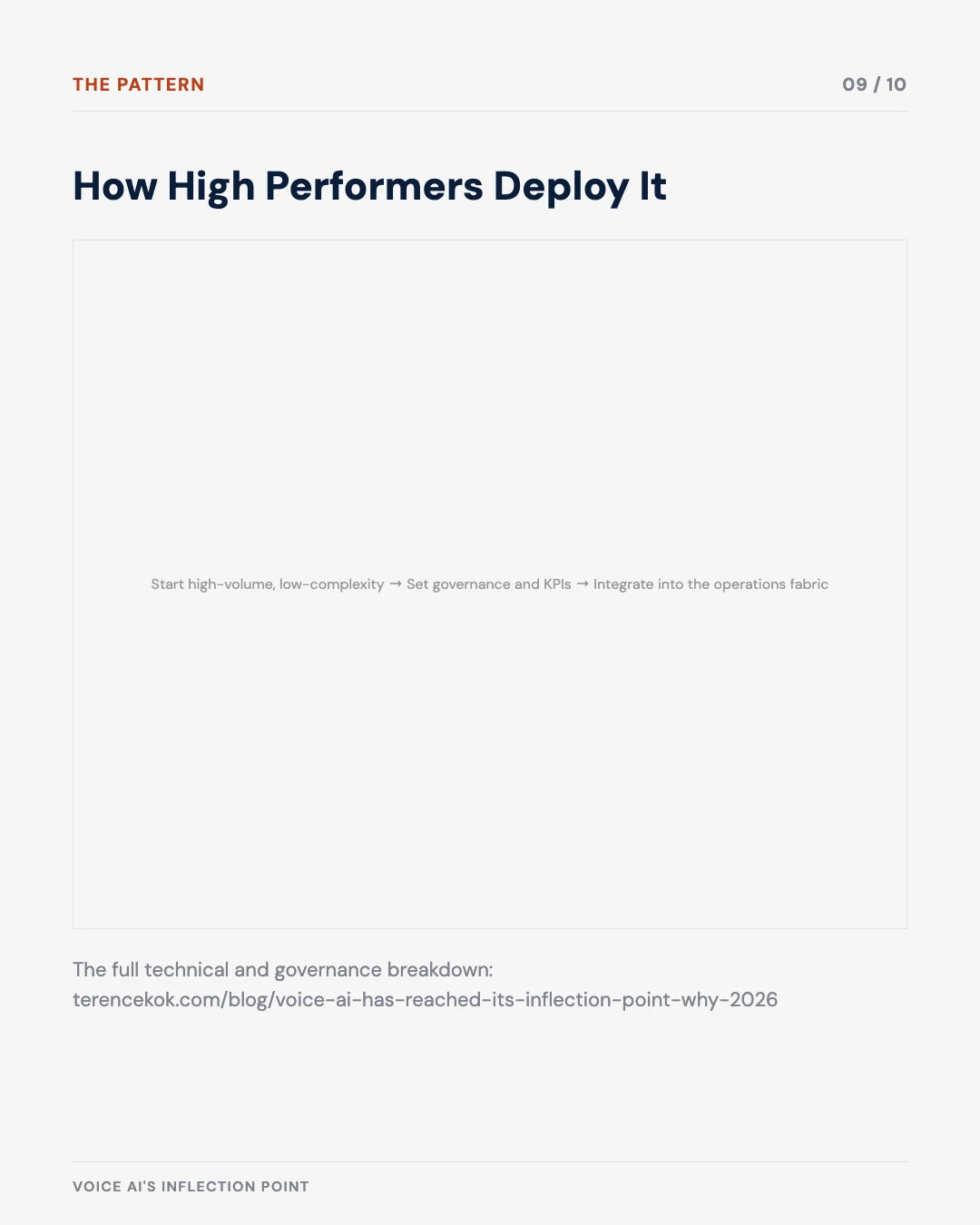
For programme leaders in smart cities and critical infrastructure, the strategic question is shifting. The opportunity is to design voice AI not as a series of pilots but as an integrated capability aligned with existing ICT, OT, and data platforms. High-performing organisations follow a consistent pattern:
- Start with high-volume, low-complexity workflows where ROI can be evidenced quickly — the same selection criteria that apply to any agentic deployment, voice or otherwise.
- Establish governance, measurement baselines, and clear KPIs such as containment rate, average handle time, satisfaction scores, and cost per interaction.
- Integrate voice AI tightly with CRMs, EHRs, ticketing, scheduling, and knowledge repositories so that agents operate as part of a unified digital operations fabric rather than as stand-alone tools.
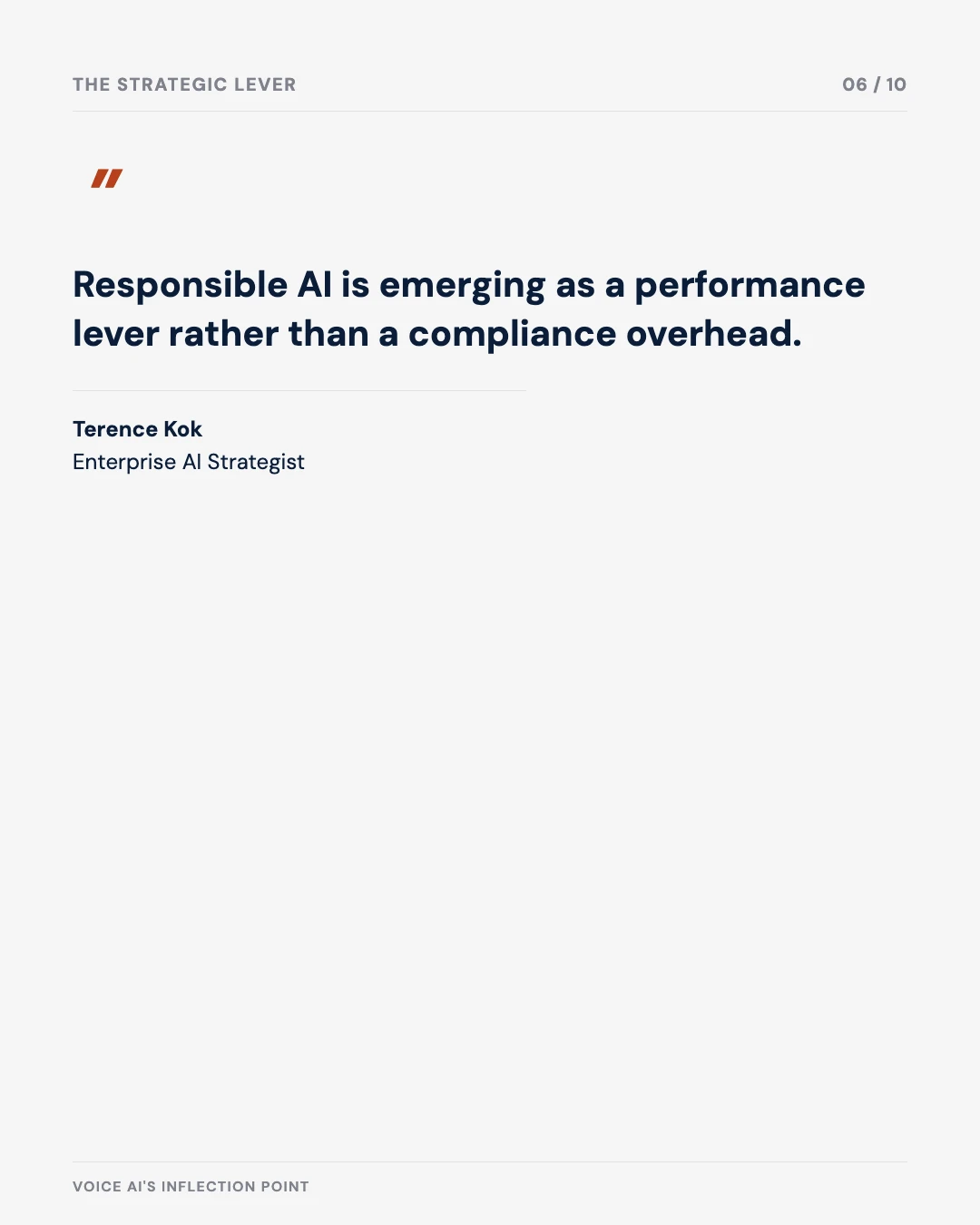
Responsible AI is emerging as a performance lever rather than a compliance overhead. Surveys indicate that around 60% of executives attribute improved ROI and efficiency to structured responsible AI practices, and over half report measurable gains in customer experience and innovation when guardrails and transparency mechanisms are embedded by design. In sensitive domains such as healthcare and education, clear signalling that users are interacting with an AI agent, robust safety constraints, and seamless handover to human experts are now standard expectations.
Responsible AI is emerging as a performance lever rather than a compliance overhead.
Free tool
AI Trust, Risk & Governance Dashboard
Surface the accent bias, deepfake and data-lineage risks this piece flags before they show up in your voice AI deployment.
Was this useful?