
Listen to this article
Executive Summary
Agentic AI’s return is concentrated in a narrow band of processes, not a general automation layer, and deployments already in production are showing triple-digit ROI. The open constraint is no longer capability. It’s institutional trust and governance.
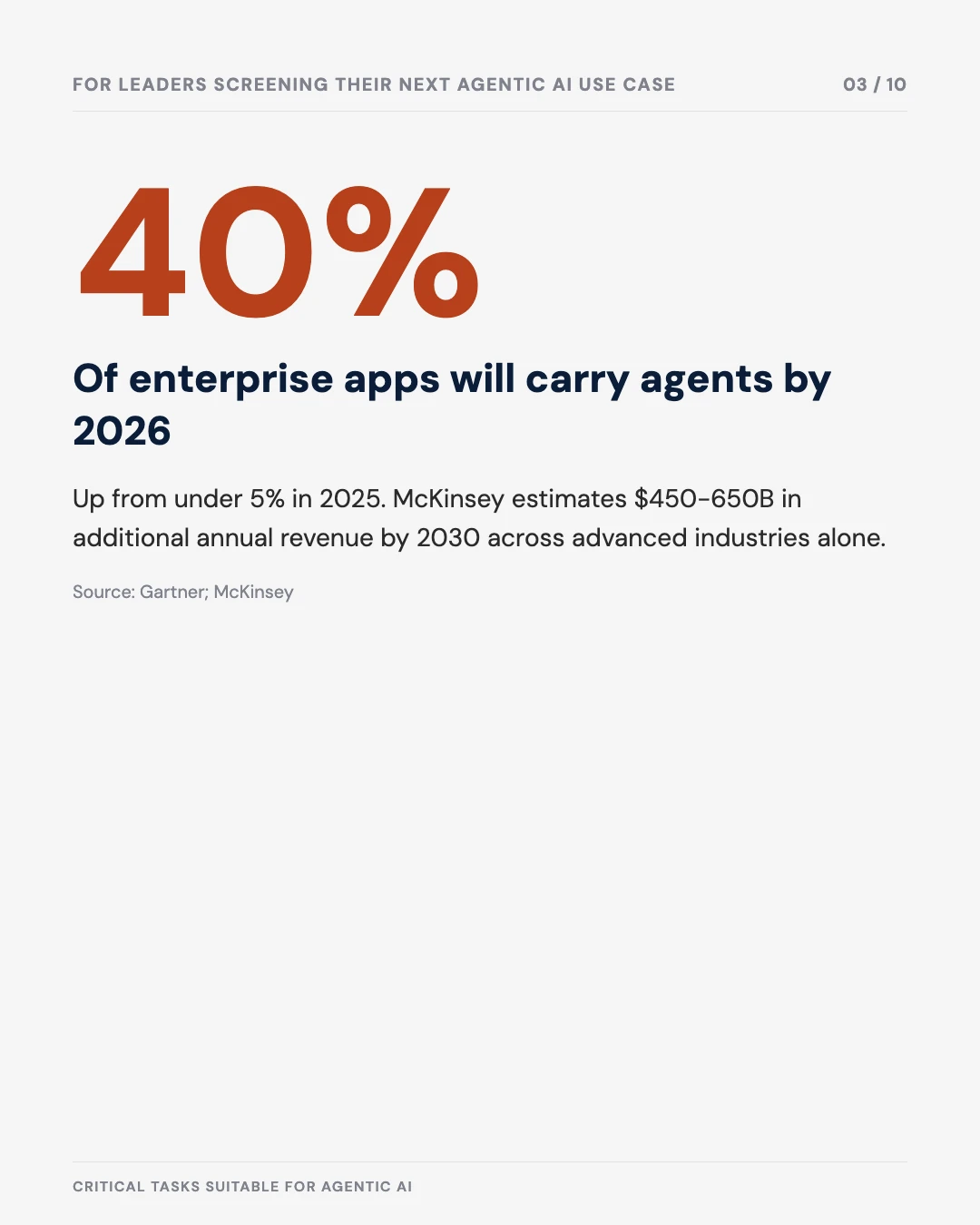
40%
of enterprise applications will carry task-specific agents by end of 2026, up from <5% in 2025
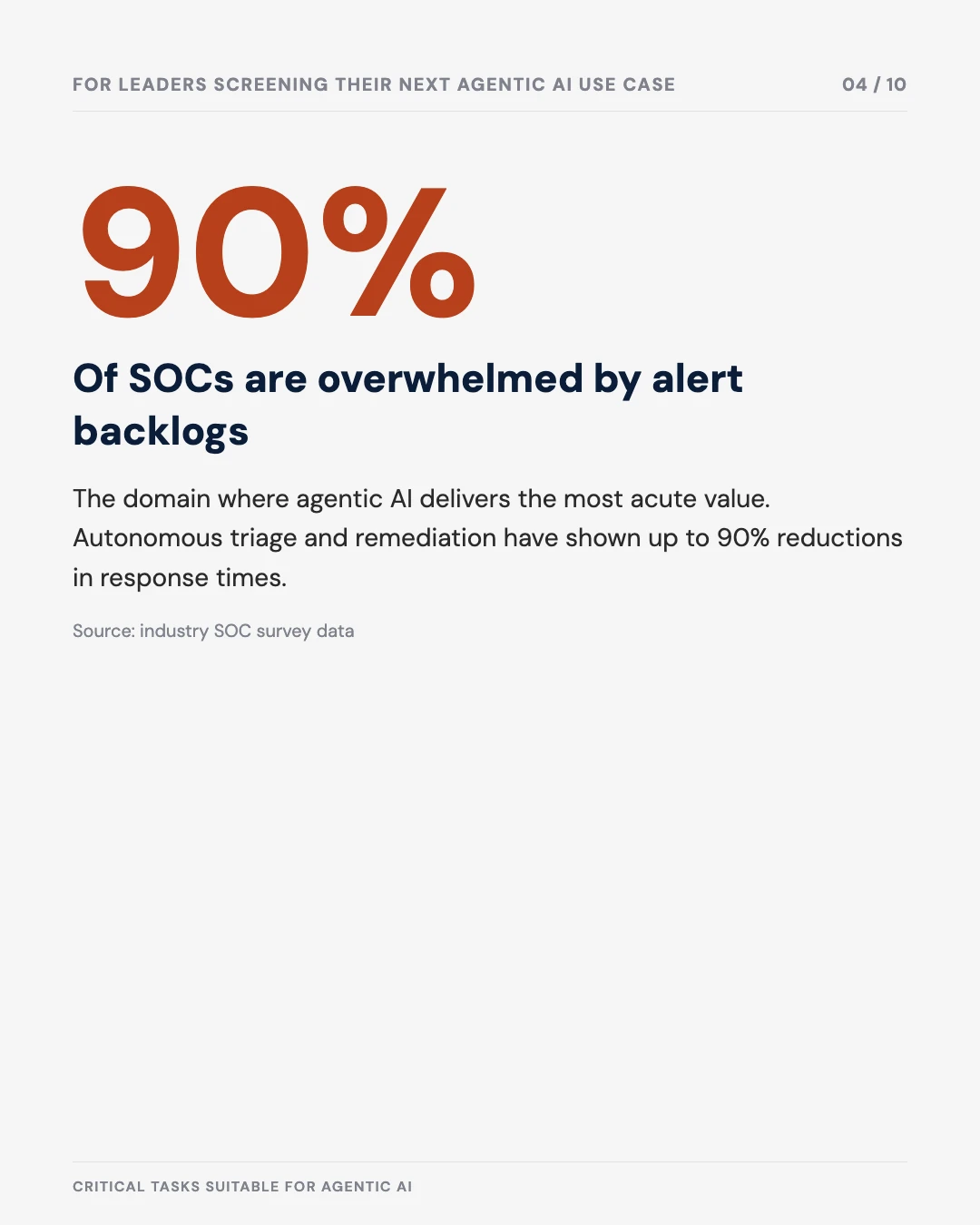
90%
reduction in SOC alert triage workload and response times in reported deployments
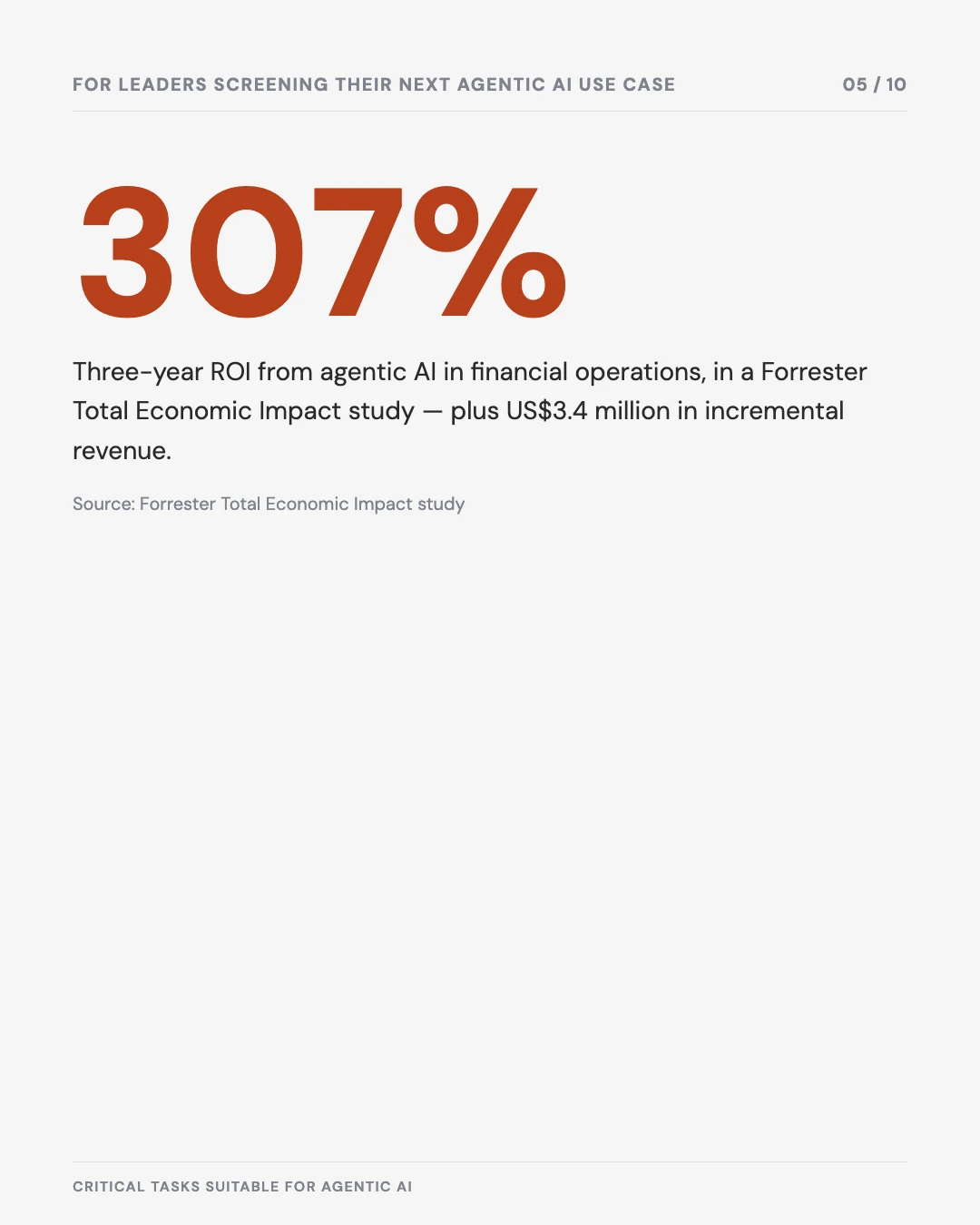
307%
three-year ROI from agentic AI in financial operations, per Forrester’s TEI study
4.5%
of organisations currently trust AI to act with full autonomy
Core conclusions
- Agentic AI’s value is structurally concentrated in processes that are repetitive, cross-system, policy-governed, measurable, and tolerant of adaptive execution, not a blanket replacement for task-level automation.
- Case data across IT operations, SOC, finance, and supply chain deployments already shows 90%+ workload reductions and triple-digit ROI; the technology is production-ready today.
- Trust lags capability. Only 4.5% of organisations currently permit full autonomy, so deployment sequencing has to plan for tiered oversight and governance (e.g. Singapore’s Model AI Governance Framework for Agentic AI, January 2026), not just technical readiness.
The argument, in ten slides
Save it, share it, or run it against the next use case someone pitches you as “agent-ready.”
The data, in three tables
Market signal and forecasts
| Metric | Value | Source |
|---|---|---|
| Enterprise applications incorporating task-specific agents by end of 2026 | 40% (up from <5% in 2025) | Gartner |
| Additional annual revenue agentic AI could generate by 2030 (advanced industries) | US$450–650 billion | McKinsey |
| Cost savings from agentic AI deployments | 30–50% | McKinsey |
| Day-to-day SOC operational decisions handled autonomously by 2028 | 15% (up from 0% in 2024) | Gartner |
Forecasts, not observed outcomes — treat as directional planning inputs rather than committed baselines.
Reported deployment outcomes, by domain
| Domain | Reported outcome | Source |
|---|---|---|
| SOC alert triage and response | Up to 90% reduction in triage workload and response times | Reported implementations |
| Financial operations | 307% three-year ROI; US$3.4M incremental revenue | Forrester Total Economic Impact study |
| Supply chain routing and logistics | >20% reduction in inventory and logistics costs | McKinsey research |
| Smart city traffic optimisation | Up to 30% congestion reduction; 15–25% faster peak travel times | Pilot deployments |
| Energy grid management | 20–40% operational cost savings | Operator-reported |
| Software maintenance (Fortune 500 financial services) | 70% of routine maintenance automated; 85% lower bug rate | Case report |
| Parallel multi-agent execution | 90.2% improvement over single-agent benchmarks | Anthropic research |
Domain figures are drawn from named case deployments cited in the article, not a controlled cross-industry study — treat as illustrative range, not a guaranteed return.
Governance and oversight posture
| Metric | Value | Source |
|---|---|---|
| Organisations that currently trust AI to act with full autonomy | 4.5% | Industry data cited in article |
| Organisations requiring human final decision authority | 47% | Industry data cited in article |
| Organisations permitting bounded autonomy with continuous monitoring | 27% | Industry data cited in article |
Singapore launched the world’s first Model AI Governance Framework for Agentic AI in January 2026, the first jurisdiction-level attempt to formalise the tiered-oversight model these numbers imply.
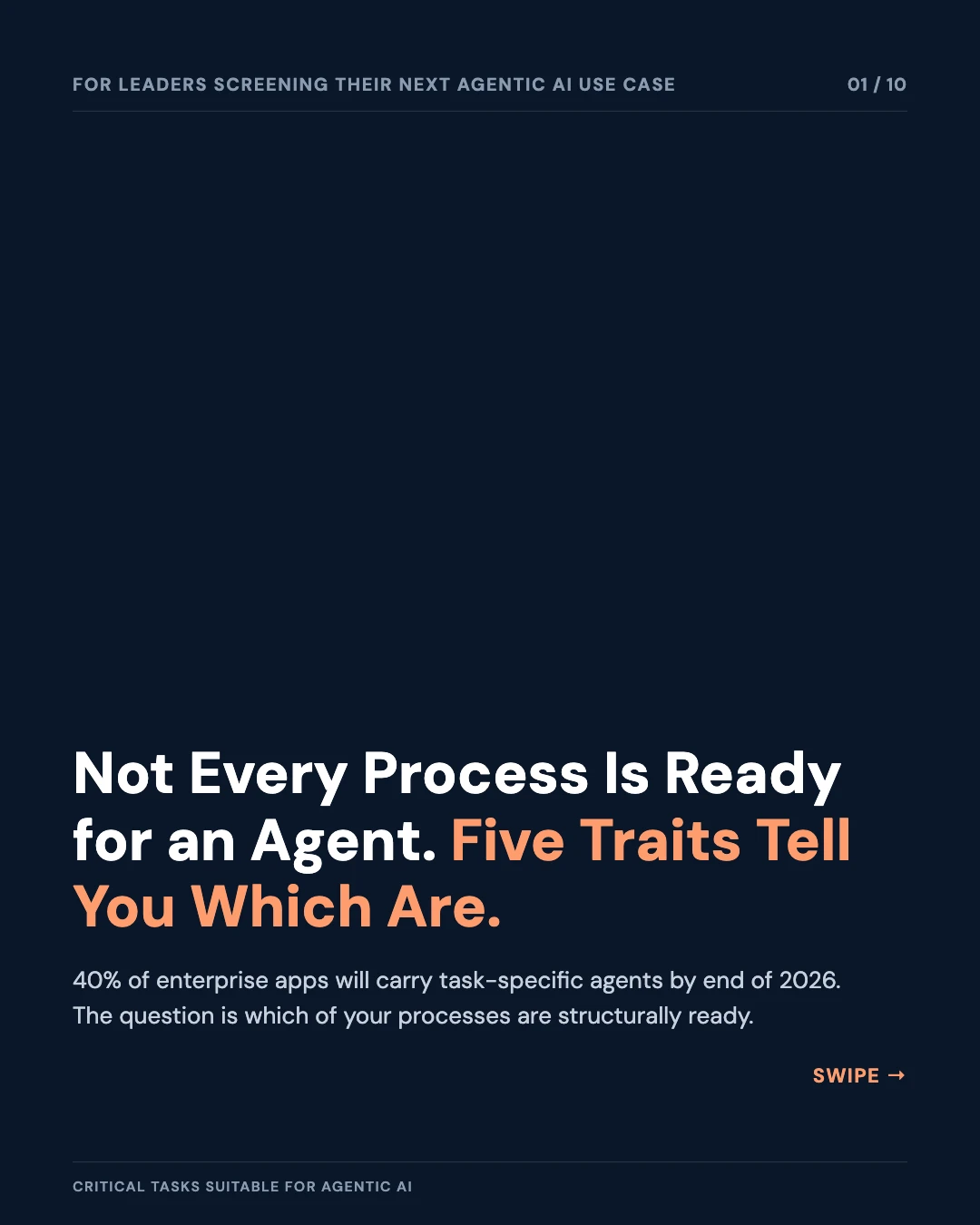
The enterprise AI landscape has shifted decisively. Gartner projects that 40% of enterprise applications will incorporate task-specific agents by the end of 2026, up from less than 5% in 2025.
McKinsey estimates that agentic AI could generate US$450–650 billion in additional annual revenue by 2030 across advanced industries alone, with cost savings of 30–50%. These aren’t speculative figures. They reflect deployments already in operation across financial services, manufacturing, telecommunications, and government.
Yet the critical question for digital leaders is not whether agentic AI delivers value, but which work processes are structurally suited to autonomous execution, and how those processes must be redesigned to exploit the technology’s distinct capabilities.
The critical question is not whether agentic AI delivers value, but which work processes are structurally suited to autonomous execution.
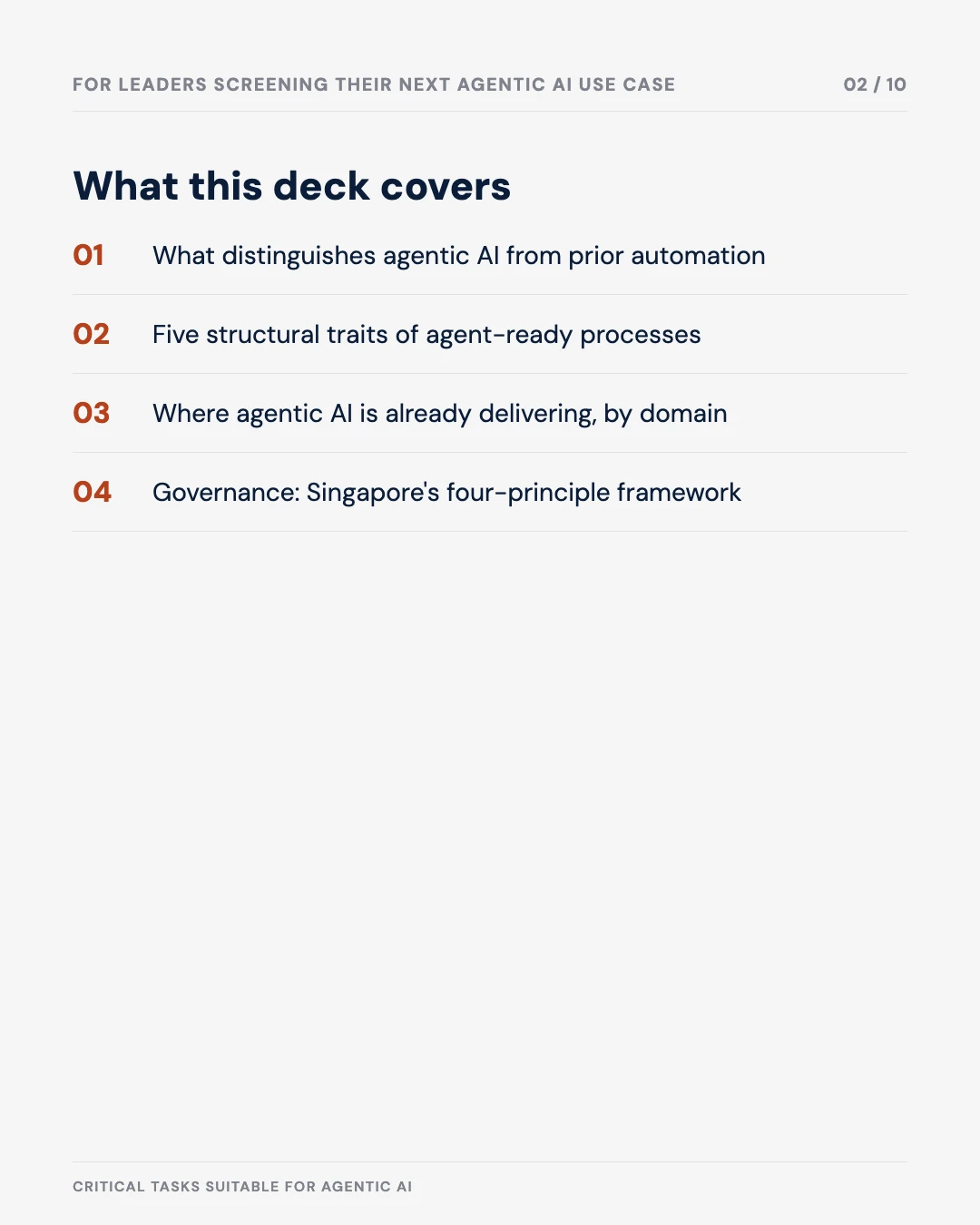
What Distinguishes Agentic AI From Prior Automation
Agentic AI systems differ from both traditional rule-based automation and generative AI in four fundamental respects:
- Reasoning and planning: decomposing high-level objectives into sequenced, multi-step execution plans
- Tool use and system integration: invoking APIs, databases, external services, and other agents to complete tasks across heterogeneous platforms
- Adaptive execution: detecting failures or changed conditions mid-workflow and dynamically re-routing without human prompting
- Outcome orientation: operating against defined goals rather than scripted instructions, with the capacity to evaluate whether the goal has been achieved
This combination transforms AI from a responsive assistant into an autonomous operator capable of managing end-to-end workflows.
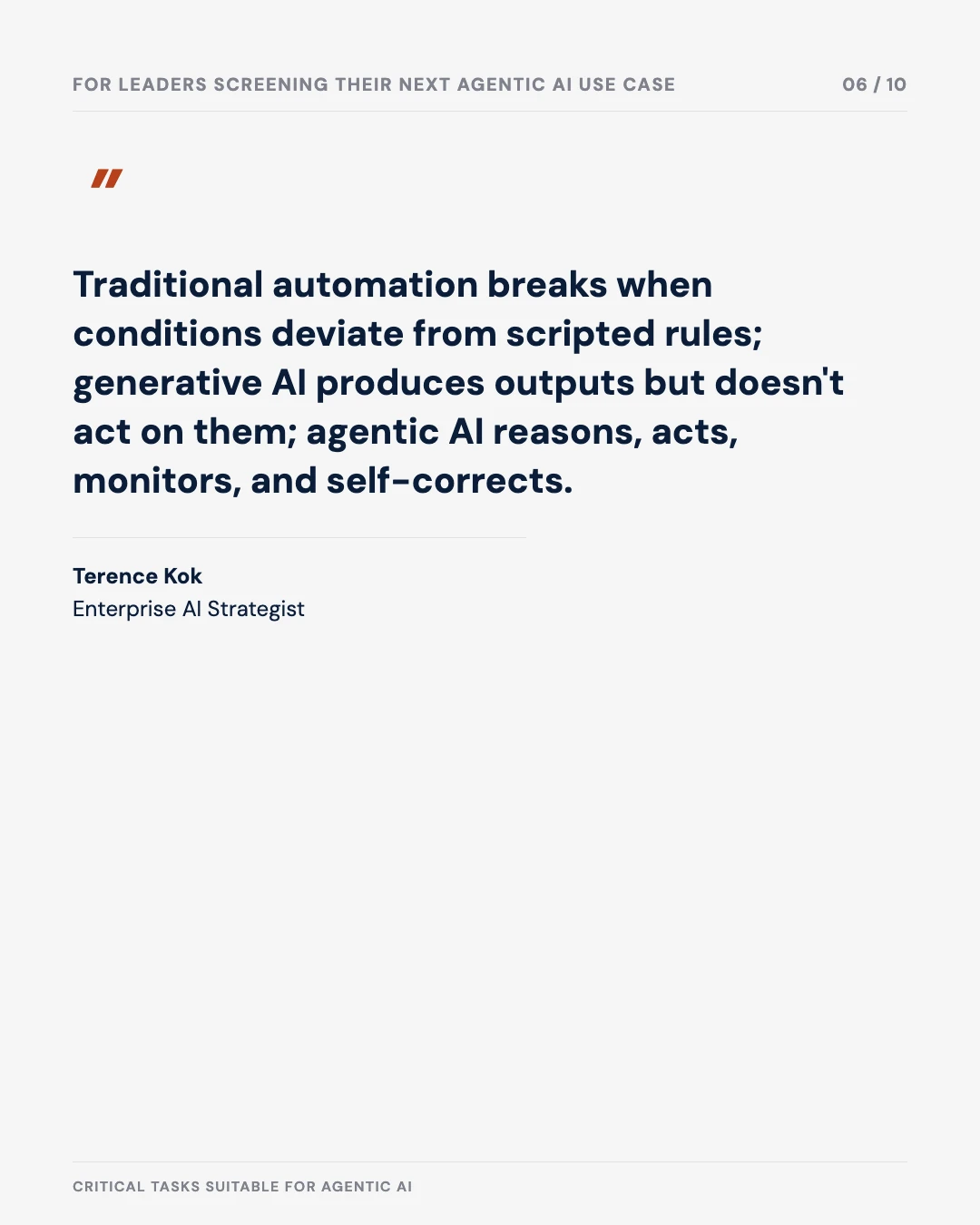
Traditional automation breaks when conditions deviate from scripted rules; generative AI produces outputs but does not act on them; agentic AI reasons, acts, monitors, and self-corrects.
The Five Structural Characteristics of Agentic-Ready Processes
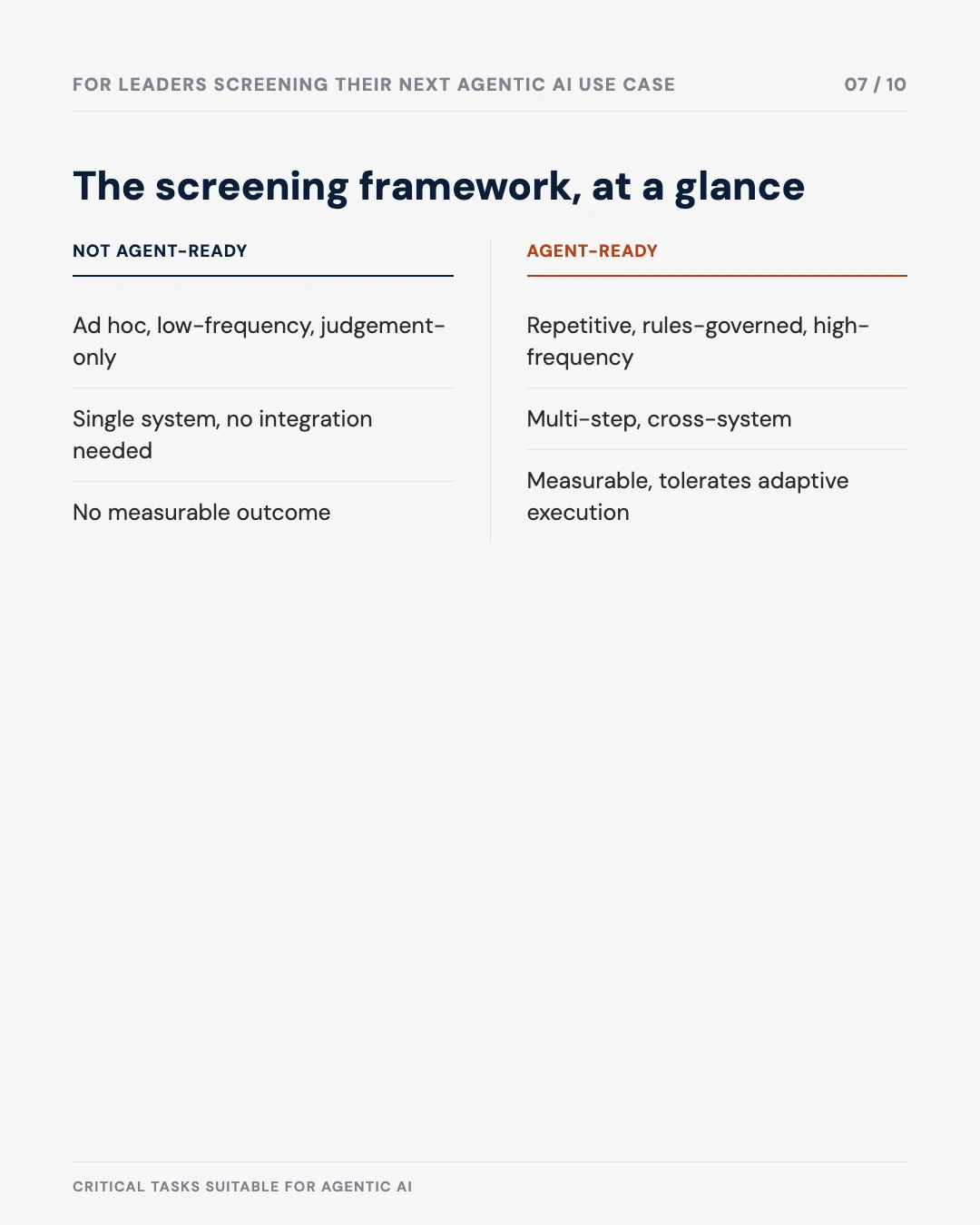
Not every process is suitable for autonomous execution. The highest-impact deployments share five structural characteristics that practitioners should use as a screening framework:
1. Repetitive, High-Frequency, and Rules-Governed
Processes that occur at scale, follow codified policies, and require consistent application of decision logic are the primary candidates. These workflows consume disproportionate human effort on predictable tasks. Examples include invoice processing, employee onboarding, access provisioning, and compliance monitoring.
2. Multi-Step with Cross-System Dependencies
Agentic AI excels where a workflow traverses multiple enterprise systems: ERP, HRIS, ITSM, CRM, requiring data retrieval, transformation, and action across disconnected platforms. The agent acts as the orchestration layer that traditional point-to-point integrations cannot provide dynamically.
3. Clear Decision Logic with Defined Escalation Boundaries
The process must have articulable decision criteria that can be encoded as policies or guardrails. Critically, the boundaries of autonomous action must be defined: what the agent may resolve independently, and at what threshold human approval is required. Processes requiring purely subjective judgement remain poor candidates for full autonomy.
4. Measurable Outcomes
The process must yield quantifiable performance indicators, such as resolution time, error rate, throughput, and cost per transaction, against which the agentic system’s performance can be baselined and continuously optimised.
5. Tolerance for Adaptive Execution
The process environment must accommodate dynamic re-routing. If a fixed, linear sequence is mandatory with no deviation permitted, traditional RPA may suffice. Agentic AI is most valuable where exceptions are common, conditions change, and the system must reason through alternative paths.
Critical Task Domains Best Suited for Agentic AI
Drawing on current enterprise deployments and published case studies, the following domains represent the highest-impact opportunities for agentic AI adoption.
1. IT Operations and Service Management
IT operations represent the most mature deployment domain. Key processes include:
- Proactive incident detection and resolution: Agents monitor infrastructure telemetry, identify anomalies, correlate signals across SIEM, SOAR, and EDR platforms, and execute remediation actions such as service restarts, configuration rollbacks, or endpoint isolation. Implementations have reduced alert triage workloads by up to 90%.
- Automated provisioning and de-provisioning: Agents grant or revoke access based on role-based policies, enforcing least-privilege principles across identity and access management (IAM) systems without manual intervention.
- Self-service resolution: Conversational agents diagnose and resolve routine issues such as password resets, VPN configuration, and software licence allocation end-to-end, reducing ticket volumes and mean time to resolution (MTTR).
One reported deployment at Power Design automated over 1,000 hours of repetitive IT work through an agentic assistant, shifting the IT function from reactive service desk to proactive operations partner.
2. Cybersecurity Operations Centre (SOC)
The SOC is arguably the domain where agentic AI delivers the most acute operational value, given that 90% of SOCs report being overwhelmed by alert backlogs.
- Autonomous alert triage: Agents classify, enrich, and prioritise security alerts in real time, dismissing false positives and surfacing confirmed threats with full investigative context.
- Threat hunting and hypothesis generation: Agents autonomously investigate behavioural deviations, correlate threat intelligence feeds, and trace lateral movement across network segments.
- Automated remediation: For validated threats, agents execute containment actions such as endpoint isolation, credential rotation, and IP blocking, within pre-approved policy boundaries.
- Continuous vulnerability management: Agents assess vulnerability severity in production environments, prioritise patching, and, in controlled environments, execute remediation autonomously.
Gartner projects that by 2028, agentic AI will autonomously handle 15% of day-to-day operational decisions in security, up from 0% in 2024. Implementations have demonstrated 90% reductions in response times.
3. Financial Operations
Finance functions contain high volumes of structured, policy-driven transactions ideally suited to agentic execution:
- Invoice processing: Agents extract data from invoices, match against purchase orders, validate completeness, and route for approval. Exceptions are flagged with full context for human review.
- Expense report automation: Agents read receipts, apply policy rules, compile submissions, and execute compliance checks as part of every transaction.
- Real-time financial inquiry resolution: Agents pull live data from ERP systems to answer budget, accrual, and spend queries without manual ticket generation.
- Fraud detection and compliance monitoring: Agents continuously scan transaction patterns, flag anomalies, and initiate investigation workflows.
A Forrester Total Economic Impact study reported 307% ROI over three years and US$3.4 million in incremental revenue for organisations deploying agentic AI in financial operations.
4. Supply Chain and Logistics
Supply chains are inherently multi-system, multi-party, and subject to real-time disruption: conditions where agentic AI’s adaptive capabilities are most valuable.
- Demand forecasting and inventory optimisation: Agents analyse historical sales data, market signals, and supply constraints to predict demand and trigger procurement actions before stockouts occur.
- Autonomous routing and scheduling: Agents optimise delivery routes in real time, adjusting for disruptions such as shipping delays, weather events, or capacity constraints. McKinsey research documents more than 20% reductions in inventory and logistics costs.
- Supplier monitoring and risk management: Agents track supplier performance, financial health, and geopolitical risk indicators, escalating supply chain threats before they materialise.
5. Human Resources
- HR workflows are characterised by multi-step, cross-system processes that follow well-defined policies:
- End-to-end onboarding: Agents orchestrate document collection, benefits enrolment, equipment provisioning, access configuration, and training assignment across HRIS, IT, and facilities systems.
- Policy interpretation and case resolution: Agents interpret policy language contextually based on role, location, and eligibility, reducing escalations and improving consistency.
- Employee self-service: Agents resolve queries on leave entitlements, payroll, tax withholding, and benefits autonomously.
Ciena reported automating over 100 workflows across HR and IT, reducing approval times from days to minutes.
6. Smart City and Critical Infrastructure Operations
For smart city programme leads and infrastructure operators, agentic AI combined with digital twin architectures represents a step-change in operational capability:
- Traffic flow optimisation: Agents ingest real-time data from cameras, sensors, and transit schedules, correlate with roadworks and weather, and execute predictive signal timing adjustments. Pilot deployments report up to 30% reductions in congestion and 15–25% reductions in peak travel times.
- Energy grid management: Agents monitor distributed energy resources, predict short-term demand fluctuations, manage demand-response programmes, and optimise renewable integration across smart grids. Operators report 20–40% operational cost savings.
- Water and utility management: Agents detect pipeline leakage, forecast water demand, and optimise distribution networks autonomously.
- Emergency response coordination: Agents analyse multi-source sensor data to detect incidents, correlate threat intelligence, and dispatch emergency services with situational context. The Australian Red Cross scaled from 30 to 300,000 incident-per-day processing during wildfire emergencies using agentic AI.
- Predictive maintenance: Digital twin-embedded agents monitor infrastructure health continuously, predict component failures, and schedule maintenance before service interruptions occur.
Research from the IEOM Society documents that integration via unified operations platforms and digital twins, combined with explicit accountability mechanisms (audit trails, AI registers), is a stronger predictor of sustained performance than any single algorithmic technique.
7. Governance, Risk, and Compliance (GRC)
Regulatory complexity makes GRC a natural domain for agentic AI:
- Continuous compliance monitoring: Agents scan regulatory updates, interpret requirements, and assess organisational compliance posture in real time.
- Policy interpretation and enforcement: Agents apply regulatory requirements to operational contexts, flagging non-compliance and initiating remediation workflows.
- Risk assessment automation: Agents evaluate transaction patterns, operational data, and external signals to quantify and prioritise risk exposure
IBM demonstrated enterprise-grade agentic AI for governance and compliance through an eight-week proof of concept, embedding intelligence directly into risk and compliance processes to enable consistent policy interpretation and faster decisions.
8. Engineering, R&D, and Software Development
Knowledge-intensive engineering processes benefit from agents that can reason over large repositories of historical data:
- Test case generation: Agents synthesise test descriptions from historical requirements databases, reducing effort by 50% for experienced engineers and substantially more for junior staff. A tier-one automotive supplier deployed this using LangGraph and frontier LLMs.
- Code generation and quality assurance: Agents generate code, run tests, identify performance bottlenecks, apply patches, and release updates. One Fortune 500 financial services company automated 70% of routine software maintenance, reducing bug rates by 85%.
- Documentation automation: Agents generate and maintain technical documentation based on code changes, reducing documentation debt.
9. Sales and Customer Engagement
Sales processes involve data aggregation, qualification, and personalisation: tasks where agents can operate autonomously.
- Autonomous lead qualification: Agents analyse prospect data, assess conversion likelihood, and prioritise pipeline opportunities.
- Prospecting and research: A truck OEM deployed multi-agent systems to identify prospects, assess fit, and generate sales profiles with contact information. Prospecting efforts doubled, driving a 40% increase in order intake within three to six months.
- Customer service resolution: Agents consolidate CRM, ticket history, and product data into unified context views, resolve routine inquiries autonomously, and route complex cases with full investigative context.
Architectural Considerations for Deployment
Multi-Agent Orchestration
Single-agent architectures do not scale to enterprise-grade complexity. Production deployments increasingly adopt multi-agent orchestration, where specialised agents handle discrete capabilities under a coordinator agent that plans, sequences, and supervises execution. I’ve catalogued the eight recurring agent patterns behind these architectures in more detail. Inter-agent communication protocols (Google’s A2A, Anthropic’s MCP, Cisco-led AGNTCY) are maturing to enable standardised coordination across frameworks and models.
Key architectural patterns include:
- Centralised (Supervisor): A single coordinator agent manages task allocation and data flow. Provides clear control but introduces a potential single point of failure.
- Decentralised: Agents operate autonomously and communicate via a publish-subscribe message bus. More resilient but harder to coordinate.
- Parallel task execution: Sub-agents work simultaneously on independent sub-tasks, reducing completion time. Anthropic’s research architecture demonstrated 90.2% improvement over single-agent benchmarks using this approach.
Governance and Human Oversight
Singapore launched the world’s first Model AI Governance Framework for Agentic AI in January 2026, establishing four key principles:
- Bound risks upfront: Select appropriate use cases and limit agents’ autonomy, tool access, and data access
- Meaningful human accountability: Define significant checkpoints requiring human approval, particularly for high-stakes or irreversible actions
- Technical controls throughout the lifecycle: Baseline testing, whitelisted service access, decision chain logging, and behavioural boundary detection
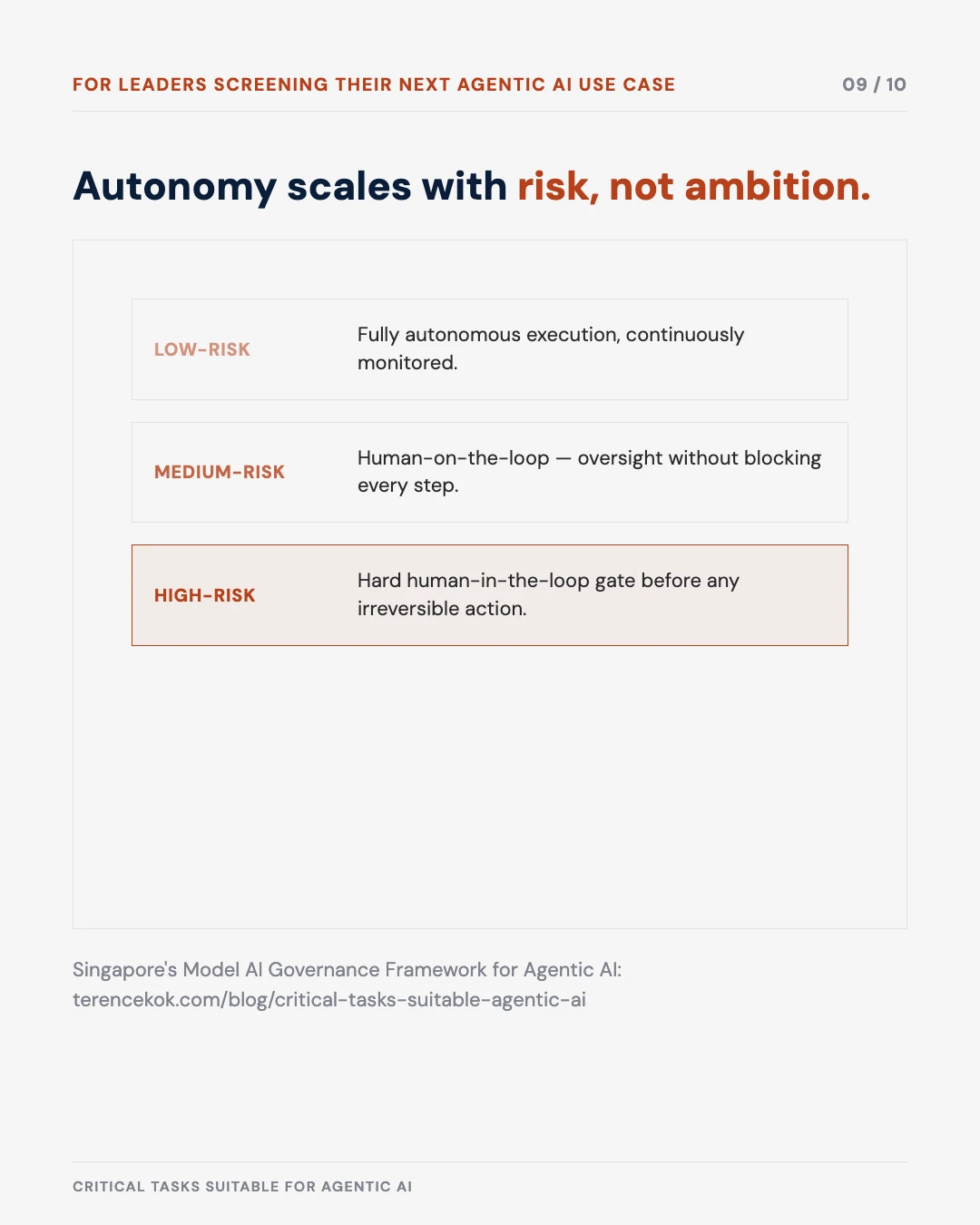
- Tiered oversight models: Fully autonomous for low-risk actions; human-on-the-loop for medium-risk workflows; hard human-in-the-loop gates for high-risk decisions — I go deeper on redesigning this exact tiering as systems mature elsewhere
Industry data confirms this approach: only 4.5% of organisations currently trust AI to act fully autonomously. 47% require human final decision authority, and 27% permit bounded autonomy with continuous monitoring.
Data and Integration Readiness
Agentic AI performs optimally when:
- Systems of record are accessible via APIs or integration middleware
- Data is reasonably clean, consistent, and deduplicated across platforms
- Decision policies are codified and version-controlled
- Audit trails and logging infrastructure are in place
Organisations should shift from use-case-specific data pipelines to reusable data products that serve multiple agents across the enterprise.
Implementation Approach
The evidence from current deployments consistently points to a phased approach:
- Identify high-impact, rules-based processes: Map where teams spend disproportionate time on predictable, cross-system tasks
- Evaluate autonomy potential: Assess whether decision logic can be codified and appropriate guardrails established
- Assess integration readiness: Confirm API availability, data quality, and system accessibility
- Deploy narrowly, measure rigorously: Start with a single workflow, establish quantified baselines, and measure against resolution time, error rate, cost, and satisfaction metrics
- Scale horizontally: Extend proven patterns to adjacent processes, evolving toward multi-agent orchestration across departments
- Embed governance continuously: Maintain human-in-the-loop review for sensitive actions, transparent audit trails, and versioned policies
Conclusion
Agentic AI is not a general-purpose automation layer. Its value is structurally concentrated in work processes that are repetitive, multi-step, cross-system, policy-governed, and subject to real-time variability.
Organisations that treat agentic AI as a tool for redesigning end-to-end workflows, rather than accelerating individual tasks, will capture disproportionate operational and financial returns.
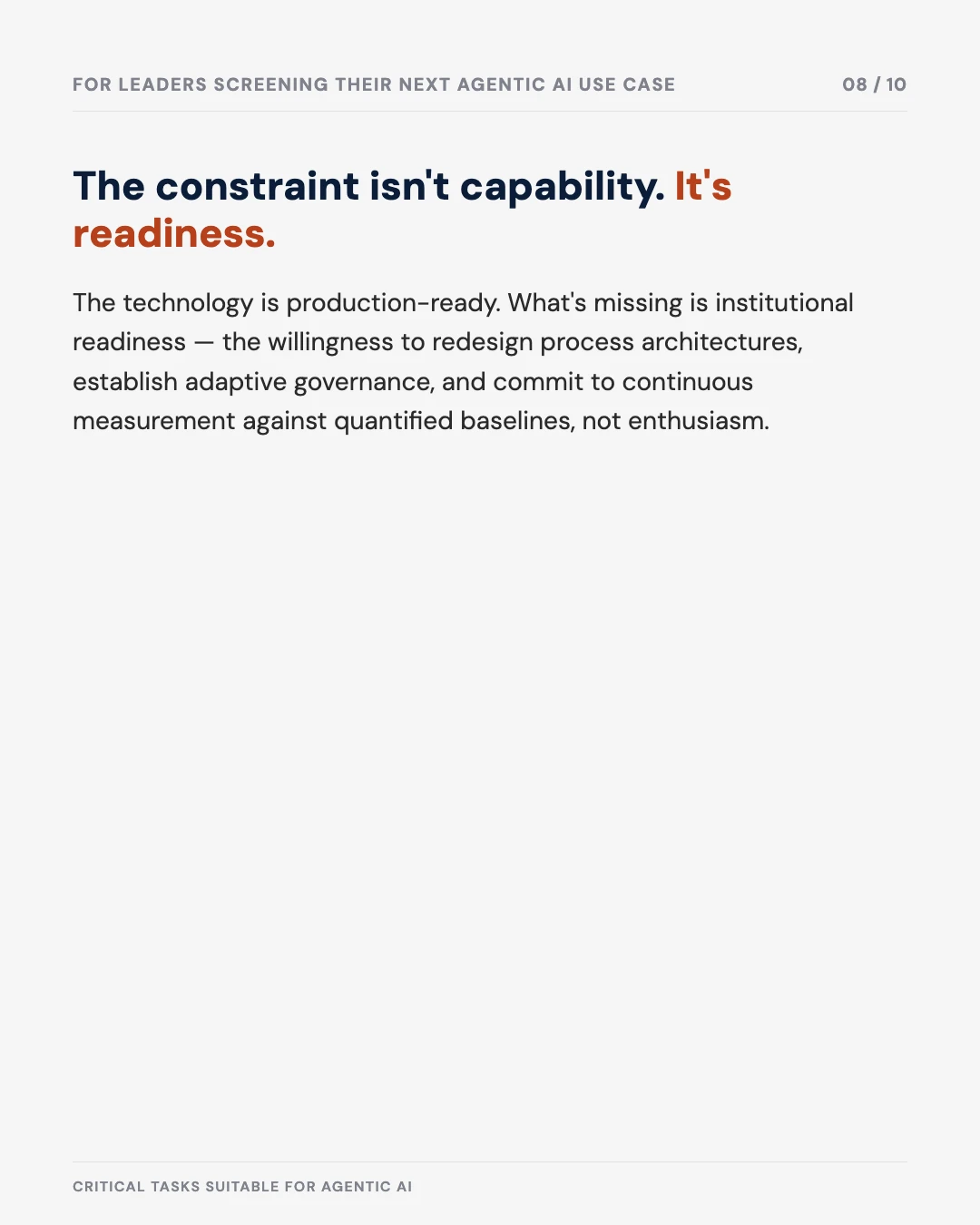
The technology is production-ready. The constraint is no longer capability but institutional readiness: the willingness to redesign process architectures, establish adaptive governance frameworks, and commit to continuous performance measurement against quantified baselines.
Sources: Gartner; McKinsey & Company; Forrester, Total Economic Impact study; IEOM Society; Singapore Model AI Governance Framework for Agentic AI (January 2026); reported enterprise case data (Power Design, Ciena, Australian Red Cross, IBM, Anthropic Research).
Free tool
TRACE Agent Evaluation
Score a specific candidate task against the five structural characteristics above and get an interactive deployment verdict.
The technology is production-ready. The constraint is no longer capability but institutional readiness.
#AgenticAI #SmartCities #DigitalTransformation #AI #Automation #DigitalTwins #Cybersecurity #Infrastructure #Governance
Was this useful?