
Listen to this article
Executive Summary
Technology adoption is now a primary driver of enterprise value, and its central human benefit is freeing people’s time and attention for creativity, judgement, and innovation rather than simply replacing them. Treating adoption as optional, or adopting without embedding it into daily work, is an active decision to erode competitiveness over time.
Core conclusions
- Digital adopters show stronger valuation, market share, and growth outcomes than organisations that delay; non-adoption is not a neutral choice, it accumulates strategic risk.
- The real payoff of automation and AI is bandwidth: freeing people from manual, repetitive work so they can focus on problem-solving, design, and stakeholder engagement.
- Leadership’s task is disciplined, outcome-driven adoption. That means pairing platforms with skills, governance, and accountability rather than running isolated pilots.
The case, in ten slides
Save it, share it, or send it to whoever is funding the next technology programme.
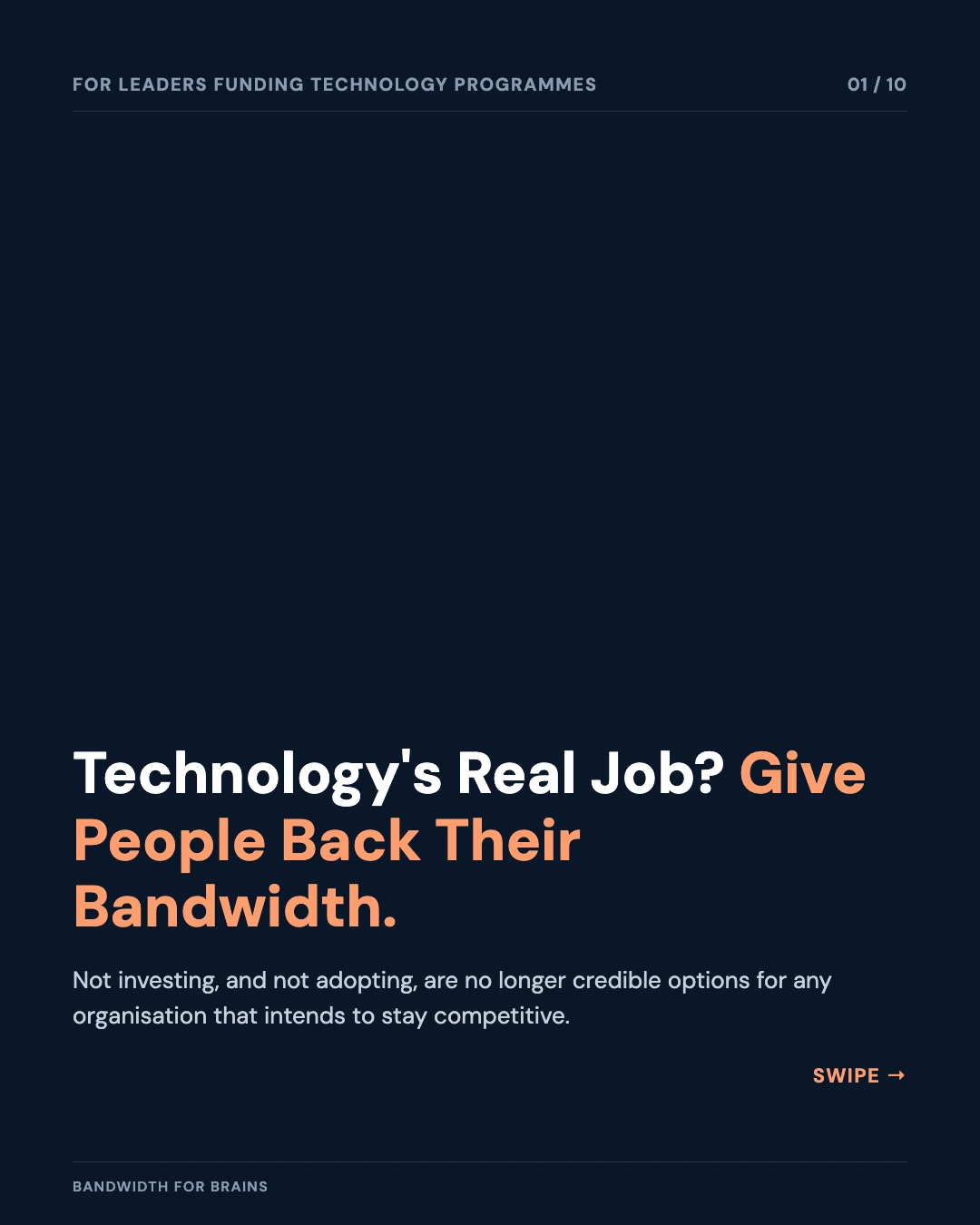
The value of an organisation will increasingly be determined by how effectively it adopts and scales new technologies, not by whether it uses technology at all. In this environment, not investing and not adopting are no longer credible options for any organisation that intends to remain competitive and relevant.
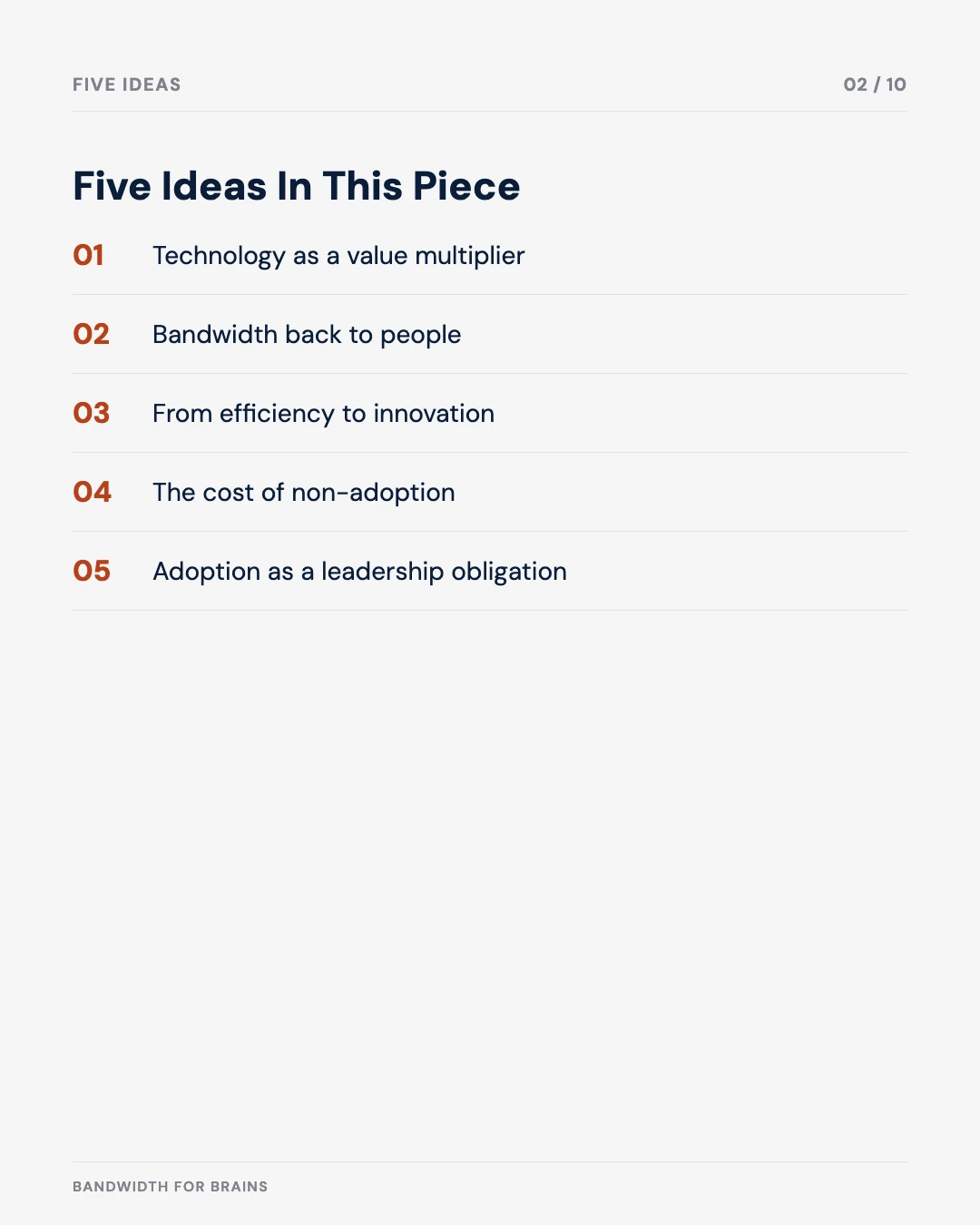
Technology as a value multiplier
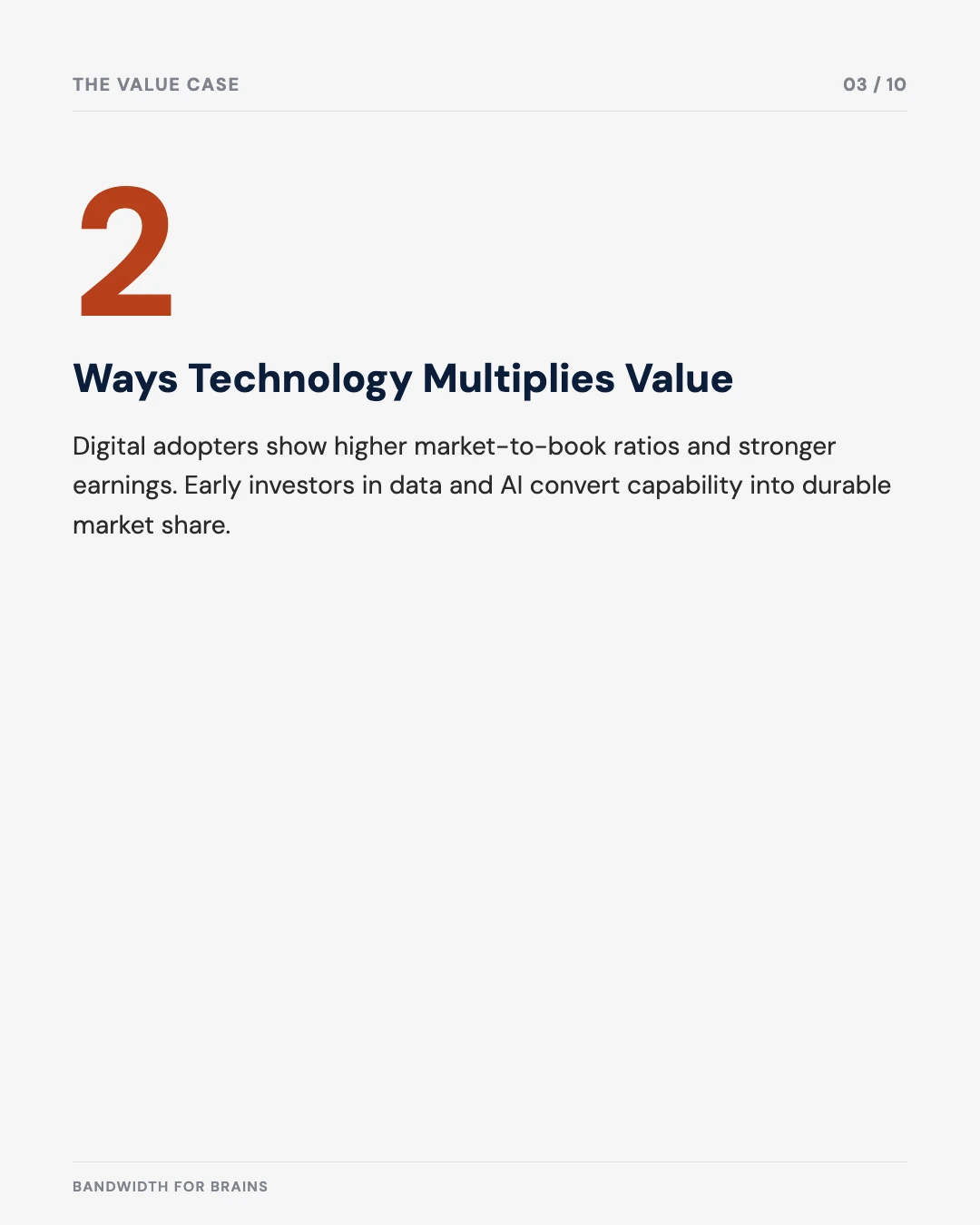
Technology has moved from a support function to a primary driver of enterprise value.
- Digital adopters tend to show higher market‑to‑book ratios, stronger earnings responses, and more resilient growth than peers that delay digitalisation.
- Organisations that invest early in data, AI, and automation (for example, recommendation engines and personalisation) convert those capabilities into durable gains in market share and customer lifetime value.
In short, technology now underpins valuation, margin resilience, and strategic flexibility.
Bandwidth back to people
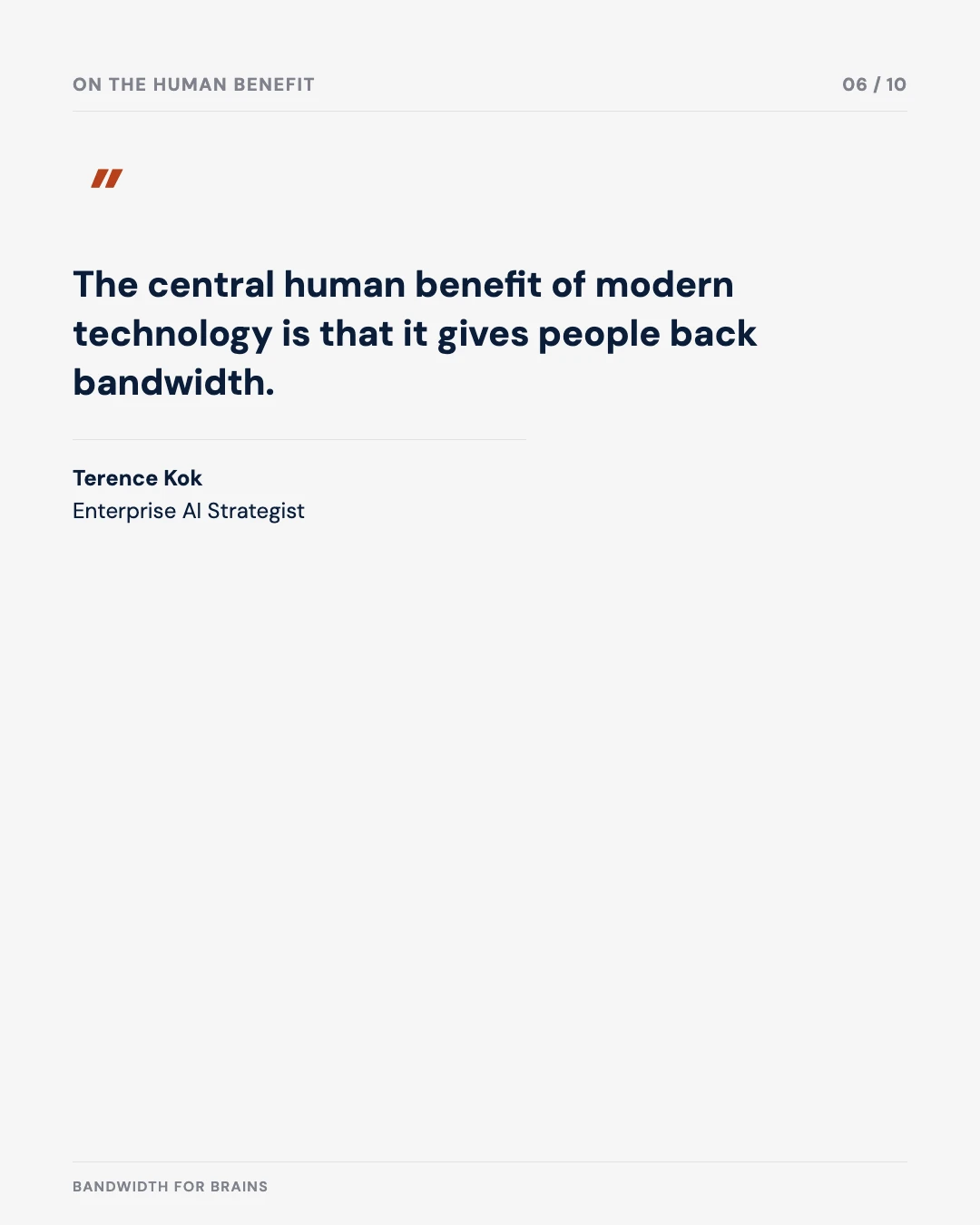
The central human benefit of modern technology is that it gives people back bandwidth.
- IT automation and workflow tools strip out manual data entry, repetitive reporting, and basic triage, freeing time for problem‑solving, design, policy thinking, and stakeholder engagement.
- Research on AI introduction shows that, when implemented well, it can increase employee creativity by boosting autonomy, feedback, and intrinsic motivation.
With clear operating models and deliberate role redesign, automation and AI expand cognitive and creative capacity at scale instead of simply replacing tasks.
From efficiency to innovation
Mature technology programmes move beyond cost‑cutting and support structured innovation.
- Digital platforms improve data quality and observability, enabling rapid experiments, A/B tests, and continuous optimisation of services and policies.
- Automation and collaboration tools help cross‑functional teams co‑create new products, services, and operating models, shortening the path from idea to implementation.
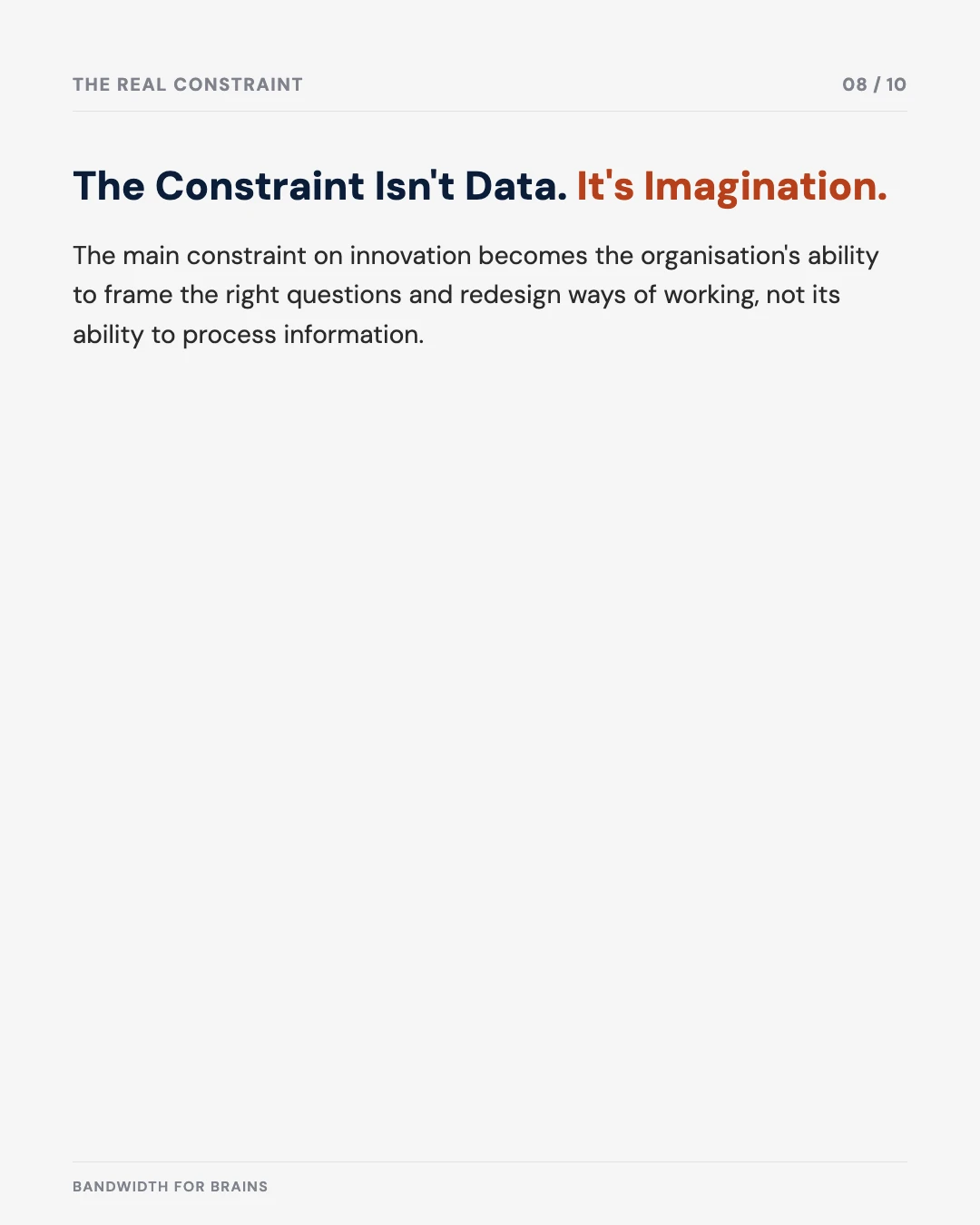
In this context, the main constraint on innovation becomes the organisation’s ability to frame the right questions and redesign ways of working, not its ability to process information. That redesign question is the actual bottleneck in most AI programmes, more than any technology choice.
The cost of non‑adoption
Choosing not to invest, or investing without genuine adoption, creates accumulating strategic risk.
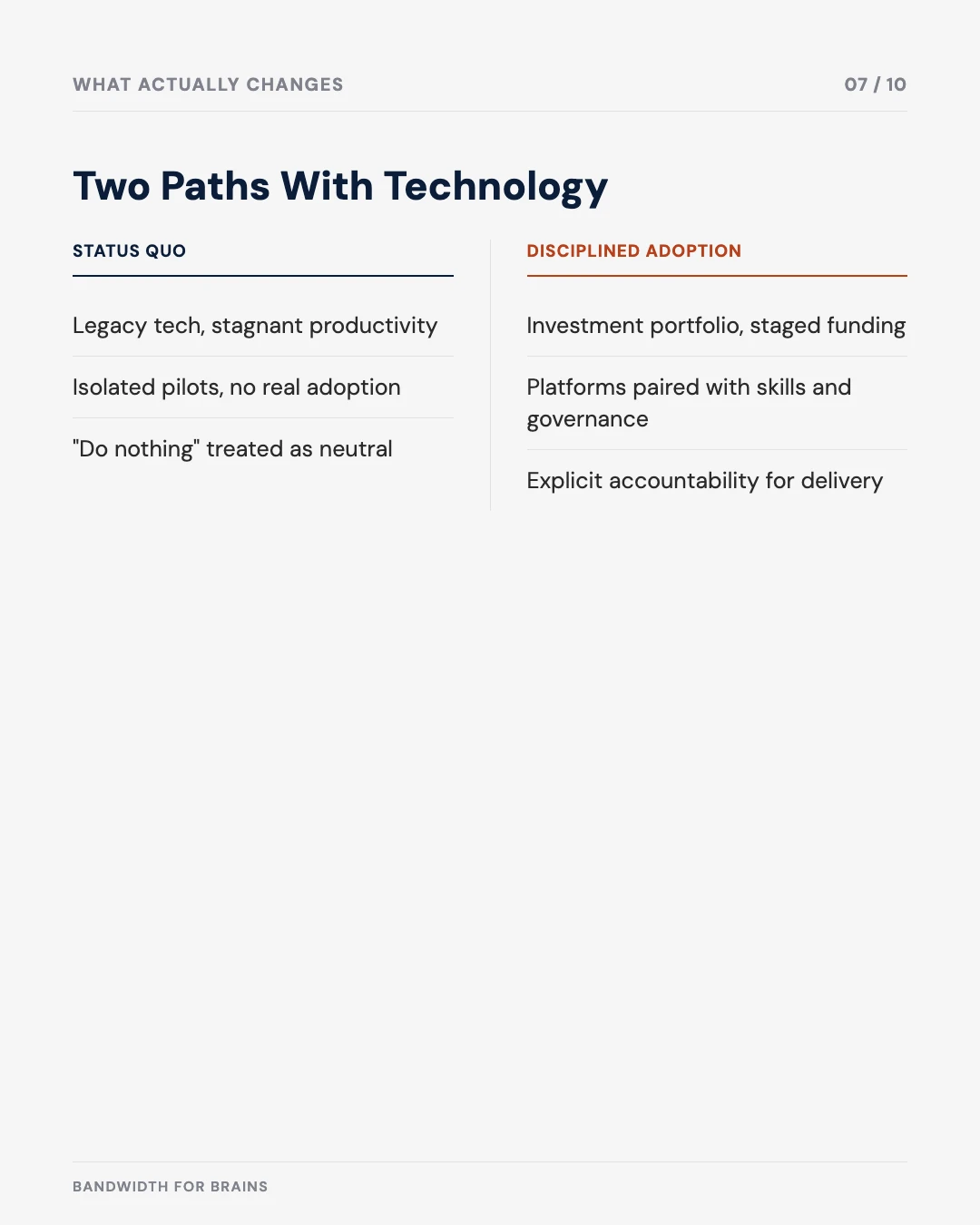
- Organisations that cling to legacy technologies face stagnant productivity, higher operating costs, and weaker responses to market, regulatory, or societal shocks.
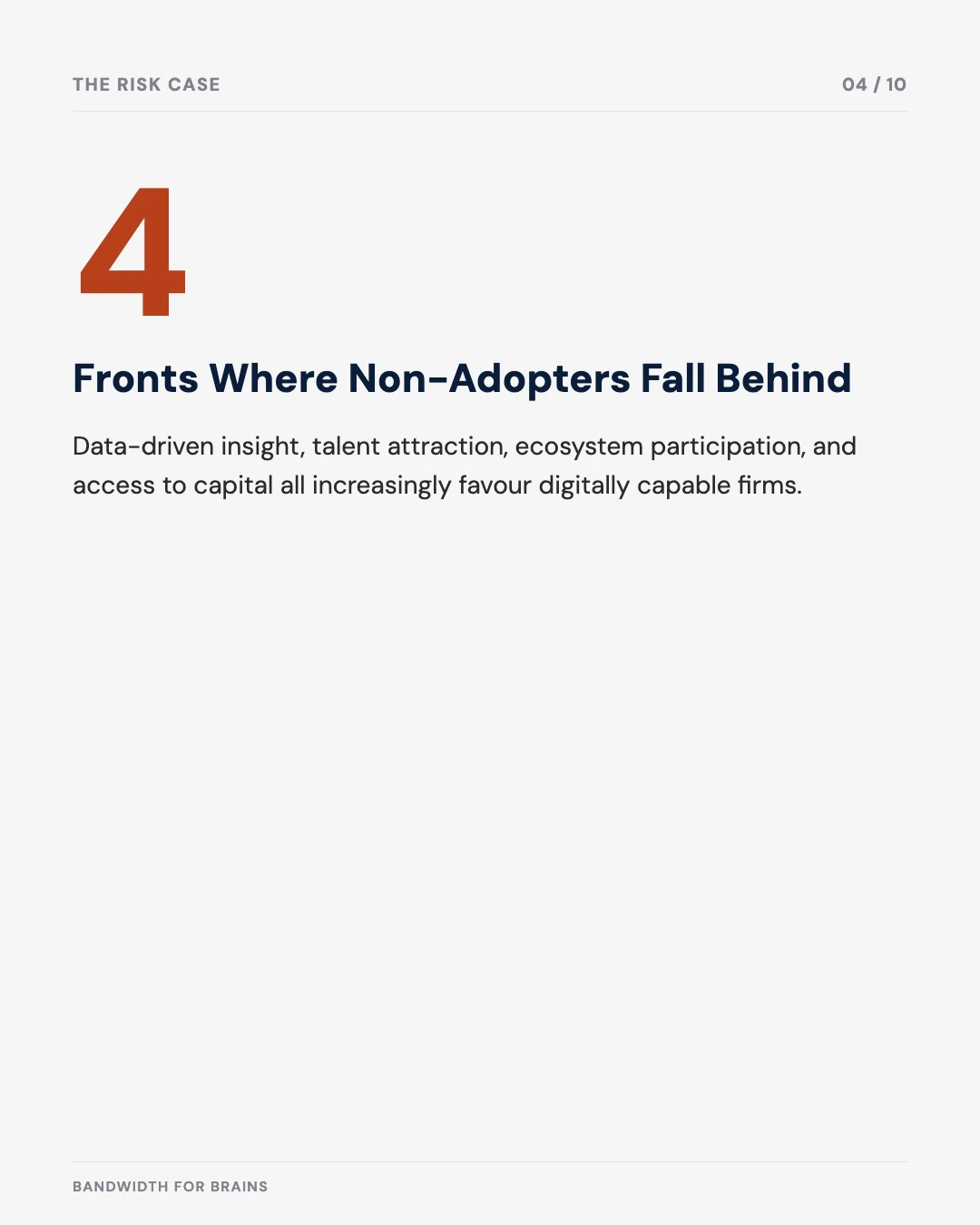
- Non‑adopters fall behind on data‑driven insight, talent attraction, ecosystem participation, and access to capital, all of which increasingly favour digitally capable firms.
“Do nothing” is not a neutral position; it is an active decision to accept erosion of competitiveness, resilience, and enterprise value over time.
Adoption as a leadership obligation
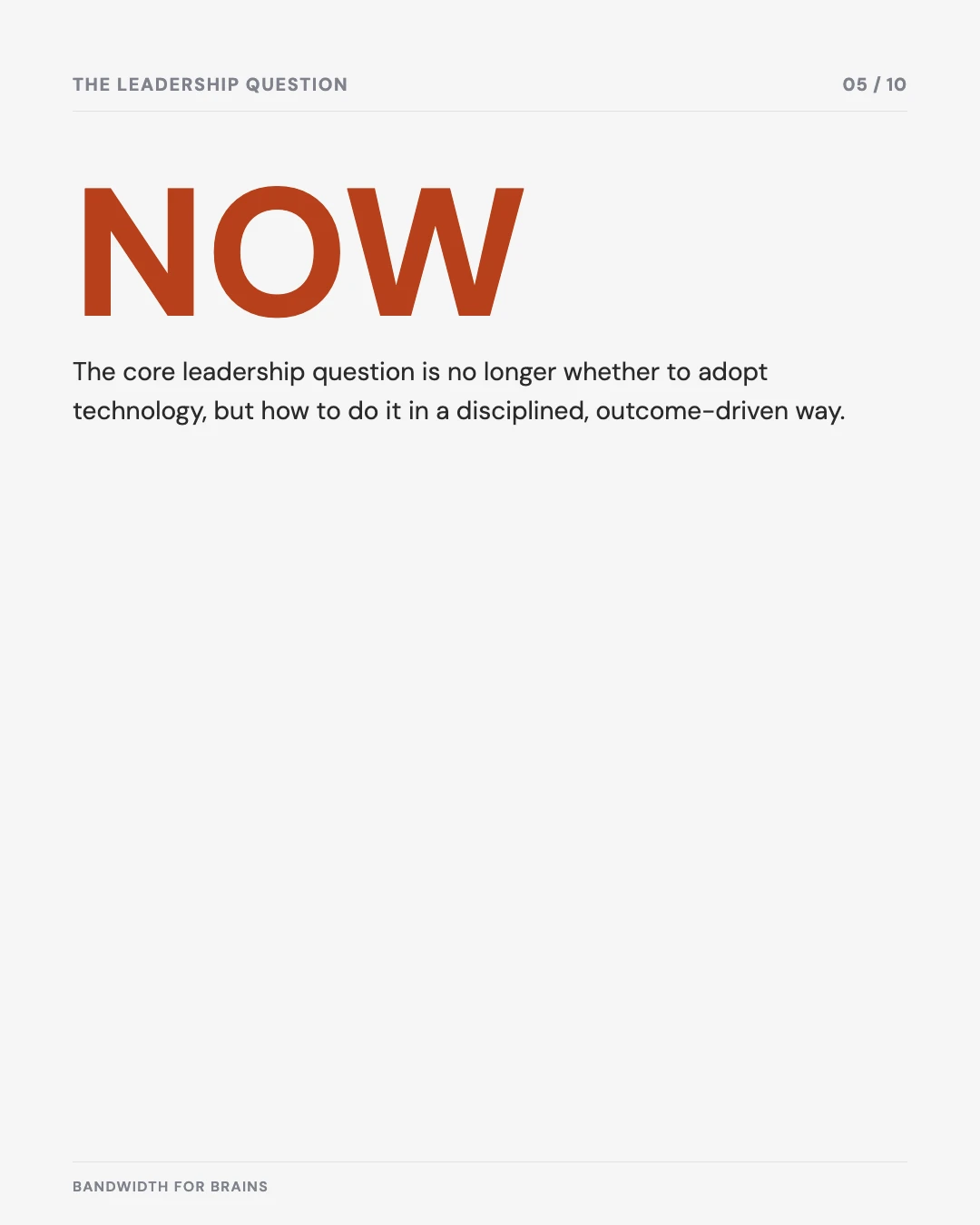
The core leadership question is no longer whether to adopt technology, but how to do it in a disciplined, outcome‑driven way.
- High‑performing organisations treat technology as an investment portfolio, with clear value theses, staged funding, and explicit accountability for delivery and adoption. That cadence question, whether the organisation itself can move as fast as the technology, is one I have written about separately: AI Moves in Months. Does Your Organisation?
- They pair platforms with skills, governance, and risk controls, recognising that value comes from embedding technology into everyday work rather than running isolated pilots.
As a result, an organisation’s future value will be shaped by its ability to continuously adopt and operationalise new technologies in ways that give people more bandwidth for creativity and innovation, not less.
Was this useful?