
Listen to this article
Executive Summary
Buying AI platforms and rolling out generic upskilling won’t keep HR strategically relevant. What matters is the human judgment to decide what stays human, how risk is governed, and how work gets redesigned.
Core conclusions
- Judgment is a muscle to be trained repeatedly, not a certification: sense-making, change comfort, experimentation, work redesign, and human accountability.
- Work redesign should start with the friction people actually experience, not with the tool, and must explicitly guard against single points of failure disguised as productivity.
- HR is the function responsible for deciding in advance where human oversight stays mandatory, rather than leaving that call to be made by default as AI systems scale.
The five muscles, in ten slides
Save it for your next HR leadership offsite, or send it to whoever owns the AI rollout.
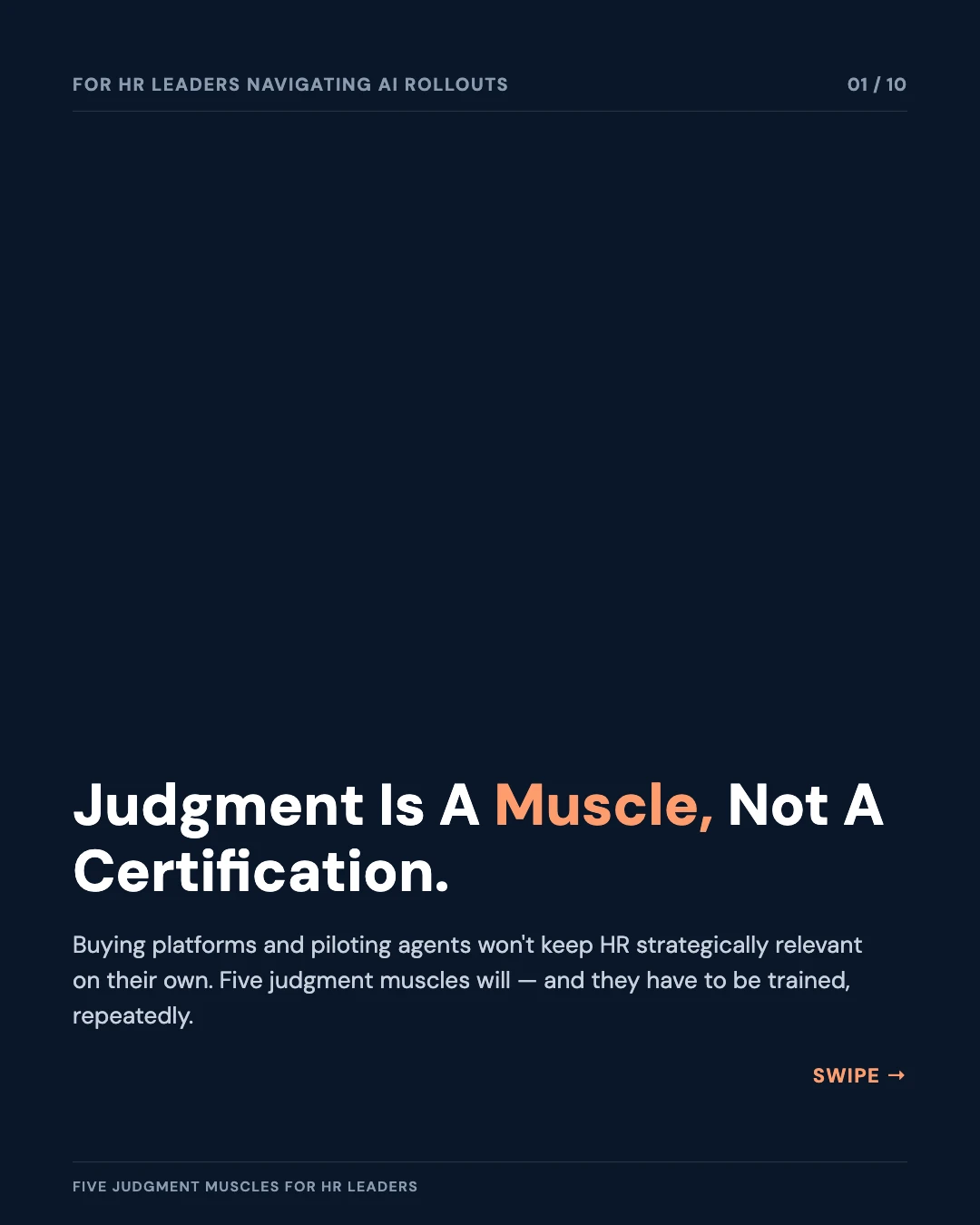
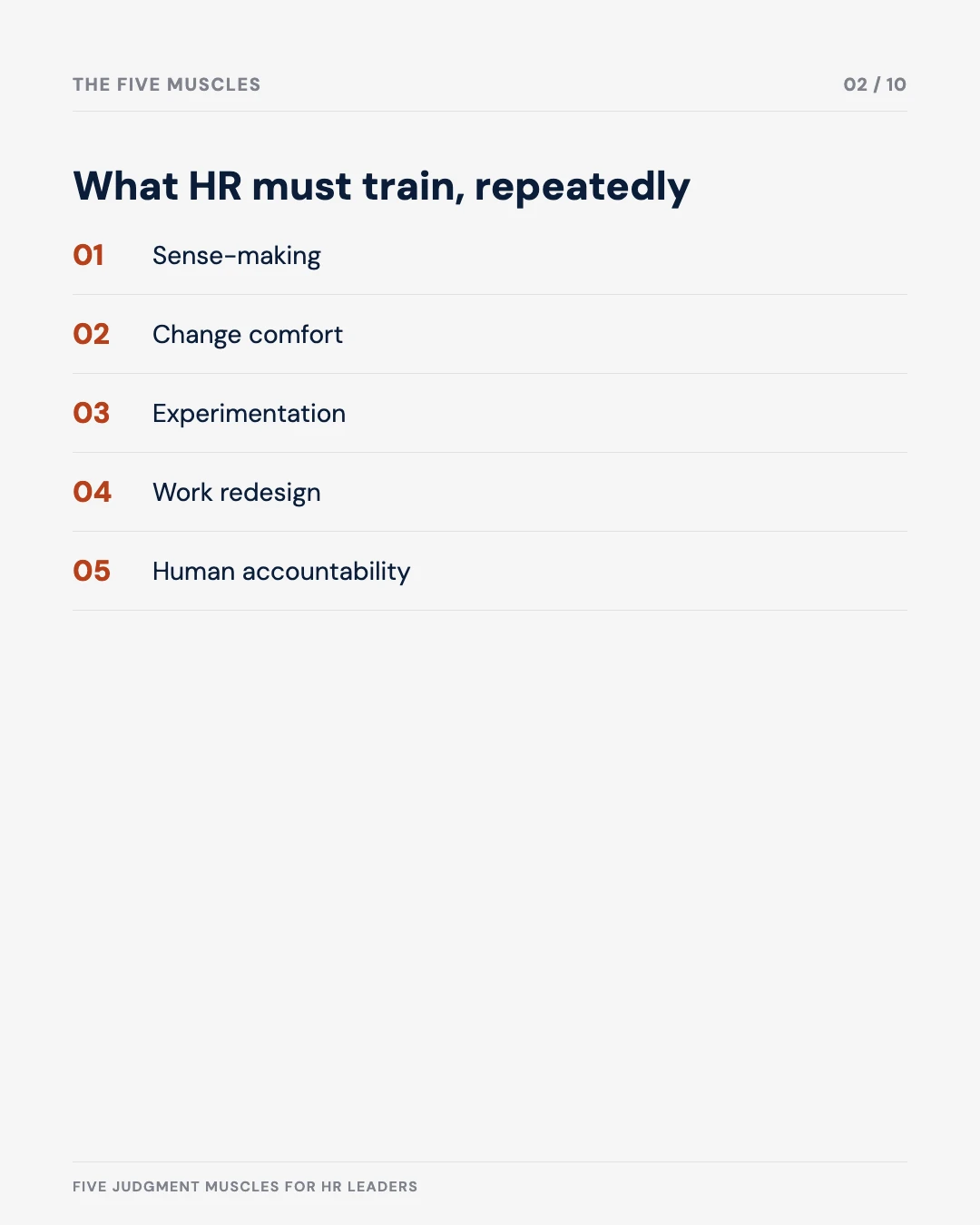
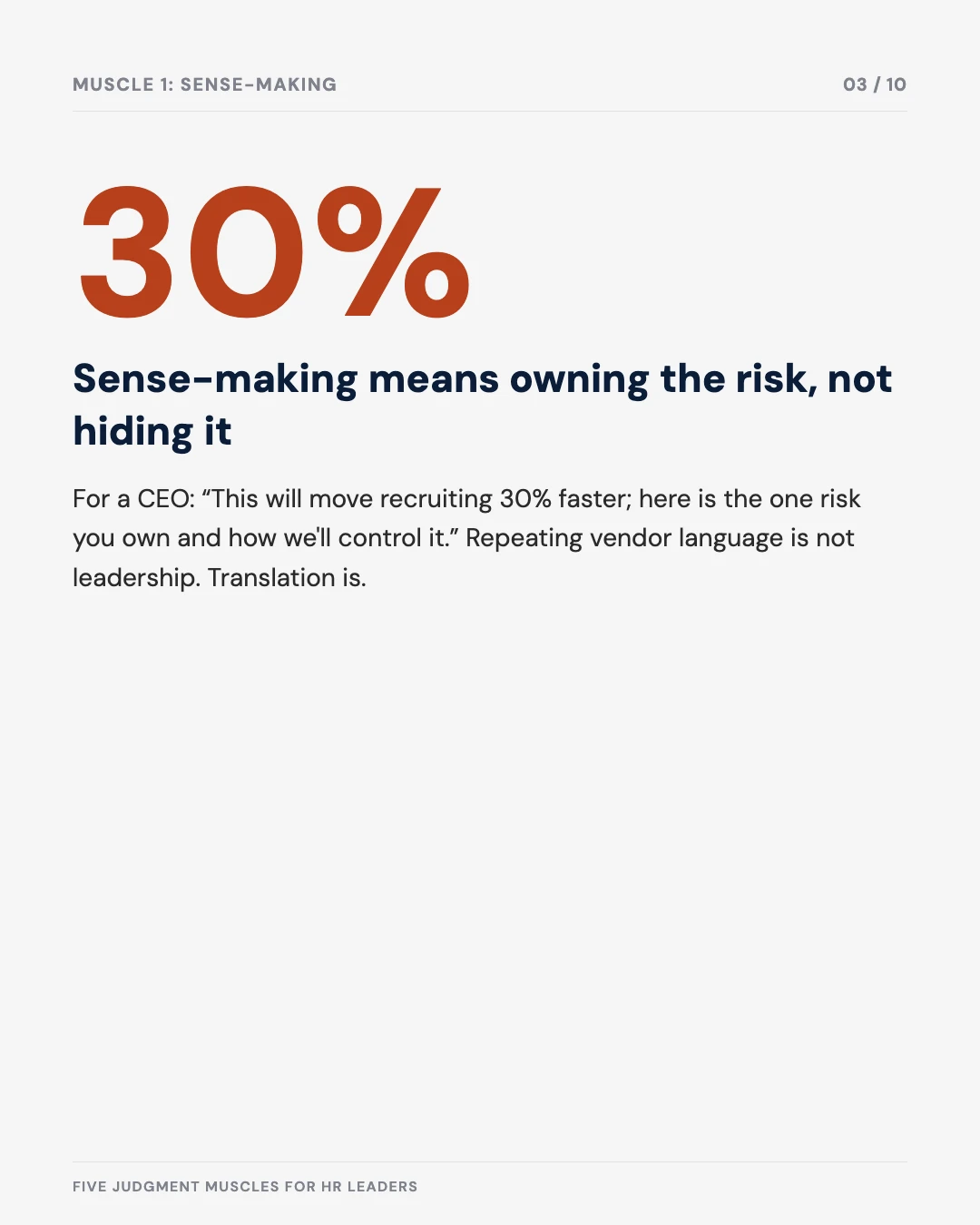
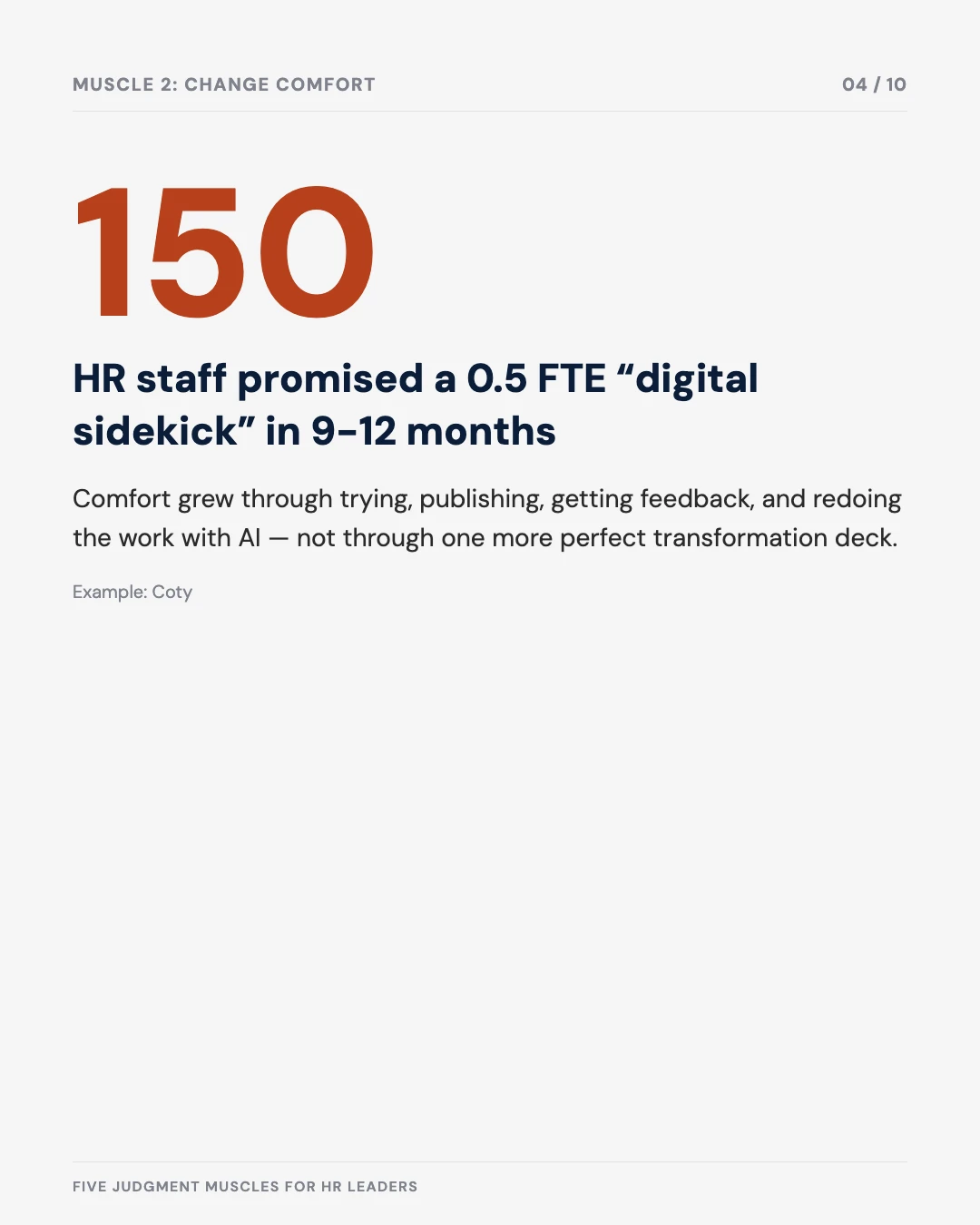
During InteracTech Asia 2026, HR leaders gathered to examine what it really takes to stay relevant in an AI‑driven workplace. I would like to share pivotal points from one of the keynote speakers, Ramya Balakrishnan COTY, VP Global Talent & Development, who touched on something critical.
From Tools to Judgment
Ramya argued that buying platforms, piloting agents, or rolling out generic upskilling programmes will not, by themselves, keep HR strategically relevant. What matters is the human capacity to decide what remains human, how risk is governed, and how organisations position themselves over the next decade as AI capabilities continue to shift.
Judgment was described as a “muscle” that must be trained repeatedly, not a one‑off certification or technology rollout. Five such muscles were highlighted: sense‑making, change comfort, experimentation, work redesign, and human accountability.
Judgment is a “muscle” that must be trained repeatedly, not a one‑off certification or technology rollout.
Muscle 1 – Sense‑making: translating AI for different stakeholders
Sense‑making is the discipline of translating AI facts into language that CEOs, CFOs, and frontline managers can act on. For CEOs, HR needs to frame AI in terms of strategic impact and a clearly owned risk, for example: “This will move recruiting 30% faster; here is the one risk you own and how we will control it.” For CFOs, the focus shifts to unit economics, showing before‑and‑after role costs, the underlying assumptions, and the “bet” required for the numbers to hold.
For frontline managers, sense‑making means explaining visible Monday‑morning changes: how AI might screen 100 CVs down to 2, how this reduces workload, and why manager judgment still governs the final hire. The lecture stressed that repeating vendor language is not leadership; effective translation is a prerequisite for alignment and real decision‑making across the organisation.
Muscle 2 – Change comfort: operating on shifting ground
The second muscle is becoming comfortable leading publicly while the ground shifts underfoot. Ramya described discarding several “perfect” transformation decks and making progress only after action preceded certainty. Practical programme elements included building a “digital sidekick,” creating a sandbox, and running focused training to encourage curiosity and visible experimentation.
An example from Coty illustrated this principle: around 150 HR staff were promised the equivalent of a “0.5 FTE digital sidekick” within 9–12 months by using Copilot to remove “not fun” tasks and reduce daily drudgery.
The initiative progressed in three phases: Basic Copilot use for email summaries and presentations, targeted function‑specific workflows led by “bright sparks,” and finally organisation‑level use cases in areas such as talent and succession planning, with senior leaders personally practising prompt writing and agent building. Comfort grew through a cycle of trying, publishing, receiving feedback, and redoing work with AI.
Muscle 3 – Experimentation: small bets, fast learning
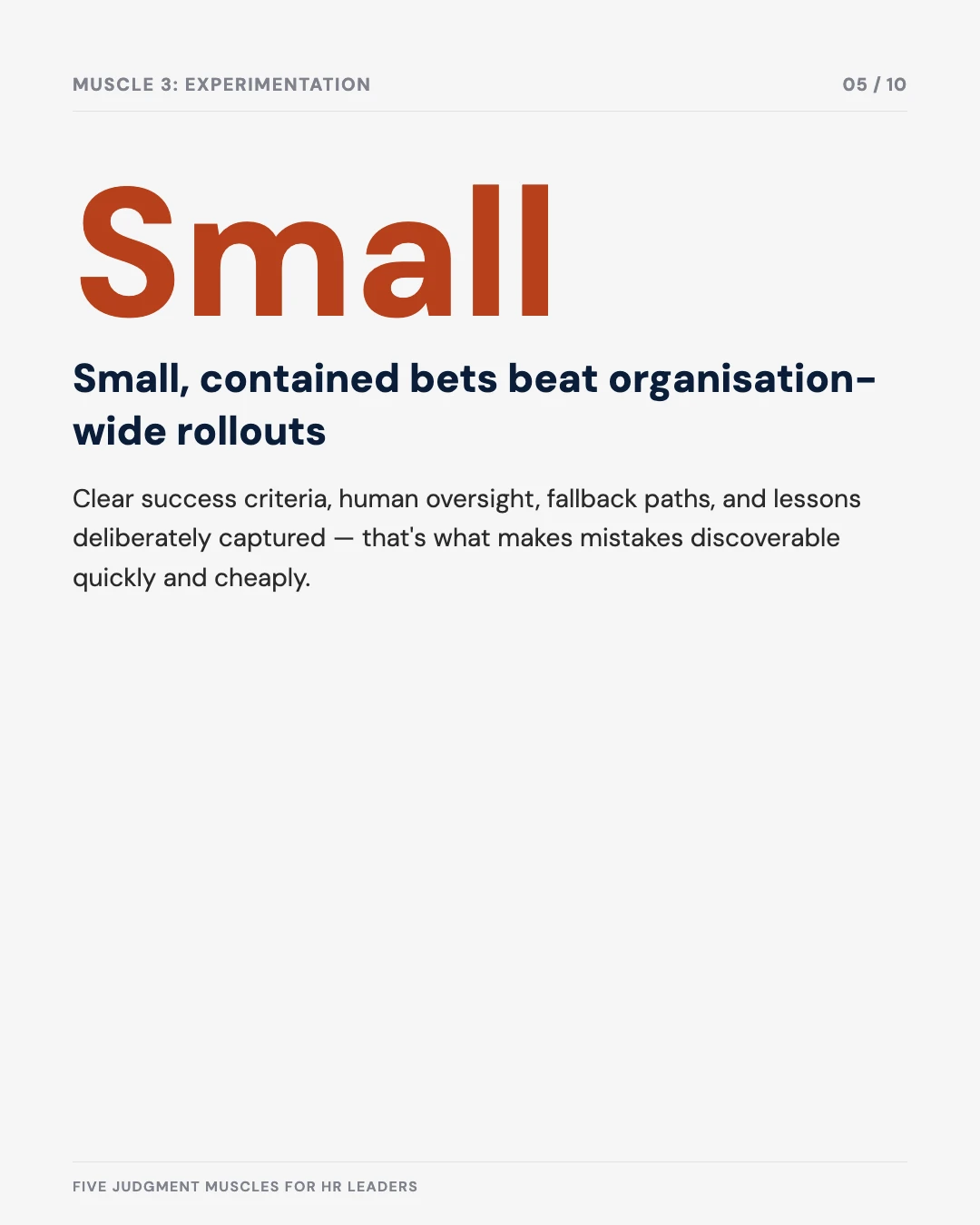
Experimentation was framed as a core HR leadership practice rather than a technical activity. Instead of high‑risk, organisation‑wide deployments, HR should sponsor small, contained tests that make mistakes discoverable quickly and cheaply. I have written more broadly about why that first small win matters so much for building genuine organisational curiosity. This includes setting clear success criteria, ensuring human oversight and fallback paths, and deliberately capturing lessons learned to inform broader adoption.
Muscle 4 – Work redesign: starting with people and problems
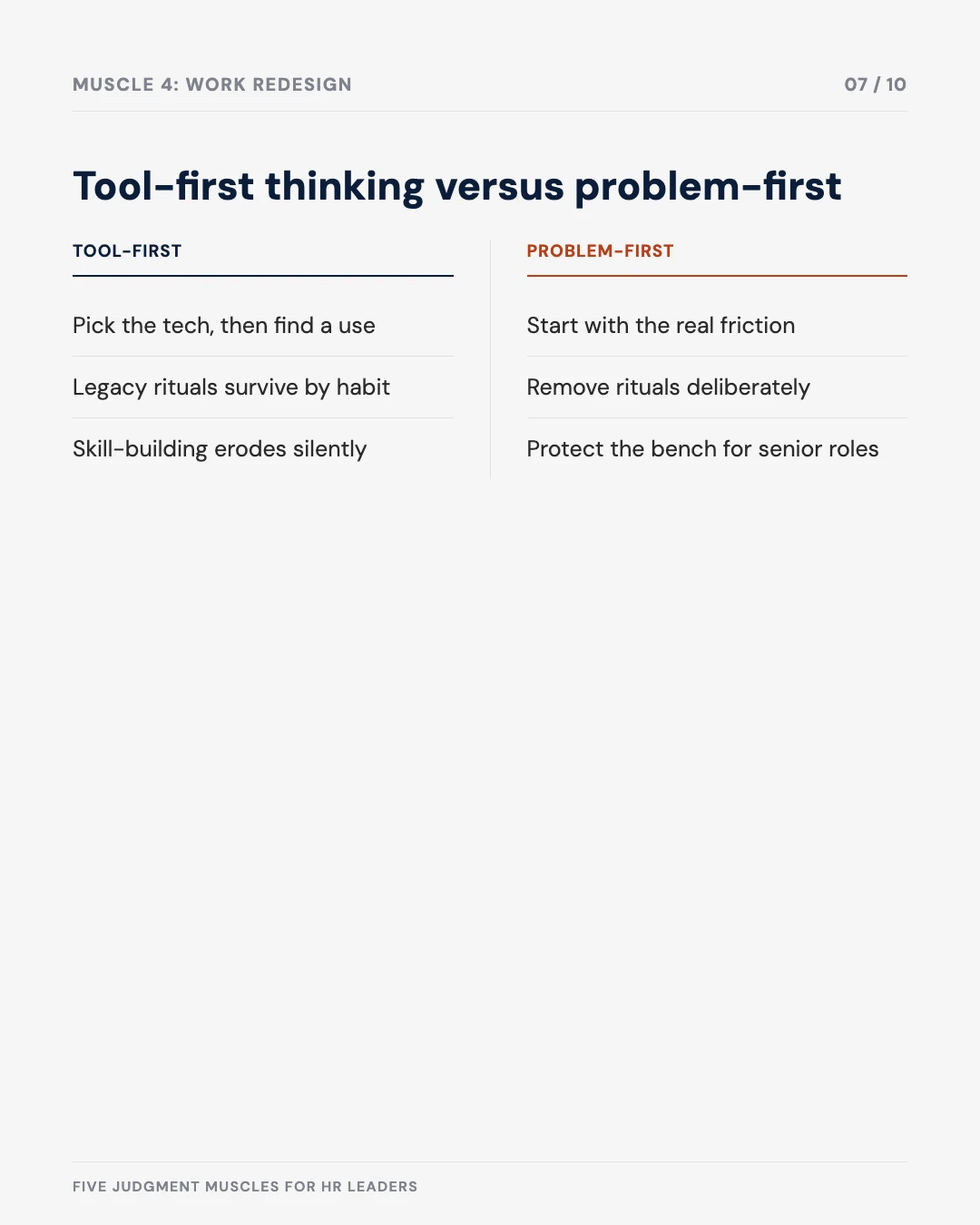
The fourth muscle requires HR to resist “tool‑first” thinking and begin with the friction that people experience in real workflows. Only after the problem and constraints are clear should the organisation select AI technologies. Three critical questions were proposed to guide AI‑enabled work redesign.
First, does AI actually make this easier, and if so, which legacy rituals can be removed rather than preserved out of habit?
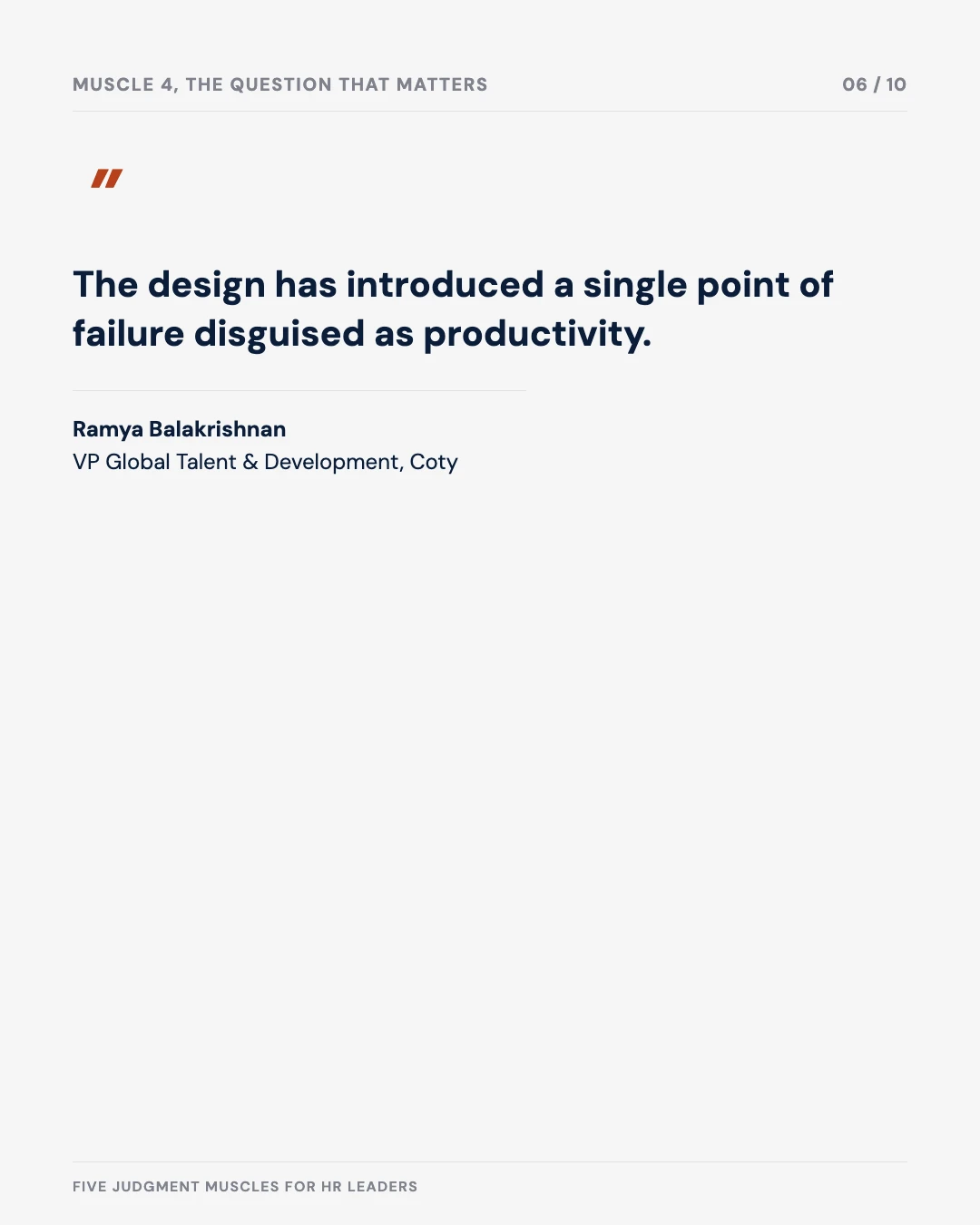
Second, does the solution create a dangerous dependence such that, if the model fails on Monday, no human can safely step in? If so, the design has introduced a single point of failure disguised as productivity.
The design has introduced a single point of failure disguised as productivity.
Third, does automation make the work impossible to learn, for example, when tasks that once built finance analysts’ capabilities over months are now completed in minutes, undermining the future bench for senior roles.
HR was positioned as the function that must “hold the fort” for learning, balancing the elimination of obsolete steps with safeguards for human oversight and skill development.
HR must “hold the fort” for learning, balancing the elimination of obsolete steps with safeguards for human oversight and skill development.
Muscle 5 – Human accountability: deciding what stays human
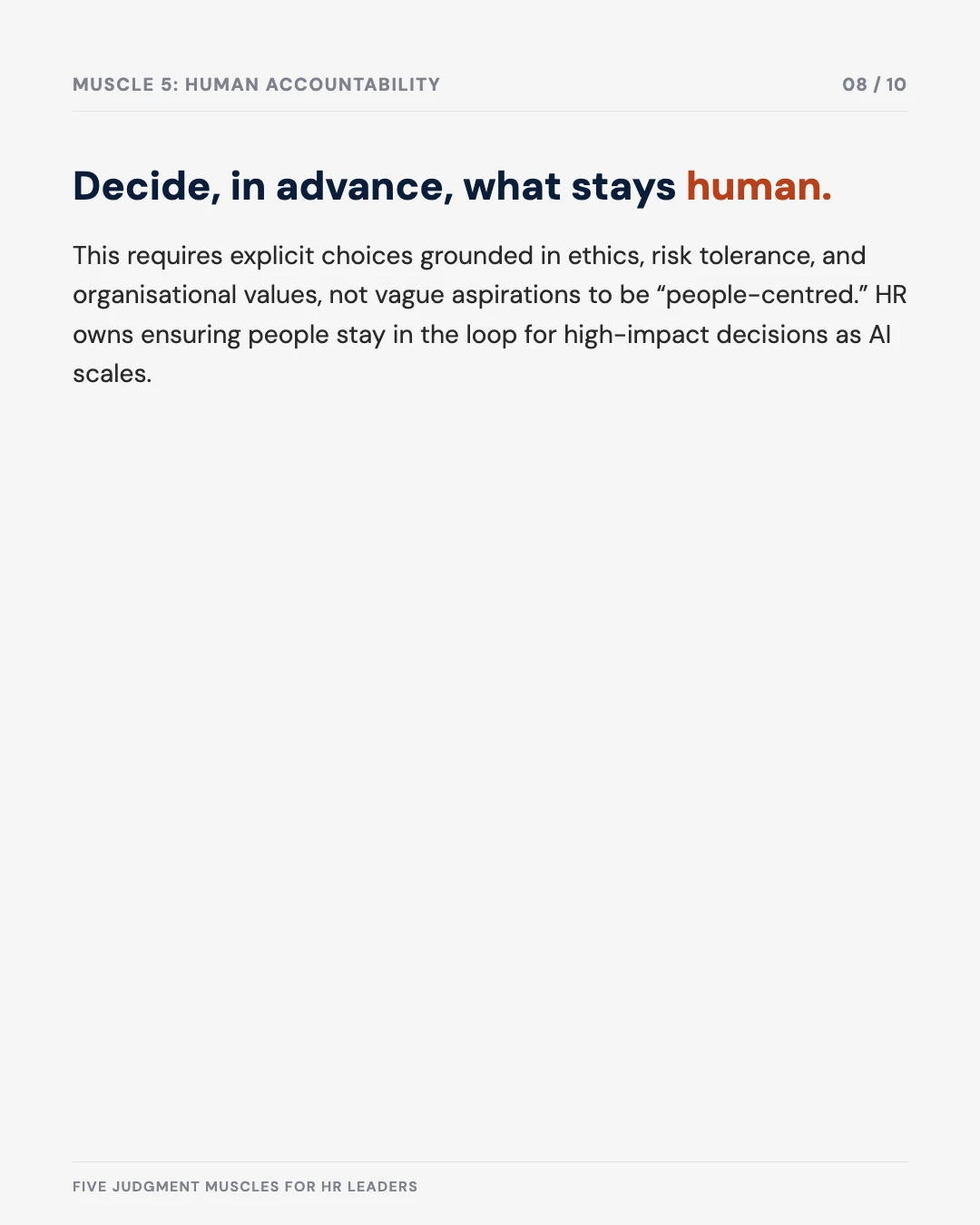
The final muscle is defining in advance where human oversight is mandatory and which decisions must remain human. This requires explicit choices grounded in ethics, risk tolerance, and organisational values, rather than vague aspirations to be “people‑centred.” HR was identified as the owner of this accountability, responsible for ensuring people remain in the loop for high‑impact or high‑risk decisions even as AI systems scale. This is the same design question I explore from an architecture angle in Redesigning Oversight Architectures.
Concrete actions for HR leaders
The session concluded with a direct call to action for HR professionals.
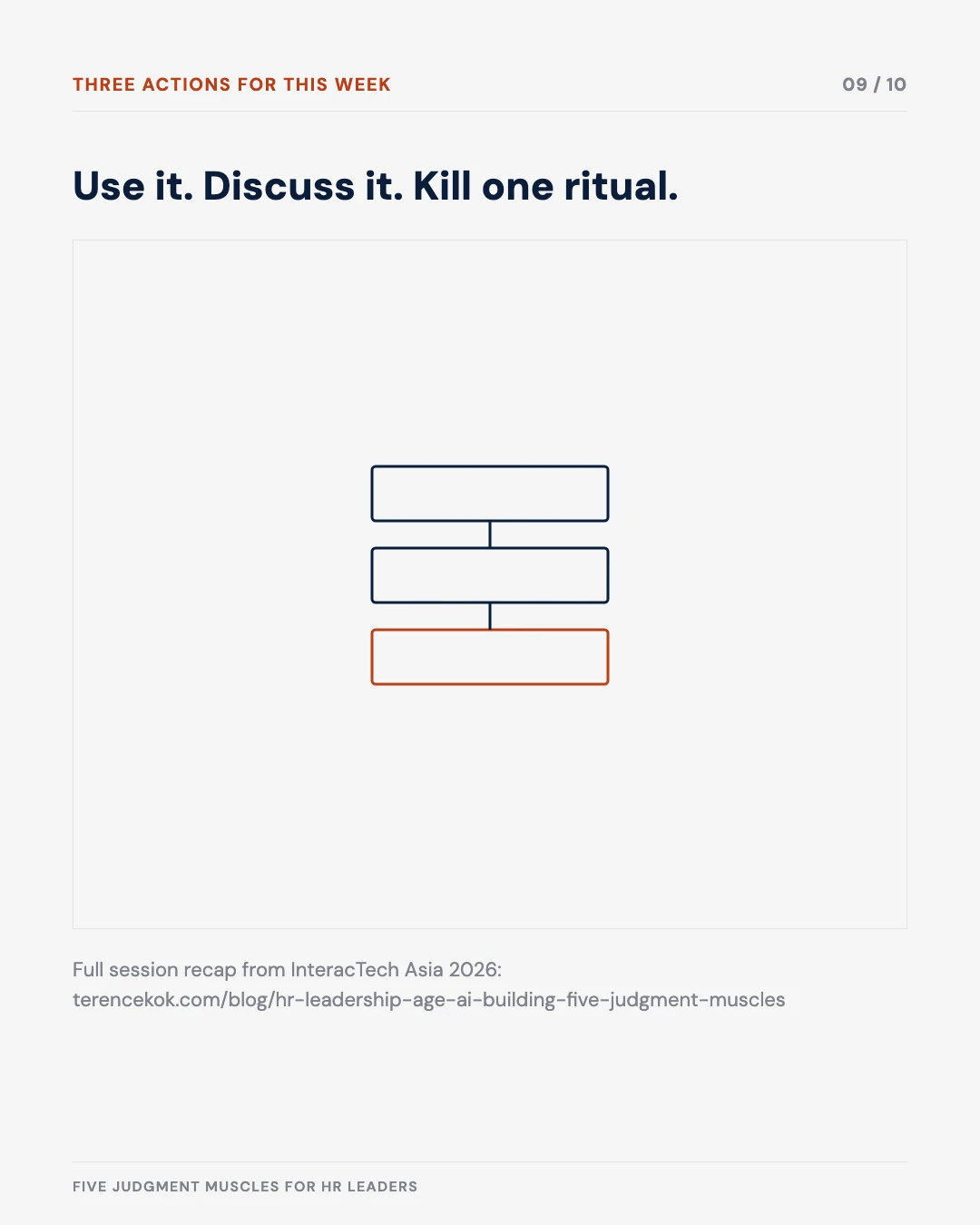
First, each participant was asked to use AI for a specific task, work or personal, to directly experience the efficiency and capability gains.
Second, they were encouraged to have an honest cross‑functional conversation about AI’s impact, translating it into the language of strategy and risk, unit economics, or near‑term operational changes for at least one partner function.
Third, HR teams were tasked with killing one ritual that AI has rendered obsolete, such as manual daily or weekly reporting, and replacing it with a sustainable automated workflow with appropriate safeguards.
In closing, sincere thanks to Ramya Balakrishnan for framing AI not as a tools conversation but as a judgment challenge, and for articulating the five “judgment muscles” with such clarity and practicality. Appreciation is also extended to Human Resources Online and panel speakers who created a forum where uncertainty could be acknowledged openly and where HR leaders are invited to act, learn, and refine their judgment in public.
Free tool
Human-AI Interaction & Decision Quality
Muscle 5 is about deciding in advance where human oversight stays mandatory — this benchmarks decision acceptance and automation bias so that call is evidence-based, not vague.
Was this useful?