Sultan Haitham City, Oman
Smart city technology strategy and infrastructure engineering for a 1,570-hectare greenfield city.
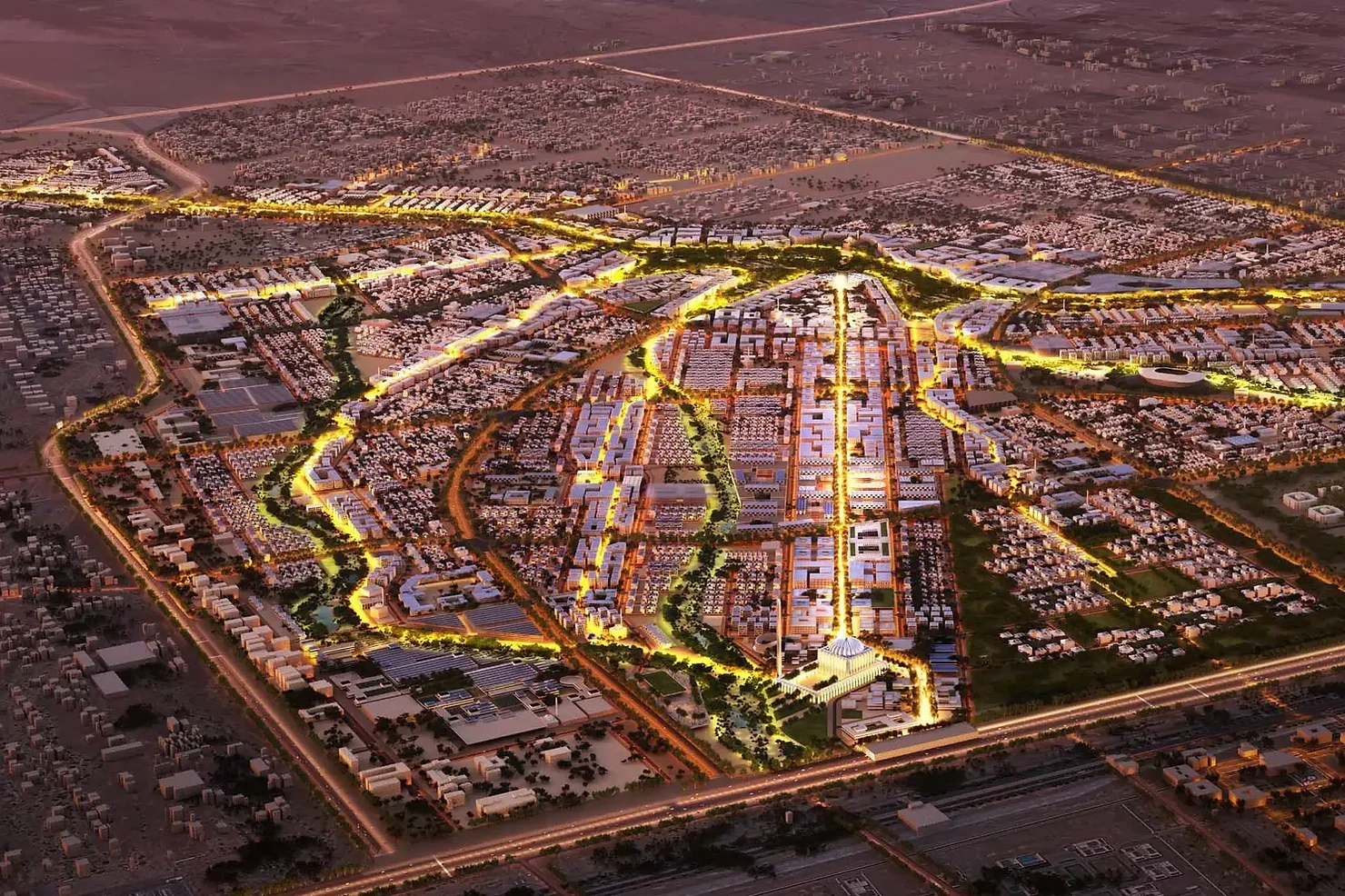
Led the smart city infrastructure engineering workstream for Sultan Haitham City, a 1,570-hectare greenfield development designed as Oman's new national capital. Defined the technology architecture across smart mobility, utilities, ICT backbone, environmental monitoring, and integrated city services. Developed the vendor evaluation framework and technology procurement baselines for infrastructure systems covering the full city lifecycle from construction phase through full operations.
Sultan Haitham City required a coherent smart city technology strategy before any infrastructure procurement could begin. With a 1,570-hectare greenfield site and a national mandate, the technology architecture needed to cover mobility, utilities, digital connectivity, environmental monitoring, and city operations, with procurement-ready specifications and a framework for vendor selection across each domain.
Led the smart city systems design across the full technology stack: mobility and traffic management, utility SCADA integration, ICT backbone and connectivity, environmental sensor networks, and the integrated city operating model. Developed the domain-by-domain technology baselines, vendor evaluation criteria, and integration architecture specifications. Coordinated across engineering disciplines to ensure the technology strategy aligned with civil and structural planning stages.
Smart city technology masterplan delivered as the procurement baseline for Sultan Haitham City infrastructure. Vendor evaluation frameworks adopted by the client for technology partner selection across each domain. Integrated city operating model aligned with the national ICT strategy and handed over to the client's operations team ahead of the city's transition into service.
Designing a city-scale technology strategy from a blank slate is the same challenge any growing business faces when planning its infrastructure: the systems you choose in year one determine what becomes possible (or impossible) in year five. The same vendor evaluation framework, integration design decisions, and lifecycle cost models apply whether you are specifying city-scale ICT or choosing your next business platform.
Smart City Technology Architecture Framework
The domain-by-domain technology architecture used for Sultan Haitham City: how to structure a multi-domain smart city technology strategy covering mobility, utilities, ICT backbone, environmental monitoring, and integrated operations. Includes the vendor evaluation framework, integration architecture principles, and the decision sequence for building procurement-ready specifications across each smart city domain.
Kok, T. (2026). Sultan Haitham City, Oman [Case study]. terencekok.com. https://terencekok.com/projects/sultan-haitham-city/
The same diagnostic logic from deployments like this one, applied to your business in half a day.
Book the WorkshopDiscuss a similar programme- Sultan Haitham City: 1,570-hectare greenfield development designated as the future capital of the Sultanate of Oman
- Employer testimonial letter from Meinhardt SUIT Pte Ltd (Managing Director, July 2025) naming this project available to procurement teams on request; not published online
- Employer testimonial letter from Meinhardt (Singapore) Pte Ltd (Group Director, December 2022) naming this project available to procurement teams on request; not published online
Other case studies.
 Operations & Security
Sultan Haitham City IOCC, Oman
City-scale integrated operations control for a new urban development.
Read case study → Enterprise AI
AI-Enabled Enterprise Operations Platform
Unified ERP bringing project management, finance, HR, and real-time BI into one environment.
Read case study → Infrastructure
DIFC Enterprise Campus Network Design Review
Independent peer review establishing the technical baseline for DIFC 2.0 network infrastructure.
Read case study →
Bare desert doesn't hand you an existing city's systems to borrow from, so a national capital built there means arguing every mobility, utility, and connectivity decision from first principles, with engineers from half a dozen disciplines in the same room. The vendor evaluation sessions ran late more than once because nobody wanted to be the one who picked wrong on a fifty-year asset. That care is why the framework became the client's own procurement standard rather than staying my document.
