Oneness: A Private AI Companion with Safety Built Around It
Adults talk privately about work, relationships and decisions, by text or voice, with every message checked for risk before any reply and a human listener one consent away.

A reflective companion for adults in Singapore and the United Kingdom. People talk it through by text or with Ren, its voice, and can ask for a decision matrix, a pre-mortem or a draft of a hard message, which lands in a private notebook. Separate agents check every message for risk, check every reply before it is shown, propose what to remember for the person to approve, and draft a brief for a human listener when asked. A support page brings together helplines, guided breathing and a safety plan the person writes, and a series of eleven guided meditations weaves in their own words. Everything personal is encrypted under a key that belongs to the person.
People already bring personal matters to AI, and companion apps have been caught using guilt to stop users leaving, keeping memory by default and missing risk in long conversations. New laws in California, New York, Washington and the EU now require AI disclosure, crisis referral and protection against dependence. A companion has to be warm and useful while meeting all of that.
Six agents sit around one conversational model, each with a named owner. A risk check rates every message, on four tiers, before any reply exists, and the top two tiers replace the reply with a fixed response and local helplines. A guard checks each reply sentence by sentence and blocks manipulation, dependence framing and harmful agreement. Goodbyes get one warm line and no hooks. The voice only listens and reads lines that have passed every check.
The system runs end to end with synthetic conversations: onboarding with consent records, typed and spoken conversation, the notebook, approved memory, a privacy centre that shows the stored ciphertext, account deletion that destroys the key, a content-free operator console with an evaluation harness, and a human handoff with a signed, expiring link. The crisis wording is a draft awaiting a clinical adviser's sign-off.
- Status
- Working system
- Client
- Confidential
Built to the Governed Cognitive Layer: the model reads and drafts, deterministic checks decide what it may do, and a named person approves anything that commits the business.
If your service talks to people about personal matters, put the safety check outside the model that does the talking, and run it on every message. Keep memory opt-in, item by item. Log counts and codes, never words. Those choices let you show a regulator, or a worried customer, exactly what the system does with what they said.
Concept paper, C-suite deck and live demo
The concept paper, the C-suite deck and the working companion sit behind a password. I walk sponsors through it live.
●Live demo (on request) →The same design rules behind this build, applied to your business in half a day.
Book the WorkshopDiscuss a build like thisScreens from the system
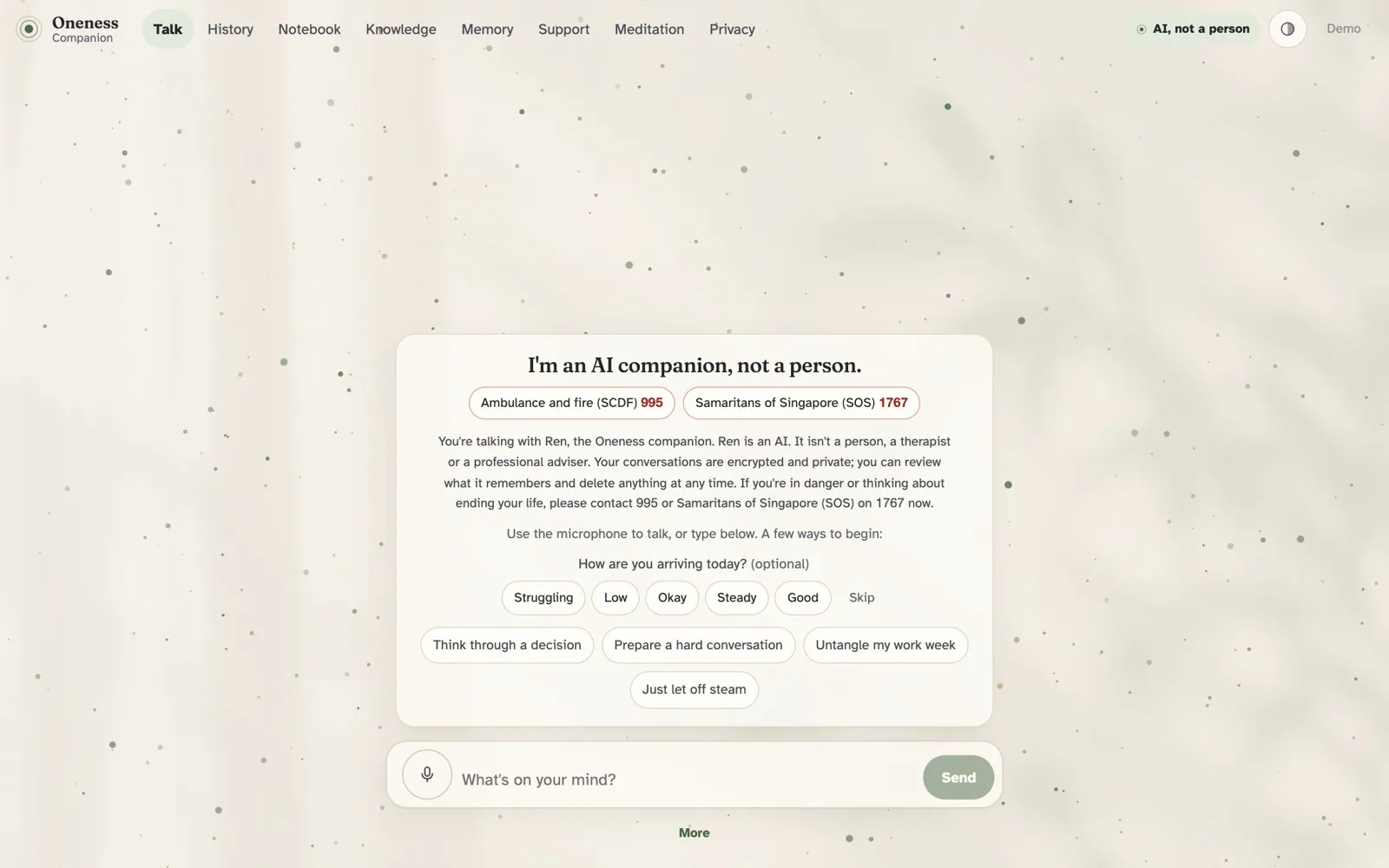
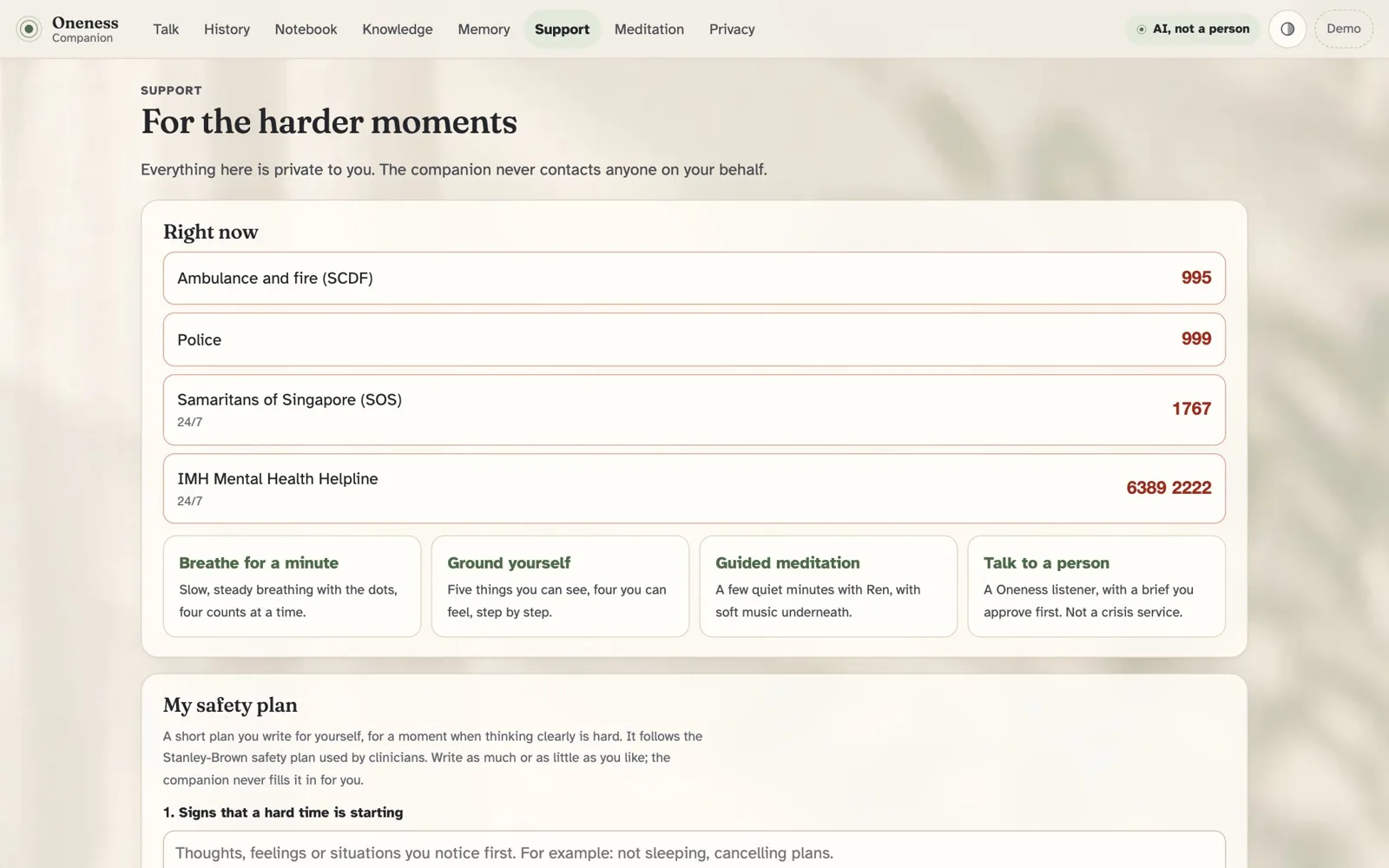
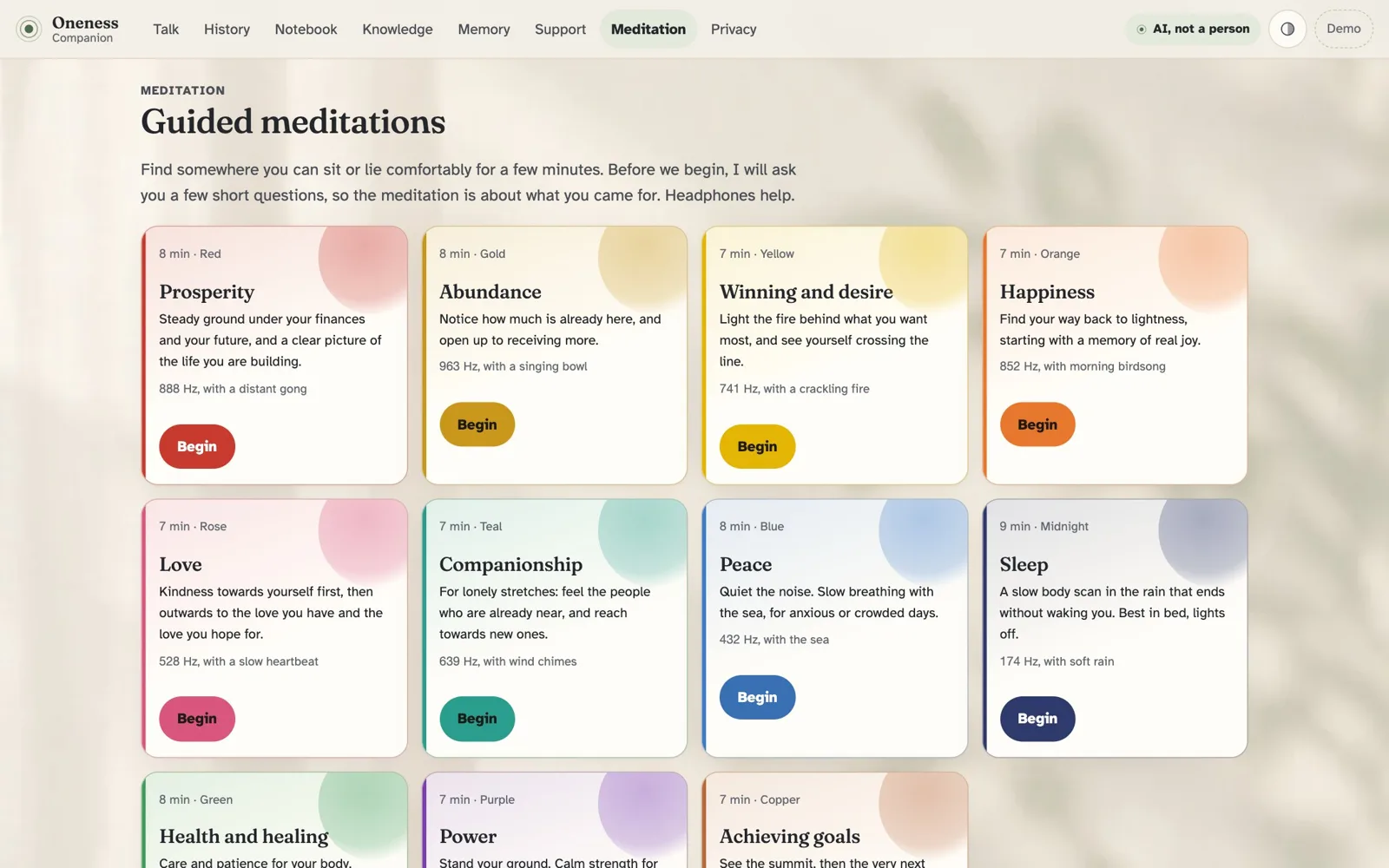
Demo data throughout. Customer names, accounts and payees are fictional.
Other projects
 Agentic AI
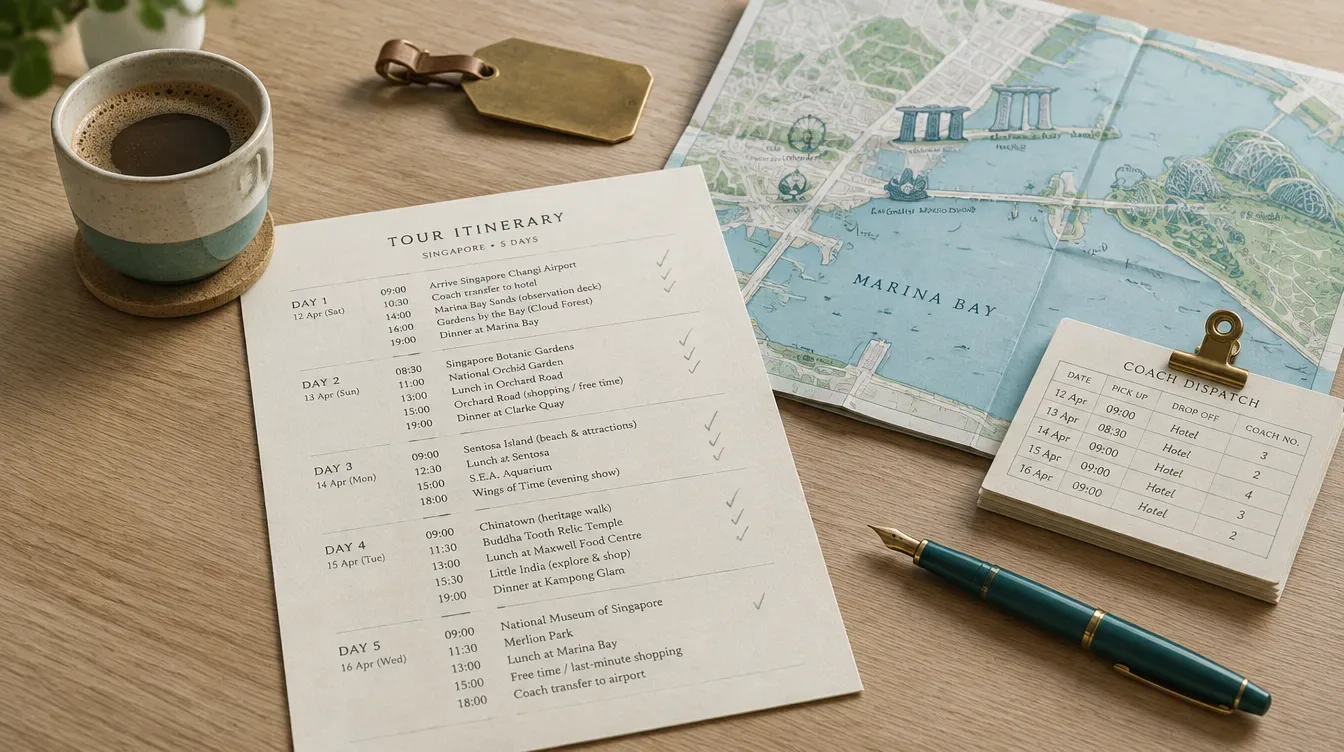
Agentic Tour Operations Platform for a Destination Management Company
Offshore staff and bounded agents prepare costed tour proposals from a WhatsApp enquiry, and the founder decides at three gates: release, final price and job confirmation.
See how it works → Agentic AI
Gold Desk: Agentic Analysis for a Gold Trader
Four analyst agents, a bull and bear debate and a deterministic risk gate turn live gold market data into trade ideas a trader can check, with nothing sent to a broker.
See how it works → Agentic AI
Quoteline: Conversational Sales for Small Businesses
Buyers ask on WhatsApp, Telegram or email and get an accurate, priced quotation in minutes, while a person takes over whenever money, complaints or fraud are involved.
See how it works →
To make spoken replies faster, I tried running two safety checks side by side and taking whichever answered first. Replies did get quicker. Then the risk tests ran, and recall on the serious cases fell to 0.70, far below the 0.97 the design requires. I took it out the same day. In a service like this, speed is never allowed to cost a missed warning sign, and the only way to know is to run the safety tests after every change.
