Agentic Tour Operations Platform for a Destination Management Company
Offshore staff and bounded agents prepare costed tour proposals from a WhatsApp enquiry, and the founder decides at three gates: release, final price and job confirmation.
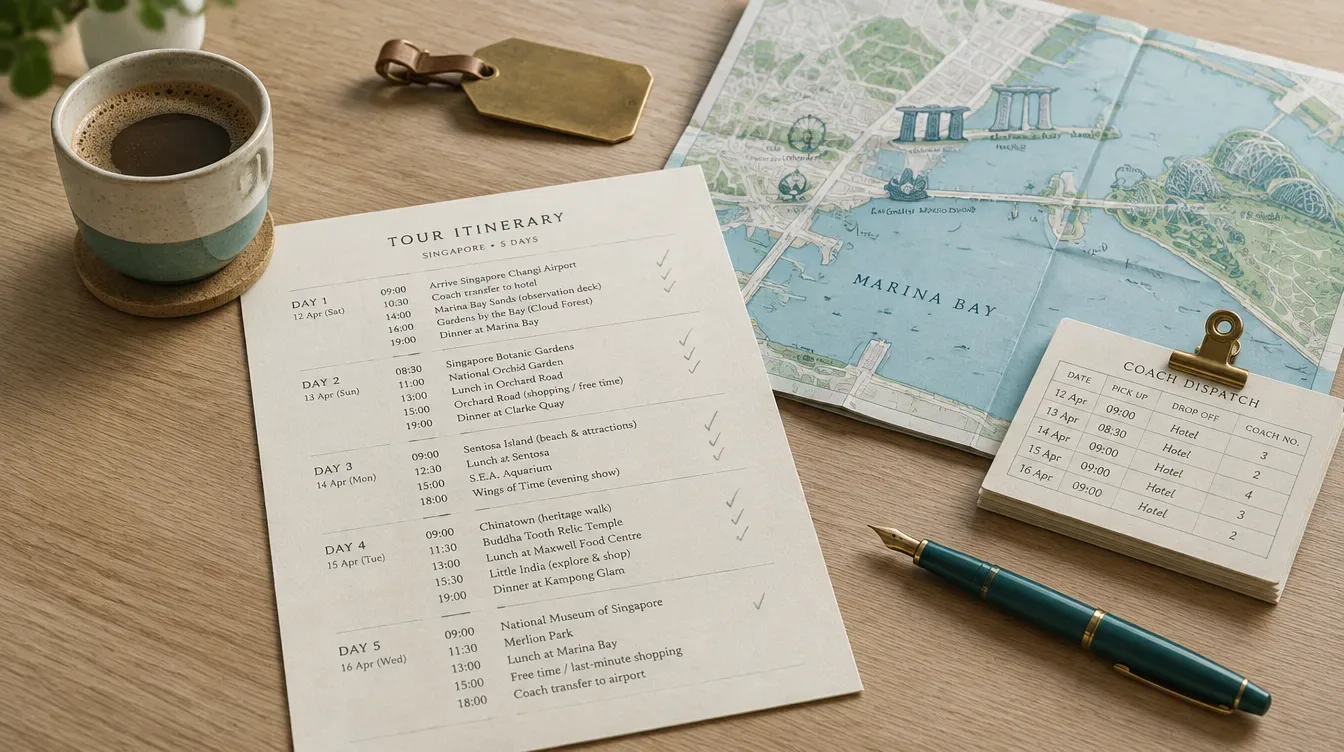
A planning, pricing and operations platform for a Singapore inbound tour and corporate-programme operator. Enquiries arrive on WhatsApp and email; agents extract the facts, draft the itinerary from approved blocks and check it; staff complete typed order forms; the founder releases the quotation, sets the final price and confirms the job. Clients review and accept on a portal with each day drawn on a map, vendors acknowledge job sheets from a link, and a dispatch board runs the day.
The founder designs, prices and resources every trip from memory, and about 90% of clients come by referral and expect a customised programme. A proposal takes him about an hour and his staff in India two to three. His time is the limit on how much business the company can take.
A deterministic workflow owns all 14 trip states; agents are refused on every transition. A pricing engine works in exact fractions with a floor that needs a typed reason. Money tables are read through a role projection, so offshore staff never see cost or margin. Seven agents draft and check inside bounded steps, each with a named owner and a kill switch, and every action lands in a hash-chained audit trail.
The system runs end to end for a fictional operator with 13 seeded trips, each driven through the real guards. It is covered by 107 unit tests and 48 end-to-end checks, and live evaluations refuse every prompt-injection case. Building it surfaced twelve points where the source documents disagreed or left a gap, each resolved toward more human control.
- Status
- Working system
- Client
- Confidential
Built to the Governed Cognitive Layer: the model reads and drafts, deterministic checks decide what it may do, and a named person approves anything that commits the business.
If one person holds the know-how, write it down as rules and blocks the system can reuse, and keep that person at the few decisions that commit money. Let code own every price and every state change, so the agents can draft and check without ever being able to promise anything.
Requirements evaluation, C-suite deck and live demo
The requirements evaluation, the C-suite deck and the working platform sit behind a password. I walk operators through it live.
●Live demo (on request) →The same design rules behind this build, applied to your business in half a day.
Book the WorkshopDiscuss a build like thisScreens from the system
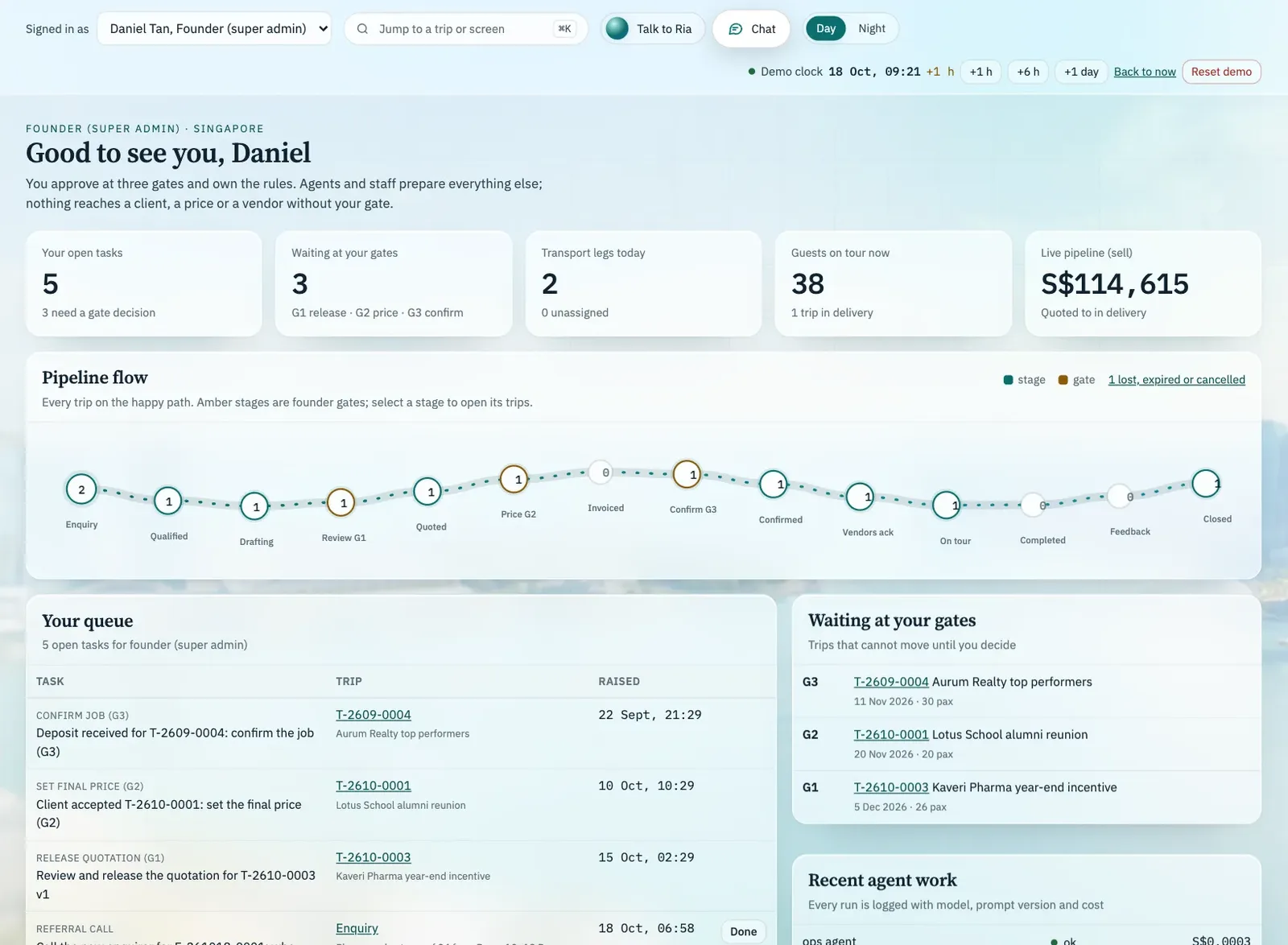
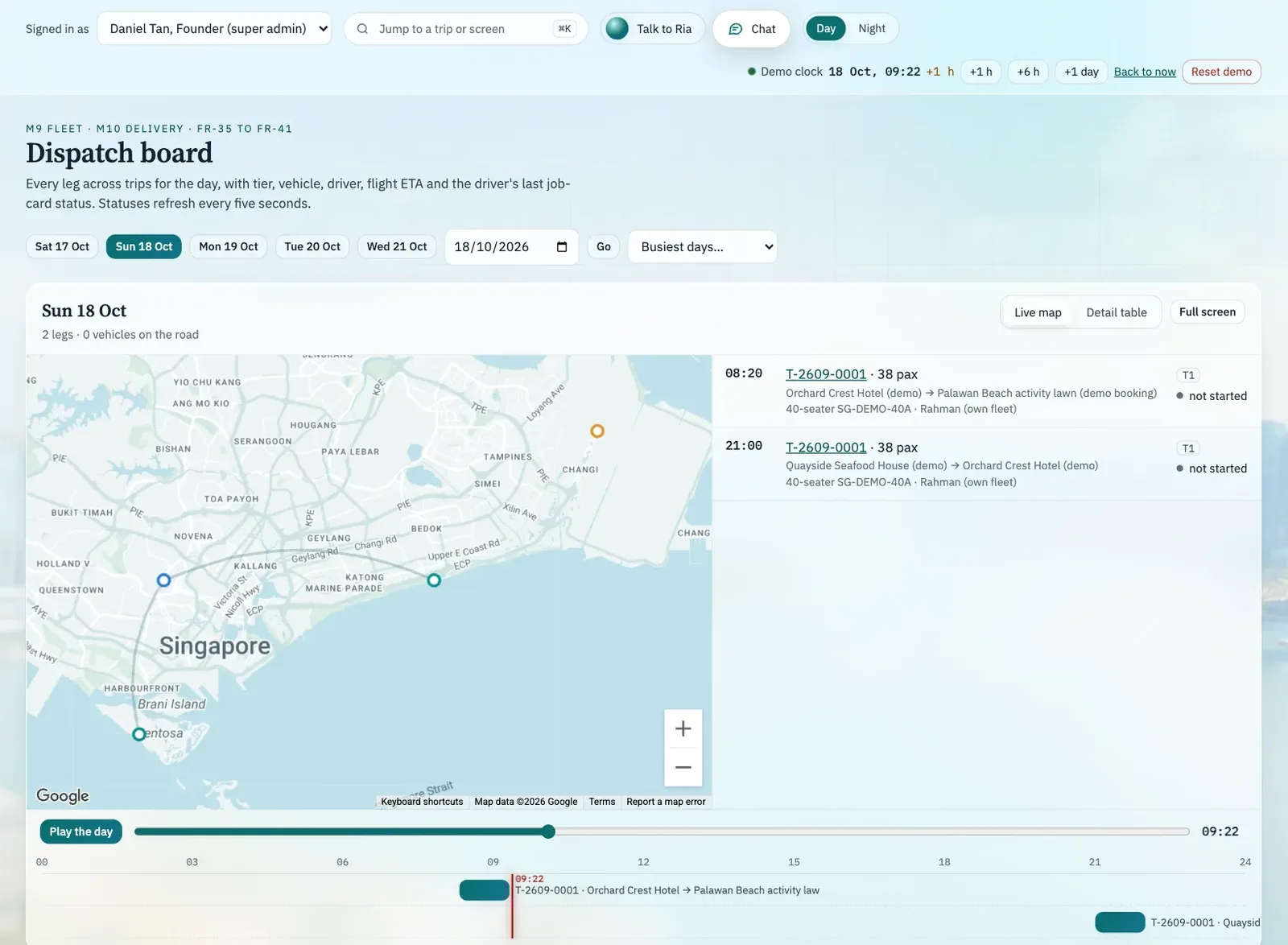
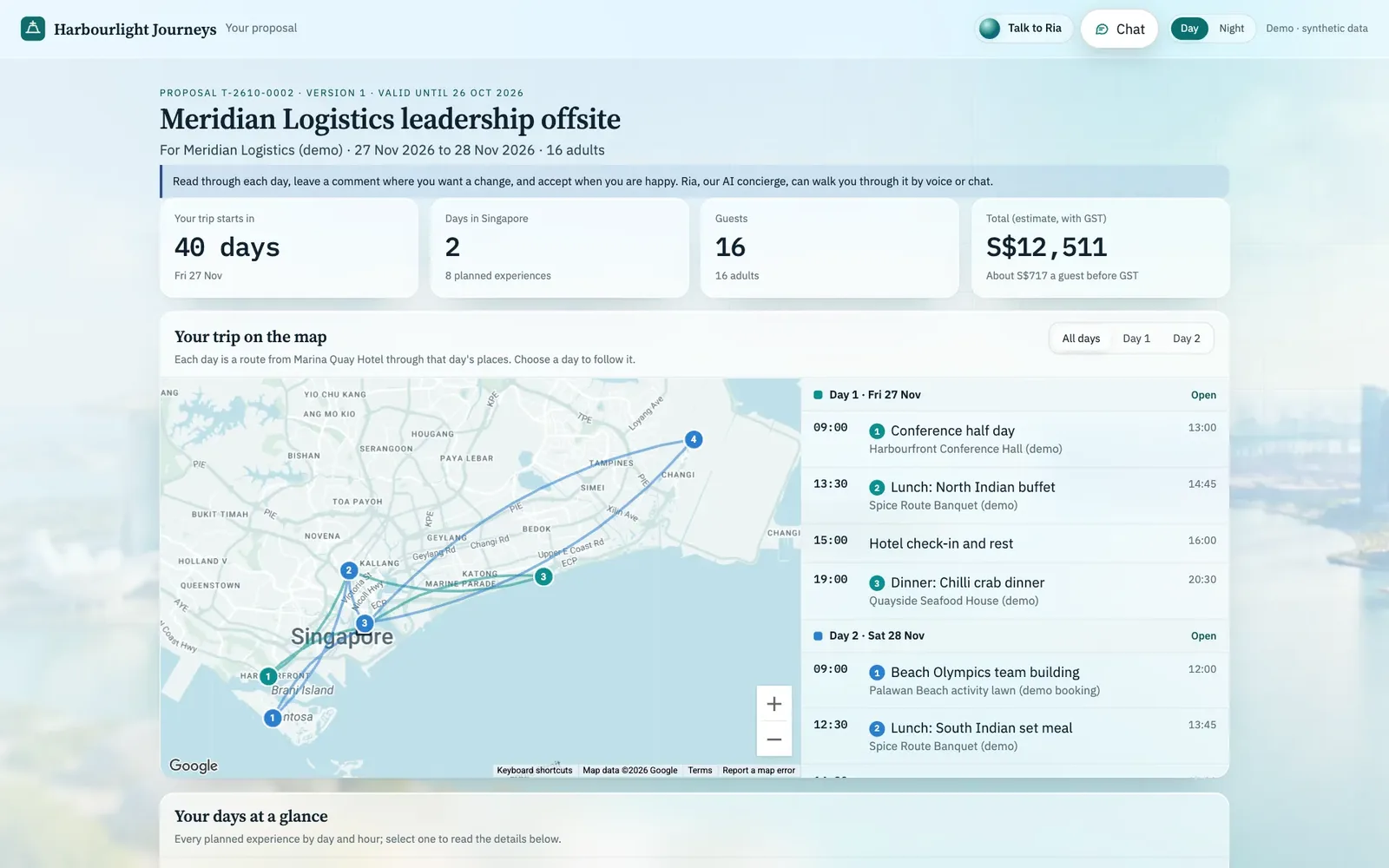
Demo data throughout. Customer names, accounts and payees are fictional.
Other projects
 Agentic AI
Gold Desk: Agentic Analysis for a Gold Trader
Four analyst agents, a bull and bear debate and a deterministic risk gate turn live gold market data into trade ideas a trader can check, with nothing sent to a broker.
See how it works → Agentic AI
Quoteline: Conversational Sales for Small Businesses
Buyers ask on WhatsApp, Telegram or email and get an accurate, priced quotation in minutes, while a person takes over whenever money, complaints or fraud are involved.
See how it works → Agentic AI
Project Forecourt PWP: Agentic Offers at the Fuel Pump
While a driver fuels, the pump screen offers one store item at a purchase-with-purchase price, and the fuel transaction is left exactly as it is.
See how it works →
The specification set the minimum price as cost plus 12% and called it a 12% margin. It is a 12% markup, which is a 10.7% margin on the price. The test vectors fixed the formula, so I built it as written and made the margin panel show the true figure. A founder who believes every discounted deal keeps 12% would be wrong on every one of them. I only found it because the code had to agree with the numbers to the cent.
