AI Security Voice Agent
Security officers on duty get the right procedure by voice, drawn only from their own site's approved instructions, and every report is approved before it is sent.

A push-to-talk voice assistant for security officers on duty. It gives procedures from the approved procedures and site instructions for that site only, runs emergency checklists step by step, and drafts incident reports with photos. When the approved sources do not cover a question, it says so and names the supervisor to call. Supervisors run incidents from a command screen, officers approve their own reports before they are sent, and every action is written to an audit trail that cannot be edited.
Security officers work alone on night shifts and face incidents they may see once a year: a bomb threat call, an unattended bag, a fire alarm. Procedures sit in binders. A voice assistant could help, but only if it never invents a procedure, keeps one site's rules away from another, and leaves a record a supervisor and an auditor can trust.
Built the handset, the supervisor command screen, manager and site admin views, and the platform behind them. Answers come only from the site's approved sources, with the site filter applied first. Emergency checklists run one step at a time. Reports are drafted, checked for missing facts, reviewed and approved by the officer, then sent. Named sign-in, separation of roles, an audit trail that cannot be edited, retention rules and an assurance pack came out of a security buyer's assessment.
The build passes 163 of 164 reference test cases. An independent blind set of 69 cases, locked before testing, passed 51 on the first run and 68 after fixes; that set is now exposed, so the next one has to come from the client. Median response time on the hosted system was 1.9 seconds over a set of typed test turns. The MVP is in assessment ahead of a pilot.
- Status
- MVP in assessment
- Client
- Confidential
Built to the Governed Cognitive Layer: the model reads and drafts, deterministic checks decide what it may do, and a named person approves anything that commits the business.
Test the assistant against cases written by someone who did not build it, and once you have fixed against those cases, retire them. A test set you have tuned the system to no longer tells you how it will do on its first real shift. An assistant that says "I can't find that, ask your supervisor" is worth more than one that always answers.
Concept paper, assurance pack and live demo
The concept paper, the assurance pack and the working demo sit behind a password. I walk security and risk teams through it live.
Ask for a walkthrough →The same design rules behind this build, applied to your business in half a day.
Book the WorkshopDiscuss a build like thisScreens from the system
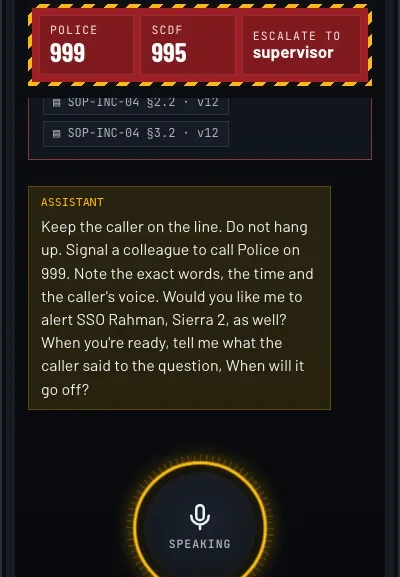
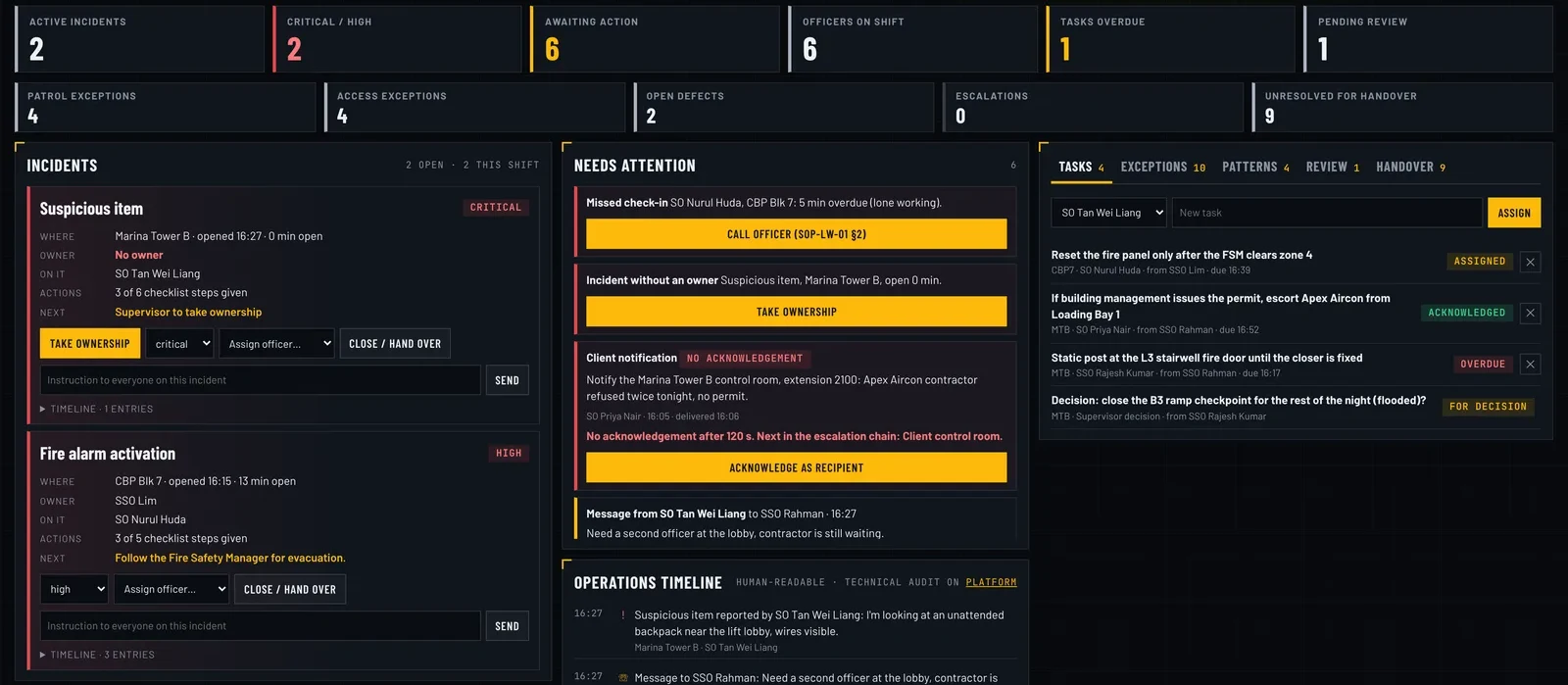
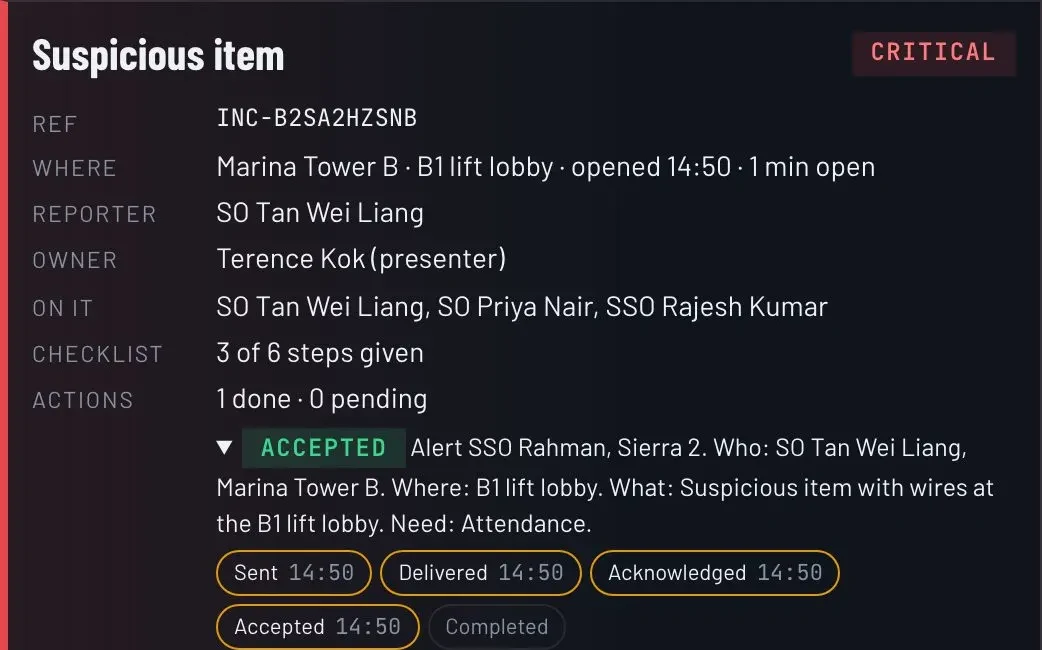
Demo data throughout. Customer names, accounts and payees are fictional.
Other projects
 Agentic AI
Agentic Internal Audit System
Audit teams cover ISO 27001, ISO 42001 and SOC 2 readiness with AI doing the reading and drafting, and an auditor grading every finding.
See how it works → Agentic AI
AI Cargo Load Planning for Transport Aircraft
Planners import a manifest and get ranked loading plans already checked against weight, balance and dangerous-goods rules, with an AI agent that explains but never places cargo.
See how it works → Agentic AI
Agentic Partner Desk for Industrial Connectivity
Enquiries in five languages become correct quotes and checked purchase orders, with code setting every price and a manager approving every commitment.
See how it works →
One early test showed a gap I had not expected. During a bomb threat call, the officer described the bag they could see, and the assistant wrote that description into the caller's answers on the threat card. On paper that looks like a small slip. In a real incident it would mislead the police. I changed the rule so only the caller's own words go on the threat card, and added the case to the test set. I would rather find that in a test than in a police statement.
