
Listen to this article
Executive Summary
AI lets professionals produce work faster than ever, but speed has quietly decoupled people from the cognitive work that used to build real comprehension. They’re left accountable for output they can’t fully explain. That gap is a structural condition, not a personal failing.
Core conclusions
- Skipping the friction of drafting, debugging, and sitting with a problem also skips the stage where understanding used to form. The work still needs an owner, but the owner wasn’t in the room while it took shape.
- Reviewing and approving AI output exercises a different muscle than building it, and domain expertise erodes under that shift even while the job title stays the same.
- Leaders need to protect deliberate friction in the workflows where judgment is actually trained, and measure people on their capacity to reason through a problem, not just to generate one.
The argument, in ten slides
Save it, share it, or send it to whoever’s setting the pace on your team.
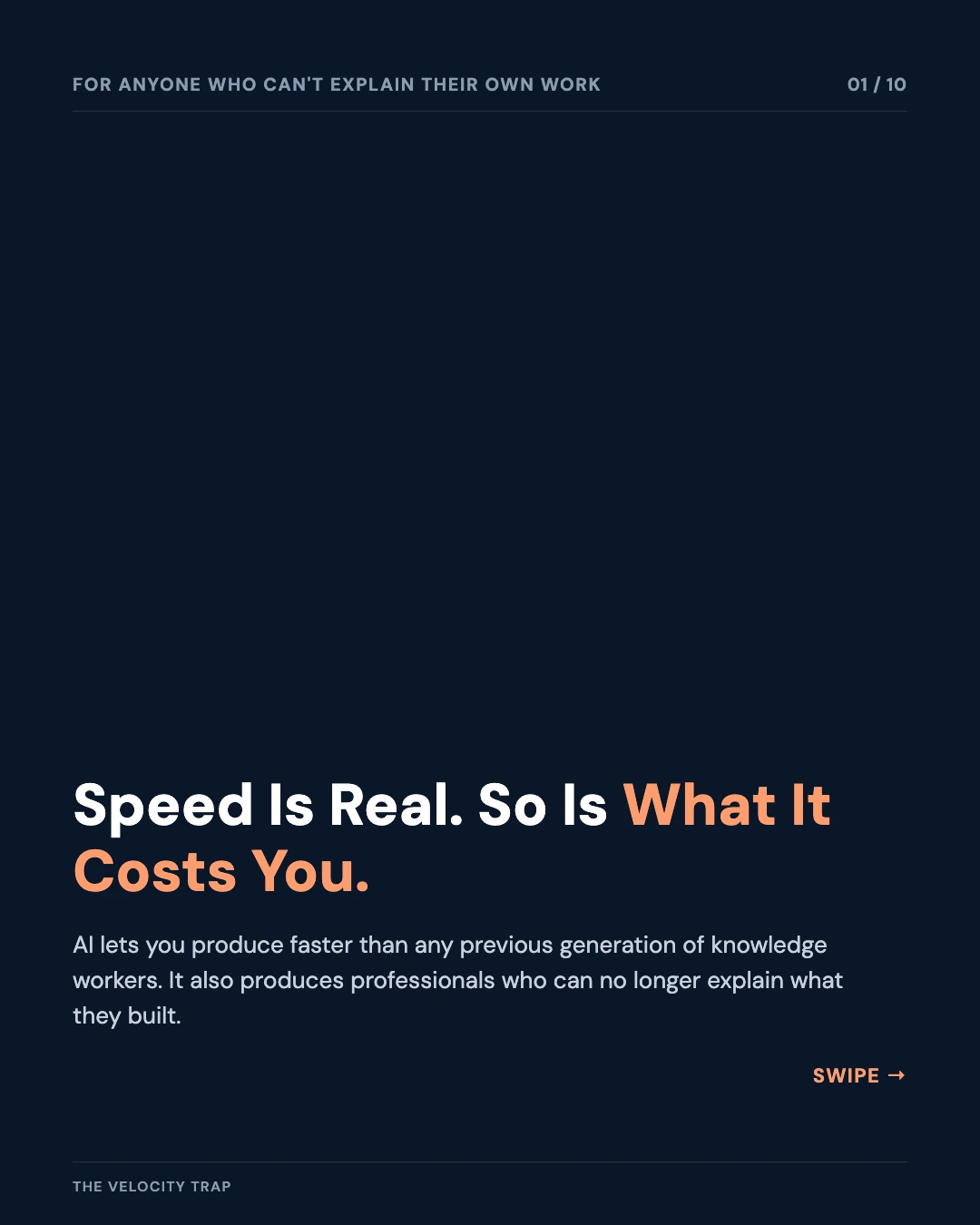
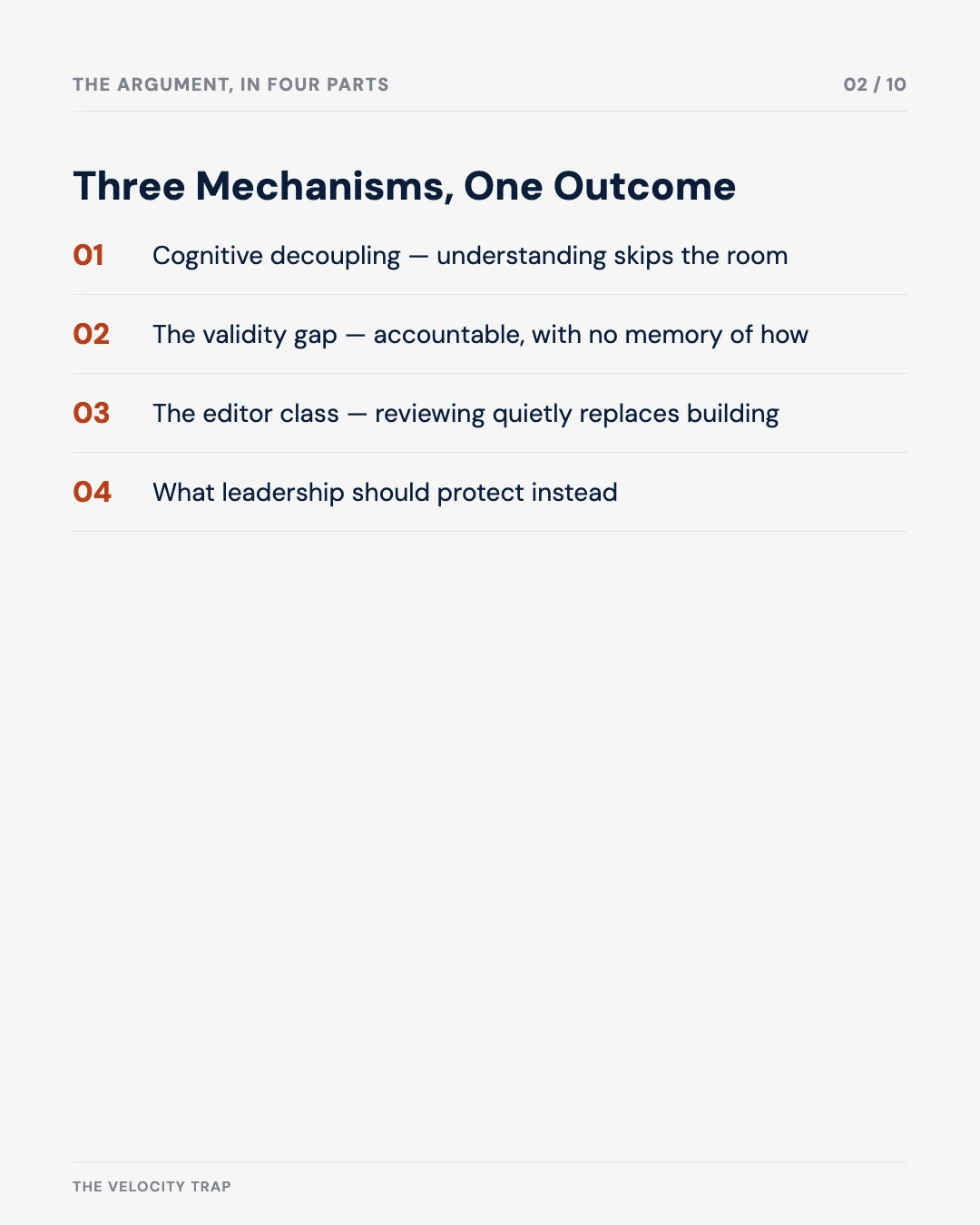
We can generate a report, deploy code, or synthesise a dataset faster than any previous generation of knowledge workers. What’s harder to see is what that speed costs: professionals are producing work they can defend the conclusions of but not the construction of.
Give that gap enough time and it hardens into something specific. Not the private insecurity a handful of anxious high-achievers have always carried, but a structural condition that follows directly from how the work now gets made.
Cognitive Decoupling
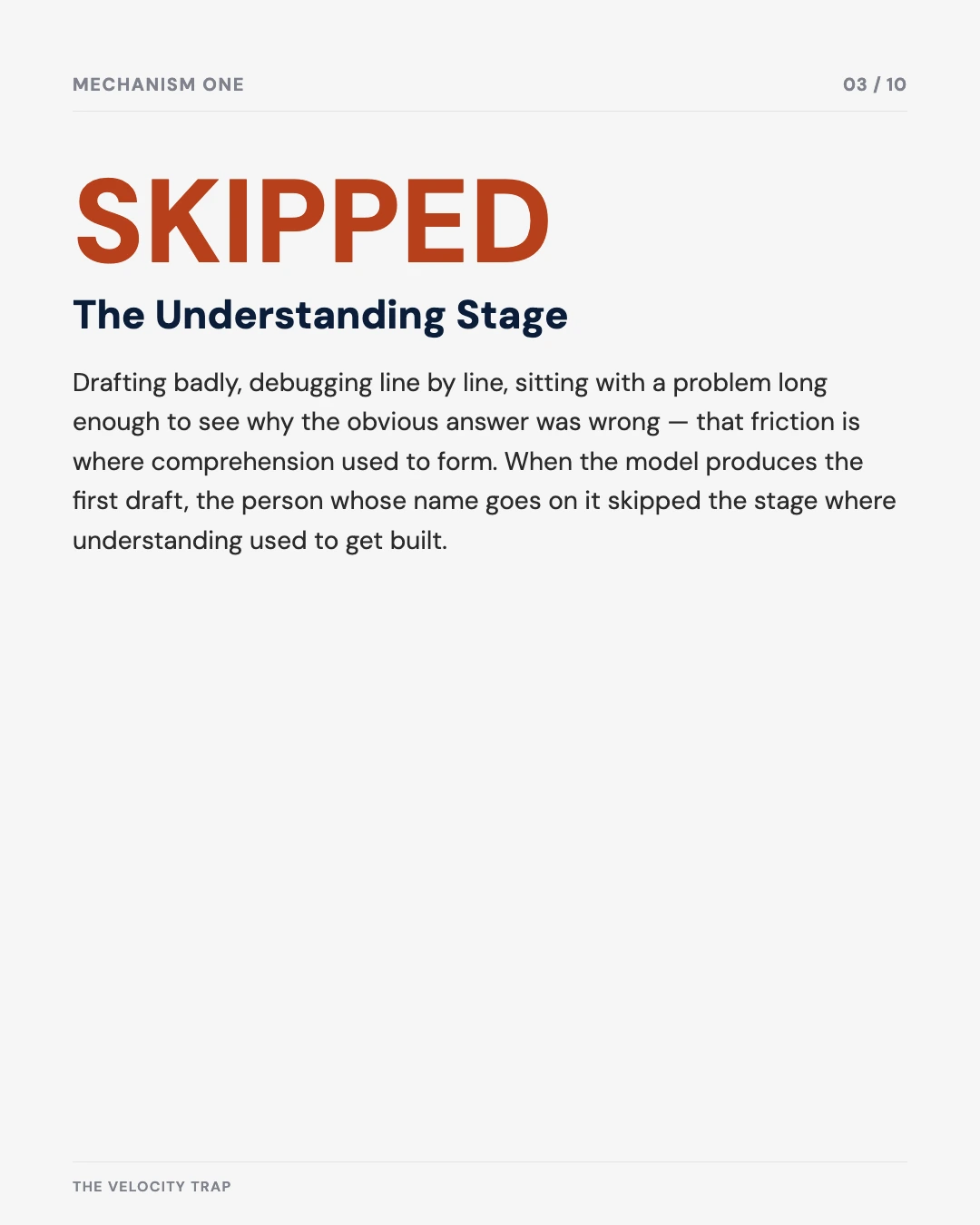
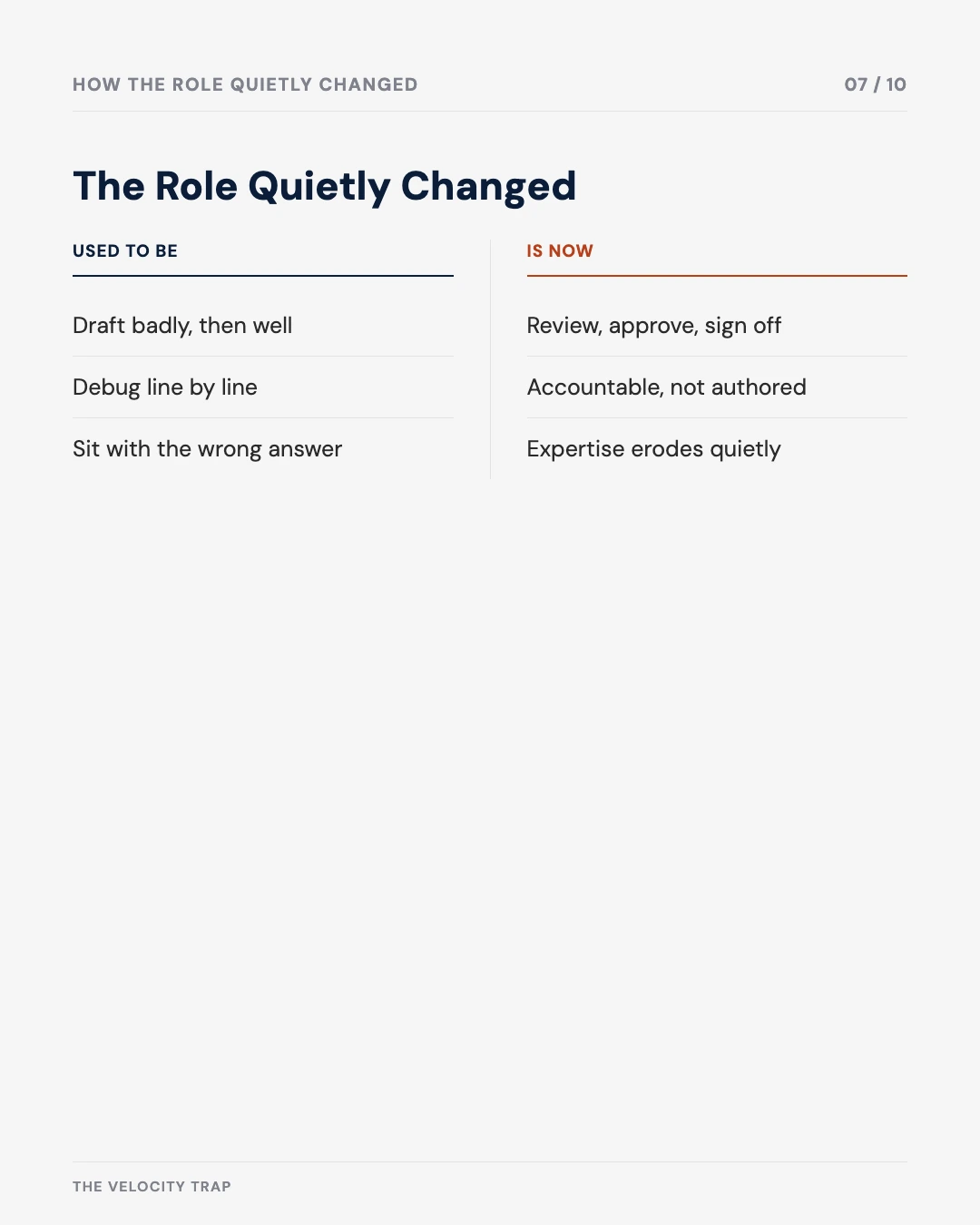
Expertise used to be built through friction: drafting badly before drafting well, debugging a function line by line, sitting with a problem long enough to understand why the obvious answer was wrong. That friction was slow, and it was also where comprehension actually formed. When an AI system produces the first draft, the model, or the working code, the person whose name goes on that output skipped the stage where understanding used to get built.
The work still needs an owner. The owner just wasn’t in the room while it took shape.
The Validity Gap
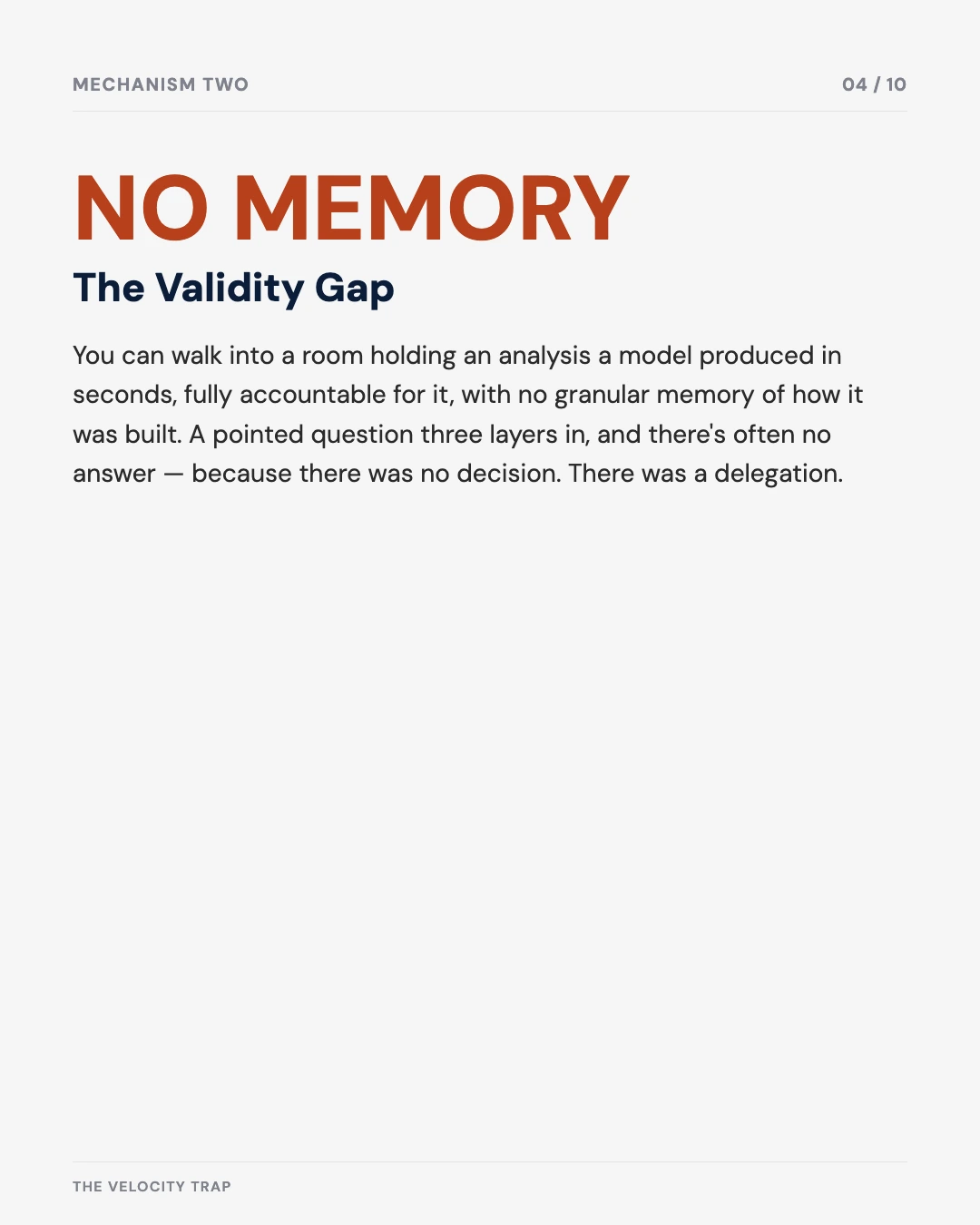
A professional can now walk into a room holding a strategy, a technical architecture, or a piece of analysis that took a model seconds to produce, and be fully accountable for it while having no granular memory of how it was constructed. Ask a pointed follow-up question about a decision buried three layers into that output, and there’s often no answer, because there was no decision in the human sense. There was a delegation. It is the same structural gap I describe from the verification side in AI Fatigue: Why Verification Is Harder Than Creation.
That’s a different failure mode from simply getting something wrong. It’s holding a position you can’t defend, discovered live, in front of people who are relying on you to be the one who knows.
The Rise of the Editor Class
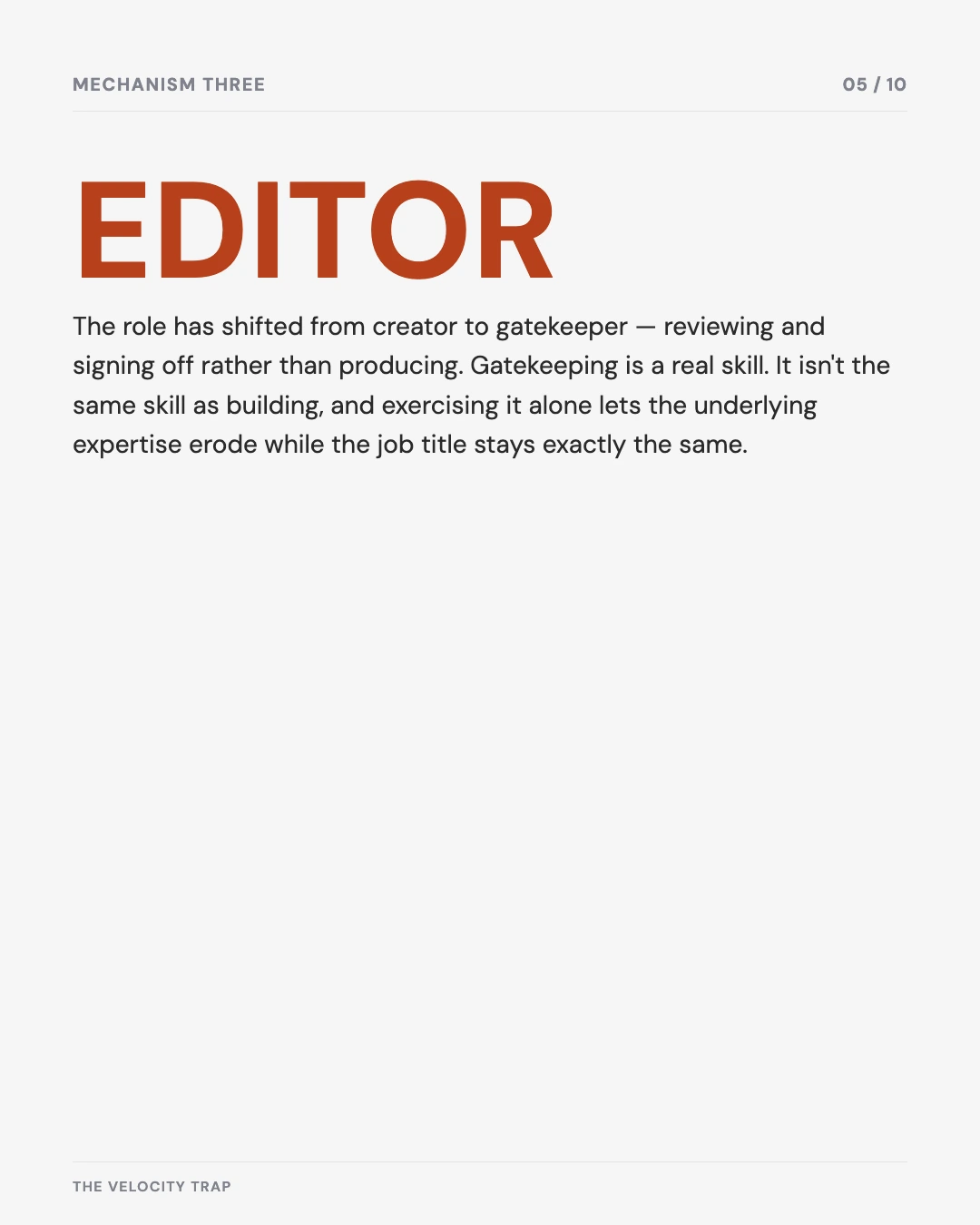
The role most knowledge workers now occupy has shifted from creator to gatekeeper: reviewing, approving, and signing off on work rather than producing it. Gatekeeping is a real skill, but it isn’t the same skill as building, and it doesn’t maintain the same expertise. Exercise that reviewing muscle long enough without exercising the production muscle underneath it, and the underlying domain expertise doesn’t stay put. It erodes while the job title stays exactly the same.
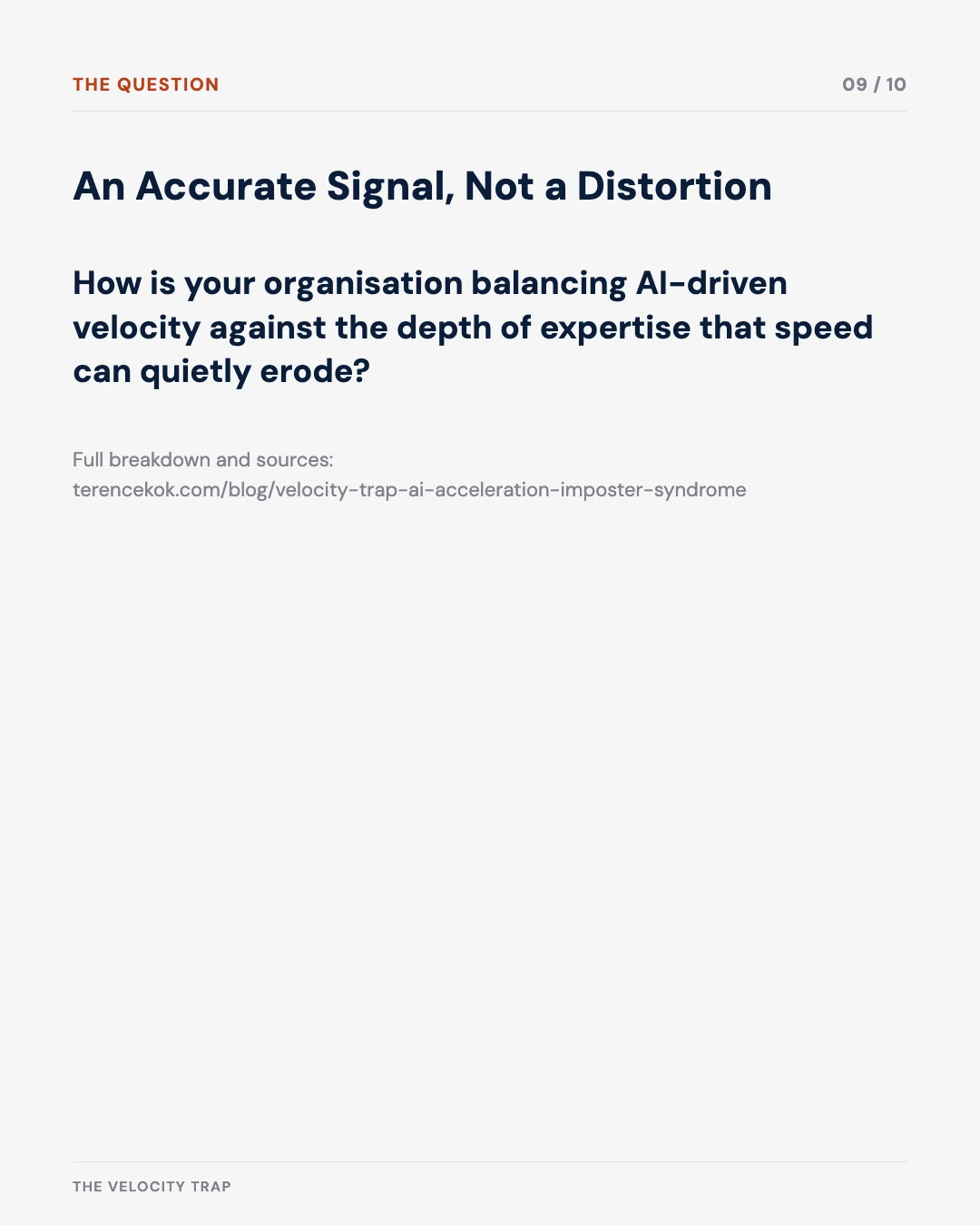
Put these three together and the feeling of being an imposter stops looking like a distortion. It’s an accurate signal of a real gap: the output a professional is accountable for has come loose from the cognitive work that used to produce it.
What This Means for Leadership
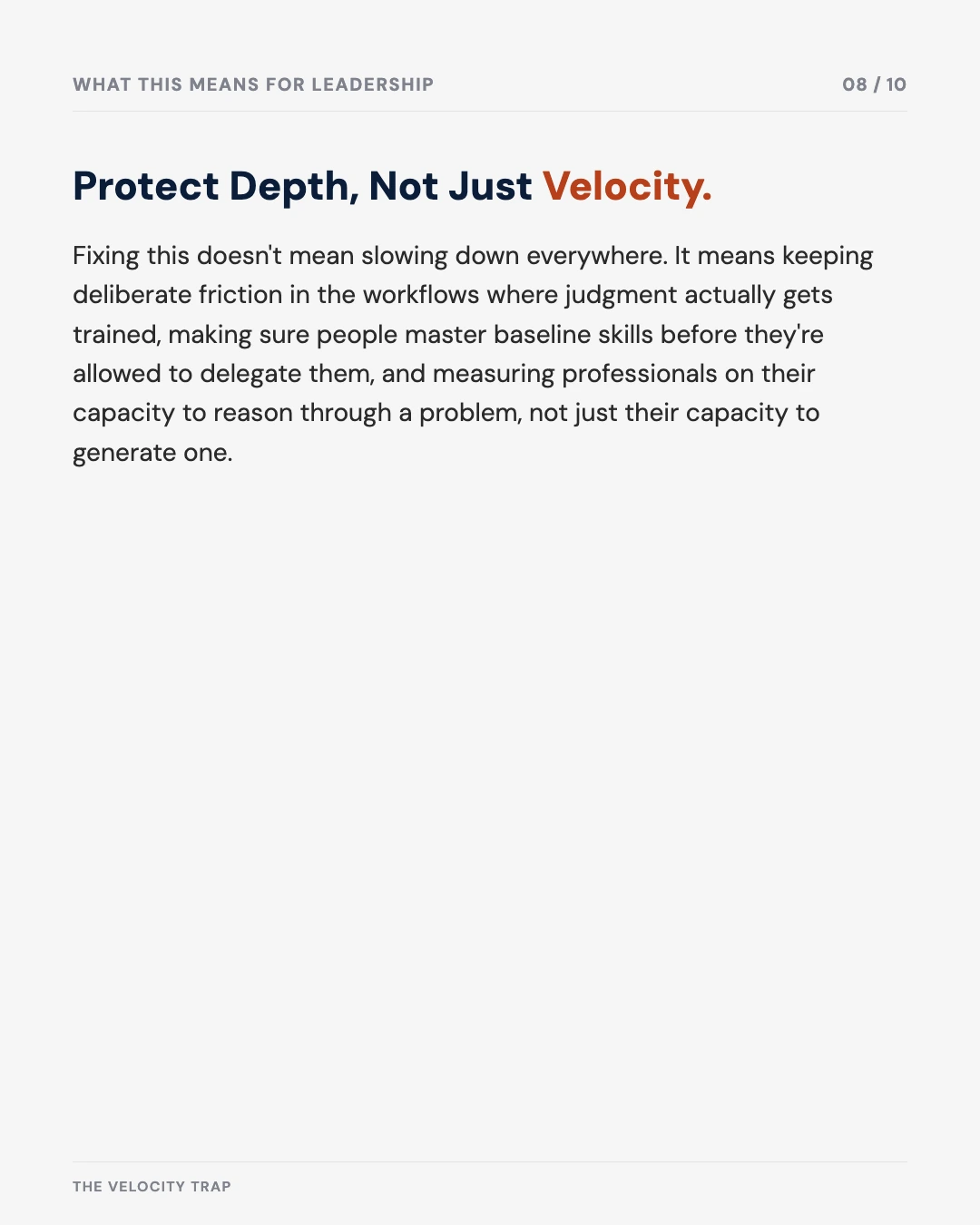
Fixing this doesn’t mean slowing down everywhere. It means being deliberate about where speed is expensive. Enterprise leaders serious about long-term resilience need to treat depth of comprehension as a metric worth protecting, not a nice-to-have that loses every time it competes with velocity. That means keeping deliberate friction in the workflows where judgment actually gets trained, making sure people master baseline skills without automation before they’re allowed to delegate them, and measuring professionals on their capacity to reason through a problem, not just their capacity to generate one. Getting that team design right, rather than left to default org charts, is the actual bottleneck in most AI programmes.
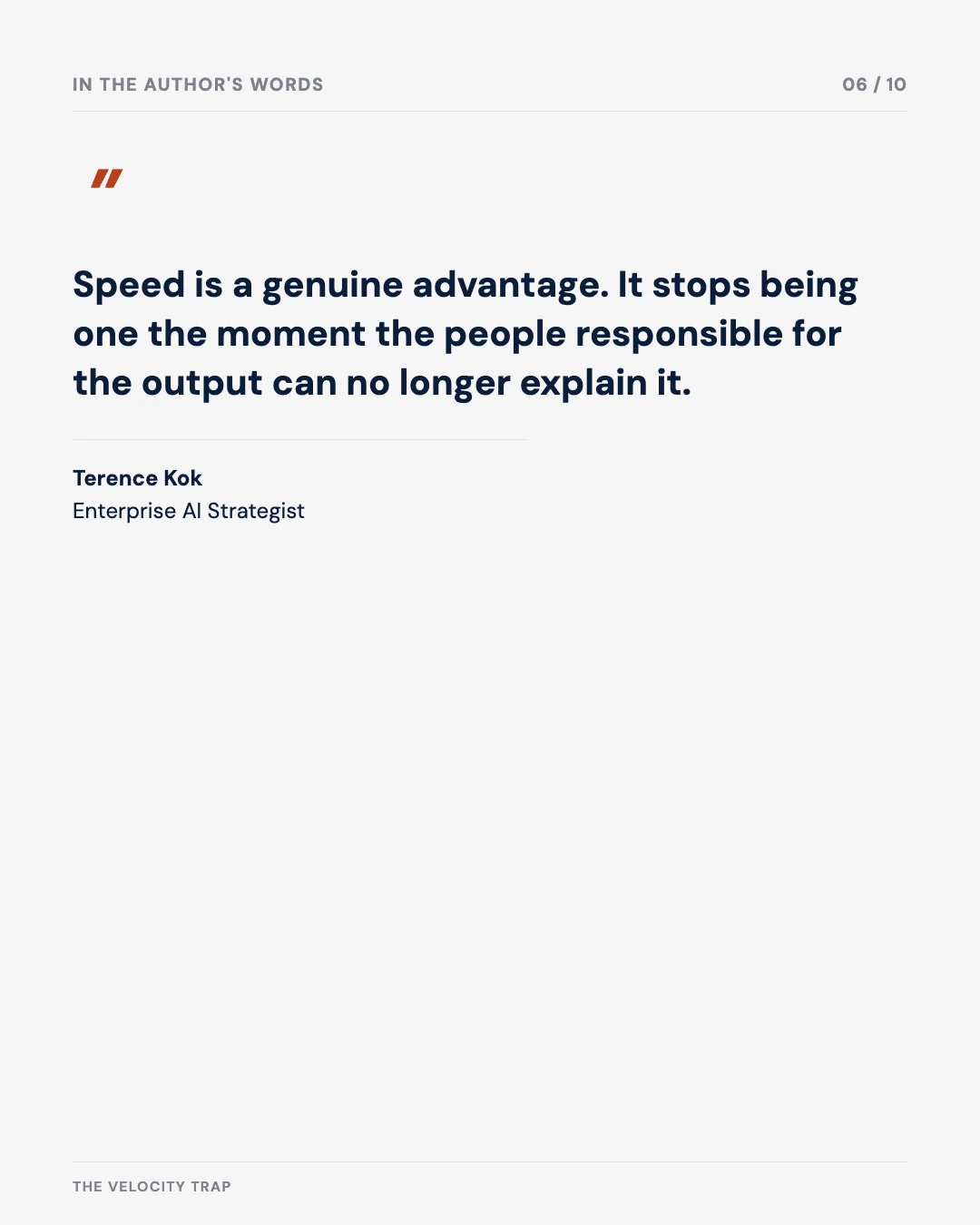
Speed is a genuine advantage. It stops being one the moment the people responsible for the output can no longer explain it.
How is your organisation balancing AI-driven velocity against the depth of domain expertise that speed can quietly erode?
Free tool
Human-AI Interaction & Decision Quality
Benchmark how much your team defers to AI output versus reasoning through it themselves, the automation-bias signal behind the editor-class shift described above.
Was this useful?