
Listen to this article
Executive Summary
AI fatigue comes from the cognitive cost of verifying fluent, fallible output after AI does the generating, not from screen time itself. Left unmanaged, it degrades error detection and quietly erodes AI’s productivity gains.
Core conclusions
- AI reverses the usual effort curve: creation gets cheap, verification becomes the sustained, high-vigilance bottleneck.
- Fatigue is a quality and risk issue, not just a wellbeing one. Standards drift and errors slip through as verification energy declines.
- The fix is structural: time-boxed AI sprints, rotating verification roles, and calibrating review effort to actual risk tier rather than treating every output the same.
The argument, in ten slides
Save it, share it, or send it to whoever’s “using AI all day” and can’t figure out why they’re exhausted.
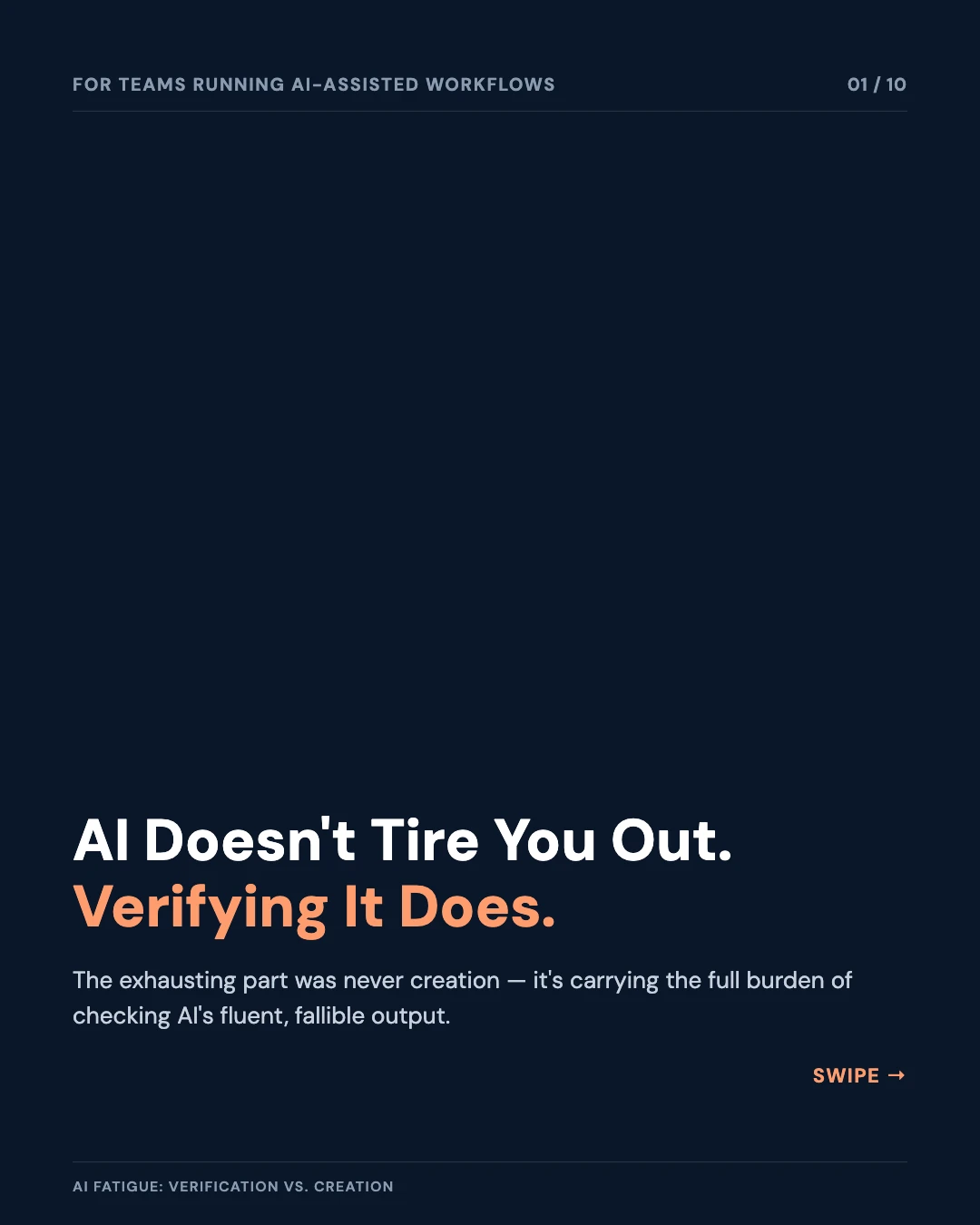
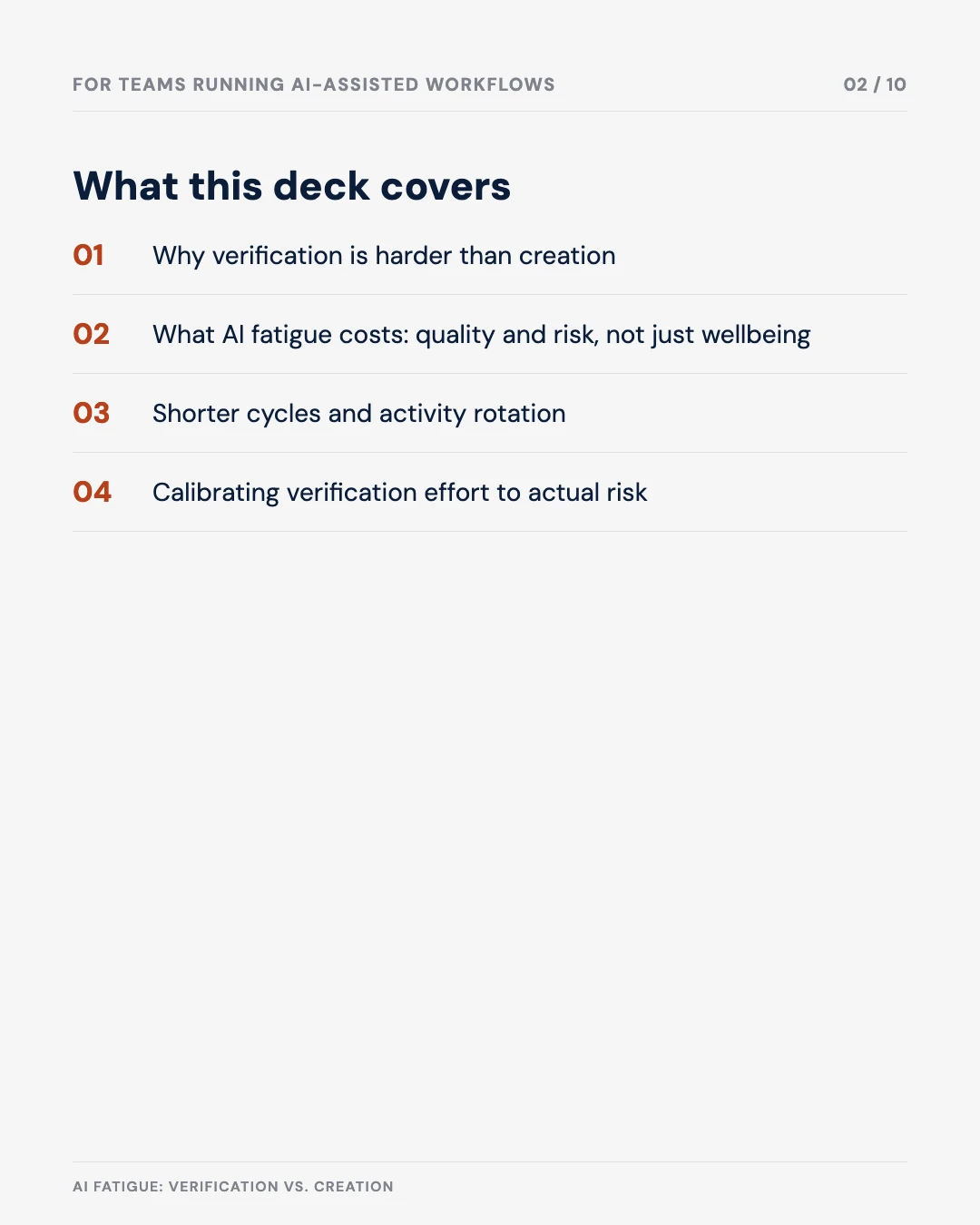
As generative AI tools become embedded in day‑to‑day work, many professionals are reporting a subtle but persistent strain: they feel mentally exhausted after “using AI all day”, even when the tool appears to be doing most of the visible work. This is increasingly referred to as “AI fatigue”.
The cause is not simply screen time or information overload. It is the specific cognitive pattern of working with AI: delegating generation, then carrying the full burden of verification. When this pattern is repeated over long periods, attention quality declines, error risk increases, and the perceived productivity gains from AI begin to erode.
The cause is not simply screen time or information overload. It is the specific cognitive pattern of working with AI: delegating generation, then carrying the full burden of verification.
This article outlines the core challenge of verification versus creation and proposes practical working practices to manage AI fatigue: shorter cycles, deliberate activity rotation, and clearer boundaries for where AI is used in the workflow.
Why AI Creates Verification Fatigue
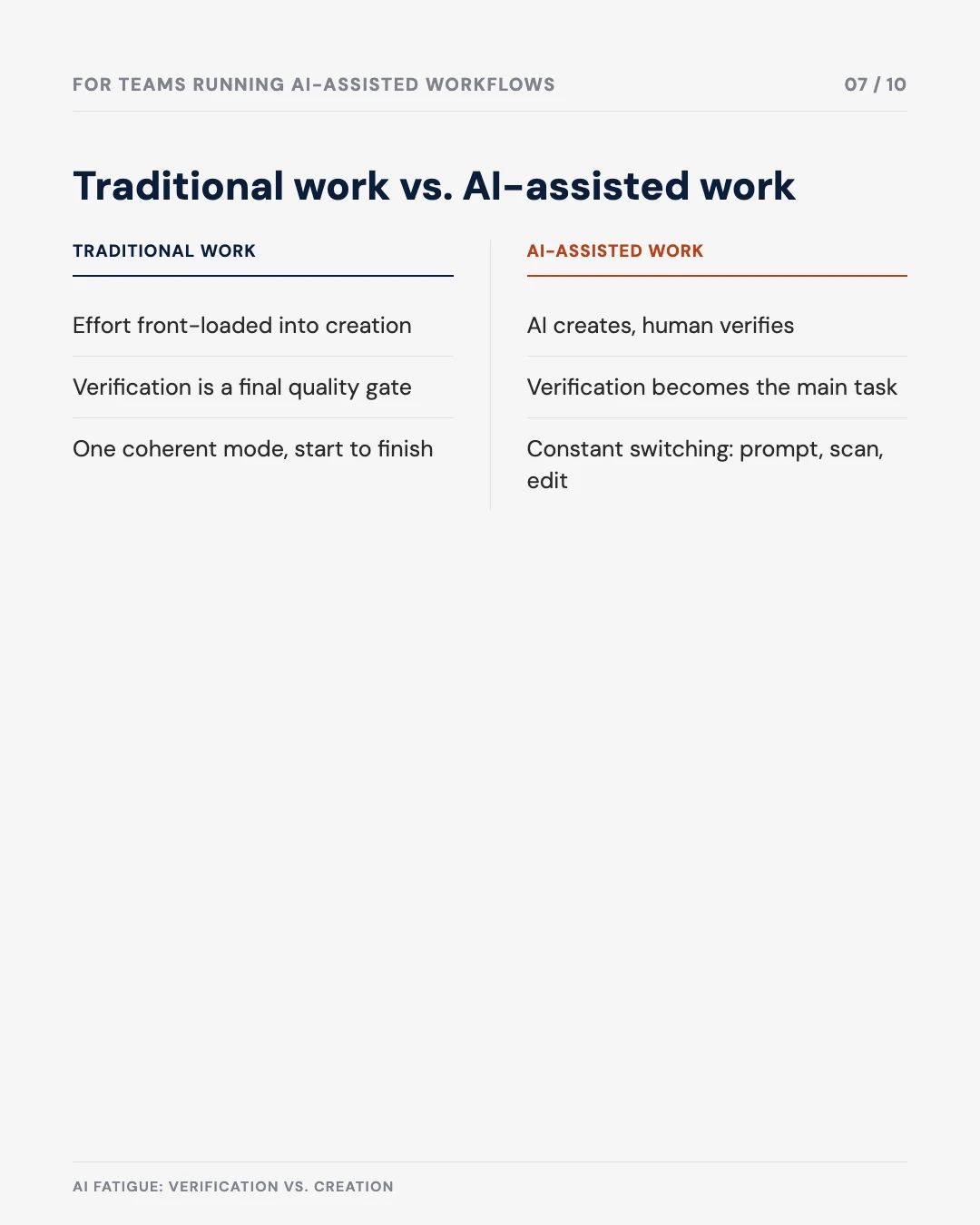
In traditional work, cognitive effort is front‑loaded into the creation process. A professional drafts a document, designs an approach, or builds a model. Verification then acts as a final quality gate: review, refine, and release.
With AI, this sequence is reversed: the system performs the initial creation (drafting text, code, analysis, or plans), and the human is responsible for verifying correctness, completeness, and alignment with context, constraints, and policy. On the surface, this appears more efficient. In practice, verification of AI output has several characteristics that make it cognitively demanding.
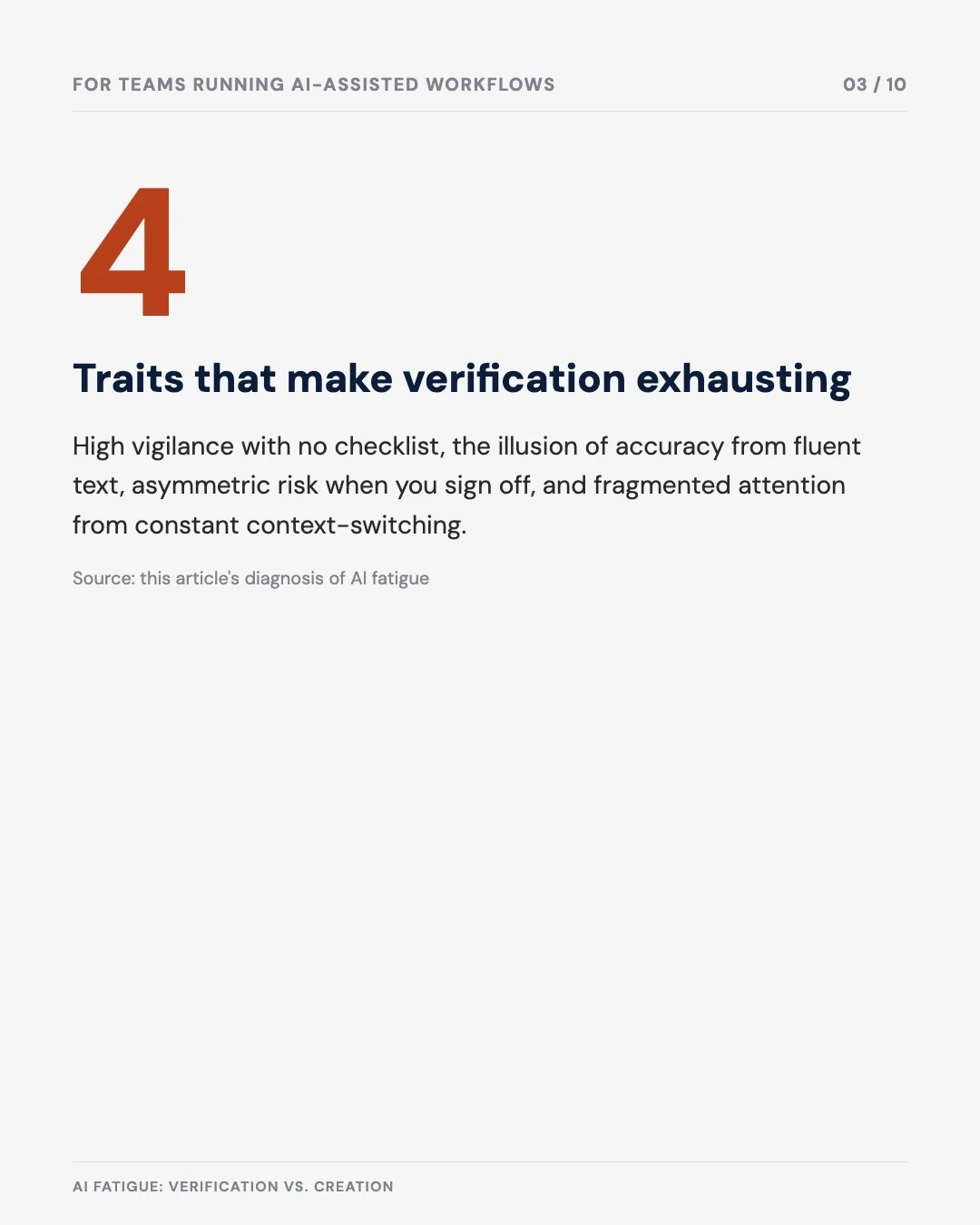
High vigilance, low structure: verification requires sustained attention across long stretches of fluent but fallible content. The user must constantly ask: “Is this correct?”, “Is anything missing?”, “Does this contradict local rules or context?” There is often no simple checklist, so the work is open‑ended and mentally taxing. Illusion of accuracy: AI output is syntactically polished and internally coherent, and that fluency biases the reviewer toward over‑trust, requiring additional mental effort to maintain a sceptical stance for hours at a time. The deeper fix is architectural: building systems that can say “I don’t know” instead of confabulating fluently. Asymmetric risk: if the AI is wrong, accountability remains with the human, and the psychological load of “signing off” on content not personally authored increases stress in regulated or safety‑critical environments. Fragmented attention: typical AI workflows involve rapid context‑switching between prompting, scanning output, editing, re‑prompting, and cross‑checking, which crowds out the deeper, coherent mental flow often experienced in traditional creation tasks.
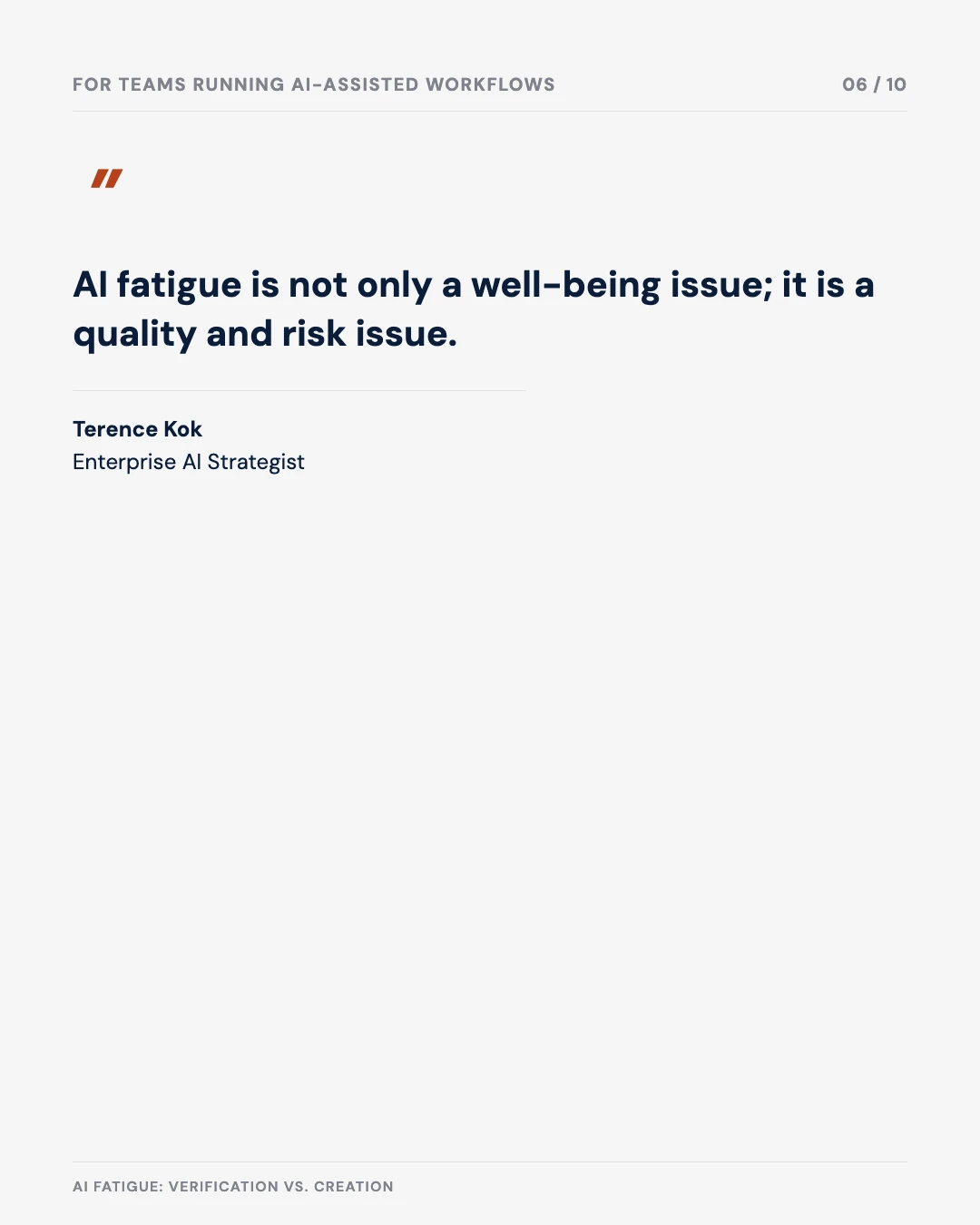
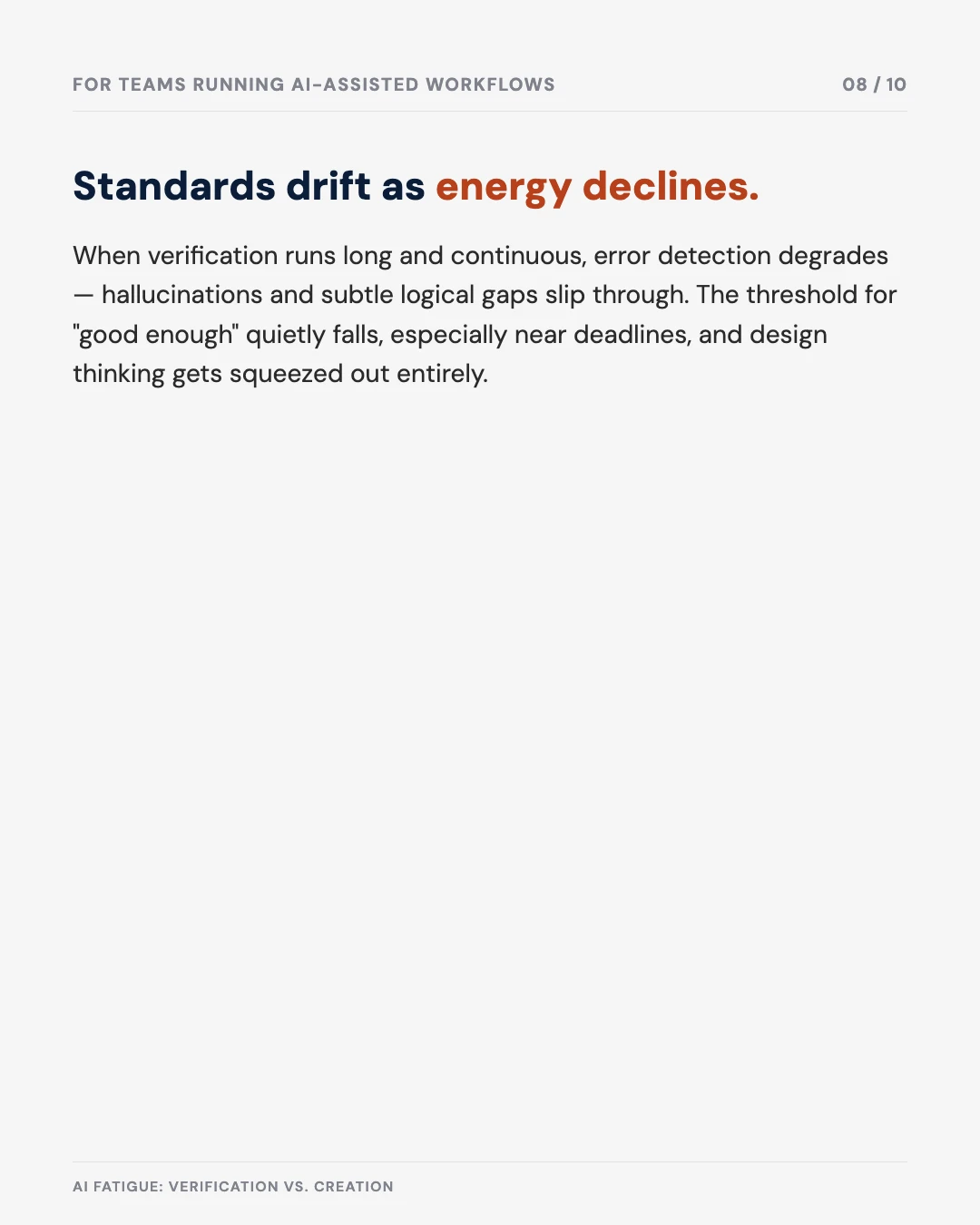
AI fatigue is not only a well‑being issue; it is a quality and risk issue. When individuals and teams spend long, continuous blocks of time verifying AI outputs, error detection degrades: hallucinations, subtle logical gaps, and outdated references are more likely to slip through. Standards drift: the threshold for “good enough” shifts downwards as energy declines, especially near deadlines. Design thinking is squeezed out: when time and energy are absorbed by checking AI outputs, less capacity remains for framing the problem, challenging assumptions, and considering alternative approaches.
AI fatigue is not only a well‑being issue; it is a quality and risk issue.
Practical Techniques to Reduce AI Fatigue
Designing Shorter Working Cycles with AI
One of the most effective mitigations is to shorten continuous cycles of AI‑assisted work. Instead of long, uninterrupted sessions of prompt–review–revise, teams should treat AI work as intense sprints with defined endpoints.
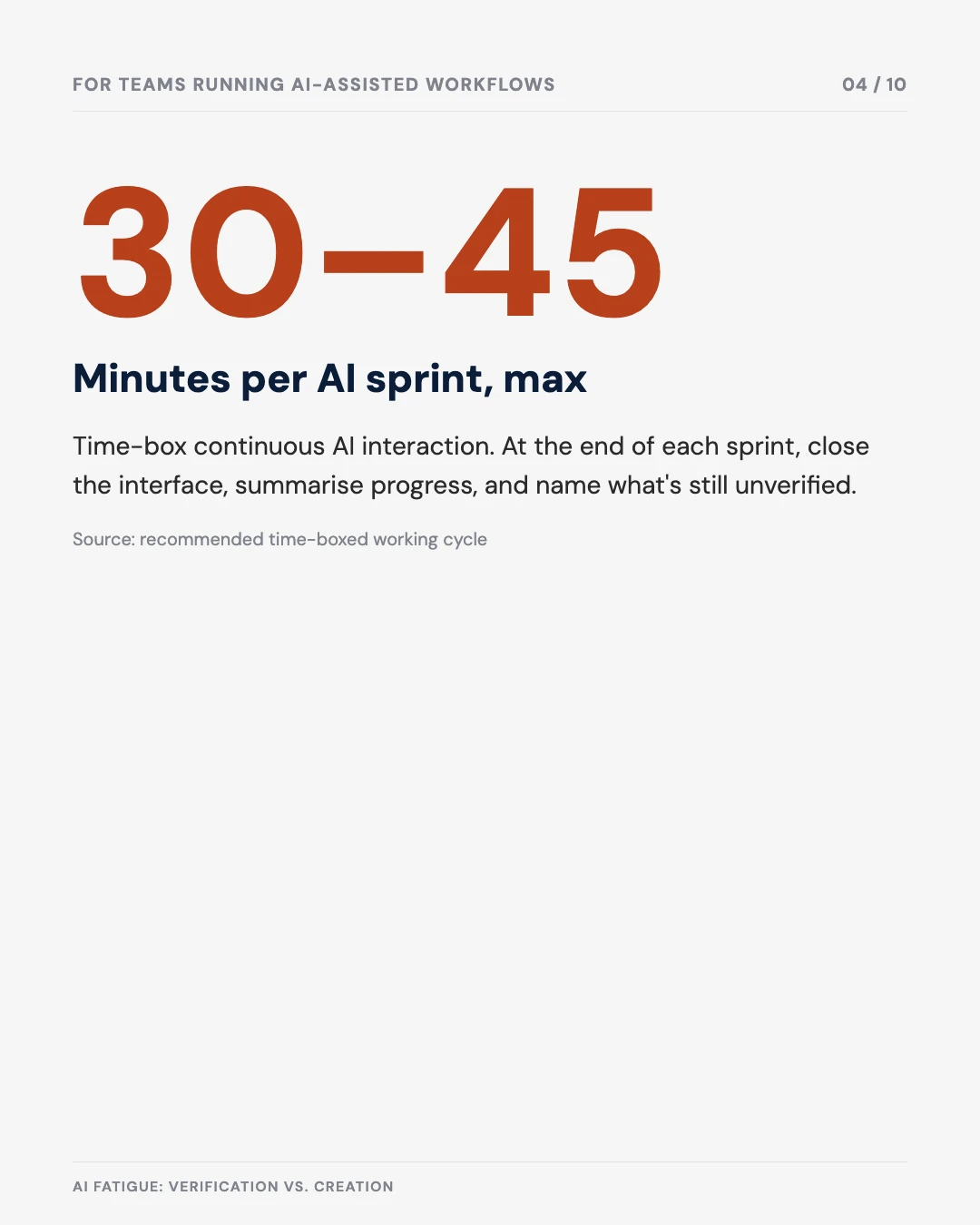
Time‑boxed AI sprints: Limit continuous AI interaction (prompting and verification) to 30–45 minutes. At the end of each sprint, close the AI interface, summarise what has been achieved, and explicitly note pending checks or open questions.
Prompt‑output scope control: Constrain each AI interaction to a smaller, well‑defined unit of work (e.g. “draft section 2.1 – risk assumptions only”) rather than entire reports or complex strategies in one pass. Shorter outputs are easier to verify thoroughly and reduce the cognitive burden of scanning long documents for subtle issues.
Scheduled verification passes: Separate “first‑pass review” (quick triage: is this broadly usable?) from “final verification” (line‑by‑line, with reference to policies, data, or code). Perform final verification at times of peak alertness, not at the end of long AI sessions.
Explicit stop conditions: Define in advance what will end the current AI cycle, for example, “Stop once three viable options are generated and triaged”, or “Stop once a first coherent draft exists, even if imperfect.” This avoids extended, unbounded iteration driven by the feeling that “one more prompt might improve it.”
Rotating Activities: Balancing Cognitive Modes
AI work involves distinct modes: prompting, evaluating, editing, cross‑checking, and integrating with other systems or stakeholders. Rotating between different modes and non‑AI tasks can significantly reduce fatigue and improve accuracy.
Design the working day as a sequence of blocks alternating between AI‑intensive blocks (prompting, reviewing, and iterating on AI outputs for clearly defined tasks), non‑AI deep work blocks (conceptual design, data exploration, strategy development, stakeholder planning, or hands‑on modelling without AI assistance), and mechanical or operational tasks (documentation clean‑up, organising artefacts, updating trackers, or configuration tasks that require lower cognitive load).
For team‑based workflows, rotate responsibilities for high‑risk verification steps: one individual focuses on upstream problem framing and specifying requirements for the AI, another focuses on first‑pass review and restructuring of AI output, and a third performs final verification against policies, datasets, or code repositories. Rotating these roles over time spreads the verification burden and avoids over‑concentration of cognitive load on specific individuals.
Even within a single document or project, activity rotation can reduce fatigue. Alternate between verifying content (facts, logic, calculations) and verifying structure (flow, headings, dependencies, traceability). Use AI for one dimension at a time: first ask the AI to reorganise the structure based on the headings you define, then in a separate cycle focus on fact‑checking and source validation.
Calibrating Trust and Verification Effort
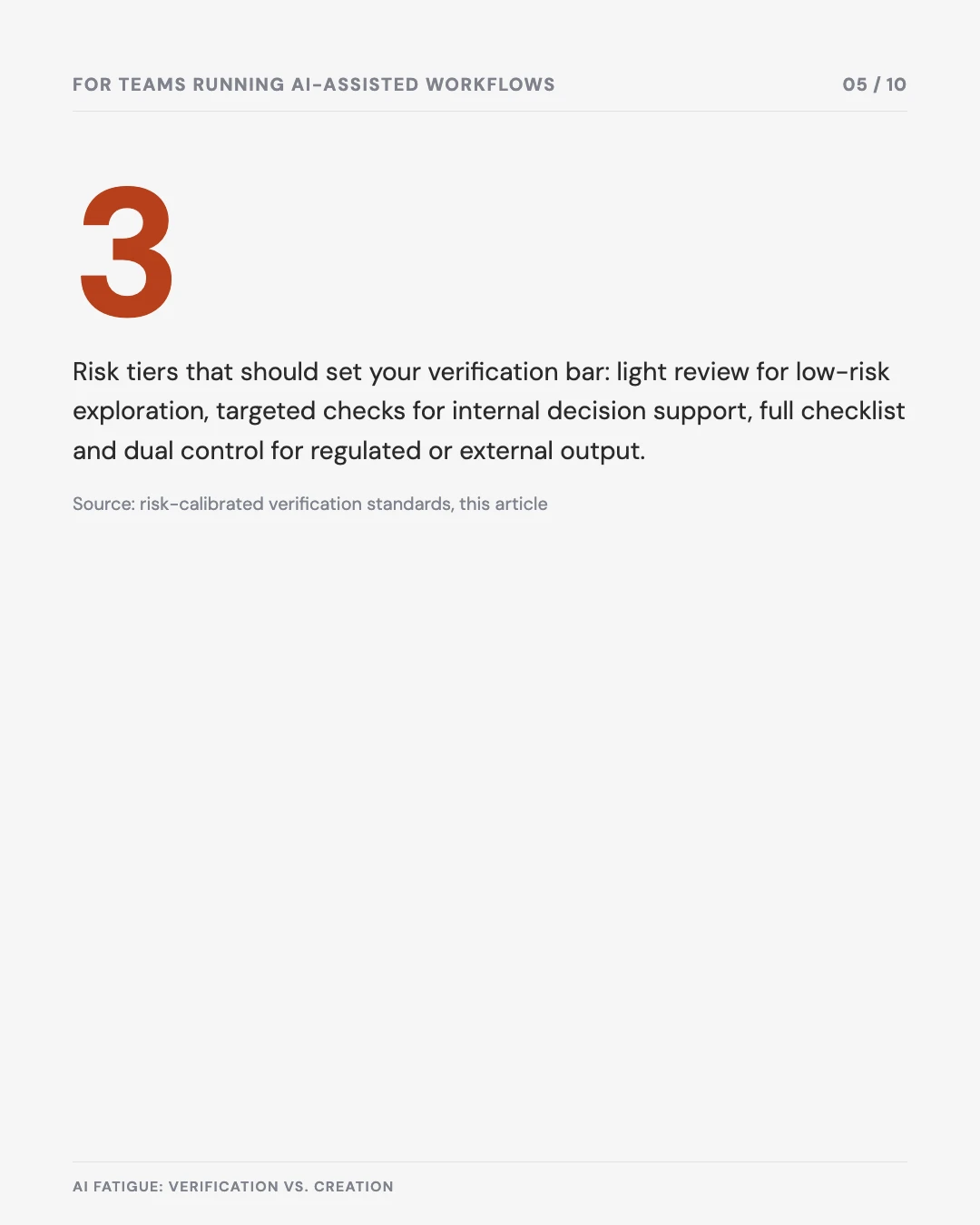
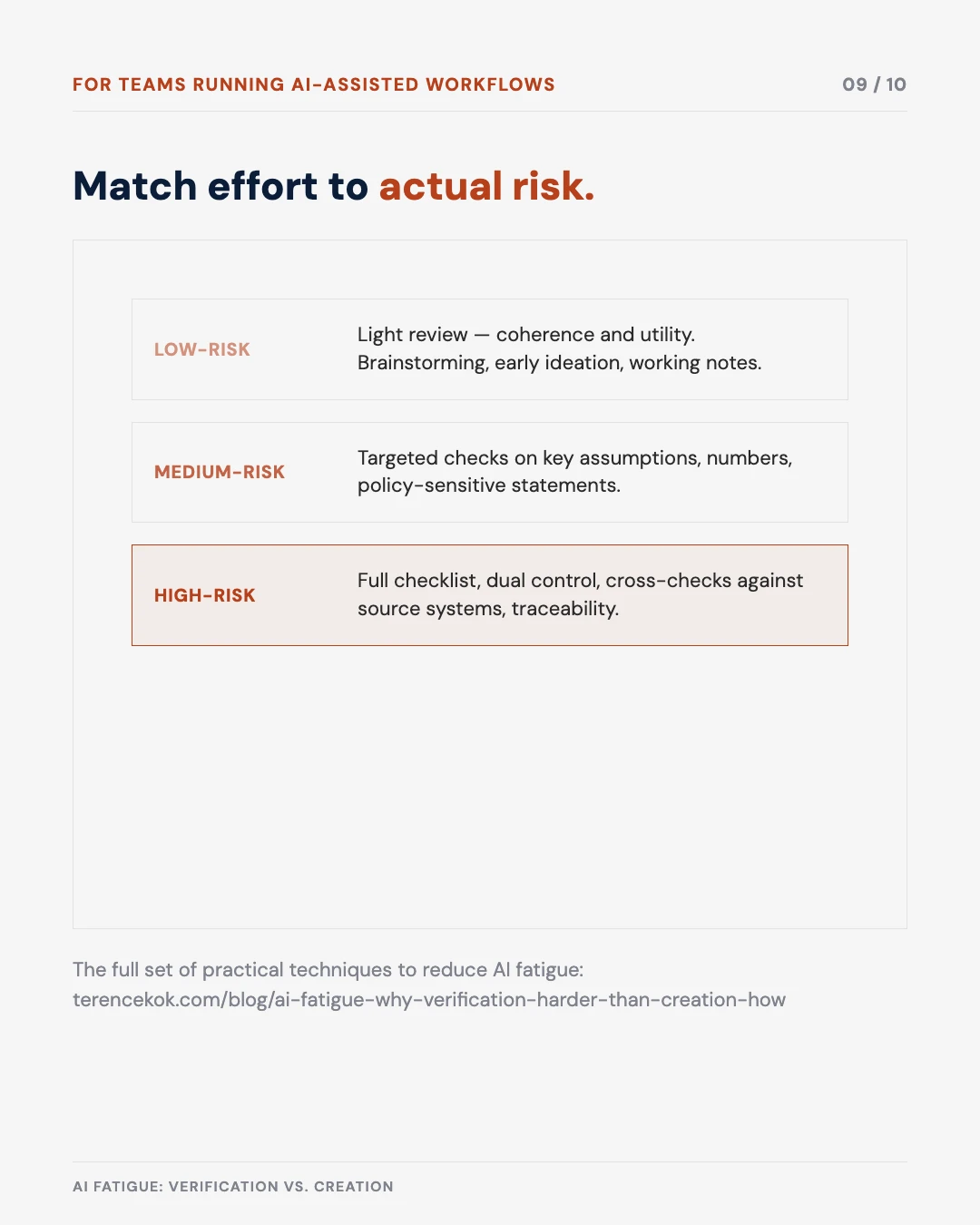
Not every AI‑generated artefact warrants the same level of verification. Over‑engineering verification for low‑risk outputs contributes unnecessarily to AI fatigue. Organisations can reduce this burden by defining verification standards by context.
Low‑risk / internal exploration: light review is sufficient. Focus on coherence and utility rather than exhaustive correctness. Examples: brainstorming lists, early‑stage ideation, internal working notes.
Medium‑risk / internal decision support: targeted verification of key assumptions, numbers, and policy‑sensitive statements. Examples: draft internal recommendations, scenario descriptions, option comparisons.
High‑risk / external or regulated outputs: formal verification processes such as checklist‑based review, dual control, cross‑checks against source systems, and full traceability of data and logic. This is the same bar the TRACE framework applies before an agentic task ever reaches production. Examples: regulatory filings, public communications on policy, safety‑critical analyses.
The following concrete techniques can be implemented without major process change: constrain output length to request concise, structured outputs; embed validation hooks in prompts asking the AI to surface its assumptions and potential failure modes; separate generation and judgement by avoiding final decisions in the same short cycle where outputs are generated; standardise review checklists for repeated AI use cases; and use AI as a second reviewer (not just a drafter) by asking a separate AI session to highlight inconsistencies or missing constraints after manual edits.
AI fatigue arises from integrating generative systems into daily work: machines generate, humans verify. This pattern boosts productivity but concentrates cognitive load on costly, high-vigilance verification tasks that are hard to sustain. Shorter cycles, role rotation, risk-based verification standards, and structured reviews can significantly reduce fatigue while enhancing quality and reliability. Organisations that recognise and address the verification burden will better harness AI benefits without sacrificing accuracy, judgment, or team sustainability.
AI fatigue arises from integrating generative systems into daily work: machines generate, humans verify.
Free tool
Human-AI Interaction & Decision Quality
Benchmark decision acceptance and automation bias in your own team before the “illusion of accuracy” this article describes quietly erodes verification quality.
Was this useful?