

Listen to this article
Jump to a section
In this article
Executive Summary
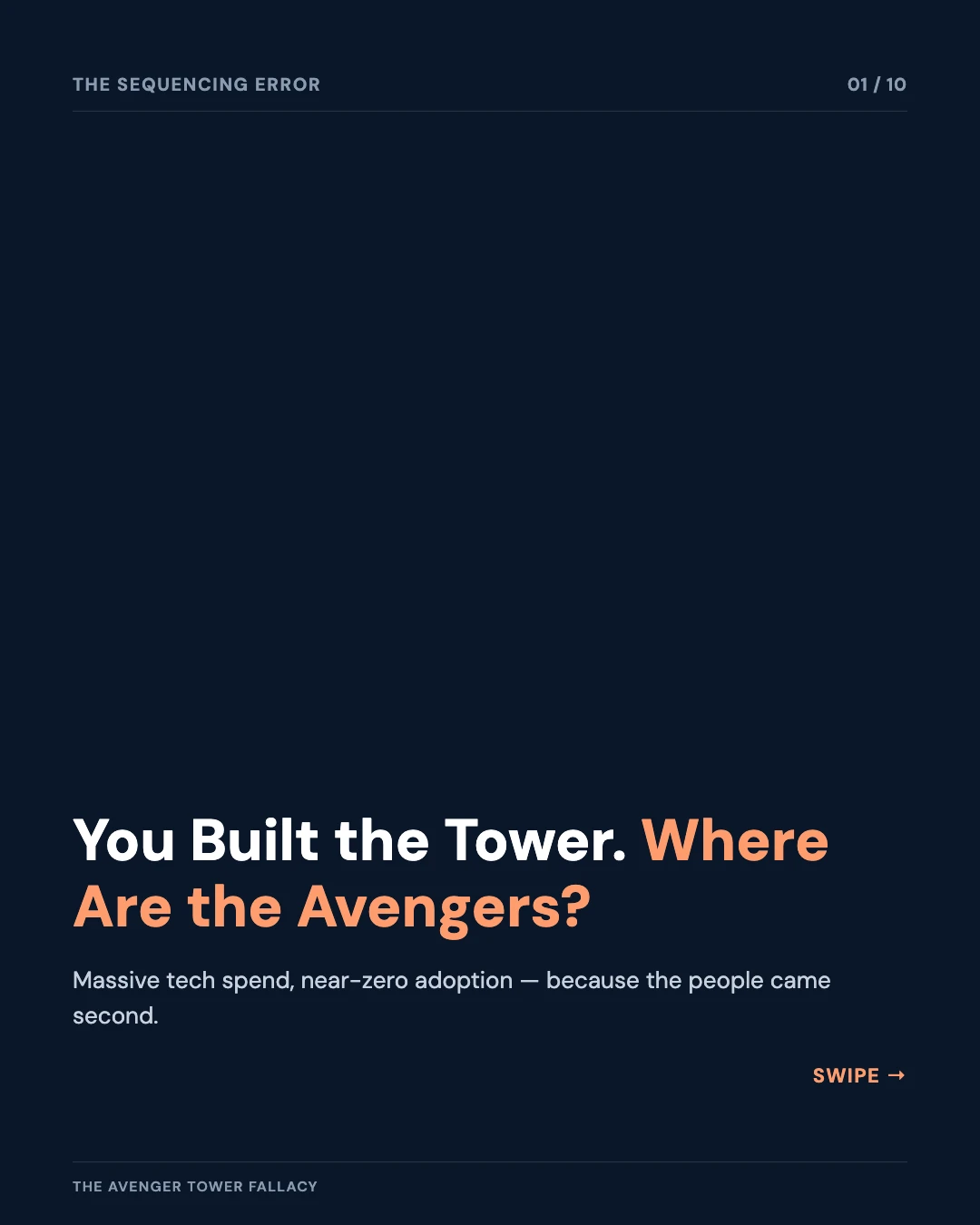
Most organisations build expensive AI infrastructure before a single employee knows how to use it. The result is massive tech spend, near-zero adoption, and ROI that never leaves the spreadsheet.
Core conclusions
- The fix is sequencing, not investment level: personal augmentation (individual AI fluency) has to come before organisational augmentation (integrated data pipelines, fine-tuned models, compliance frameworks).
- Build the platform without the people and you get expensive shelfware; build the people first and they’ll pull the infrastructure into place because they’re already hungry for better tools.
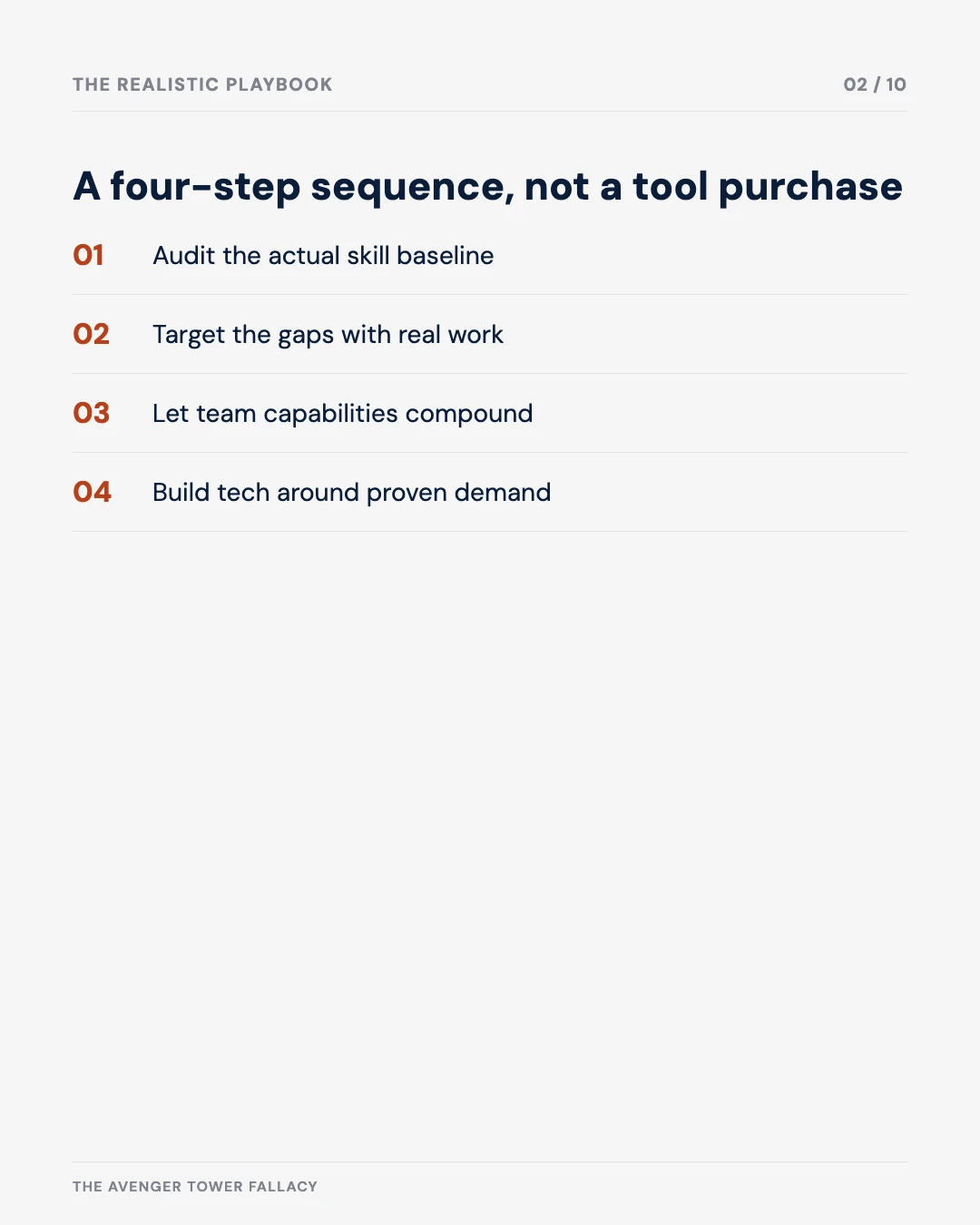
- The playbook has four steps: audit the real skill baseline, target gaps with real work, let capabilities compound, then build tech around proven demand. That sequence grounds infrastructure spend in demonstrated need.
The fallacy, in ten slides
Save it, share it, or send it to whoever signs off the infrastructure spend.
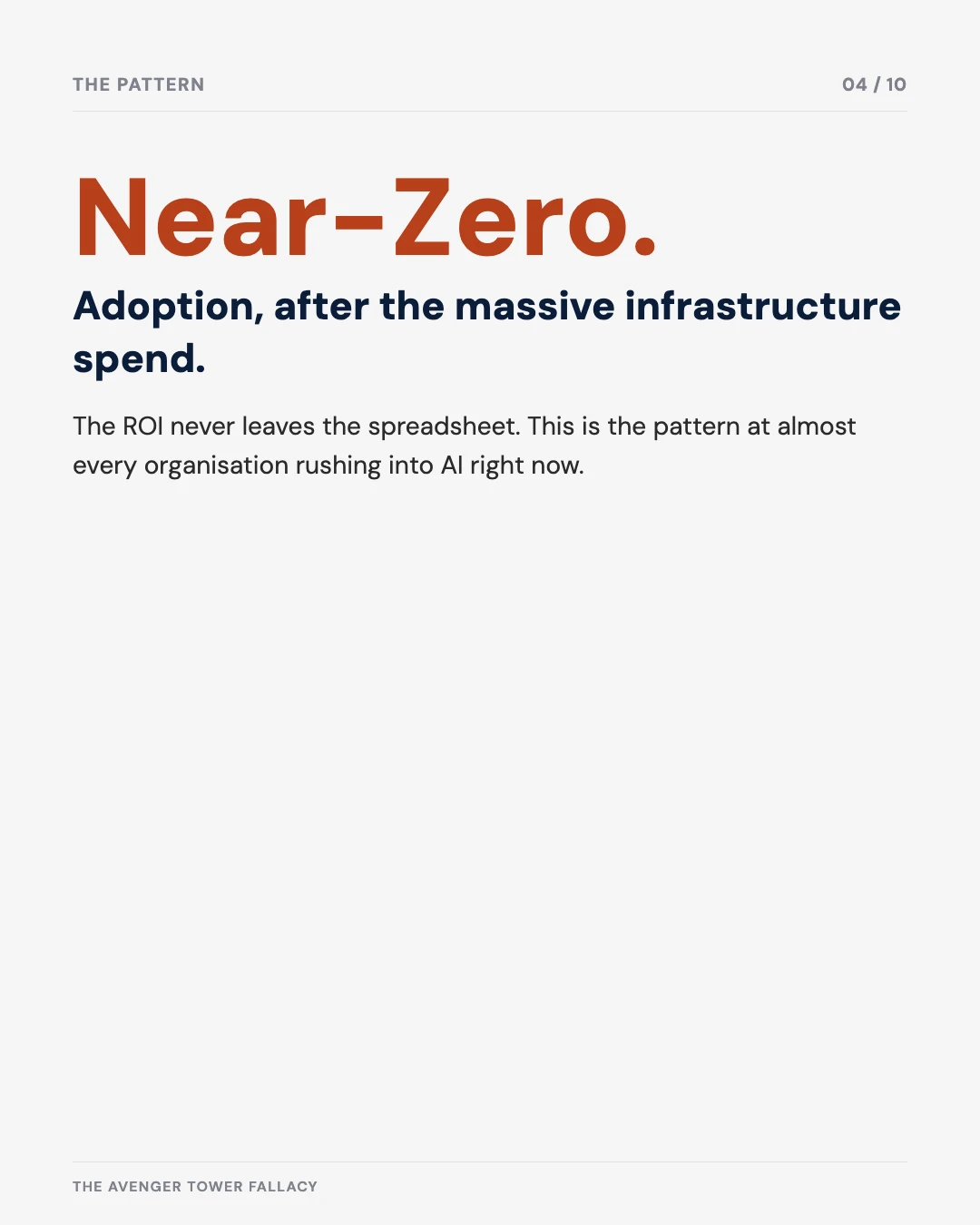
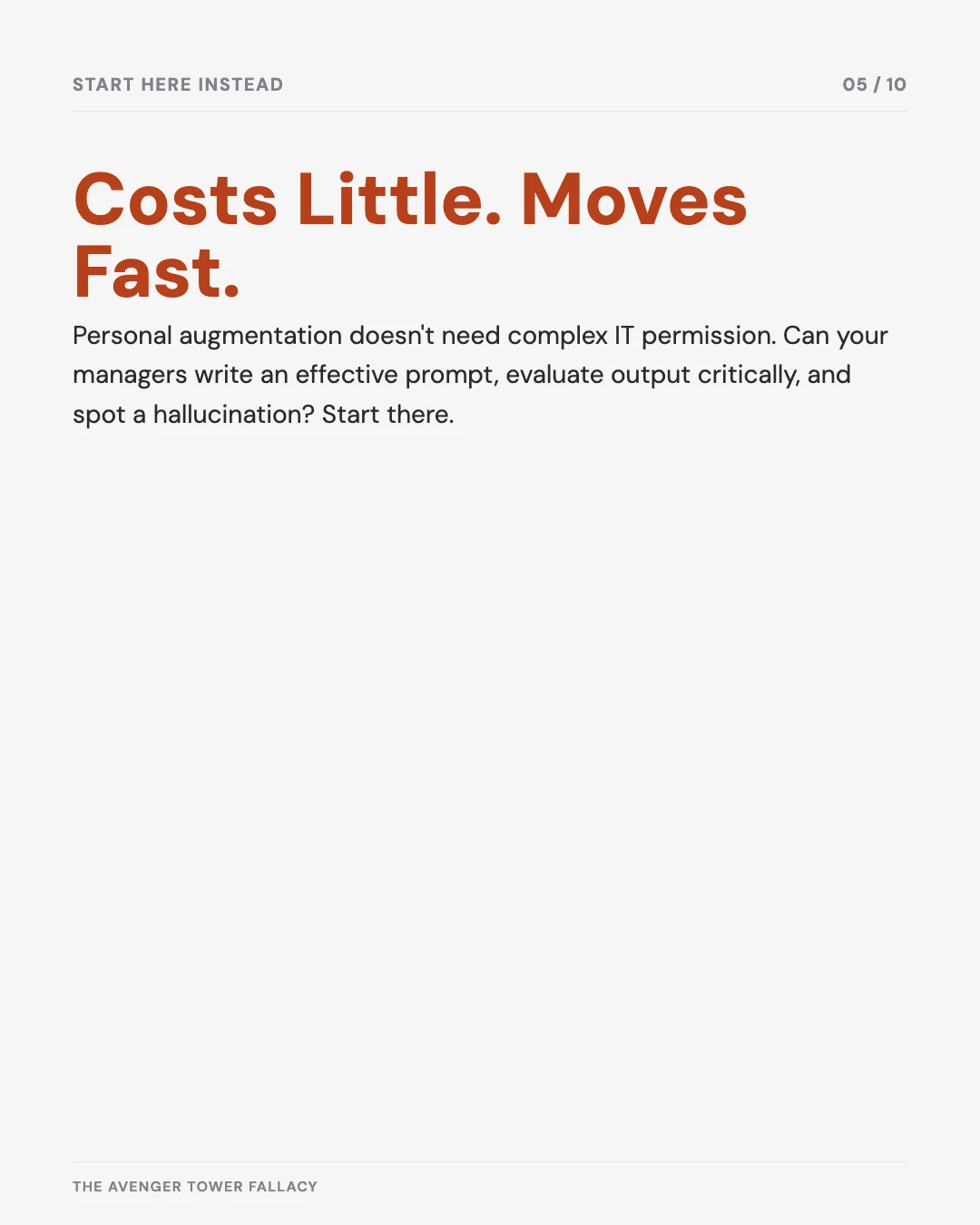

I see the same pattern happening at almost every organisation rushing into AI.
Companies throw massive budgets at building the “ultimate infrastructure.” They lock down shiny new AI platforms, roll out heavy governance frameworks, stand up data lakes, and stitch together complex integration layers.
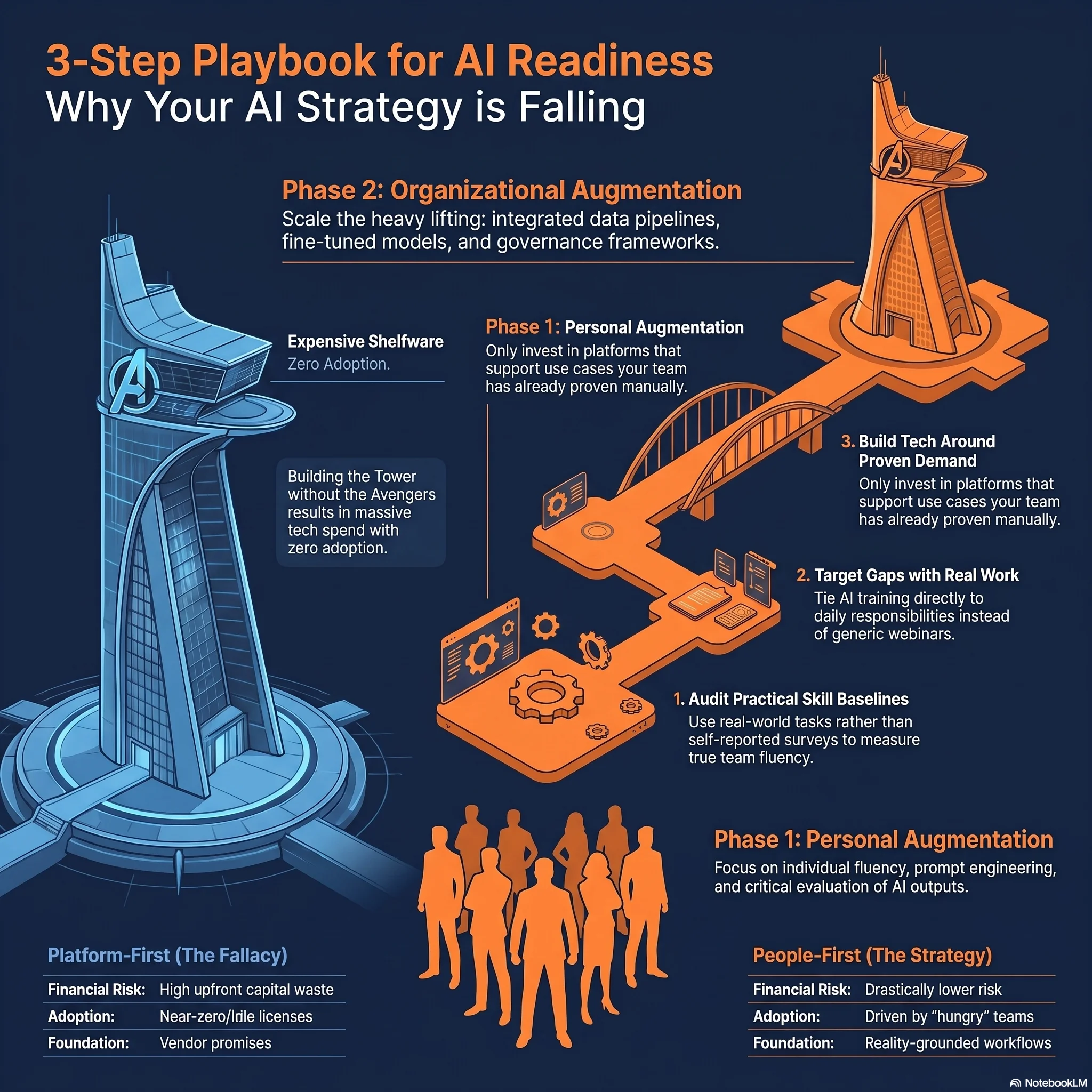
Essentially, they build an incredible, high-tech Avenger Tower before they’ve even assembled a single Avenger.
The building looks imposing on the skyline. But the people inside have no idea how to fly the jets or press the right buttons.
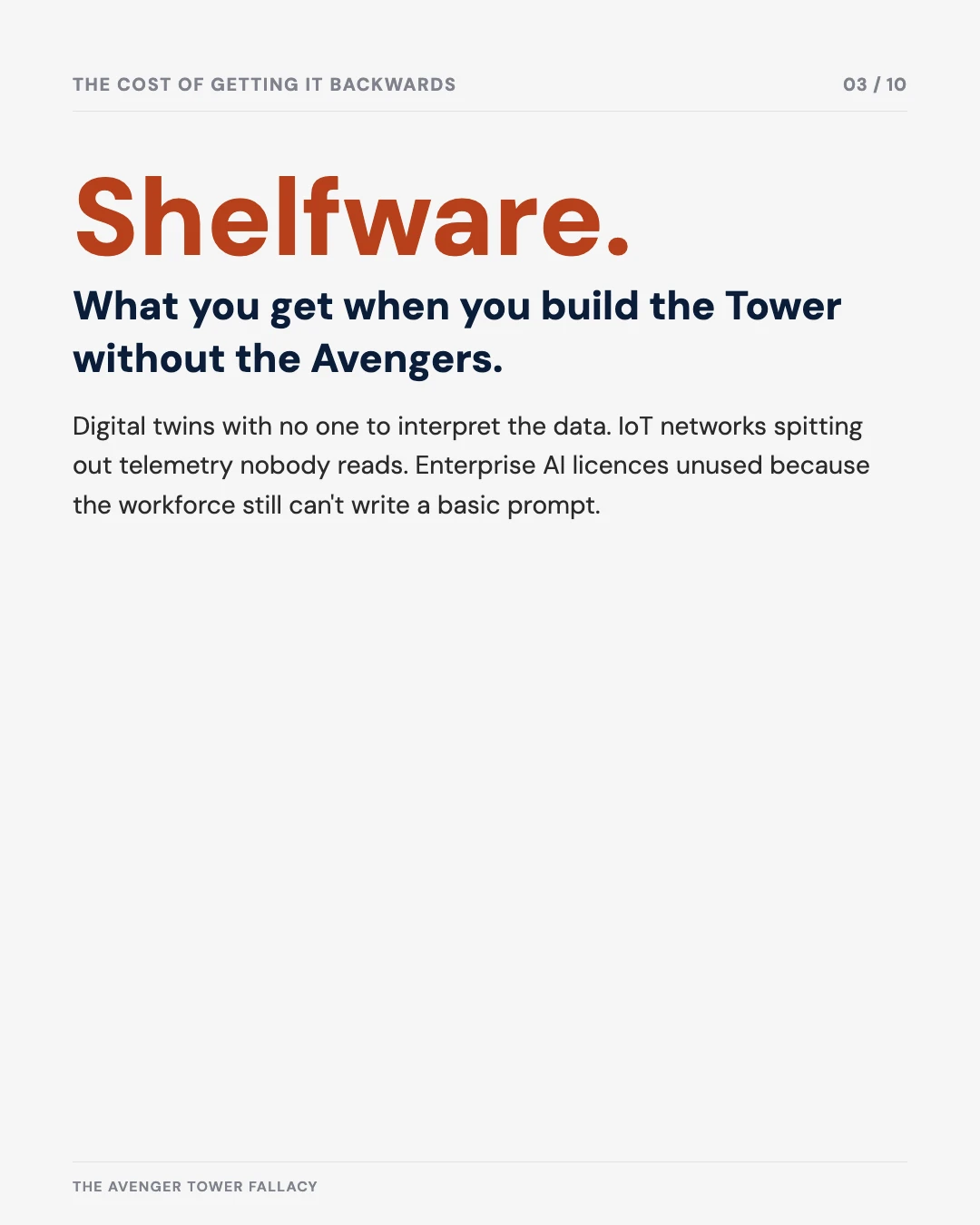
The result is massive tech spend and near-zero adoption, with an ROI that never leaves the spreadsheet. Digital twins sit there with no one to interpret the data. IoT networks spit out telemetry nobody reads. Enterprise AI licences go unused because the workforce still doesn’t know how to write a basic prompt.
I go deeper on this failure pattern in the video below:
Fix the People Before the Platform
If you want AI to work, you have to reverse the sequence. Upskilling your people needs to happen before you scale the enterprise tech. Think of it as two distinct phases:
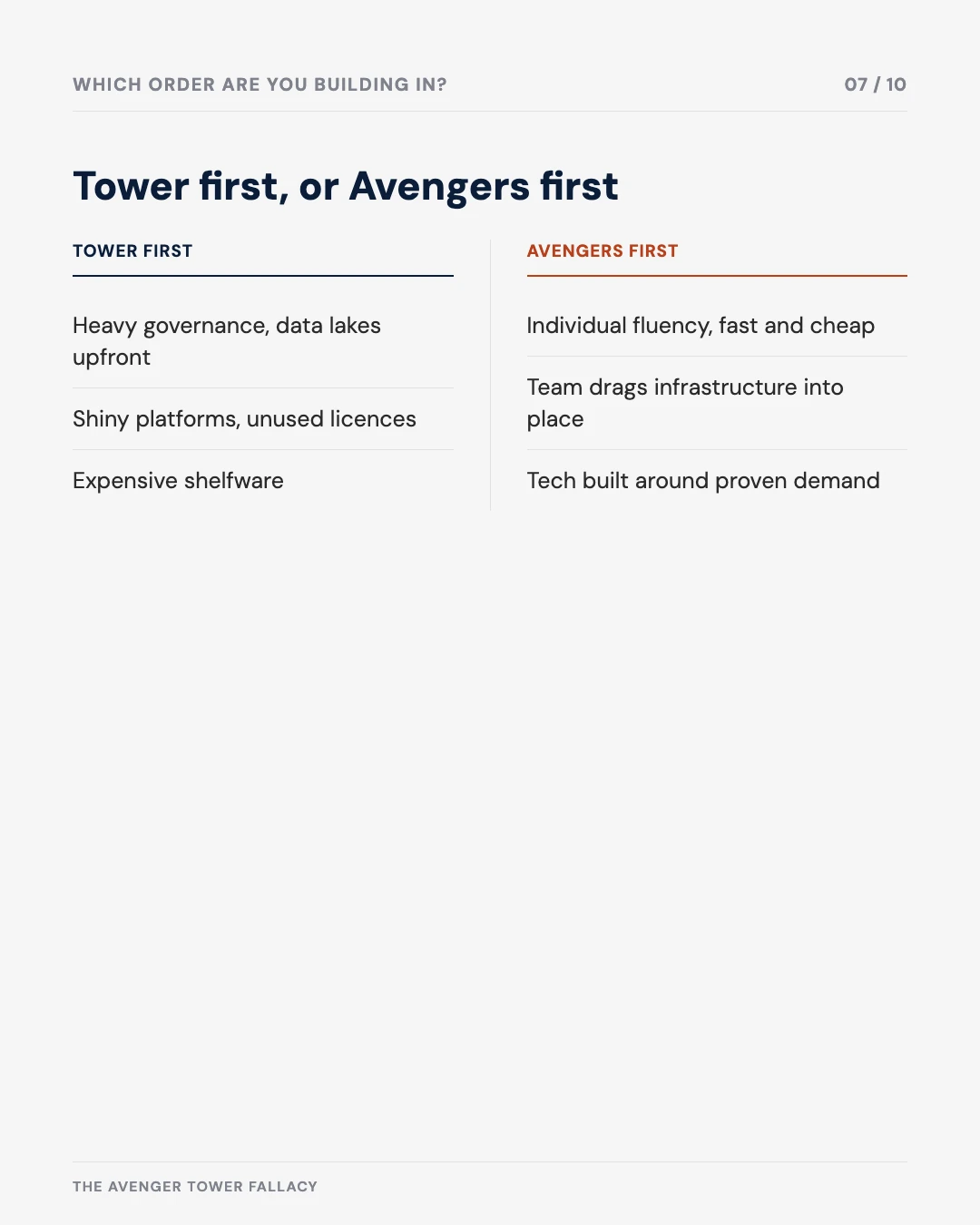
- Personal augmentation (the Avengers). Individual fluency. Can your managers and technical staff write an effective prompt? Do they know how to critically evaluate an AI’s output, spot hallucinations, and weave AI into their daily tasks? This costs very little, moves fast, and doesn’t require complex IT permission.
- Organisational augmentation (the Tower). This is the heavy lifting: integrated data pipelines, fine-tuned models, strict compliance frameworks, production-ready monitoring. It takes time, serious capital, and cross-functional alignment.
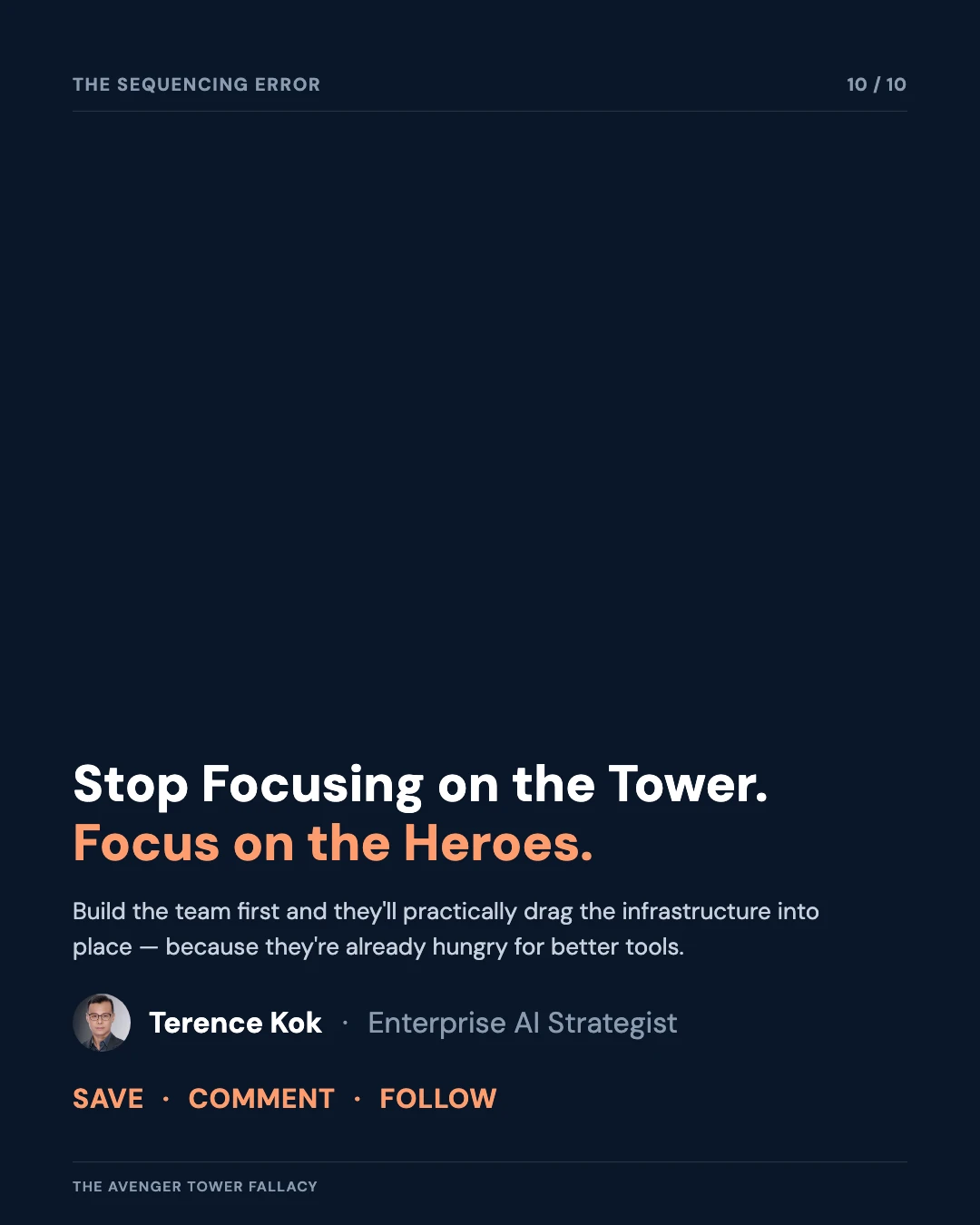
Build the Tower without the Avengers and you get expensive shelfware. Build the team first, and they’ll practically drag the infrastructure into place because they’re already hungry for better tools.
A Realistic Four-Step Playbook
Instead of buying tools and hoping people use them:
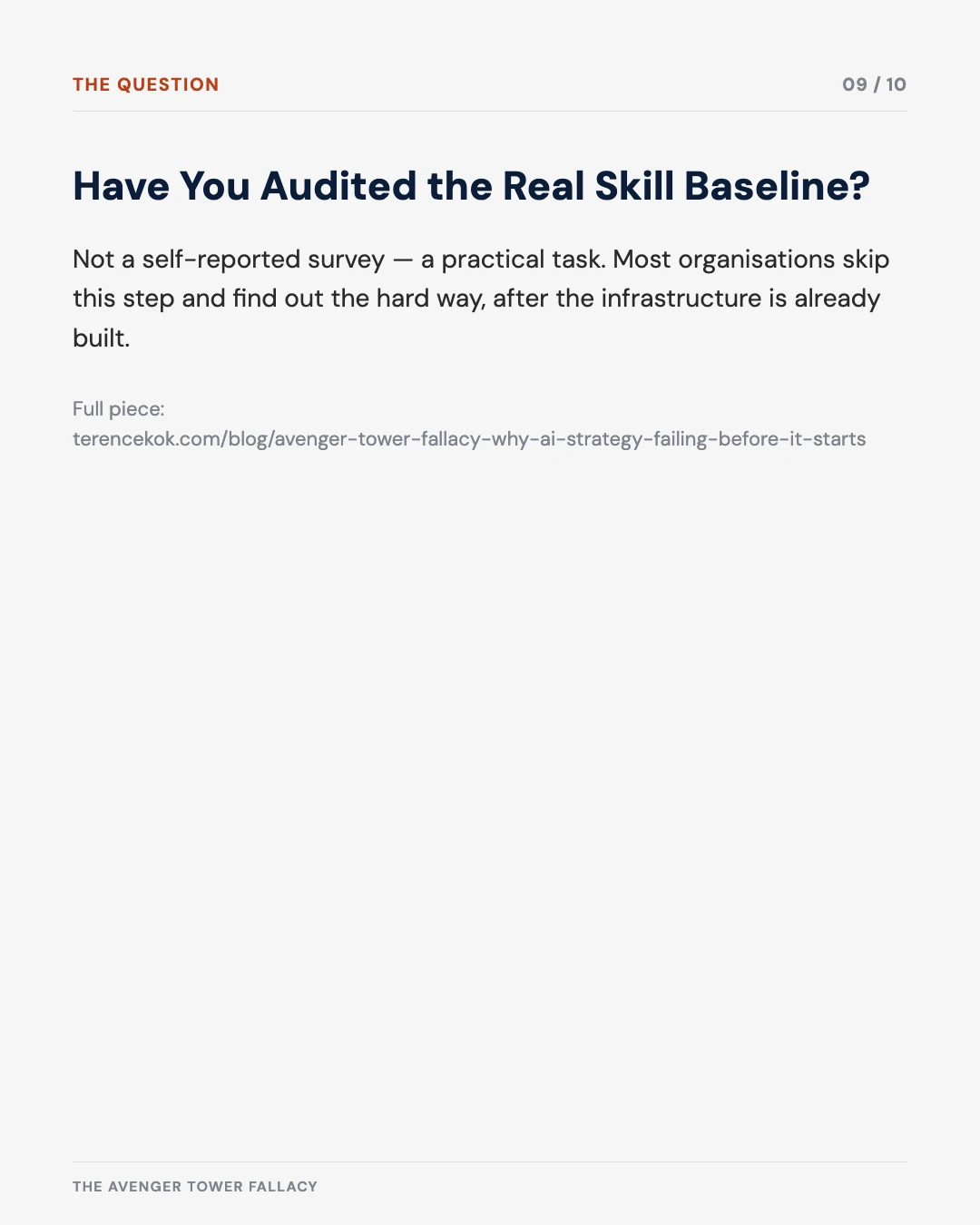
- Audit the actual skill baseline. Find out how fluent your team really is with AI today. Don’t rely on self-reported surveys. Give them practical tasks and see where they stand.
- Target the gaps with real work. Skip the generic “AI 101” webinar. Put the tools directly into people’s hands and tie training to their actual, day-to-day responsibilities.
- Let team capabilities compound. Once a critical mass of people in a department know what they’re doing, they start figuring out genuine, high-value workflows together.
- Build tech around proven demand. Only buy the platforms and design the data architectures that support the use cases your teams have already proven out manually.
Running Both in Parallel Carries Real Risk
Sometimes. If you already have a highly technical team, or competitive pressure means you can’t wait, you can build infrastructure while training the team. But be honest about what that is: a high-risk, high-stress move. Don’t do it just to look “innovative” to the board.
The Trade-off
Shifting to a people-first strategy drastically lowers your financial risk and builds a tech stack grounded in reality.
The catch is patience. Your data integration might take a back seat while your workforce gets up to speed, and you’ll need to keep a sharp eye on shadow IT, making sure enthusiastic employees aren’t pasting sensitive data into public models while they experiment.
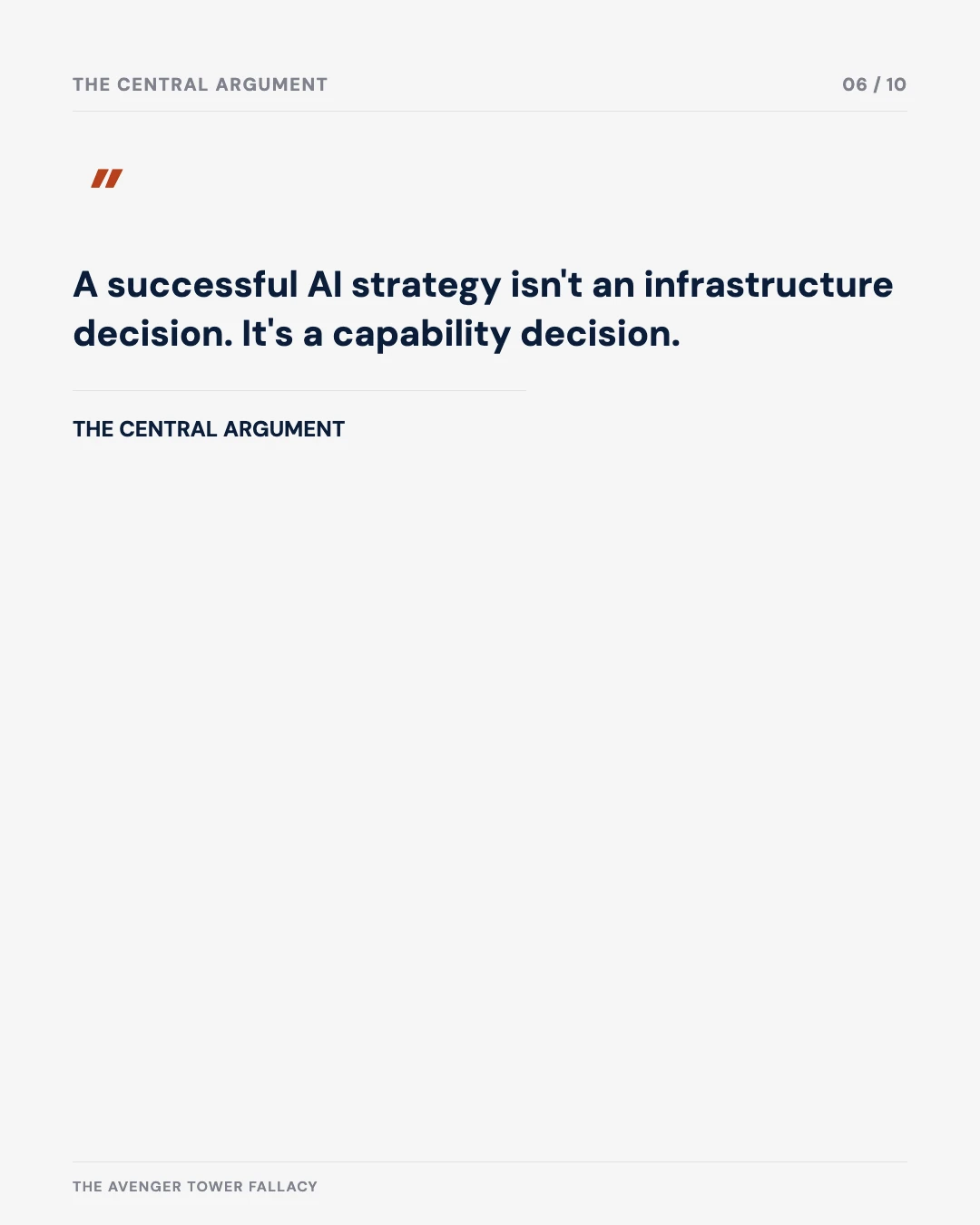
A successful AI strategy is a capability decision, not an infrastructure one. Stop focusing so much on the tower. Focus on the heroes who have to save the day.
Free tool
AI Readiness Self-Assessment
Check where your own team’s fluency stands, alongside data, process, governance, and measurement, before you commit to infrastructure spend.
And if you’d like help sequencing the upskilling ahead of the platform investment, that’s exactly what my consulting work covers.
Was this useful?