
Listen to this article
Executive Summary
AI has made work faster but not easier for leaders. An expectation-capacity gap opens when AI accelerates information and decisions faster than human absorption, judgment, and governance can keep pace.
Core conclusions
- Burnout comes from speed without redesign: efficiency gains get treated as capacity for more work instead of a chance to redesign roles and workflows.
- Making AI sustainable requires operating-model changes, not just a tech stack: non-negotiable timelines, phased rollout with hard gates, and explicit redesign of freed-up workload before tools go live.
- Clear, lightweight governance protects managerial judgment rather than slowing things down. It prevents rework and firefighting, and makes it easier to say “not yet” to low-value demands.
The remedy, in ten slides
Save it, share it, or send it to whoever keeps asking you to “use AI on this.”
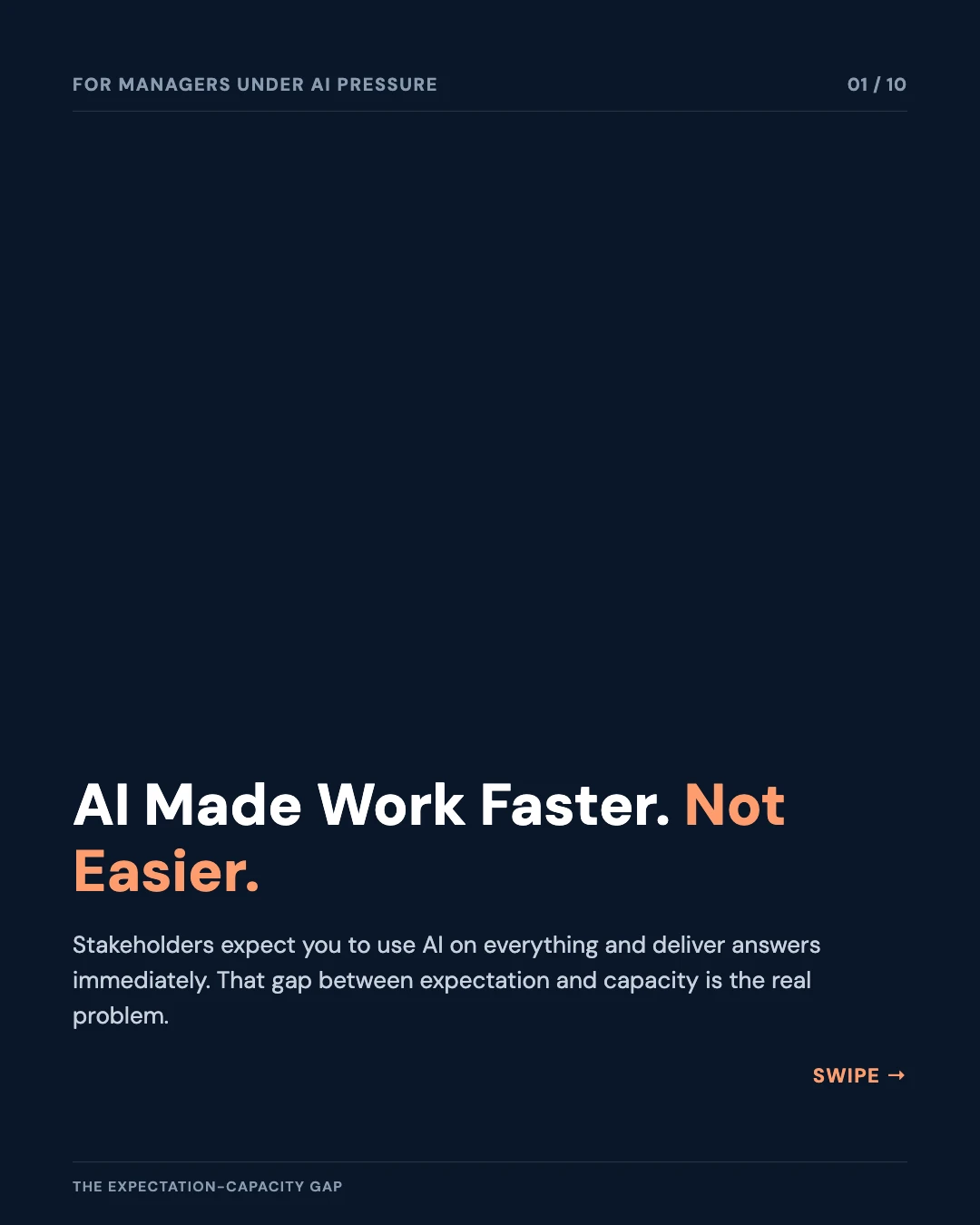
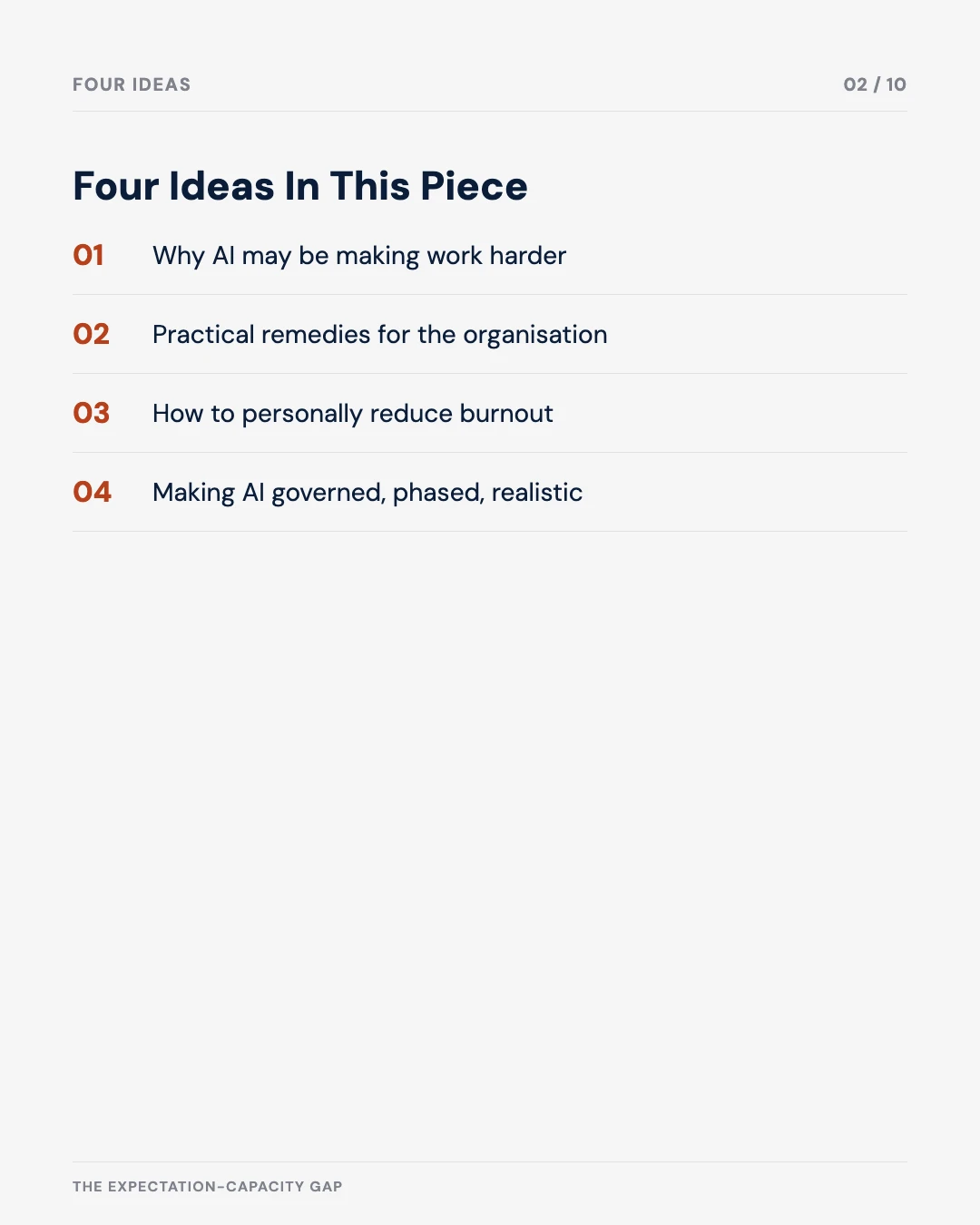
Life at work is faster and more efficient after AI, but for many leaders, it is not easier. Stakeholders expect you to “use AI on everything” and deliver answers immediately. The result is an expectation–capacity gap: AI accelerates information and decision cycles, while human absorption, judgment, and governance lag behind.
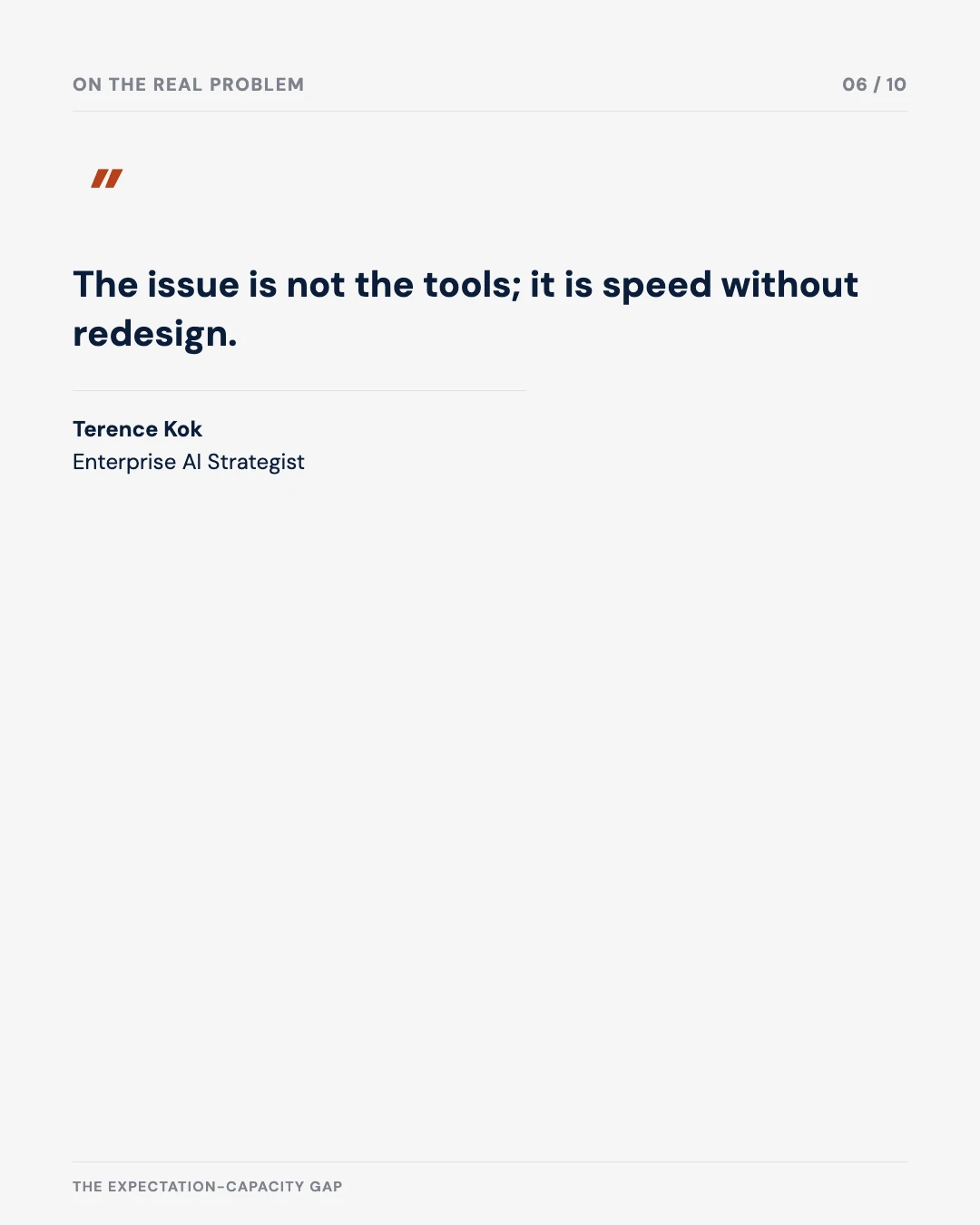
Recent surveys show that most tech leaders report unrealistic AI ROI expectations from executives, and middle managers report some of the highest burnout levels in the organisation. AI has increased the workload for most employees, even as it has improved productivity. The issue is not the tools; it is speed without redesign — I trace this same mechanism, from the individual professional’s side, in The Velocity Trap.
The issue is not the tools; it is speed without redesign.
Why AI May Be Making Work Harder
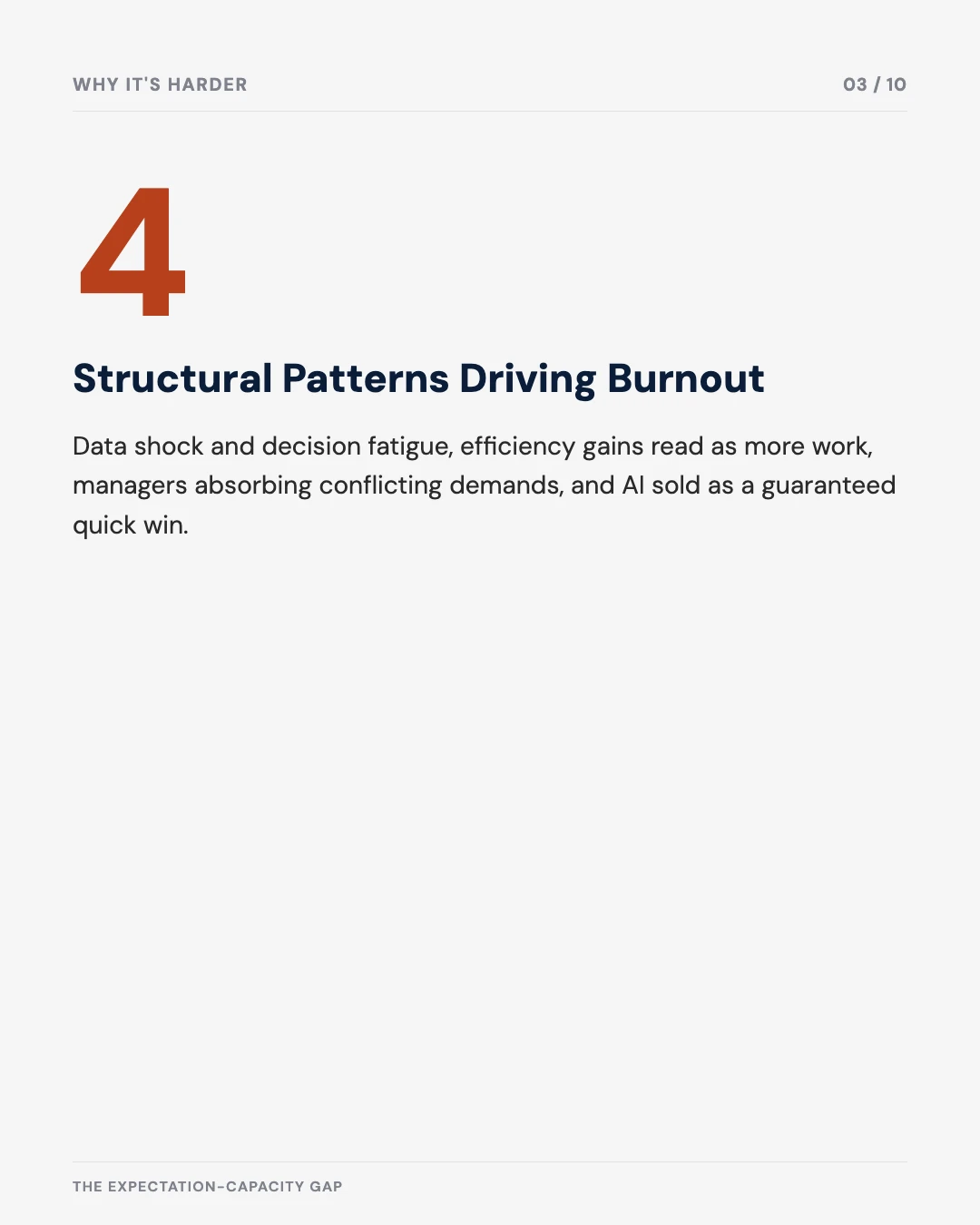
Several structural patterns are driving this burnout:
- AI increases data and decisions faster than teams can process them, creating “data shock” and decision fatigue.
- Efficiency gains are treated as capacity to do more work, not as an opportunity to redesign roles and workflows.
- Middle managers absorb conflicting demands: deliver AI results quickly, protect teams, and maintain governance and compliance.
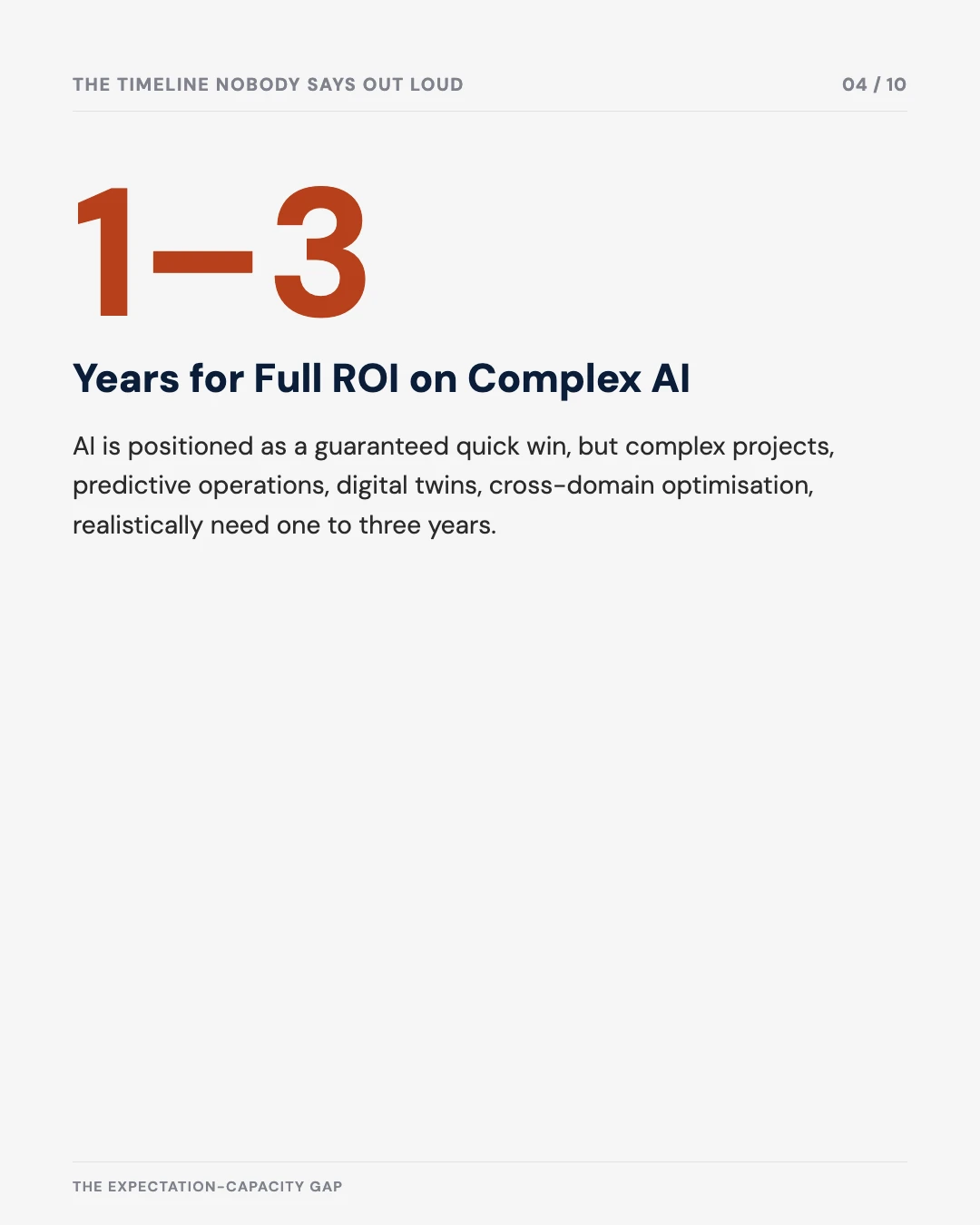
- AI is positioned as a guaranteed quick win, but complex projects realistically need 1–3 years to achieve full ROI.
The outcome is predictable: pilots multiply, the portfolio becomes unmanageable, and people burn out long before benefits are consolidated. Many organisations then quietly abandon a large share of initiatives.
Pilots multiply, the portfolio becomes unmanageable, and people burn out long before benefits are consolidated.
Practical Remedies We Can ALL Use
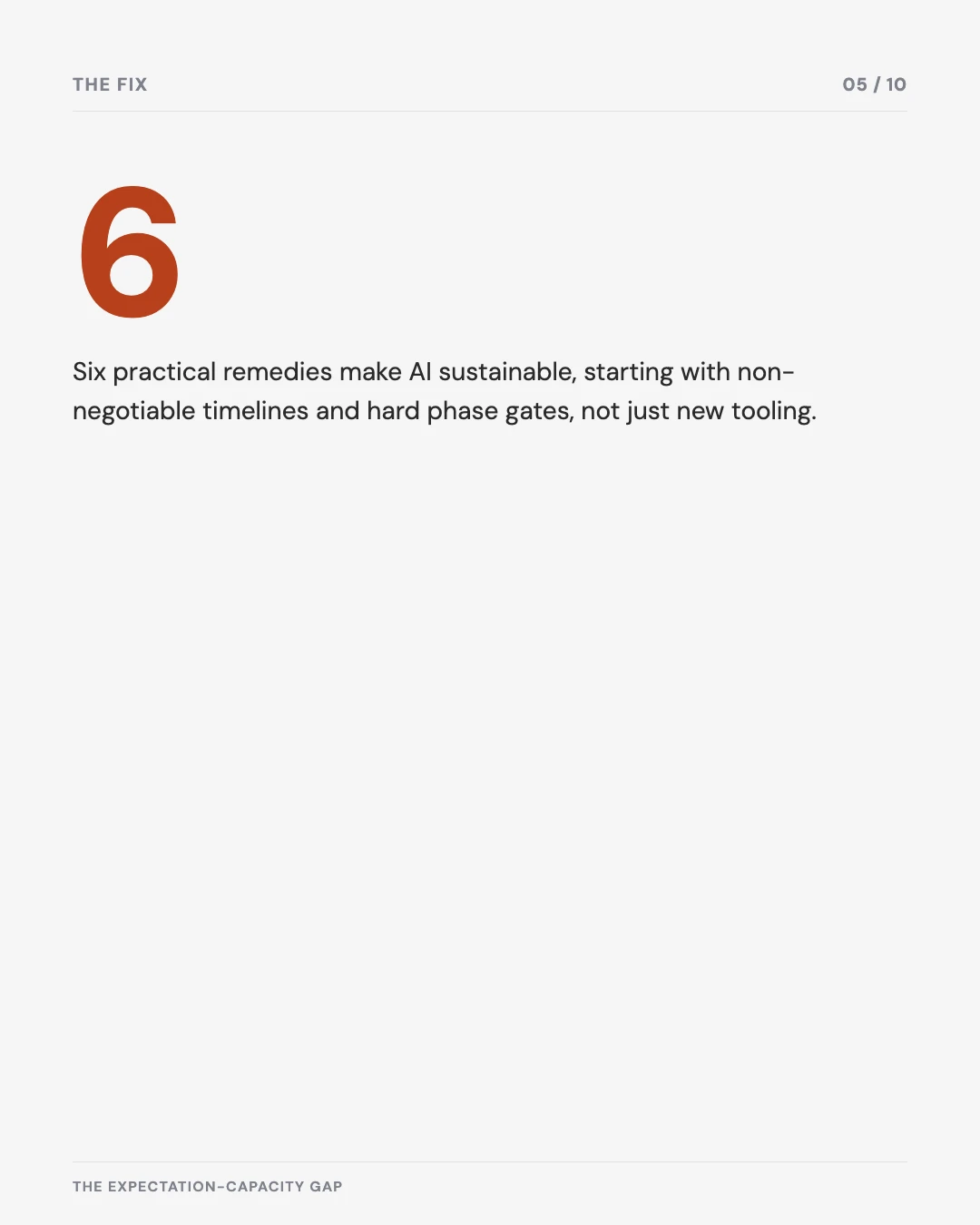
To make AI sustainable, the operating model must be adjusted, not just the tech stack.
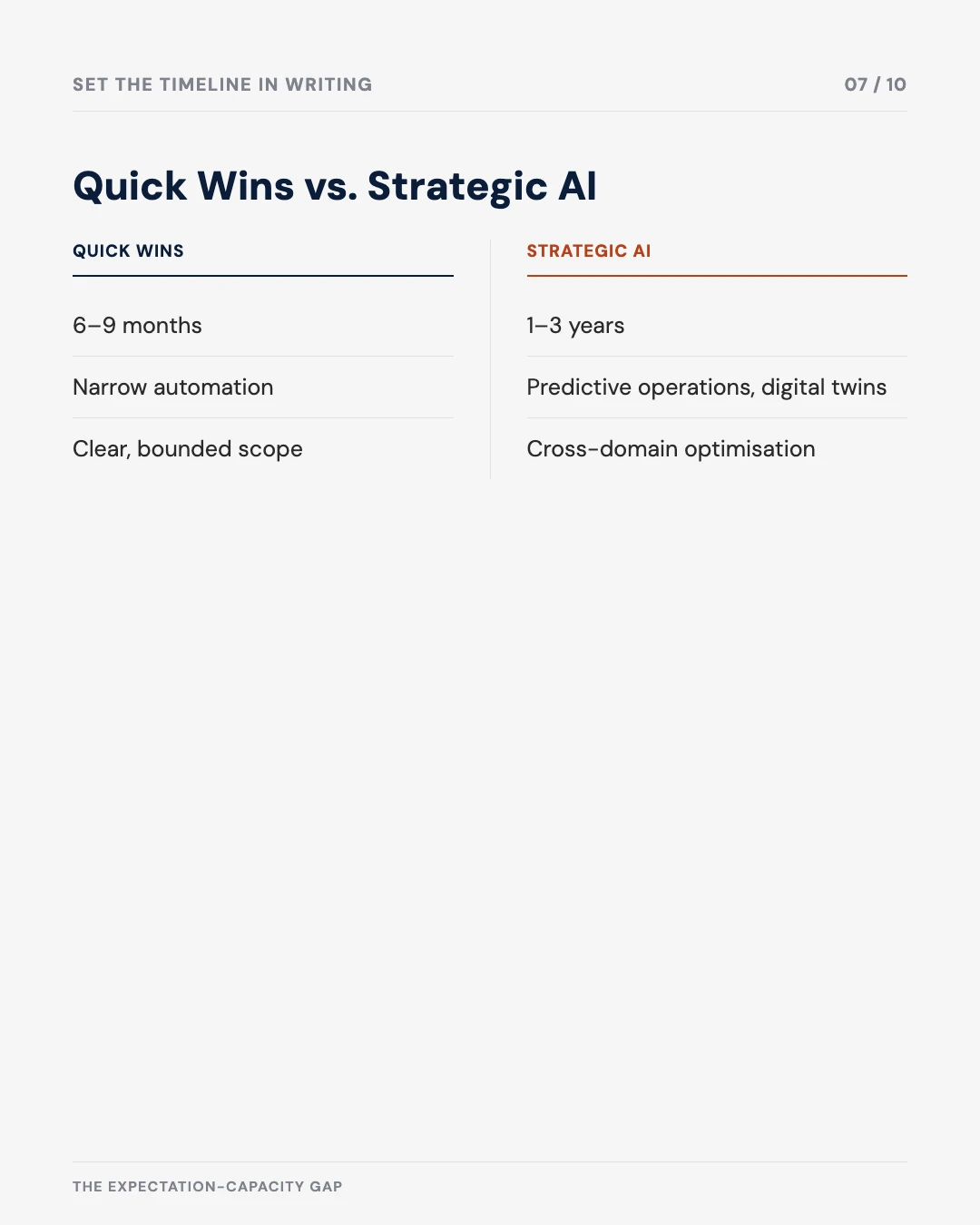
Set non‑negotiable timelines and scope. Distinguish between quick wins (6–9 months for narrow automation) and multi‑year strategic AI (predictive operations, digital twins, cross‑domain optimisation). Put these ranges in writing and have stakeholders sign up to them. 2.
Deploy in phases with hard gates. Start with one or two critical use cases, stabilise them, then scale. Each phase should have clear targets, such as accuracy, uptime, and operational impact, before new workloads are added. 3.
Redesign workload before you roll out tools. Decide explicitly what will happen to the hours freed by automation: which strategic activities they move to, what roles are accountable, and what stops to make space. If this is vague, burnout risk is high. This is fundamentally a team-design question, and I’ve argued it’s the actual bottleneck most AI programmes underestimate. 4.
Use governance as a speed enabler. Lightweight but clear governance (decision rights, model monitoring, audit trails) prevents rework, compliance panic, and firefighting later. It also makes it easier to say “not yet” to low‑value demands. 5.
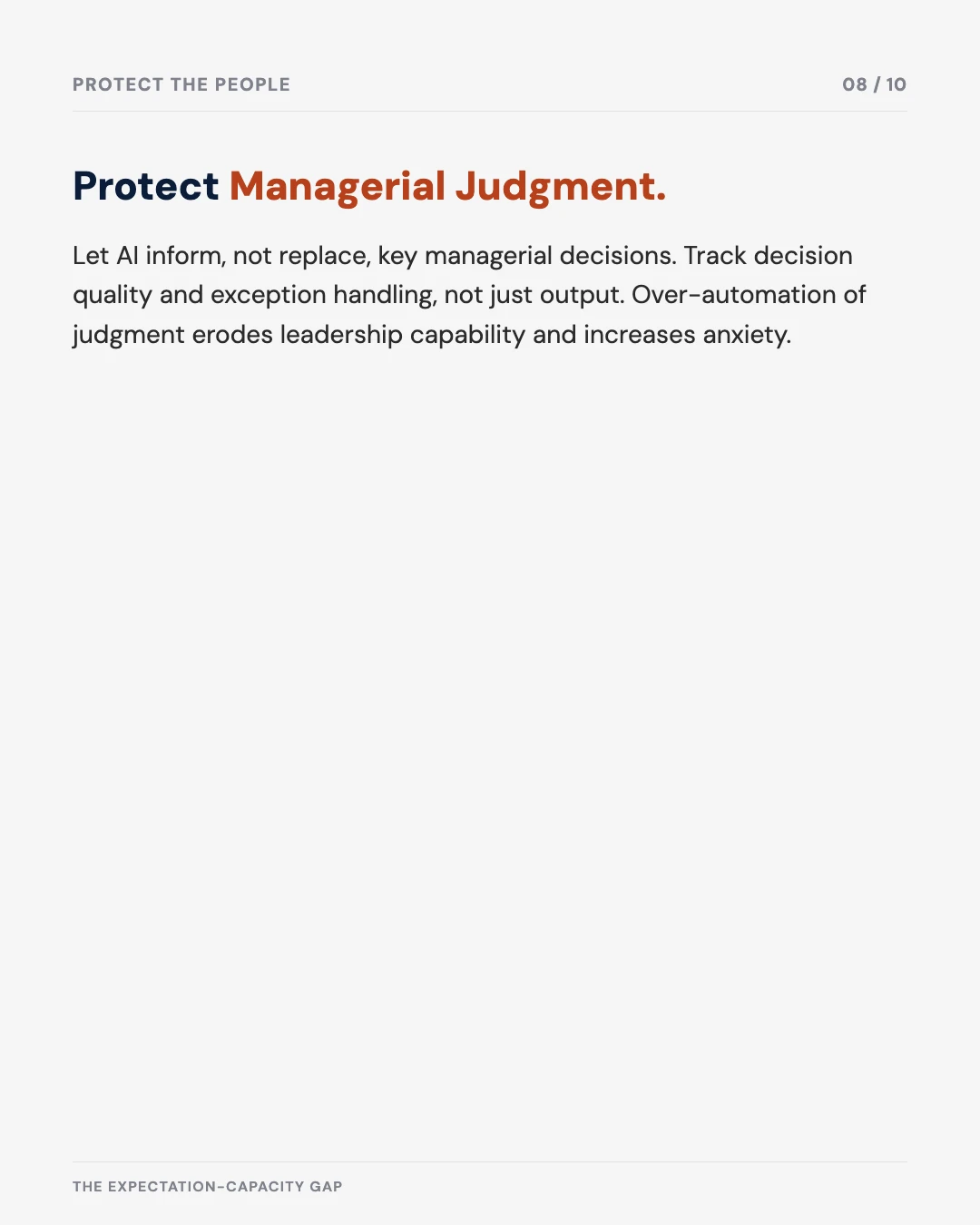
Protect middle‑management judgment. Let AI inform, not replace, key managerial decisions. Track not just output, but decision quality, exception handling, and autonomy. Over‑automation of judgment erodes leadership capability and increases anxiety. 6.
Communicate realistically and often. Baseline current performance, explain probabilistic outcomes, and share both gains and limitations. This reduces the gap between what was promised and what is possible, which is where frustration usually lives.
How To Personally Reduce Burnout
At a personal level, a few concrete moves can make this survivable:
- Translate AI hype into one prioritised roadmap and push back on ad‑hoc requests that are misaligned with it.
- Tie every new AI ask to explicit trade‑offs: “If we add this, what are we pausing or delaying?”
- Reserve fixed time for deep thinking and design work; do not allow it to be fully consumed by firefighting and demos.
- Make your constraints visible to senior stakeholders in quantitative terms: capacity, complexity, and risk, not just effort.
AI is not going away, and neither are expectations. The leaders who remain effective will not be those who say “yes” the fastest, but those who convert AI from a permanent emergency into a governed, phased, and realistic part of how their organisation operates.
Free tool
AI ROI Calculator
Model realistic ROI timelines before you promise stakeholders a guaranteed quick win AI rarely delivers in under a year.
Was this useful?