Are you suited to be a Chief AI Officer?
24 questions across 6 dimensions. 14 minutes. Discover your CAIO archetype and get a scored suitability result, with a full downloadable report.
Listen to this briefing
The Archetypes of a Chief AI Officer

The Chief AI Officer Personality Test is basically a quick self-check-up for CAIOs: 24 scenario-based questions split across six areas: Technical Fluency, Strategic Vision, Risk and Governance, Change Leadership, Commercial Acumen, and Security and Assurance Partnership. The idea is to give you a rough archetype and suitability score, benchmarked against what CAIO search committees typically look for.
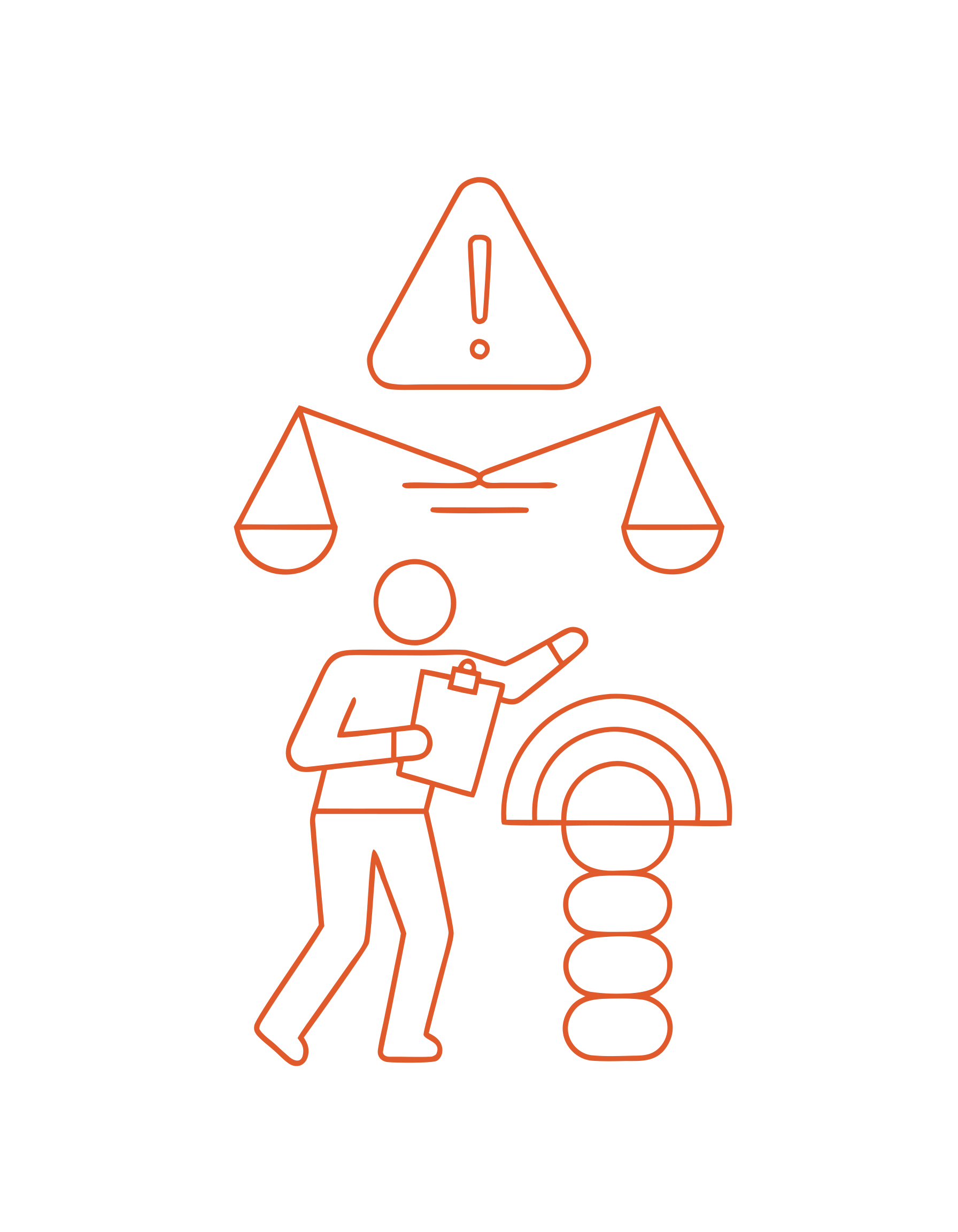
Why it matters: the CAIO role is still pretty new and messy compared to other C-suite jobs, so there's no agreed checklist for what "good" looks like. People end up being judged on whatever slice of the job someone happens to notice, maybe their technical chops, maybe their ability to get a board on side, rather than the whole picture. This test tries to cover all six angles at once, so it can flag the gaps you might not see yourself, like being strong on the tech side but weak on making the CFO-facing business case, or strong on governance but disconnected from security.
It's not meant to be gospel though, more of a starting point to test against what colleagues think of you, with a suggested retake every 6-12 months to see if you're moving the needle.
4 questions · The Architect
4 questions · The Strategist
4 questions · The Guardian
4 questions · The Catalyst
4 questions · The Operator
4 questions · The Sentinel
Your results come with real certifications and training programmes, from providers like Google Cloud, MIT Sloan, Wharton, and IAPP, matched to your specific lowest-scoring dimension. Not a generic reading list; a starting point for what to go and study.
No sign-up required. Results shown instantly.
















The certifications and training recommendations below weren't my idea — they came from a suggestion by May Jue Thet Aung, credited here. She proposed pairing every dimension's score with a real programme people could enrol in. It's a better test because of it.

Six dimensions that separate a credible CAIO from an aspiring one.
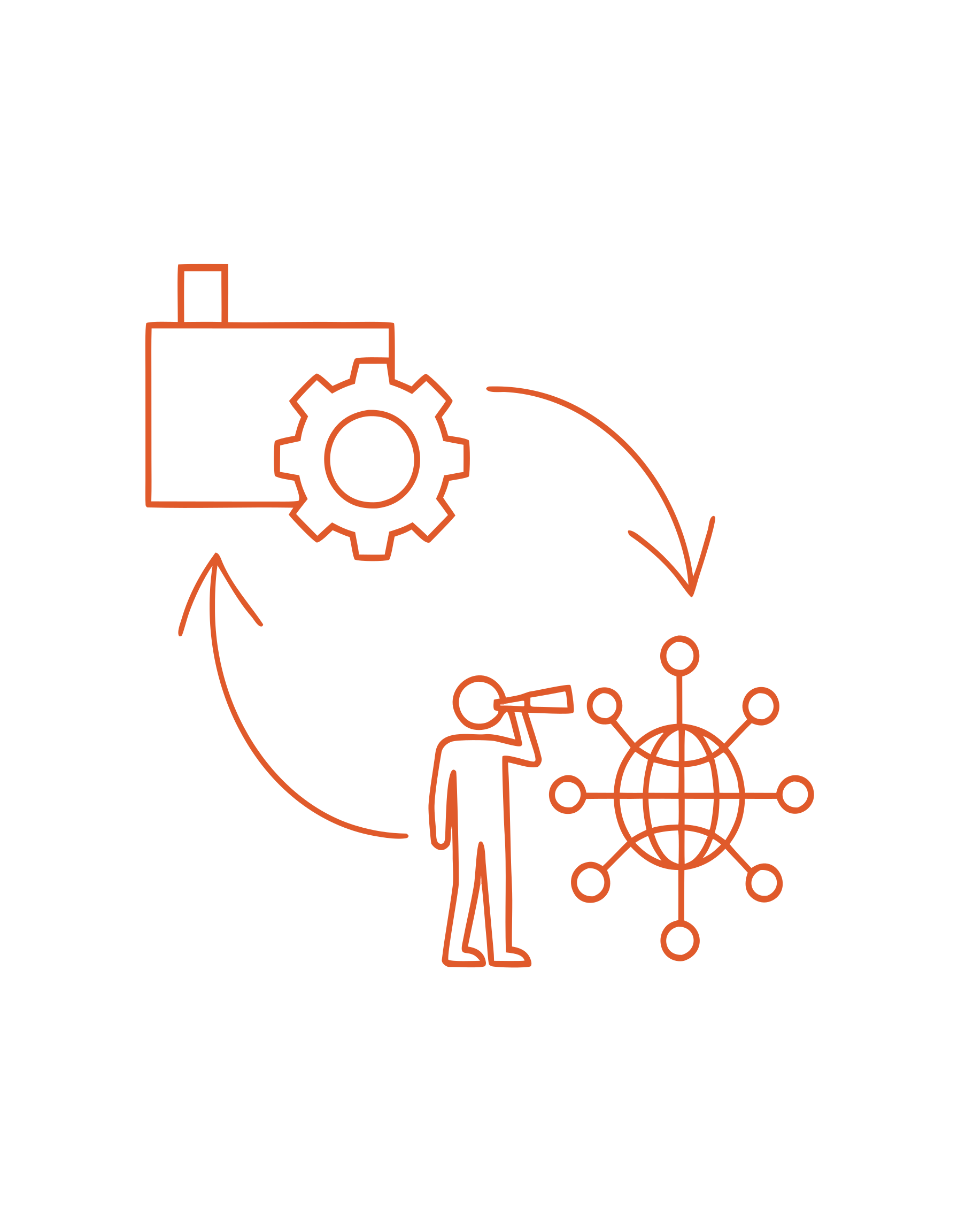
Technical Fluency — The Architect
Whether you can independently evaluate AI capability and risk, or depend entirely on others to tell you what to believe about a technology decision.
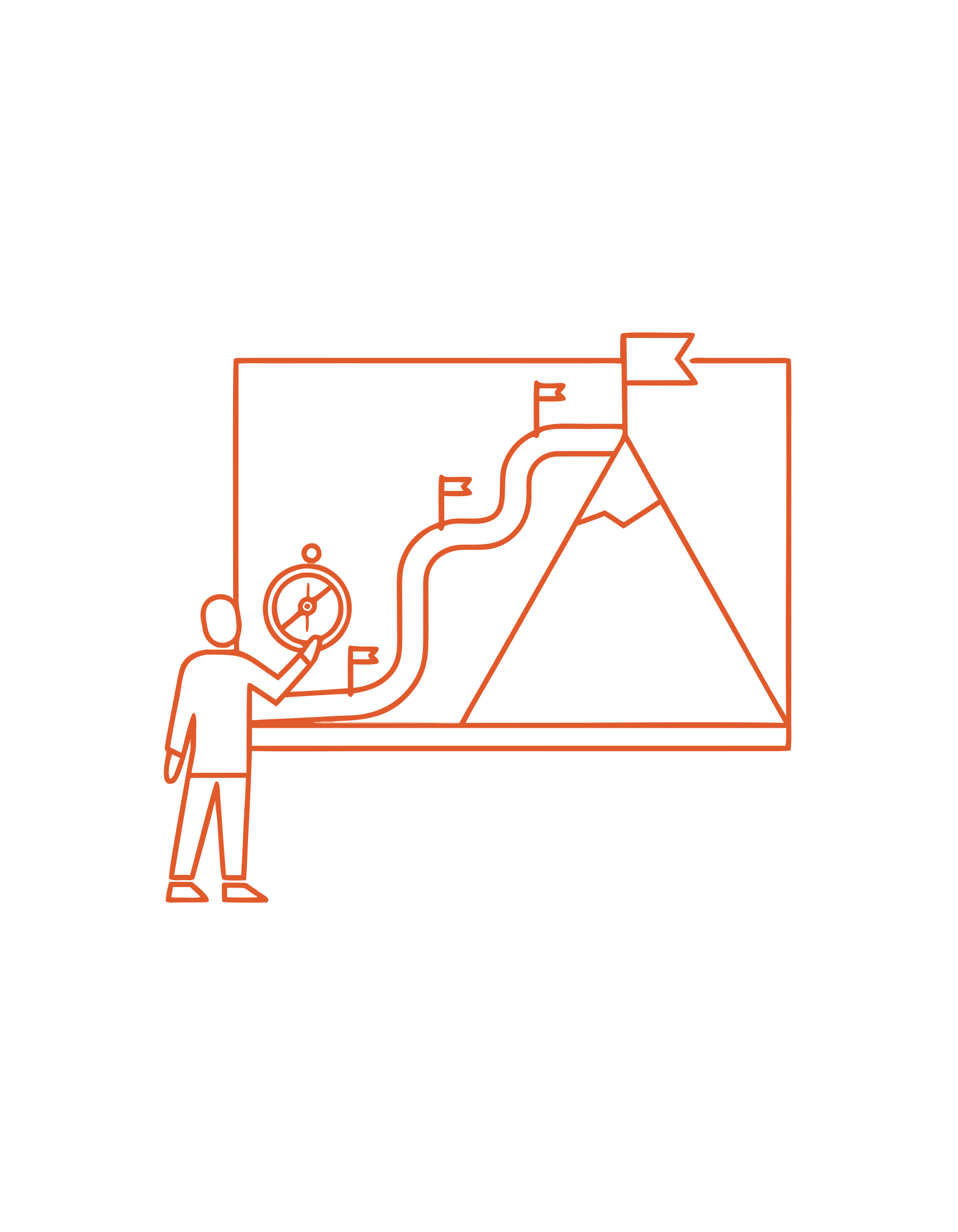
Strategic Vision — The Strategist
Whether you connect AI to business strategy and competitive position, or think about it one tool and one pilot at a time.
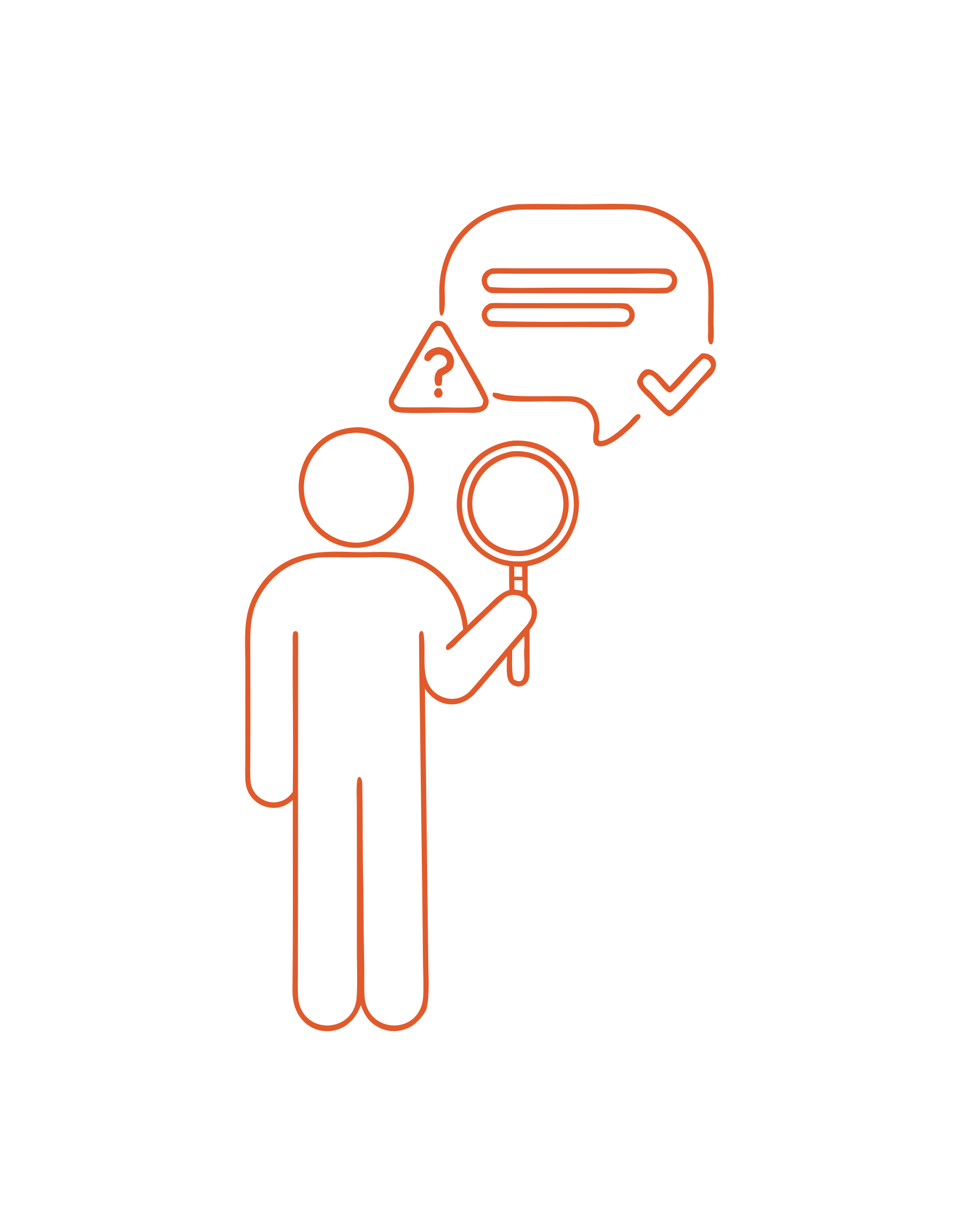
Risk & Governance — The Guardian
Whether you build governance and risk controls proactively, or only react once something has already gone wrong.
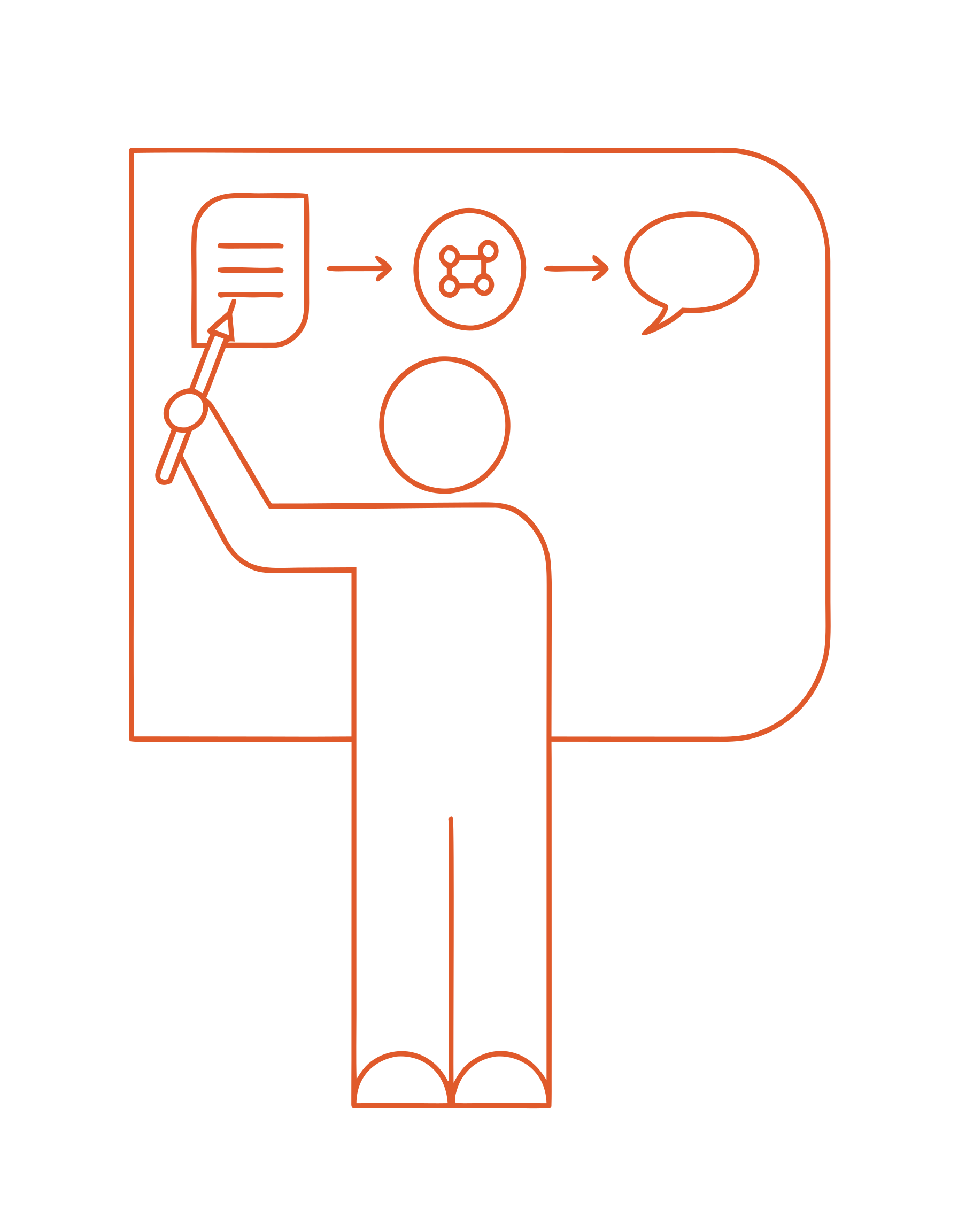
Change Leadership — The Catalyst
Whether you can bring a sceptical, anxious workforce along with a change, or rely on a mandate from the top to force adoption.
Commercial Acumen — The Operator
Whether you tie AI investment to numbers the CFO trusts, or measure success by enthusiasm rather than business impact.
Security & Assurance Partnership — The Sentinel
Whether you tie AI investment to numbers the CFO trusts, or measure success by enthusiasm rather than business impact.
Ready to turn your archetype into a development plan?
The AI Strategy Consulting engagement benchmarks your suitability profile, identifies your highest-leverage development gap, and helps you position for the right CAIO mandate.
Explore AI Strategy Consulting
I built this one because the Chief AI Officer role barely existed five years ago, so nobody agrees on what good looks like. Most candidates get judged on whichever slice of the job someone happened to notice, sharp on the technical side, weak on convincing a CFO. Twenty-four questions later you get an archetype and a suitability score, plus real certifications matched to your weakest dimension. Retake it every six months. Watching your own profile shift over time is oddly satisfying.
