
Listen to this article
Executive Summary
Clients are now running consultants’ reports through their own AI before a human ever opens the file, so the report itself has a second, non-human reader whose critique shapes the meeting before it starts.
Core conclusions
- Write for two audiences at once: clear structure, explicit reasoning, and cited data serve both the human reader and the AI summarising the work for them.
- The executive summary is now the primary prompt. If it’s muddled, every downstream AI interpretation of the report inherits that confusion.
- The firms with an edge aren’t hiding AI-side review, they’re designing for it: pre-flight testing reports through the same models clients use, and treating client AI-generated questions as feedback on the work itself.
Writing for a machine reader, in ten slides
Save it, share it, or send it to whoever signs off your next client deliverable.
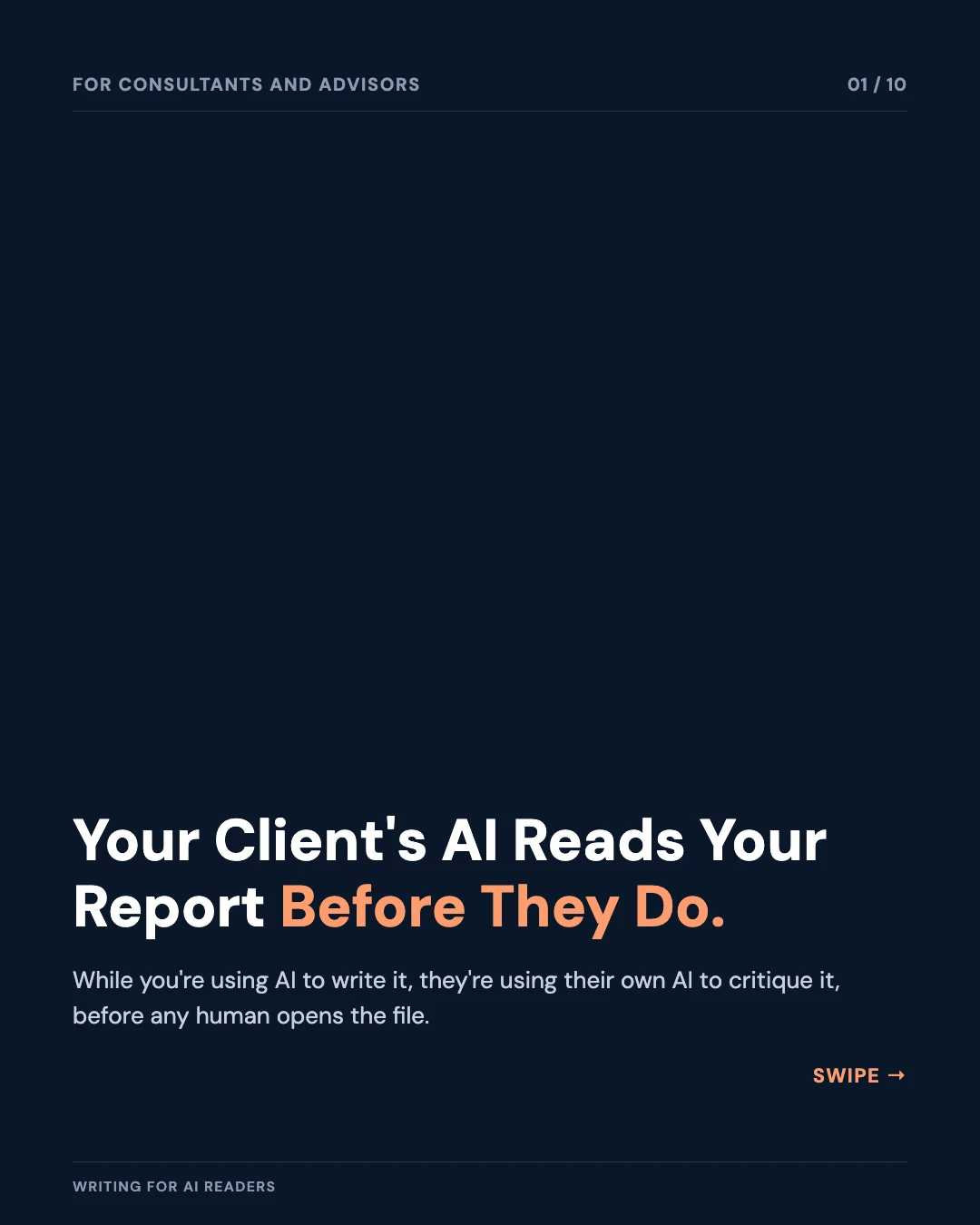
Here’s something wild: while you’re busy using AI to write your reports, your client is probably using their own AI to read them, before any actual human gets to it.
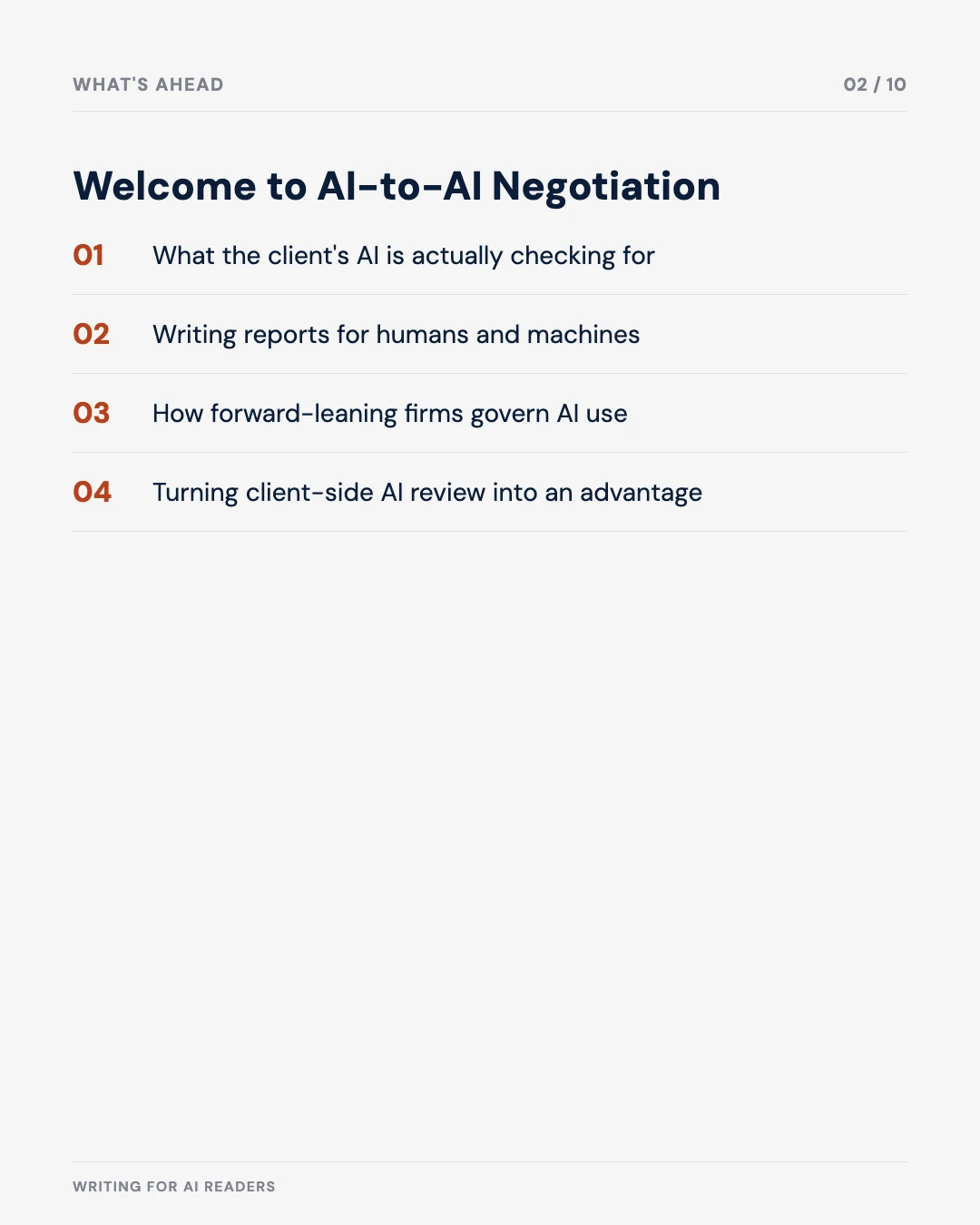
Welcome to AI-to-AI negotiation
These days, consultants are cranking out reports with the help of AI: drafting, structuring, checking the work. Meanwhile, clients are feeding those same reports into their own AI tools to summarize, validate, and poke holes in your recommendations.
There’s a quiet AI debate happening over your work before the real decision-makers even open the file.
This isn’t some future scenario. It’s happening right now. Consulting firms are using AI to speed up their analysis and writing, while clients are running everything through AI to review contracts, proposals, and board papers at scale. If you’re ignoring this, you’re letting some mysterious algorithm, trained on who-knows-what data, become the first (and harshest) critic of your work.
What’s the AI actually looking for?
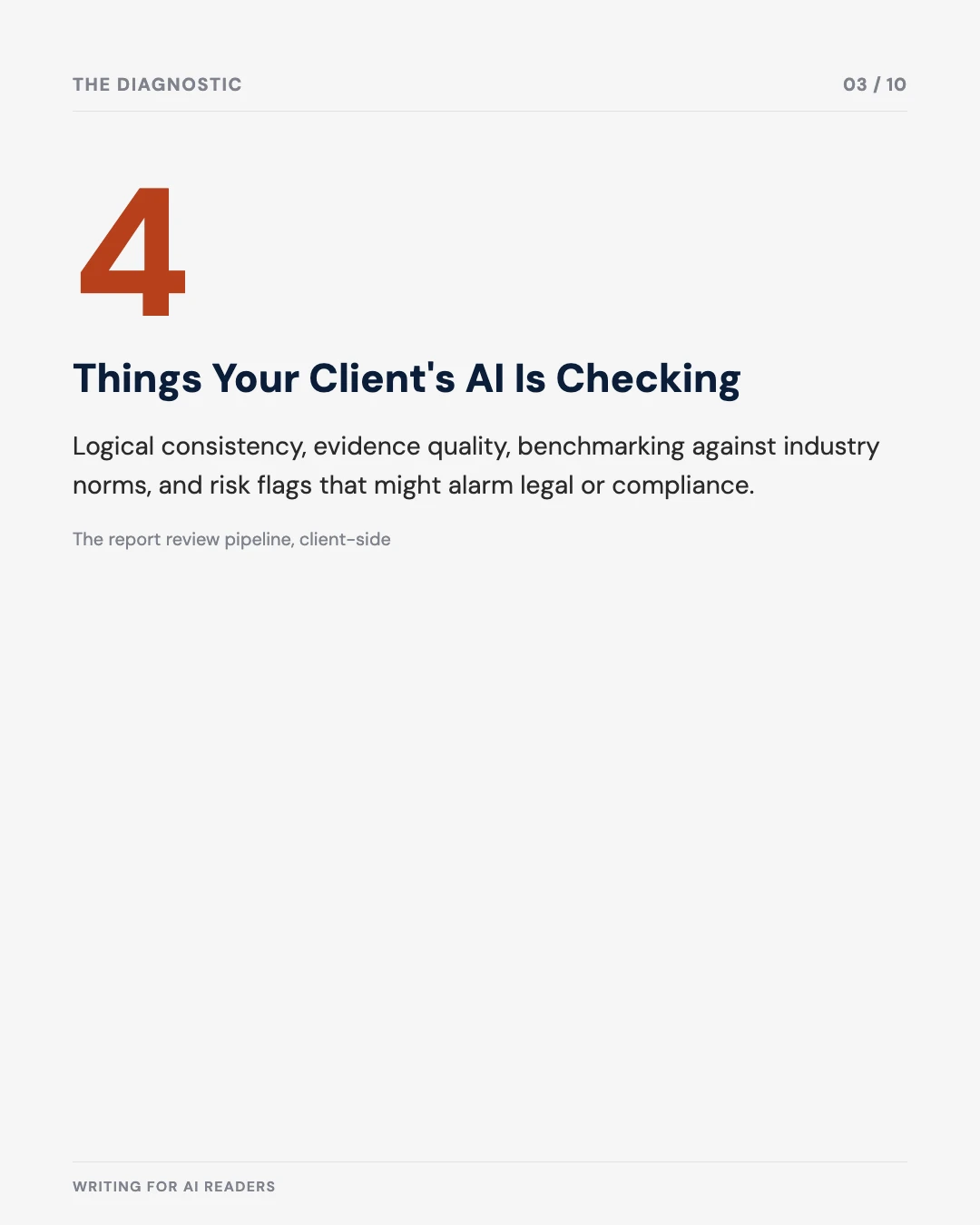
When a client feeds your report into an AI, it’s not just making a nice summary. It’s running a full diagnostic:
- Logical consistency: Do your numbers add up? Does the story make sense from section to section, or are there sneaky contradictions?
- Evidence quality: Where are you being vague? Where are you making claims without backing them up?
- Benchmarking: How do your recommendations stack up against industry norms or other options the AI knows about?
- Risk flags: Is the AI spotting feasibility issues, control gaps, or regulatory concerns that might alarm legal or compliance teams?
It’s like having a super-fast peer reviewer who never gets tired, and it’s seeing your work before the C-suite does.
Writing for humans AND machines
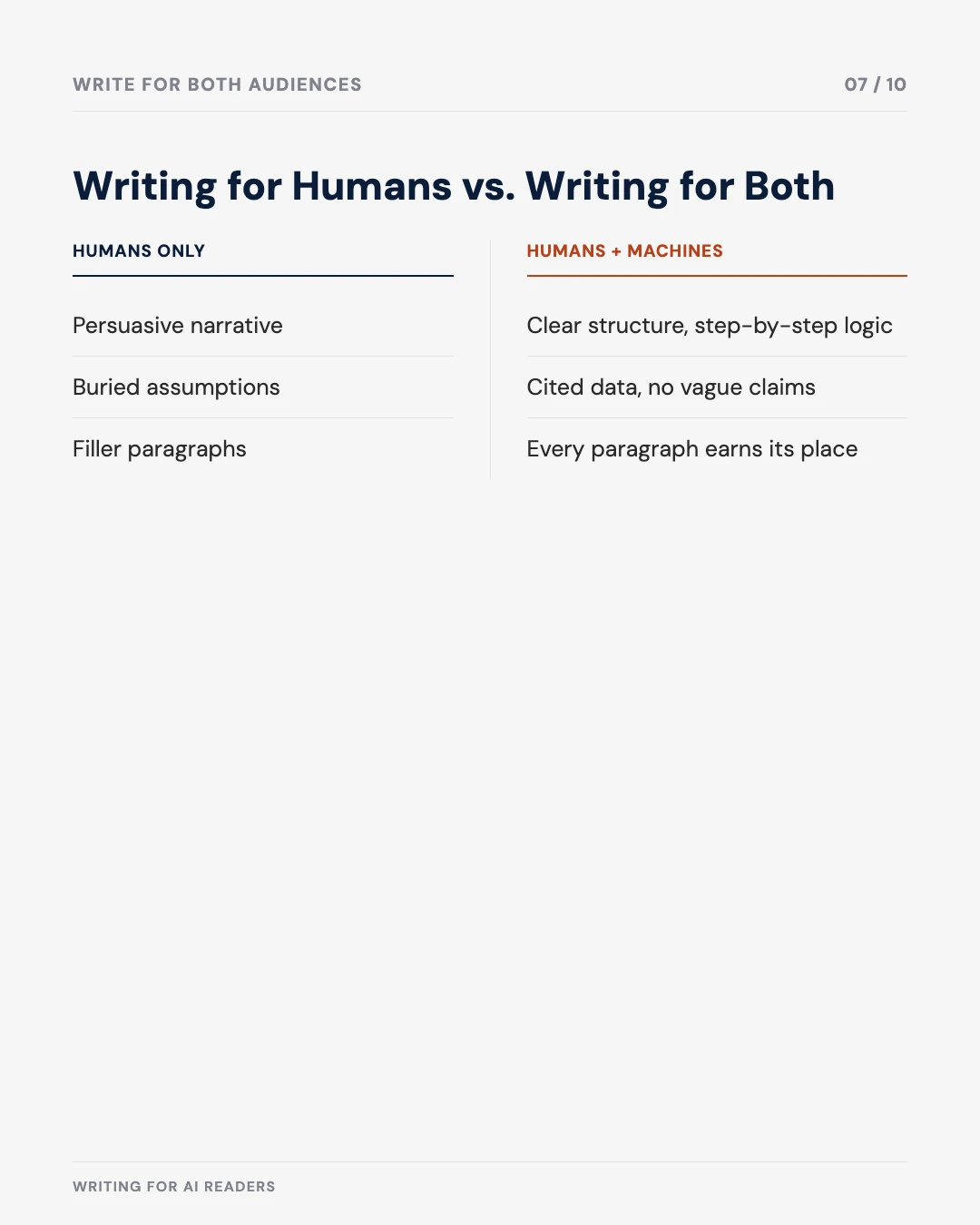
The smart move? Don’t hide your AI use, just write reports that work well for both audiences. Here’s how:
- Use clear structure: Clean sections, consistent headings, and logical flow make it easier for AI to extract accurate summaries and not misinterpret stuff.
- Show your reasoning: Walk through your logic step-by-step. Spell out assumptions. Label scenarios clearly. This helps both AI and humans follow how you got to your conclusions.
- Back everything up: Use real data: tables, metrics, cited sources. This gives AI better signals and stops it from “correcting” you with made-up benchmarks. Getting a model to admit uncertainty instead of confabulating a benchmark is its own architectural problem.
- Cut the fluff: AI tools are excellent at spotting filler. If a paragraph doesn’t add value, assume it’ll get downgraded or deleted in the client’s summary.
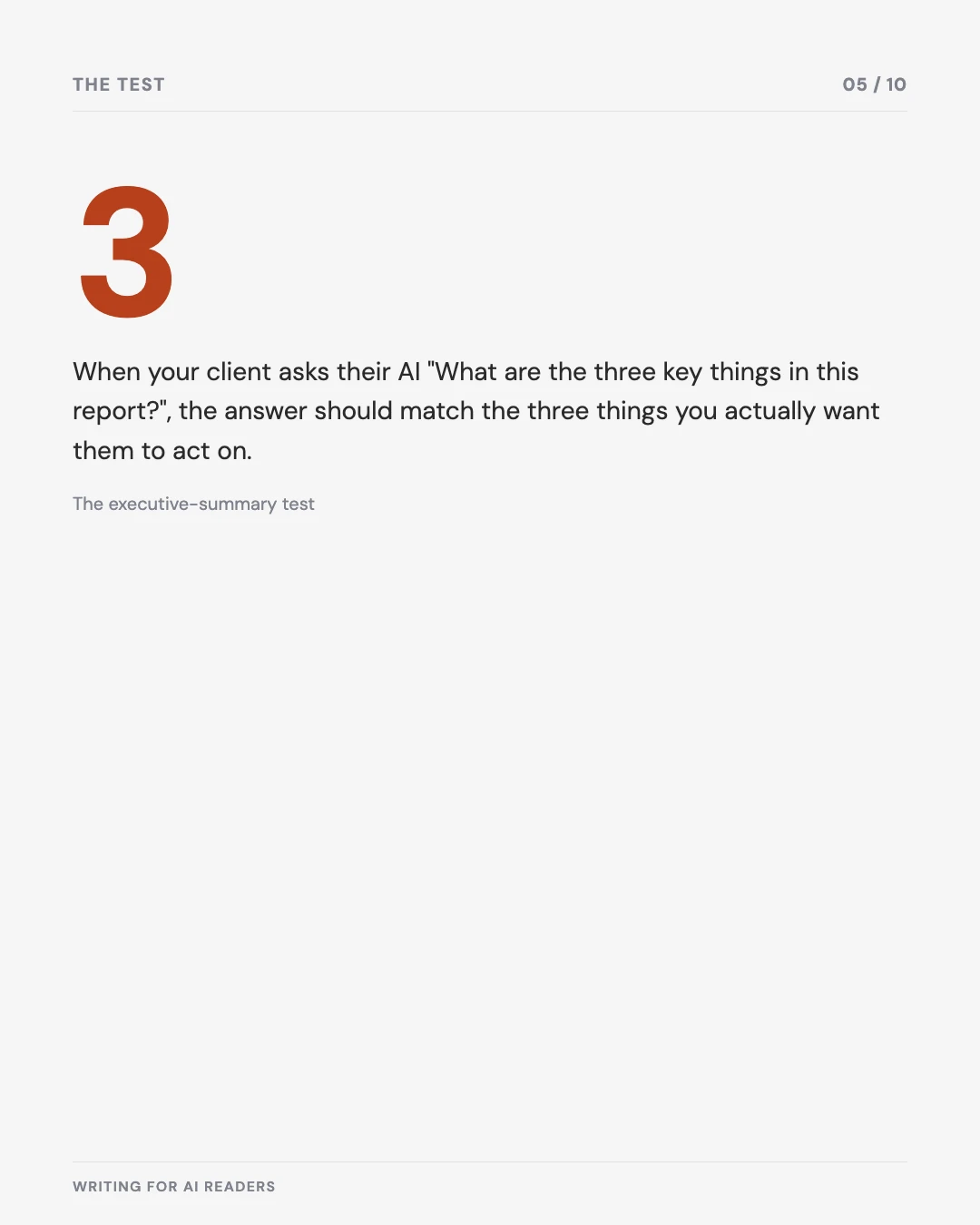
When your client asks their AI “What are the three key things in this report?” the answer should match the three things you actually want them to act on.
Being upfront about AI in your work
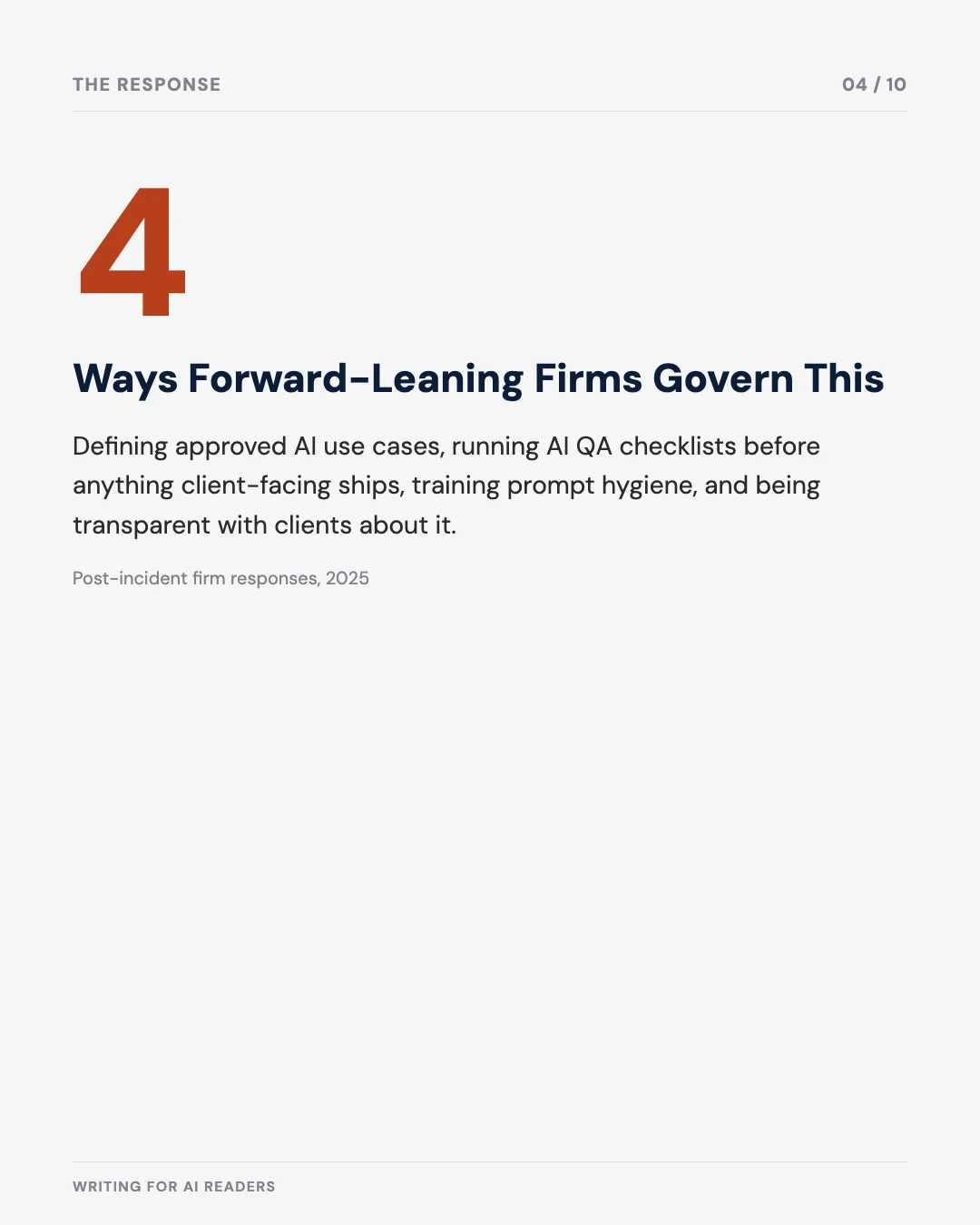
At the same time, firms are getting more careful about how they use AI, especially after some embarrassing incidents where AI-generated content made it into official reports without proper review. Forward-leaning firms are responding by:
- Defining approved AI use cases: For example, using AI for initial synthesis and drafting, but mandating human review for facts, numbers, and legal language.
- Implementing AI QA checklists: Requiring checks for hallucinations, reference verification, and consistency before anything client-facing leaves the building. That checking burden is real, and it is measurably harder than the drafting it is meant to catch: see AI Fatigue: Why Verification Is Harder Than Creation.
- Training teams on “prompt hygiene”: Teaching consultants how to constrain scope, reference internal knowledge bases, and avoid exposing sensitive data.
- Being transparent with clients: Positioning AI as an efficiency and quality amplifier, not a substitute for domain expertise and accountability.
Handled well, this transparency can increase trust rather than erode it, because it shows that AI is governed rather than hidden.
Turning AI review into an advantage
The most effective teams are not just tolerating client-side AI review; they are designing for it. Practical moves that C-suite leaders and engagement partners can implement now:
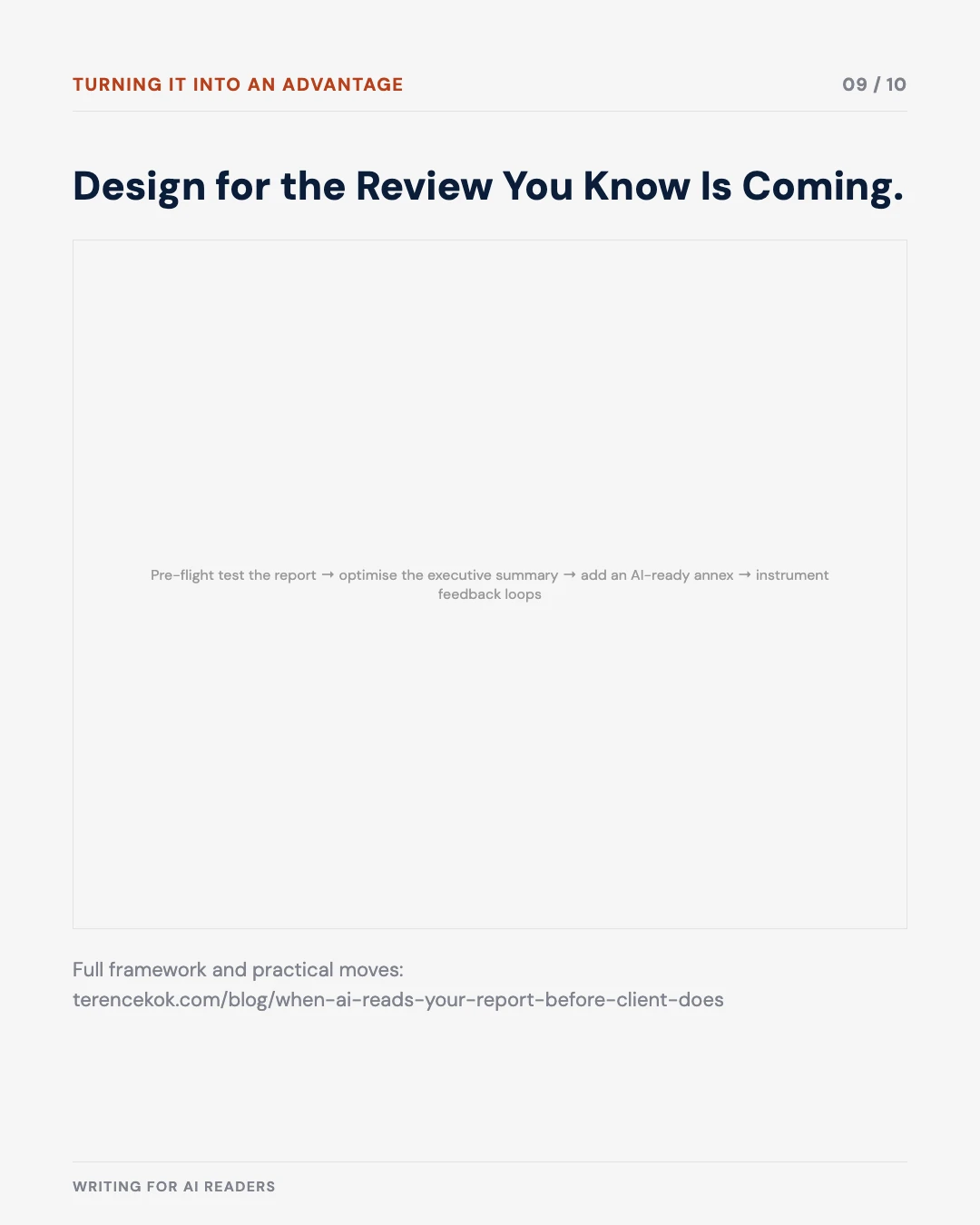
- Pre-flight test your own reports: Run key deliverables through the same category of LLMs clients are likely to use and inspect the summaries, critiques, and “top risks” it surfaces.
- Optimise the executive summary: Treat the exec summary as the primary prompt that will shape any downstream AI interpretation of the report. If it is muddled, everything downstream will be too.
- Provide an “AI-ready annex”: Include a clearly structured appendix of definitions, data tables, and options that LLMs can easily mine for precise answers.
- Instrument feedback loops: When clients share AI-generated summaries or questions, treat them as telemetry on how your work is being interpreted and refine your templates accordingly.
In an era where AI often reads and critiques your work before your client does, the competitive edge lies in treating the model as a secondary but very real stakeholder.
Those who learn to write for both human judgement and machine evaluation will set the bar for what “good” looks like in AI-era consulting.
Was this useful?