

Listen to this article
Jump to a section
In this article
Executive Summary
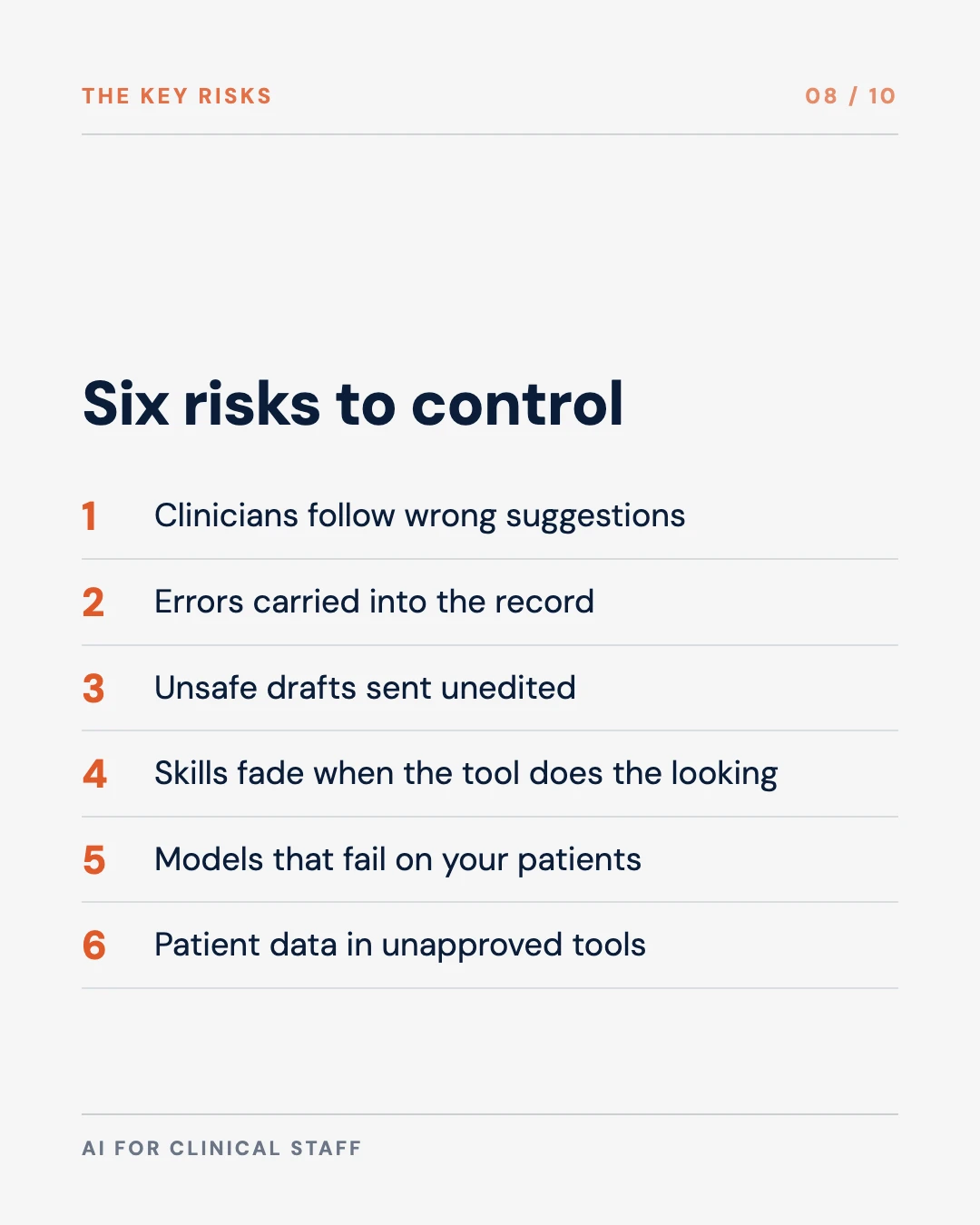
Clinical staff spend a large share of their day on records and desk work, and the global shortage of health workers will not close soon. AI can take part of that load today, mainly by drafting notes, summaries and routine documents that a clinician then checks. It can also help train staff, through simulated patients and feedback on how they take a history. The risks sit where AI meets clinical judgement: clinicians follow wrong suggestions, errors pass into the record, skills fade when the tool does the looking, and patient data leaks through unapproved tools. Those risks grow under heavy workload, which is exactly when hospitals lean on AI most.
Core conclusions
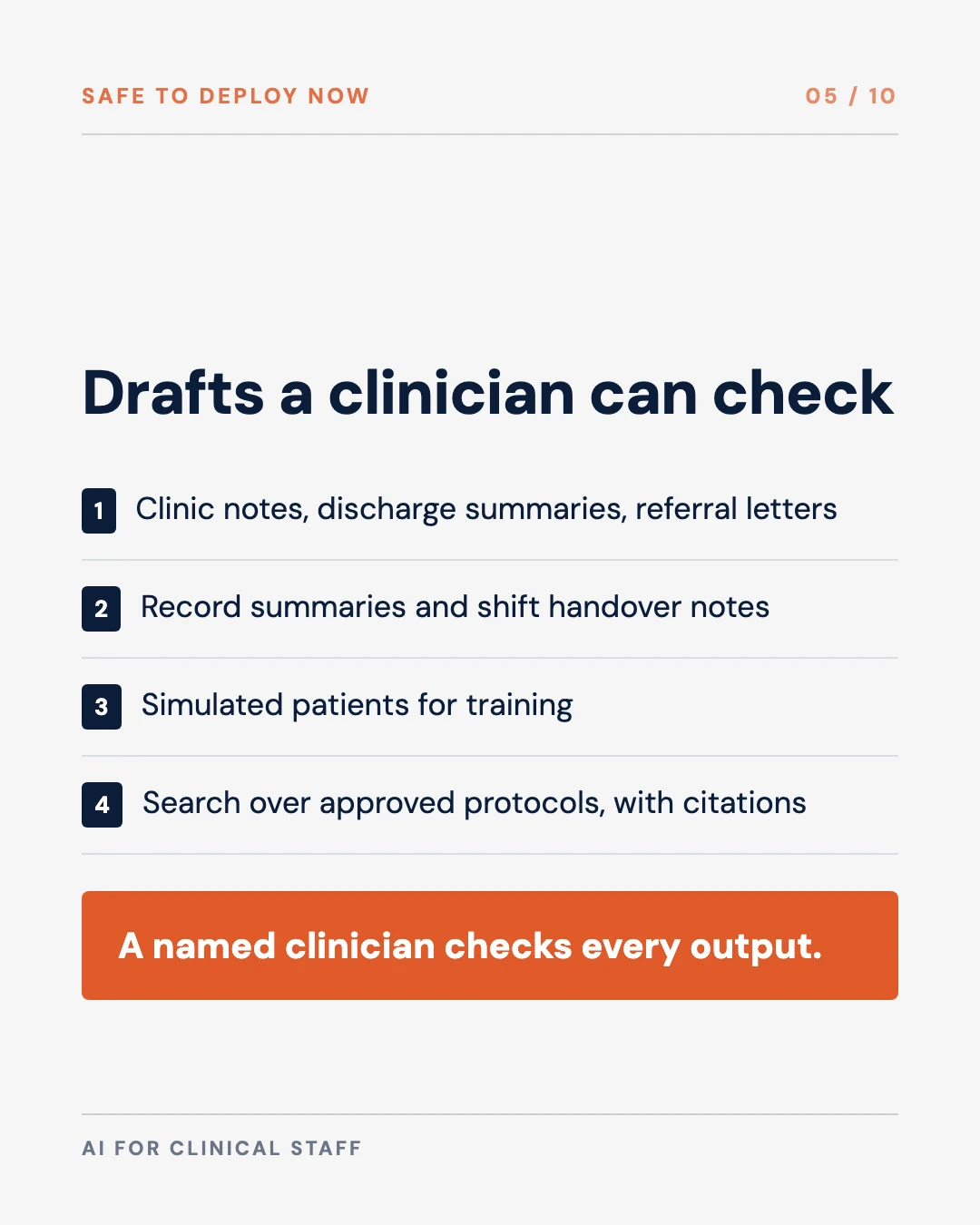
- Deploy now: AI that drafts documentation, summaries, handover notes and training scenarios, with a named clinician checking every output before it is used.
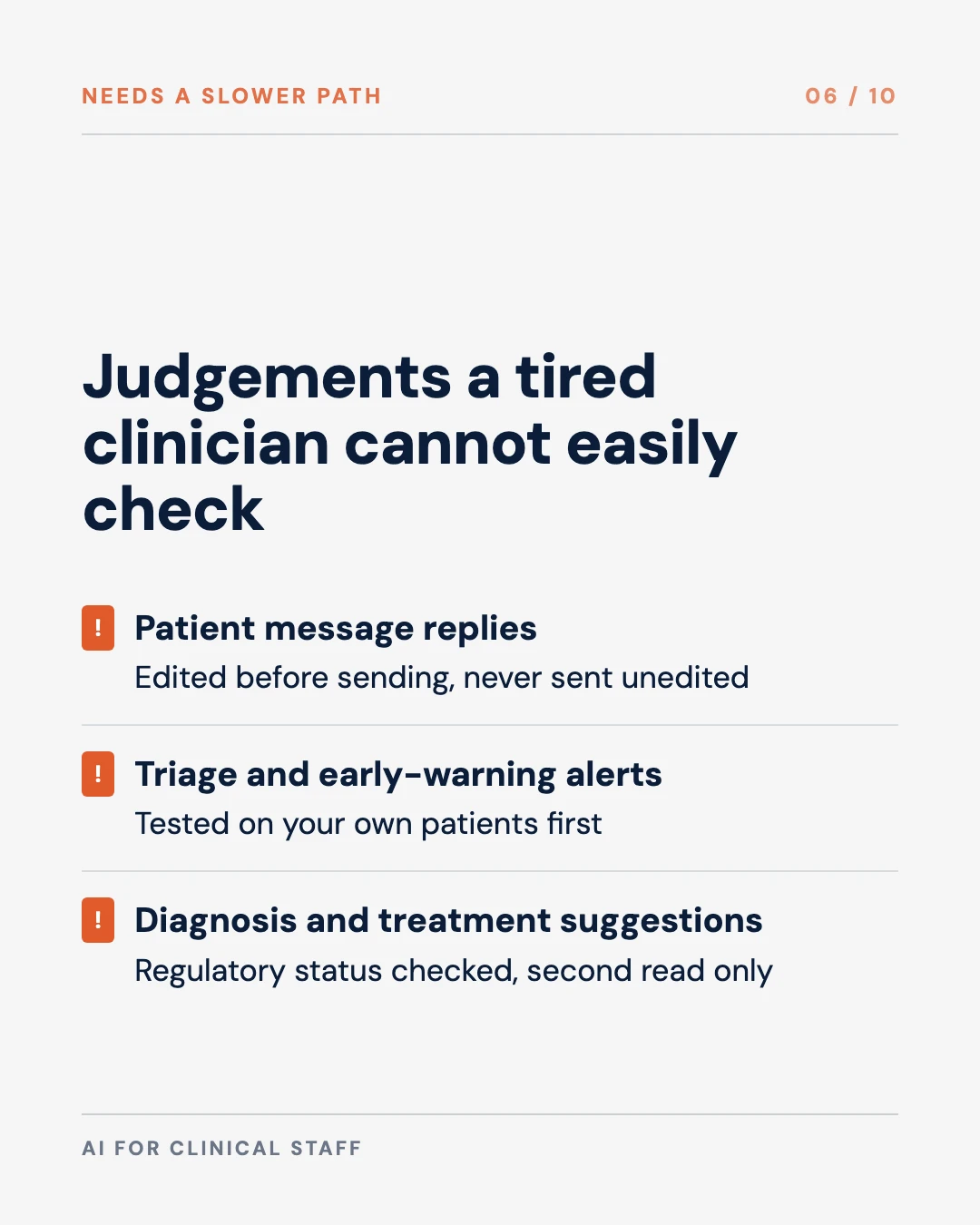
- Deploy slowly: anything that suggests a diagnosis, a triage level or a treatment. The evidence shows clinicians follow wrong AI suggestions far more often than they should.
- Decide your surge rules in advance. Review quality drops when staff are stretched, so the checks around AI must be designed for the worst week of the year.
The briefing, in ten slides
Save it, or share it with your clinical governance committee.
The pressure on clinical staff
The World Health Organization projects a shortfall of 11 million health workers by 2030, most of it in low- and lower-middle-income countries. Wealthier systems are not exempt. They feel the same gap as long waits, overtime and staff leaving the profession.
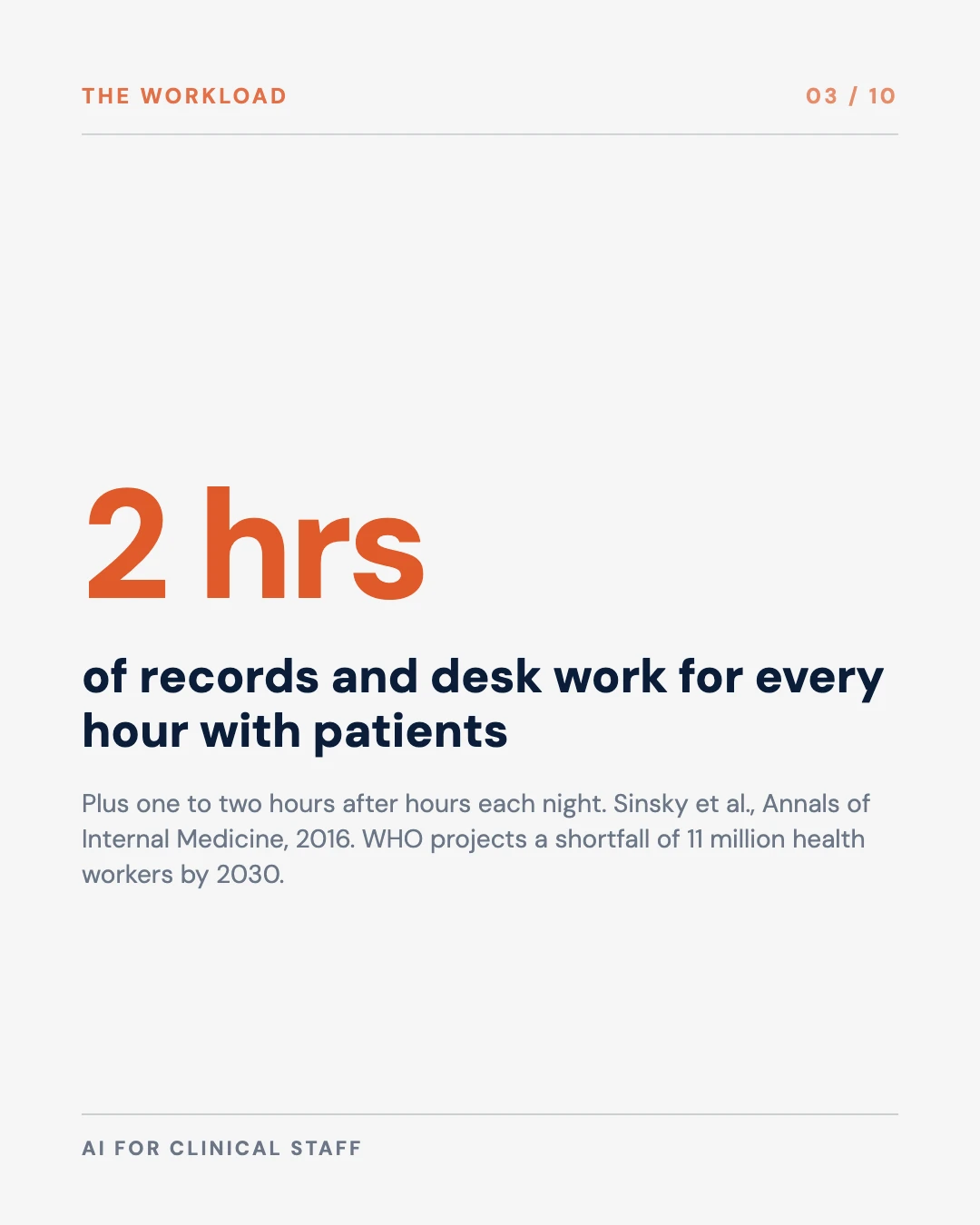
A large part of the workload is not patient care. In a widely cited time-and-motion study published in the Annals of Internal Medicine, physicians spent 27% of their office day in direct face time with patients and 49% on electronic records and desk work. For every hour with patients they spent nearly two more on records and desk work, plus one to two hours after hours each night.
That paperwork is where AI is most useful today, and it is also where the evidence is strongest.
What the evidence says about AI scribes
An ambient AI scribe listens to a consultation and drafts the clinical note. The clinician reviews and signs it.
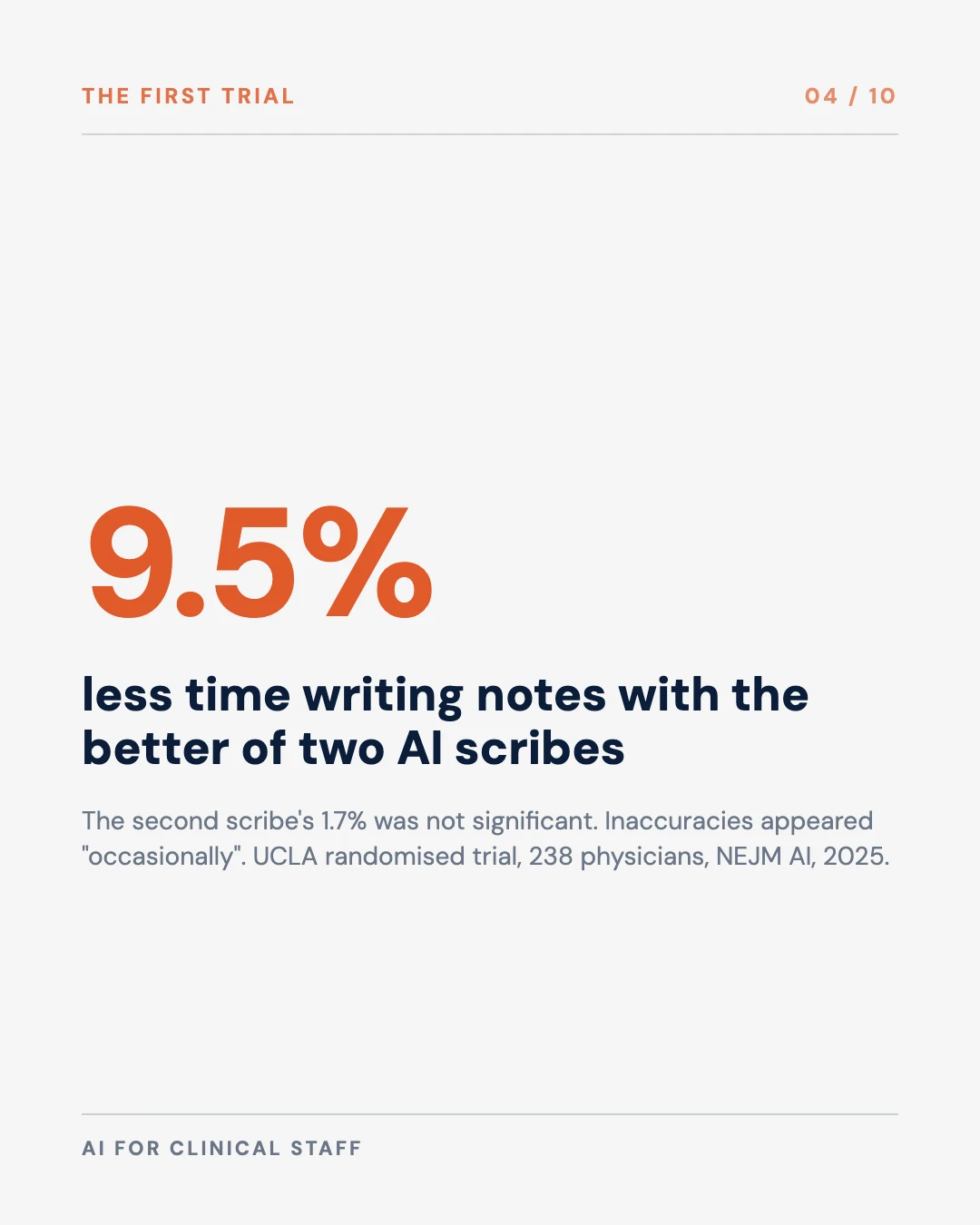
The first randomised trial of these tools, run at UCLA with 238 physicians across 14 specialties and published in NEJM AI in November 2025, gives a measured picture. One product cut time spent writing notes by 9.5% against the control group. The other showed a 1.7% reduction that was not statistically significant. Burnout measures improved with both, but the authors flagged those as secondary findings that need confirmation. They also reported that clinically significant inaccuracies appeared “occasionally” in the drafts.
Larger, less controlled rollouts report bigger benefits. Kaiser Permanente’s Northern California medical group, writing in NEJM Catalyst, estimated about 15,800 hours saved across 7,260 physicians and more than 2.5 million encounters, and most physicians reported better conversations with patients. At Mass General Brigham, self-reported burnout among scribe users fell from 50.6% to 30.7% over 84 days. These are health-system self-reports and surveys, so treat them as direction rather than precise effect sizes.
The honest summary is that scribes save some time, often less than vendors claim, and they seem to make clinicians feel better about their work. Both are worth having when your staff are stretched.
Singapore is already moving
Singapore’s public healthcare system has gone further than most. The Ministry of Health committed to rolling out automated record updating across public healthcare by the end of 2025. In June 2025, Health Minister Ong Ye Kung said SingHealth’s Note Buddy had helped more than 2,100 healthcare workers create more than 16,000 medical and administrative notes, and that all public healthcare institutions would use it or a similar tool by the end of that year. NUHS built RUSSELL-GPT to summarise case notes and draft referral letters, and its nurses are using speech-to-text tools for nursing documentation.
The governance has moved too. In March 2026 MOH and the Health Sciences Authority published a refreshed set of AI in Healthcare Guidelines (AIHGle 2.0). It replaces the 2021 version, covers generative AI, and sets out duties for developers, the institutions deploying the tools and the clinicians using them.
How AI can help train staff
Training is the second area where AI is useful now, with two cautions.
Simulated patients. A language model can play a patient for history-taking practice, at any hour, as many times as the trainee wants. In a small randomised trial published in BMC Medical Education in 2024, medical students who practised with an AI patient and also received AI feedback on their questioning scored higher after four sessions than students who practised without the feedback. The trial had only 21 students, so it is a promising signal and nothing more.
Feedback and rehearsal. The same approach works for breaking bad news, consent conversations, handover structure and de-escalation, where staff rarely get to practise before the real thing. A senior clinician should write and approve the scenarios. The AI plays them out.
Teaching staff to use the tools. In a 2024 survey of UK doctors for the General Medical Council and the Alan Turing Institute, only 15% of those using generative AI felt the training they had received was sufficient. For diagnostic and decision-support systems the figure was 56%. Most staff are using generative tools without being taught where they fail. That is a training gap the hospital owns.
The deskilling question. A 2025 study in four Polish endoscopy centres found that after doctors had been working with AI polyp detection, their detection rate on procedures without AI fell from 28.4% to 22.4%. It was an observational study, and a 2026 prospective trial in Endoscopy found no deskilling after AI was removed. The evidence is mixed. The prudent response is to keep trainees doing the core skill unaided for a set share of cases, and to measure their performance without the tool from time to time.
Safe activities to deploy now
I sort clinical AI uses by two questions. How much does the output shape a clinical decision? And will a qualified person check it before it reaches a patient or the record? The table below applies that to the uses hospitals most often ask about.
| Activity | Risk tier | Condition for use |
|---|---|---|
| Drafting clinic notes, discharge summaries and referral letters | Deploy now | Clinician reviews and signs every draft |
| Summarising a long patient record before a consultation | Deploy now | Summary links back to source entries; clinician checks key facts |
| Drafting handover notes at shift change | Deploy now | Outgoing clinician confirms before handover |
| Simulated patients and communication practice for training | Deploy now | Scenarios written or approved by a senior clinician |
| Searching approved local protocols and formularies | Deploy now | Answers cite the protocol page; tool limited to approved documents |
| Translating patient information leaflets | Deploy now | Translation checked by a qualified speaker before release |
| Rostering, bed management and discharge planning support | Deploy now | Operational decisions stay with the manager on duty |
| Drafting replies to patient messages | Deploy with care | Clinician edits before sending; never sent unedited |
| Triage prioritisation and early-warning alerts | Validate first | Tested on your own patients before go-live; alert burden monitored |
| Suggesting diagnoses or treatment | Validate first | Regulatory status checked; used as a second read only |
The pattern is simple. The safe uses produce a draft that a person can check against something they already know, such as the conversation they just had or the record in front of them. The riskier uses produce a judgement that the clinician may not be able to check without doing the full work themselves.
Free tool
Agent Risk Assessment Matrix
Place each proposed clinical AI use on autonomy and consequence, and get the controls each position needs before it goes live.
Using AI during high workloads
The case for AI is strongest when wards are full. The risks are also highest then, because every safeguard in the table above depends on someone having time to check the output.
A tired clinician who signs twenty AI-drafted notes at the end of a double shift is not reviewing them the way a rested one would. The protection exists on paper and has weakened in practice. I would plan for that directly:
Decide the surge rules before the surge. Agree in advance which AI tools stay on when the hospital is under pressure, which are switched off, and which checks can never be dropped. Making that call in the middle of a bad week leads to quiet corner-cutting.
Keep the checks proportionate to the risk. A discharge summary going to a GP needs the medication list checked every time. A meeting summary for the ward team can be checked more lightly. Tell staff which is which.
Shift AI to the work that frees clinicians most. In a surge, the biggest gains usually come from discharge paperwork, handovers and bed management, because each one releases capacity for the next patient.
Watch the error reports. If incident reports involving AI-drafted documents rise during busy periods, review is failing under load, and the answer is fewer tools or more reviewers.
Free tool
Oversight Ceiling Calculator
Work out how many reviewers your AI output needs on a bad day, before a surge tests it for you.
The key risks
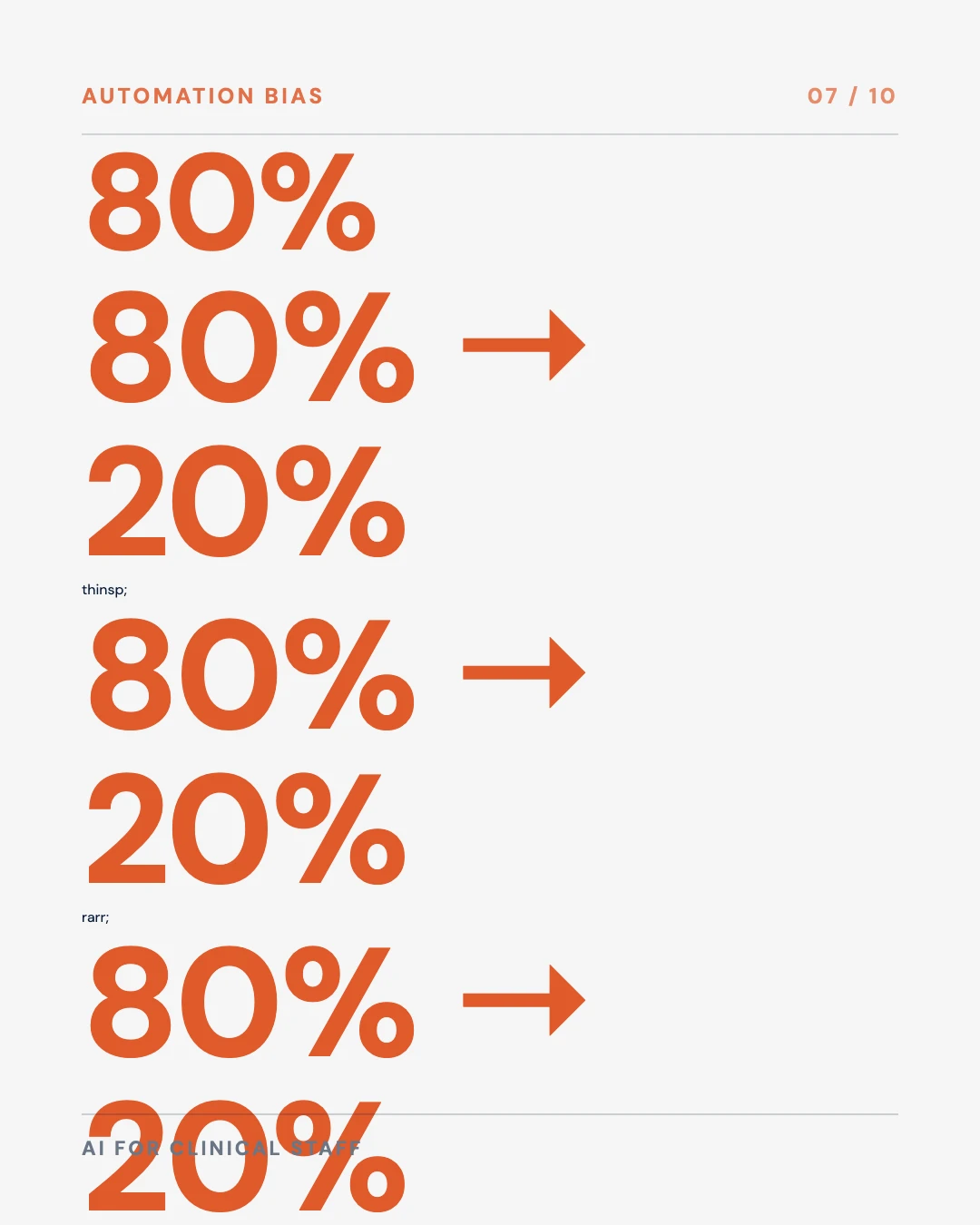
Automation bias. Clinicians follow AI suggestions, including wrong ones. In a 2023 Radiology study of mammography reading, inexperienced radiologists were accurate 79.7% of the time when the AI suggestion was correct and 19.8% when it was wrong. Moderately experienced readers fell from 81.3% to 24.8%, and even very experienced readers fell from 82.3% to 45.5%. A 2024 Nature Medicine study of 140 radiologists found that wrong AI predictions harmed performance, and that experience did not reliably predict who would be misled.
Reader accuracy when the AI suggestion was right and when it was wrong
When the AI suggestion was wrong, accuracy collapsed. Experience softened the fall without preventing it.
Source: Dratsch et al., Radiology, 2023. 27 radiologists reading mammograms with AI-suggested BI-RADS categories.
Errors carried into the record. Scribes can mishear, omit or invent. A 2026 simulation study in JMIR Medical Informatics planted interpreter errors in Spanish-English consultations, and the scribes carried 55% to 60% of them into the note. Once an error is in the record, the next clinician reads it as fact.
Unsafe drafts. In a 2024 Lancet Digital Health study of GPT-4 drafting replies to simulated patient messages in a cancer centre, 7.1% of the unedited drafts reviewed posed a risk of severe harm and one posed a risk of death. Clinicians also tended to adopt the model’s assessment. Drafting saves time, and the draft still needs a clinician who reads it as if they wrote it.
Better tools do not guarantee better decisions. In a 2024 randomised study in JAMA Network Open, physicians given GPT-4 scored 76% on diagnostic reasoning cases against 74% for those using conventional resources, a difference that was not significant. GPT-4 alone scored 92%. Handing staff a capable tool does not improve their reasoning unless the workflow and the training change with it.
Models that fail in your population. When researchers tested a widely used commercial sepsis prediction model on 27,697 patients at Michigan Medicine, it missed 67% of sepsis cases while alerting on 18% of all hospitalisations. A vendor’s validation figures do not tell you how a model will perform on your patients.
Patient data leaving the building. In 2023, staff at five hospitals in Perth were told to stop using ChatGPT immediately after a doctor used it to write a discharge summary. There was no confirmed breach, but there was no assurance of confidentiality either. When approved tools are slow to arrive, staff under pressure use whatever is open in their browser.
Regulatory status. Some tools that look like administrative software are regulated as medical devices. NHS England’s 2025 guidance says scribes that only transcribe are likely not medical devices, while those that use generative AI to summarise likely are. Check the status with your regulator before deployment, and with HSA in Singapore.
What hospital leaders should do this quarter
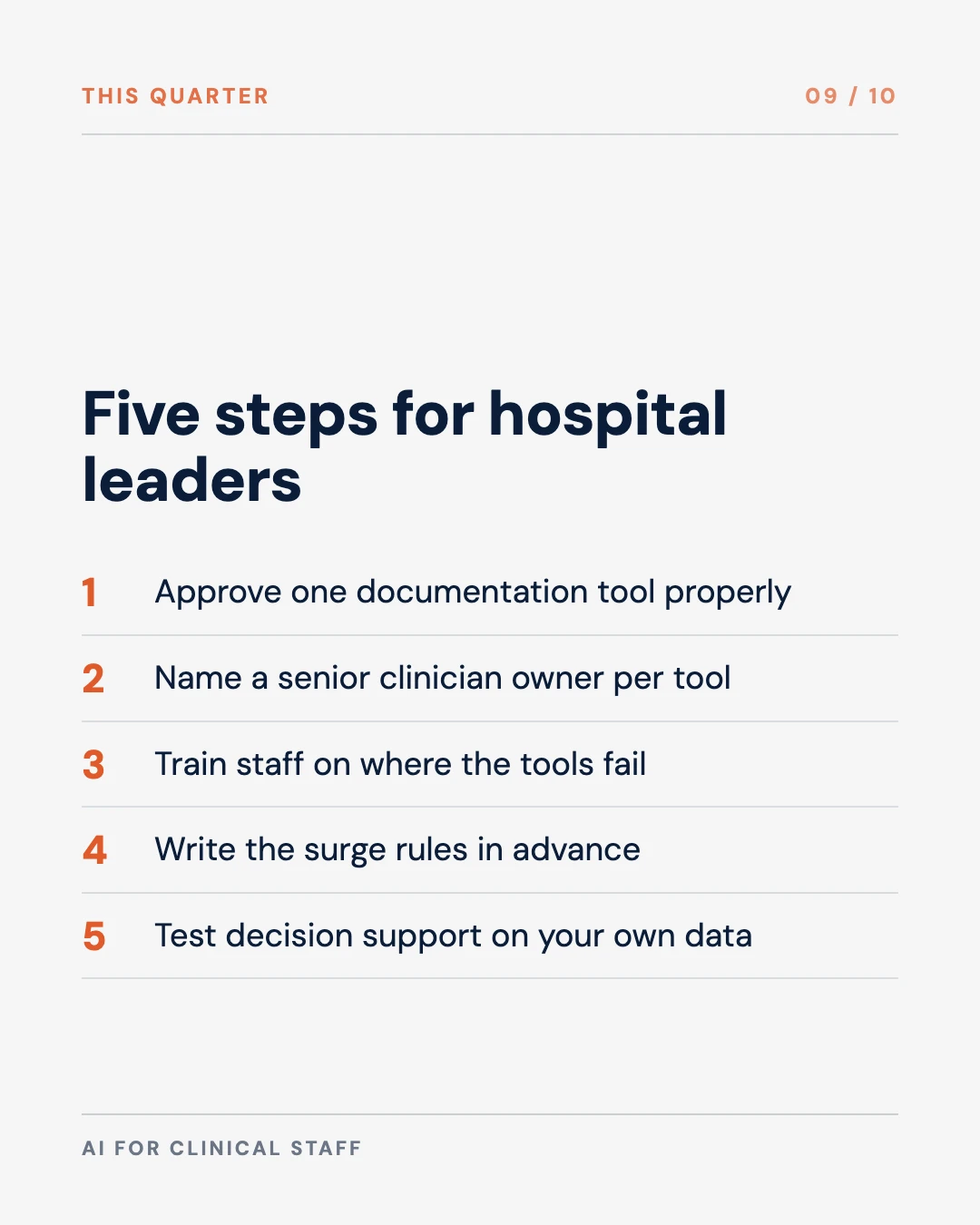
Approve one documentation tool properly. Pick a scribe or summarisation tool, run it through clinical safety and data protection review, and give staff a sanctioned option so they stop using unapproved ones.
Name an owner for every AI tool in clinical use. One senior clinician per tool, accountable for its performance, its incident reports and the decision to switch it off.
Train staff on where the tools fail. Show them real examples of wrong outputs, including confident ones. Include agency and locum staff.
Write the surge rules. Which tools stay on, which checks are never dropped, and who decides.
Test decision-support tools on your own data first. No triage, alert or diagnostic tool goes live on the vendor’s figures alone.
Evidence & Methodology
Clinical AI attracts confident claims from vendors and sceptics alike, so I have separated the trial results from the self-reported figures and from my own judgement on what is safe to deploy.
| Claim | Source | Grade |
|---|---|---|
| Projected shortfall of 11 million health workers by 2030 | WHO, health workforce topic page | Forecast |
| Physicians spent 27% of office time with patients and 49% on records and desk work | Sinsky et al., Annals of Internal Medicine, 2016, 57 physicians observed | Measured, US sample |
| One scribe cut note-writing time by 9.5%; the other’s 1.7% was not significant | UCLA randomised trial, NEJM AI, 2025, 238 physicians | Measured |
| About 15,800 hours saved across 7,260 physicians | Kaiser Permanente TPMG, NEJM Catalyst, 2025 | Measured, self-reported by the health system |
| Burnout among scribe users fell from 50.6% to 30.7% at Mass General Brigham | You et al., JAMA Network Open, 2025, survey | Measured, survey |
| Note Buddy used by more than 2,100 SingHealth staff for more than 16,000 notes | Minister for Health, speech of 16 June 2025 | Measured, as reported by MOH |
| AI feedback improved students’ history-taking scores | Brügge et al., BMC Medical Education, 2024, 21 students | Measured, very small sample |
| 15% of UK generative AI users felt their training was sufficient | Alan Turing Institute and GMC survey, 2024, 929 doctors | Measured, survey |
| Adenoma detection without AI fell from 28.4% to 22.4% after AI exposure | Budzyń et al., Lancet Gastroenterology & Hepatology, 2025, observational | Measured, contested by a 2026 trial |
| Radiologist accuracy fell sharply when the AI suggestion was wrong | Dratsch et al., Radiology, 2023, 27 radiologists | Measured |
| Scribes carried 55% to 60% of planted interpreter errors into the note | JMIR Medical Informatics, 2026, simulated consultations | Measured, simulation |
| 7.1% of unedited GPT-4 patient-message drafts posed a risk of severe harm | Chen et al., Lancet Digital Health, 2024, simulated radiation oncology messages | Measured, simulation |
| Physicians with GPT-4 did no better than those without; GPT-4 alone scored 92% | Goh et al., JAMA Network Open, 2024, 50 physicians | Measured |
| A commercial sepsis model missed 67% of sepsis cases | Wong et al., JAMA Internal Medicine, 2021 | Measured, one health system |
| The risk tiers in the activity table | My reading of the evidence above and of NHS England and MOH guidance | My call |
| Review quality drops under heavy workload | My observation; consistent with the automation bias findings above | My call |
Sources
- World Health Organization. Health workforce.
- Sinsky, C., et al. (2016). Allocation of physician time in ambulatory practice: A time and motion study in 4 specialties. Annals of Internal Medicine.
- Lukac, P. J., et al. (2025). Ambient AI scribes in clinical practice: A randomized trial. NEJM AI.
- Tierney, A. A., et al. (2025). Ambient artificial intelligence scribes: Learnings after 1 year and over 2.5 million uses. NEJM Catalyst.
- You, J. G., et al. (2025). Ambient documentation technology in clinician experience of documentation burden and burnout. JAMA Network Open.
- Ministry of Health Singapore. (2024). Transforming healthcare through technology.
- Ministry of Health Singapore. (2025). Speech by Mr Ong Ye Kung, Minister for Health, at the Synapxe AI Accelerate Conference on 16 June 2025.
- NUHS. (2023). AI healthcare in NUHS receives boost from supercomputer.
- NUHS. (2025). NUHS nurses take on higher roles with smart tools and redesigned care models.
- Baker McKenzie. (2026). Singapore: MOH and HSA launch refreshed AI in Healthcare Guidelines.
- Brügge, E., et al. (2024). Large language models improve clinical decision making of medical students through patient simulation and structured feedback: A randomized controlled trial. BMC Medical Education.
- Hashem, Y., et al. (2024). One in four UK doctors are using artificial intelligence: Exploring doctors’ perspectives on AI after the emergence of large language models. The Alan Turing Institute.
- Budzyń, K., et al. (2025). Endoscopist deskilling risk after exposure to artificial intelligence in colonoscopy: A multicentre, observational study. Lancet Gastroenterology & Hepatology.
- Pedersen, T. A., et al. (2026). Learning and deskilling effects of artificial intelligence in colonoscopy among endoscopists with different levels of experience: A pragmatic, prospective trial. Endoscopy.
- Dratsch, T., et al. (2023). Automation bias in mammography: The impact of artificial intelligence BI-RADS suggestions on reader performance. Radiology.
- Yu, F., et al. (2024). Heterogeneity and predictors of the effects of AI assistance on radiologists. Nature Medicine.
- Rabotin, A., et al. (2026). Propagation of interpreter errors by ambient AI scribes: Study using simulated clinical encounters. JMIR Medical Informatics.
- Chen, S., et al. (2024). The effect of using a large language model to respond to patient messages. Lancet Digital Health.
- Goh, E., et al. (2024). Large language model influence on diagnostic reasoning: A randomized clinical trial. JAMA Network Open.
- Wong, A., et al. (2021). External validation of a widely implemented proprietary sepsis prediction model in hospitalized patients. JAMA Internal Medicine.
- ABC News. (2023). Australian Medical Association calls for national regulations around AI in health care.
- NHS England. (2025). Guidance on the use of AI-enabled ambient scribing products in health and care settings.

From Human-in-the-Loop to AI-on-the-Loop
How to design the human check so it still works when volumes rise.

How to Build Governed RAG 2.0 Systems for High-Stakes Use Cases
The pattern behind a protocol search tool that cites its sources.

9 AI Deployments Fail (And what to do about it)
The failure patterns that apply to clinical rollouts as much as any other.
Was this useful?