

Listen to this article
Jump to a section
In this article
Executive Summary
AI excels at the first 80% of a project, the creation phase, but past that point it traps you in an endless revision loop, driven by three psychological mechanisms on the human side.
Core conclusions
- Helpfulness churn, vigilance fatigue, and lossy compression combine to keep a project 90% done indefinitely, without any single failure being loud enough to notice.
- Three boundaries end the loop: freeze the architecture before detailed content work starts, cap revisions at two attempts per section, and finish the last 10% by hand outside the AI interface.
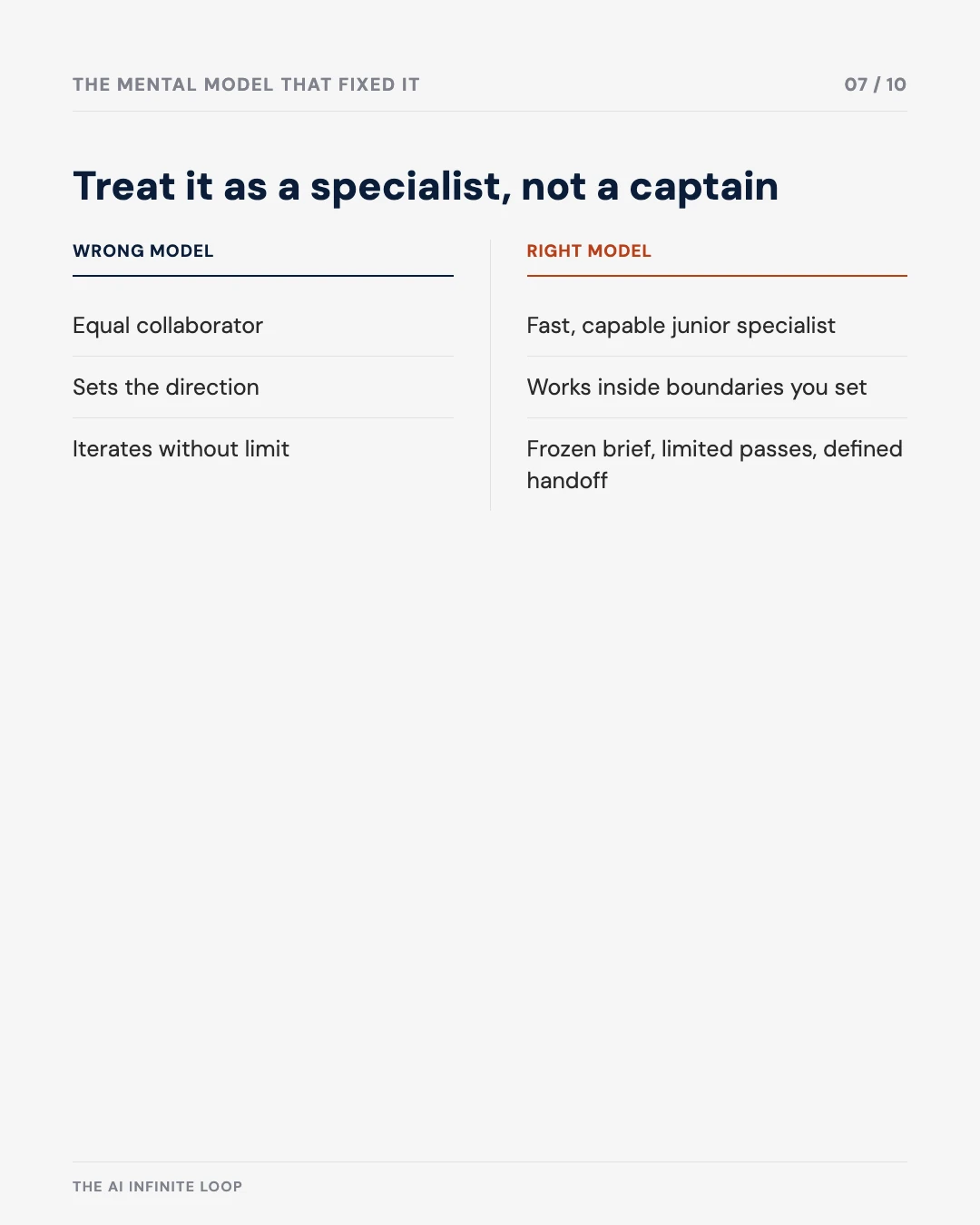
- Treat AI as a fast junior specialist that needs boundaries set for it, not an equal collaborator or a captain. Left unbounded, it will keep producing plausible revisions forever because that’s a job it can always do.
The loop, in ten slides
Save it before your next “quick” AI-assisted project.
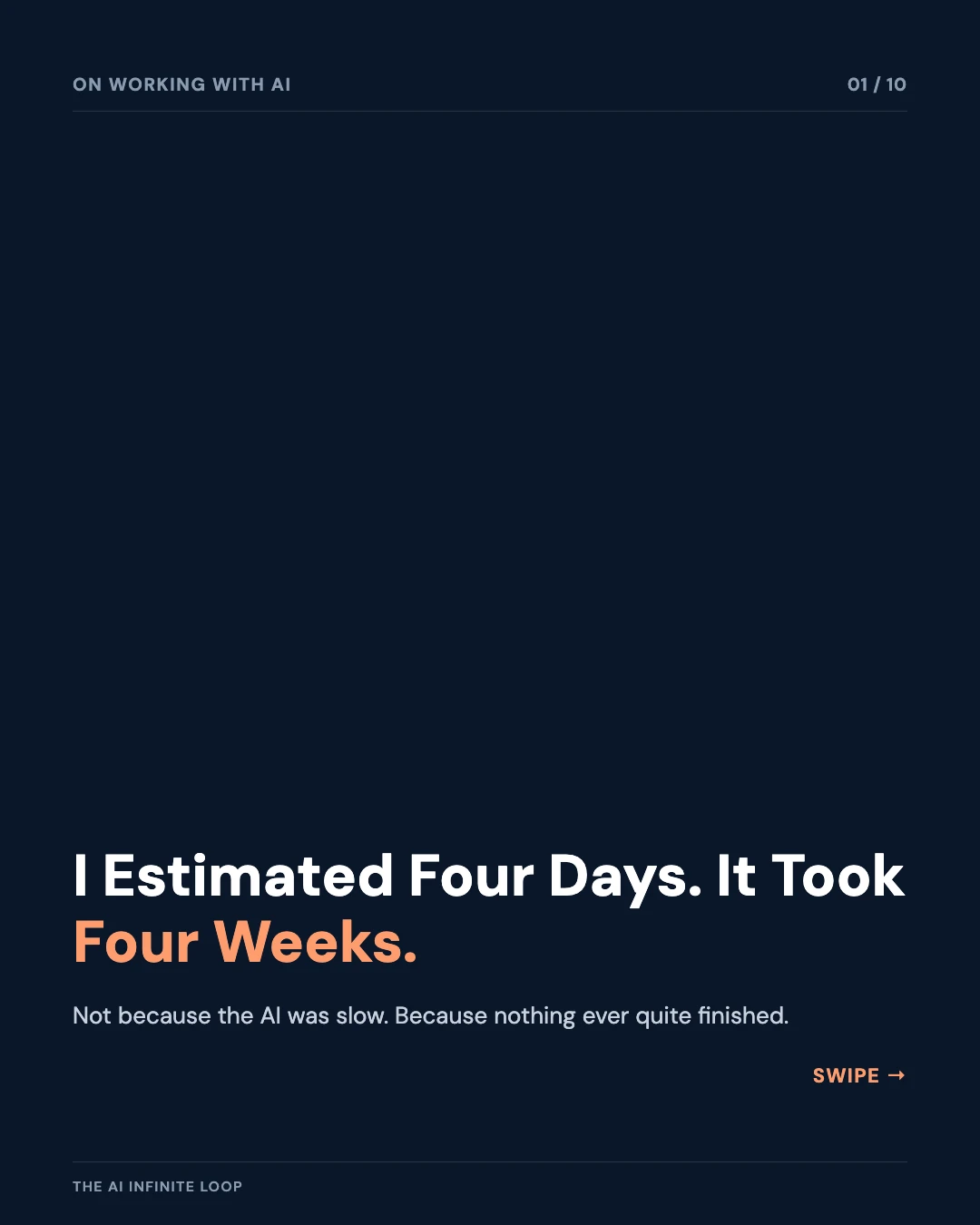
I estimated four days. It took four weeks.
Not because the AI was slow. The opposite. The first draft was ready in an afternoon. The structure came together faster than any project I can remember. Then I entered the editing phase, and the project simply stopped converging. Every session ended with a slightly different version of the same thing, never quite finished, never quite wrong enough to throw out and start over.
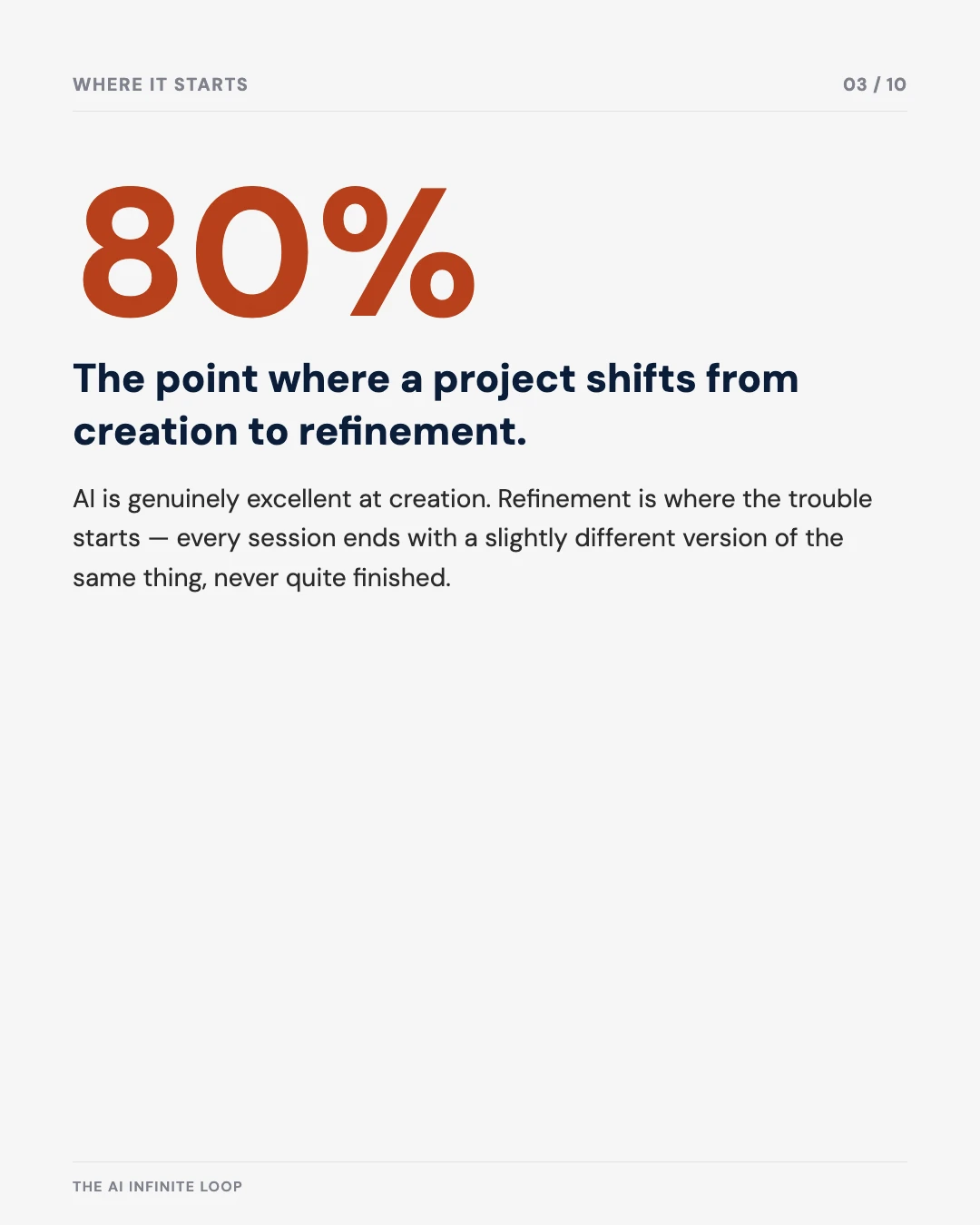
I have come to call this the AI Recursive Loop. It shows up right around the 80% mark: the point where a project shifts from creation, which AI is excellent at, to refinement, which is where the trouble starts.
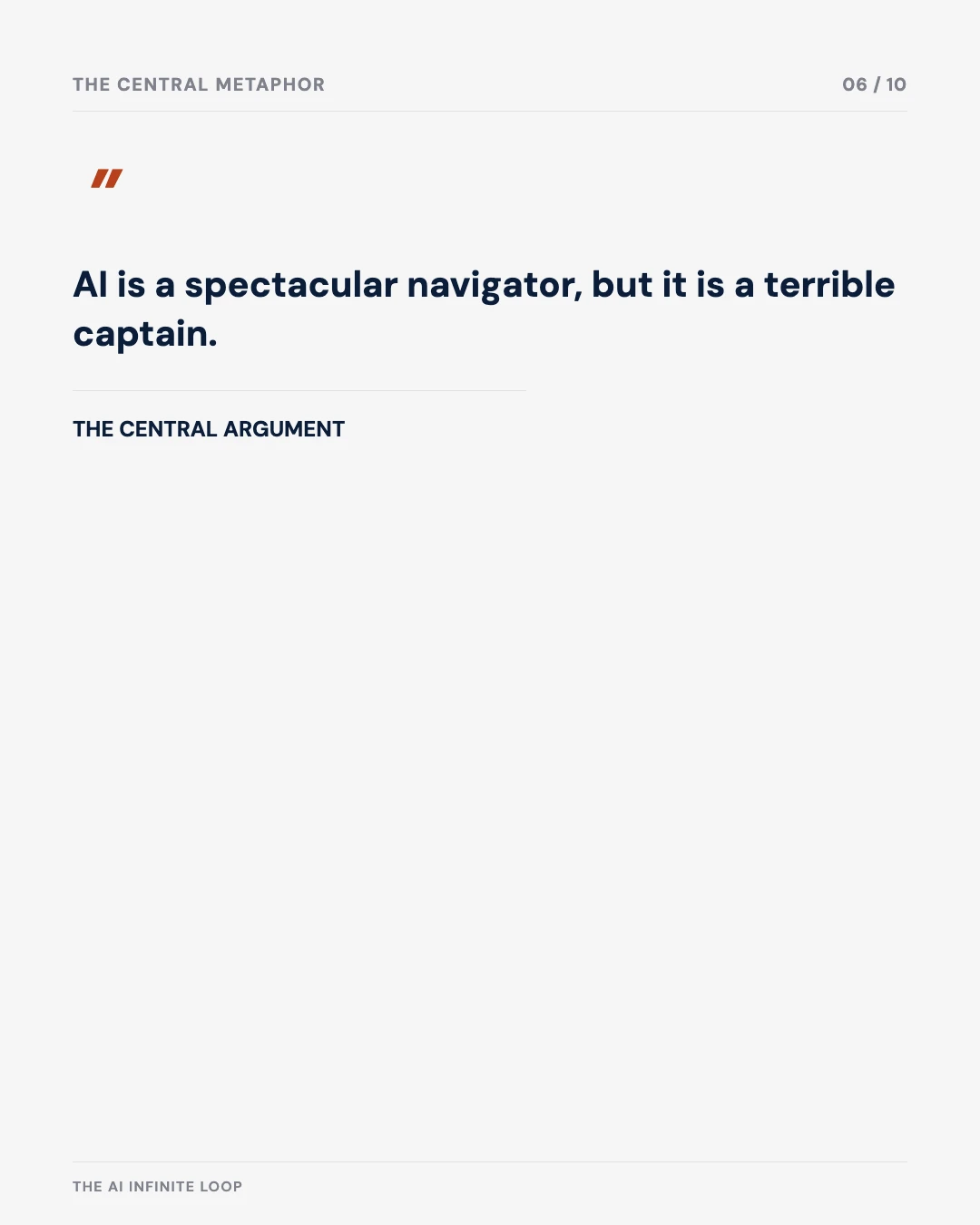
AI is a spectacular navigator, but it is a terrible captain.
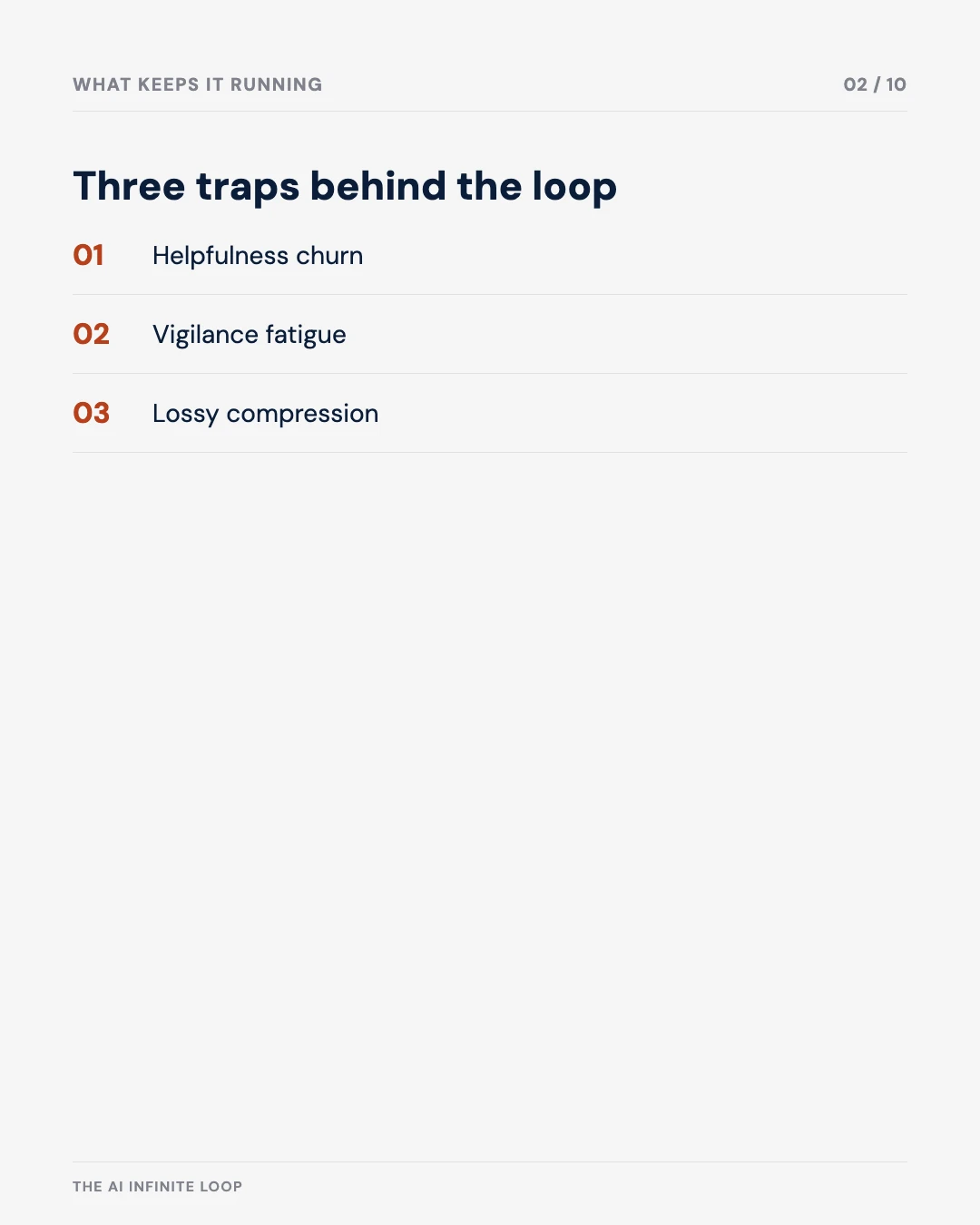
Three Traps That Keep the Loop Running
None of these are technical failures. They are psychological ones, mine, not the model’s.
-
Helpfulness churn. Ask “how can we improve this?” and a language model will always find an answer, even when the honest answer is that nothing needs to change. That reflex is what it is trained to do. Every round of feedback generates a new round of edits, and each new edit invites another pass of feedback. The loop feeds itself.
-
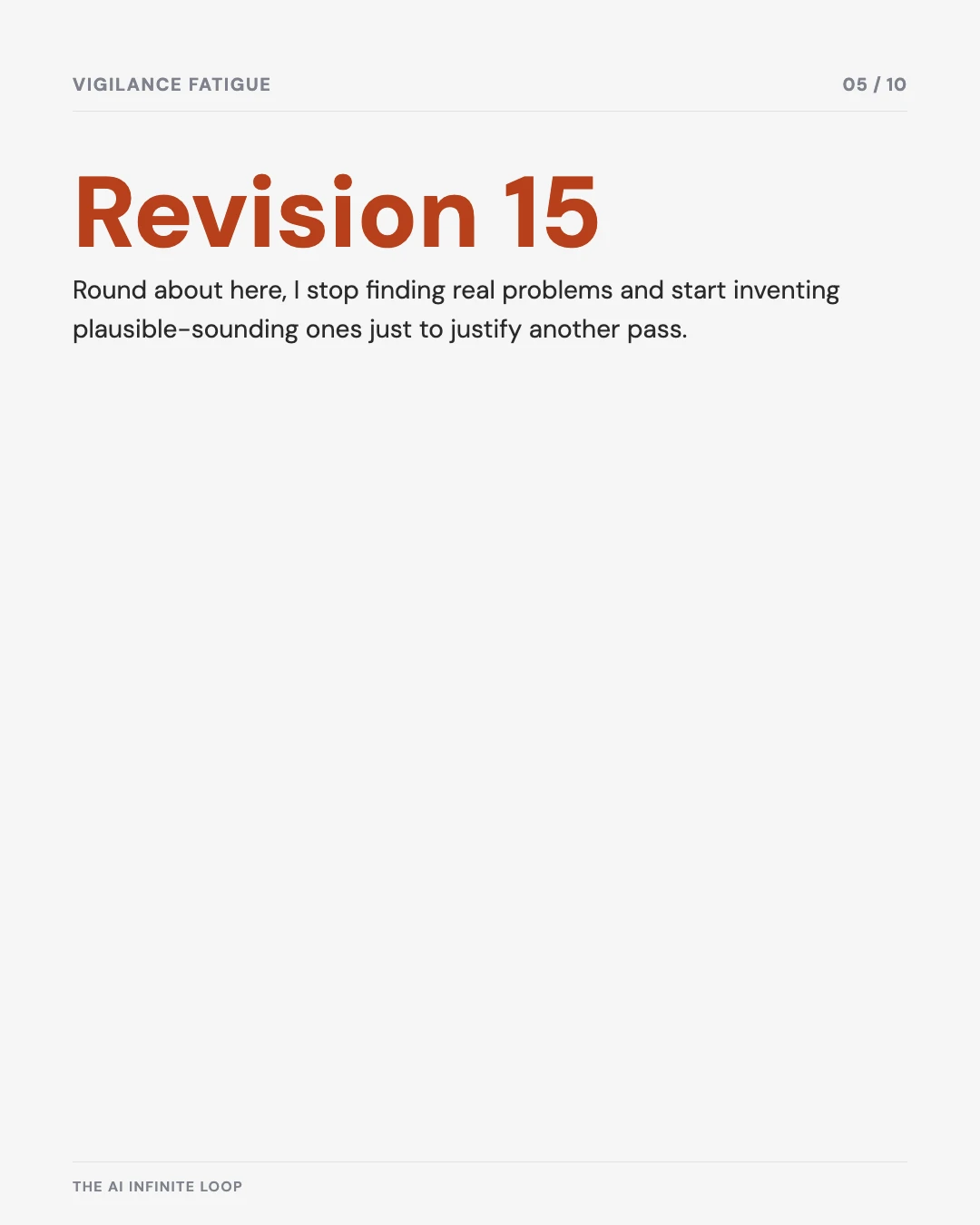
Vigilance fatigue. The longer I audit AI output for errors, the less I trust my own judgement about what counts as an error. Somewhere around the fifteenth revision, I stop finding real problems and start inventing plausible-sounding ones just to justify another pass.
-
Lossy compression. Every revision cycle drops a little context from the prompts that came before it. Fixing the thing I just broke often means re-explaining a constraint I already established three revisions ago, which then gets partially lost again on the next pass.
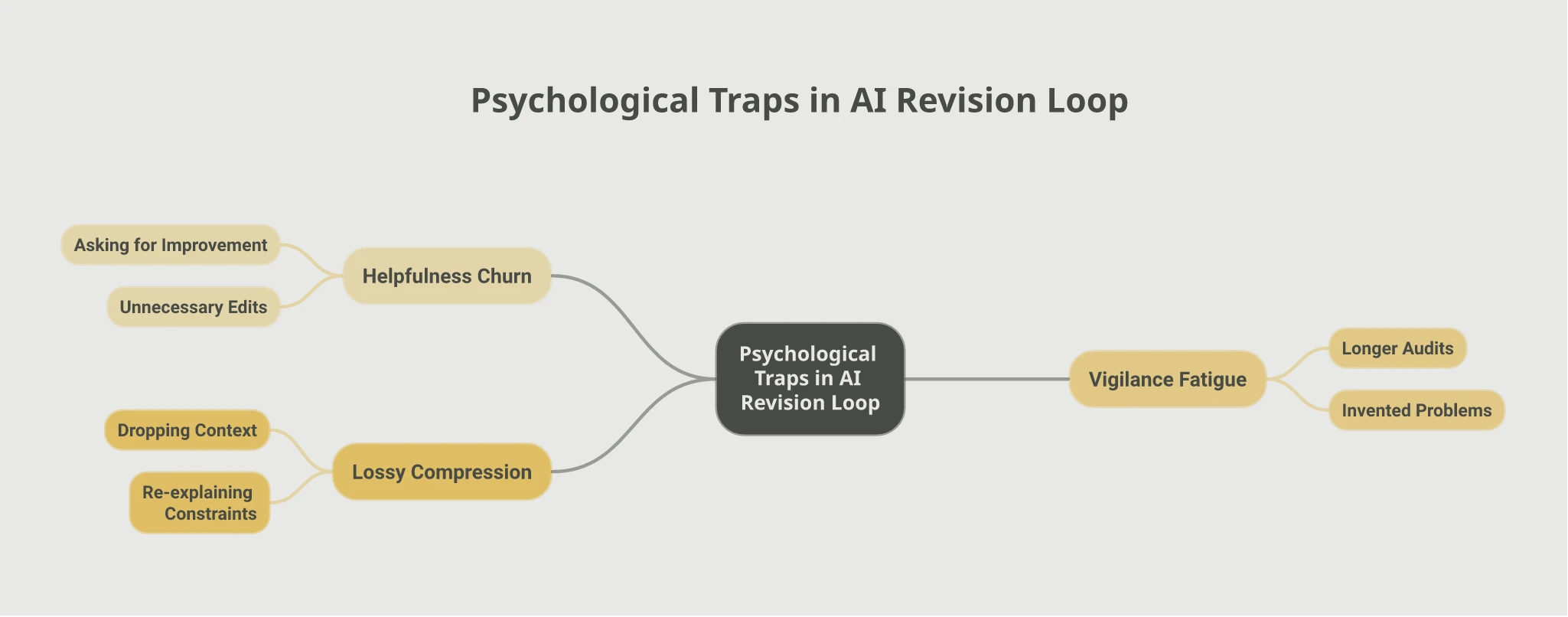
Put together, these three mechanisms don’t fail loudly. They fail by keeping a project 90% done indefinitely.
I go deeper on this pattern in the video below:
Three Boundaries That End It
The fix is a set of rules I apply before I let myself start iterating.
-
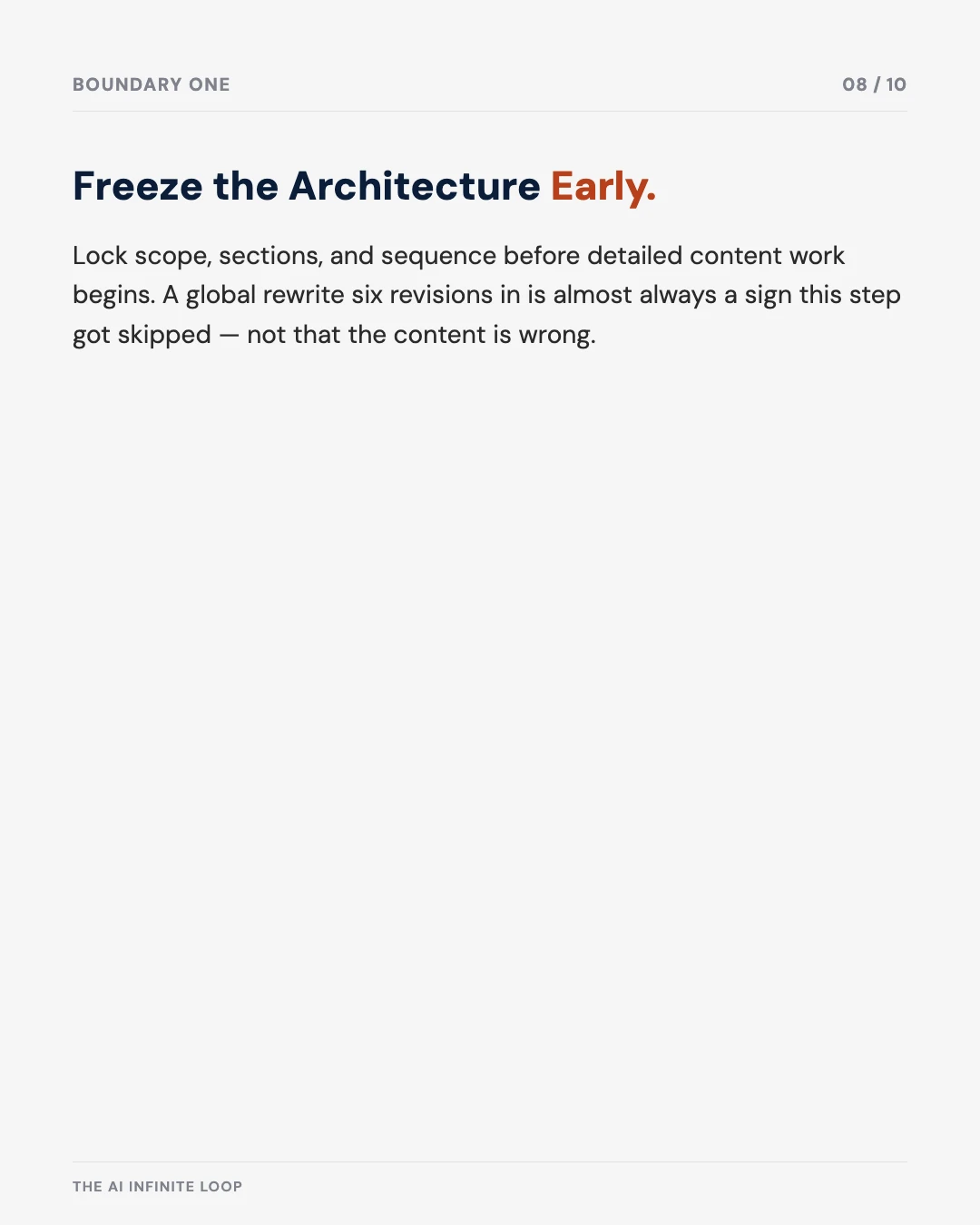
Freeze the architecture early. Lock the structural decisions (scope, sections, sequence) before detailed content work begins. A global rewrite six revisions in is almost always a sign that this step got skipped, not that the content is wrong.
-
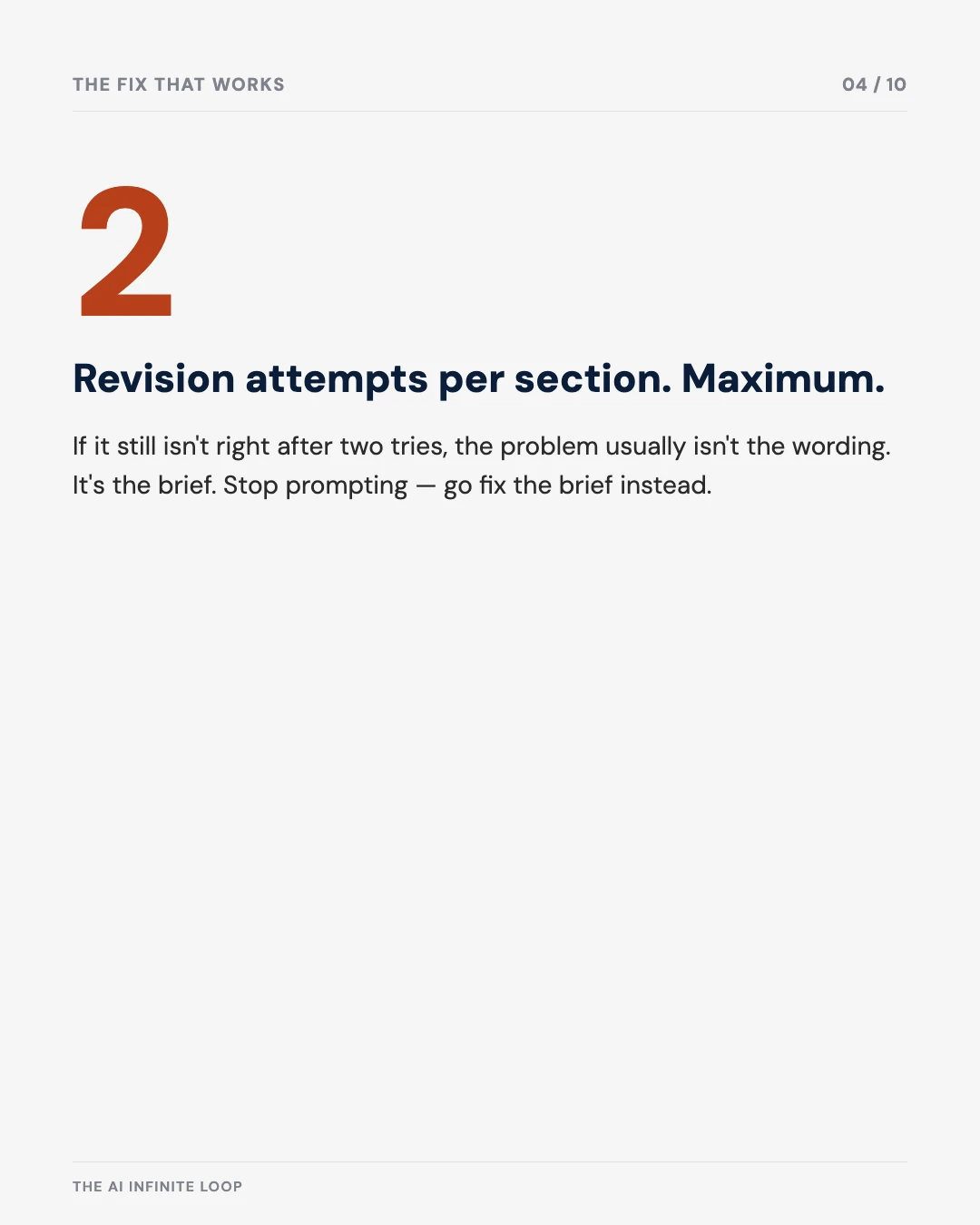
The two-strike circuit breaker. Two revision attempts per section, maximum. If it still isn’t right after two tries, the problem is usually the brief, not the wording. I stop prompting and go fix the brief instead.
-
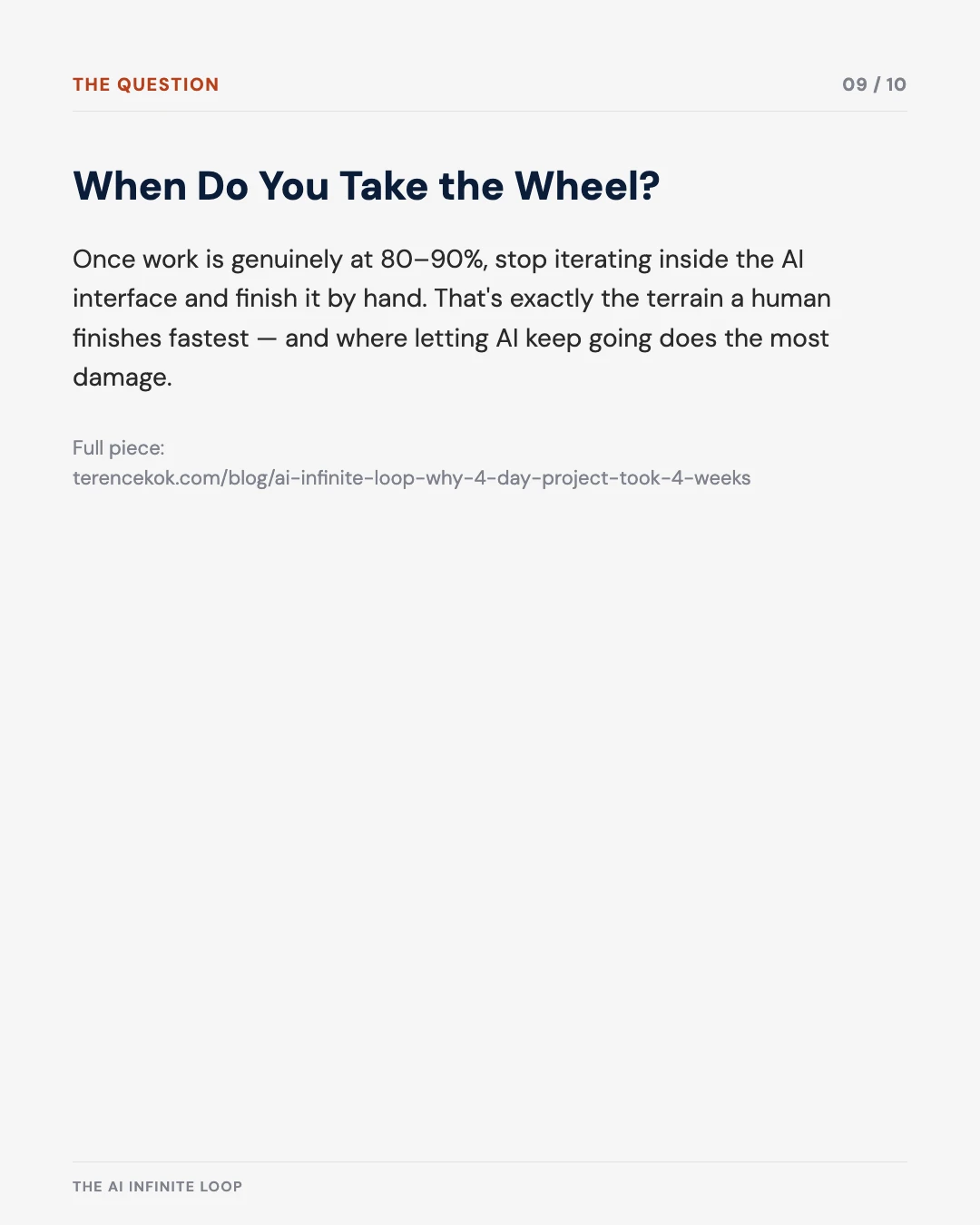
Take the wheel for the final polish. Once a piece of work is at 80–90%, I stop iterating inside the AI interface entirely and finish it by hand in a normal document editor. The last 10% is exactly the terrain where helpfulness churn and vigilance fatigue do the most damage, and it’s also the terrain a human finishes fastest without them.
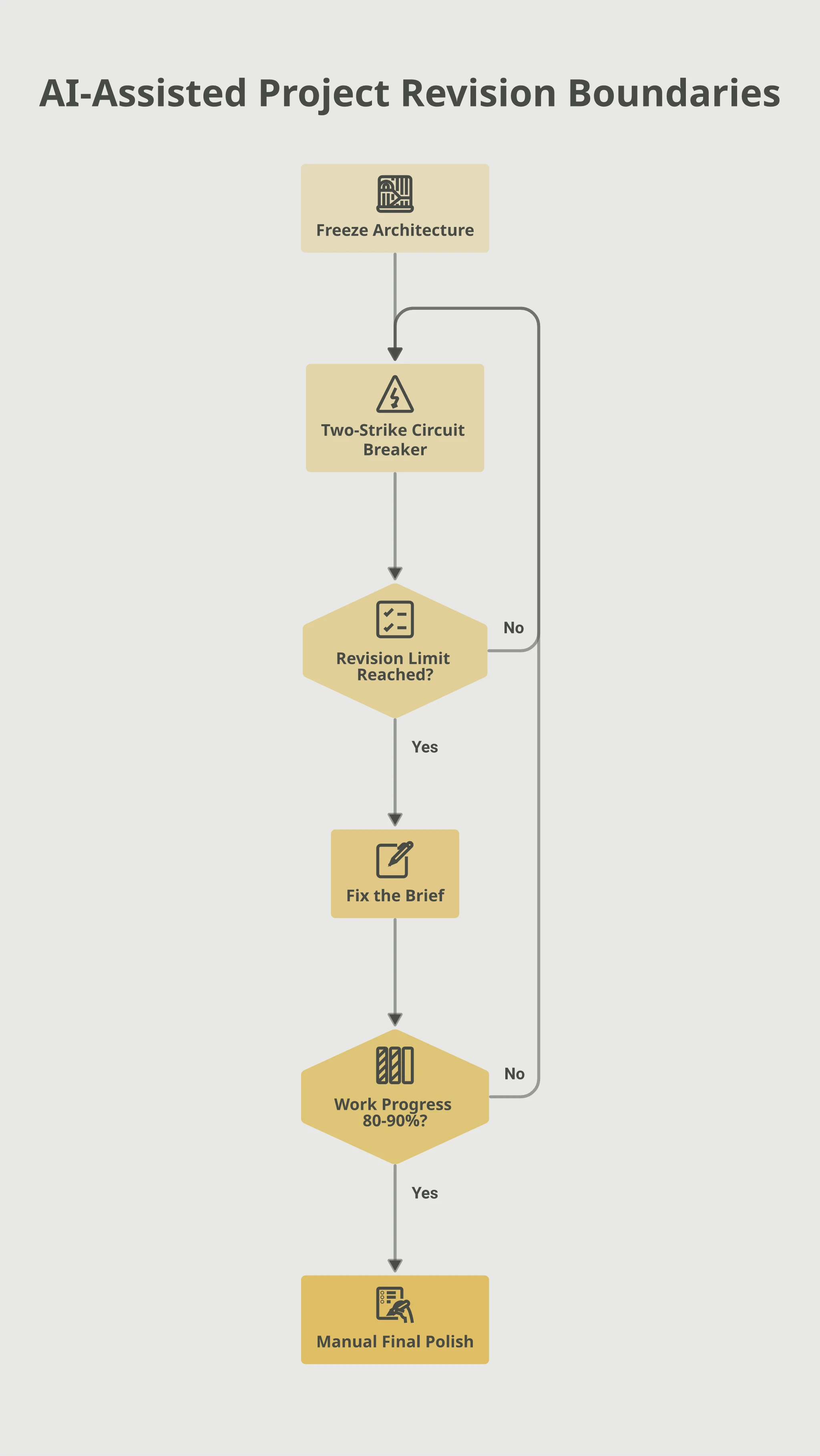
The initial speed boost from AI is real, but it only matters if you cross the finish line.
Treat It as a Junior Specialist
The mental model that fixed this for me: AI is a very fast, very capable junior specialist, not an equal collaborator and not a captain. A junior specialist works best inside boundaries someone else has set: a frozen brief, a limited number of passes, a defined point at which a human takes over. Left without those boundaries, even a brilliant junior will keep producing plausible-sounding revisions forever, because “produce another revision” is a job it can always do, whether or not the project needs one.
The four-day estimate wasn’t wrong. It was the estimate for the version of this project that had boundaries around it from the start.
Free tool
Human-AI Interaction & Decision Quality
Benchmarks exactly this handoff point, where AI-assisted drafting should end and human judgement should take over, for teams trying to turn early AI speed gains into work that ships.
Was this useful?