
Executive Summary
AI automating the “grunt work” of coding doesn’t make new graduates obsolete. It raises the bar for what counts as valuable: deep domain expertise, systems that survive production, and the judgment to be trusted with AI decisions.
Core conclusions
- Generic “AI expert” is becoming a commodity skill; pairing AI fluency with deep knowledge of a hard industry (finance, healthcare, energy) is what makes a graduate irreplaceable.
- The real gap isn’t building a model, it’s building a system that runs reliably in production. Data engineering and MLOps matter more than squeezing out the last point of accuracy.
- As companies grow wary of hallucinations and bias, the graduates who can explain why a model is safe to deploy become the trusted bridge between “magic code” and a business asset.
The advice, in ten slides
Save it, share it, or send it to a graduate who needs the reframe.


I’ve been speaking to a lot of you recently, and I can sense the anxiety. You’ve spent four years studying computer science, engineering, or data science, only to graduate into a world where an AI agent can write Python scripts faster than you can open your IDE.
It’s a valid worry. But I want to reframe it for you.
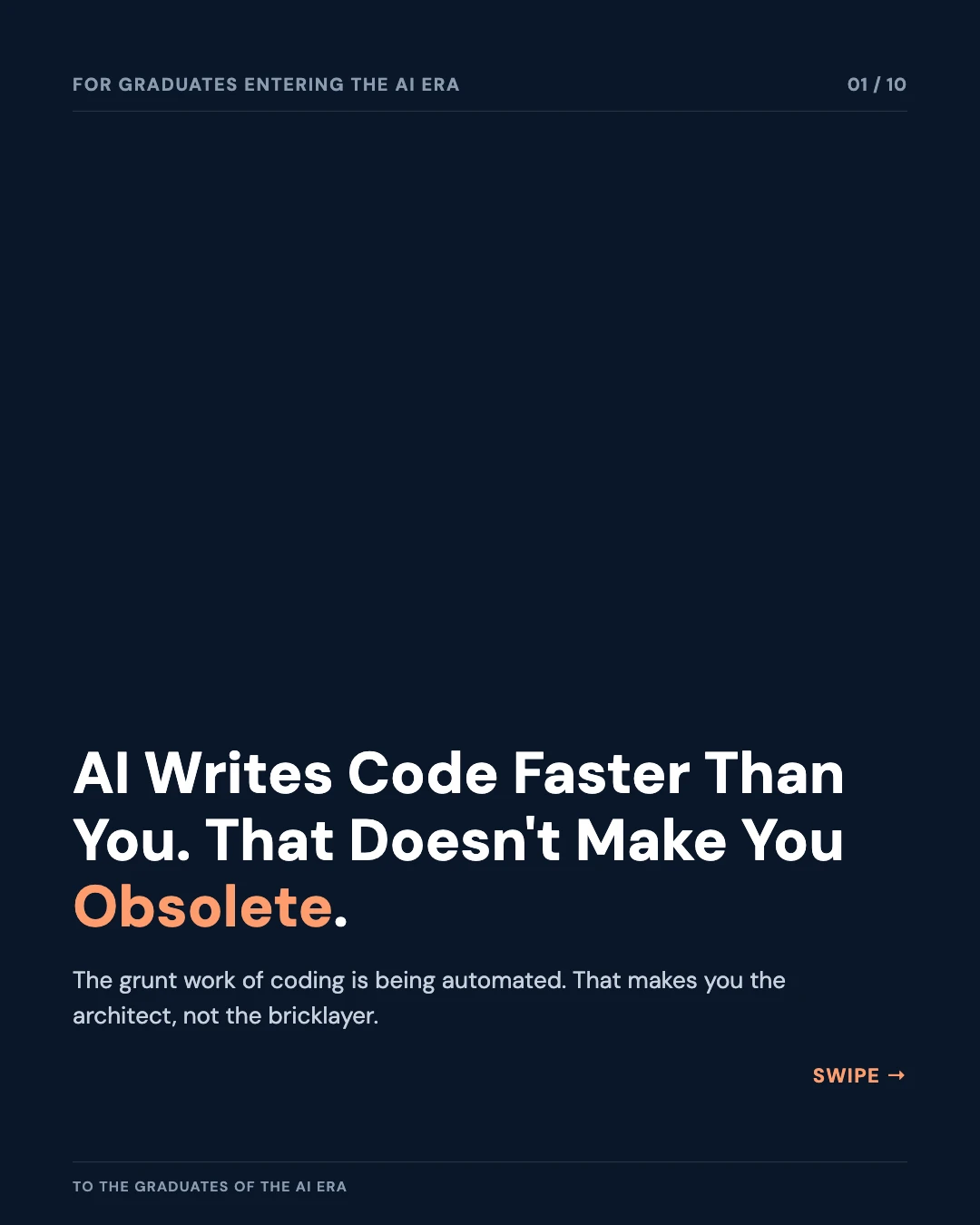
If you are graduating today, you aren’t entering a dying industry; you are entering one that is finally growing up. The “grunt work” of coding (the boilerplate, the syntax debugging) is being automated. That doesn’t make you obsolete. It makes you the architect rather than the bricklayer.
If you want to dominate your niche in this new era, you need to stop thinking like a coder and start thinking like a problem solver. Here is my advice on how to gain that upper hand.
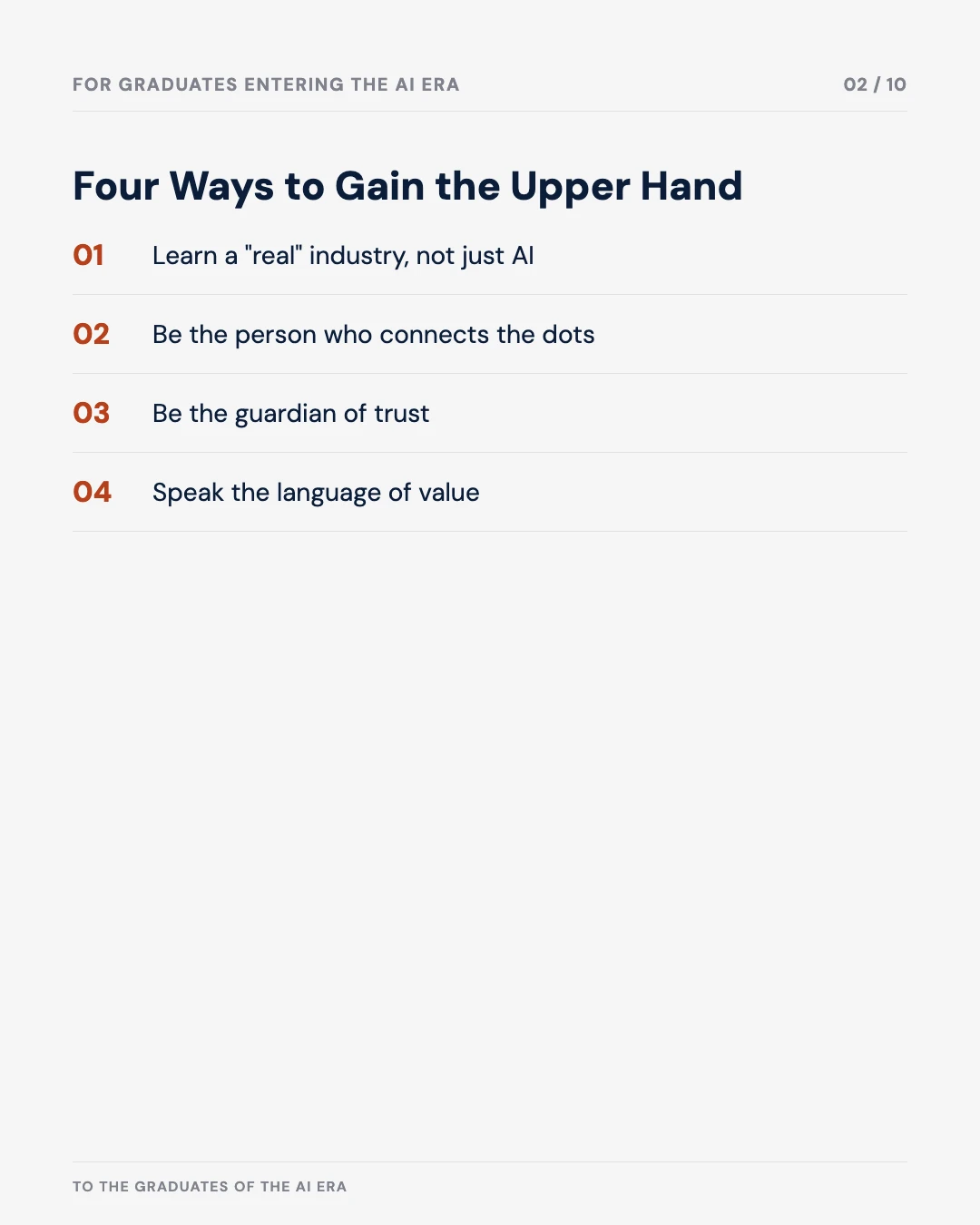
Don’t Just Learn AI; Learn a “Real” Industry
Here is a secret: generic “AI Experts” are becoming a commodity.
If you walk into an interview and say, “I know how to build a Large Language Model,” that’s great. But if you walk in and say, “I know how to use computer vision to spot defects in renewable wind turbines,” you are hired.
My best advice? Pick a “hard” domain. Go deep into finance, healthcare, energy, or urban planning. Learn the language of that industry. Understand their pain points. When you combine deep domain knowledge with AI skills, you become a “purple squirrel,” someone so rare and valuable that companies will fight to keep you.
Be the Person Who Connects the Dots
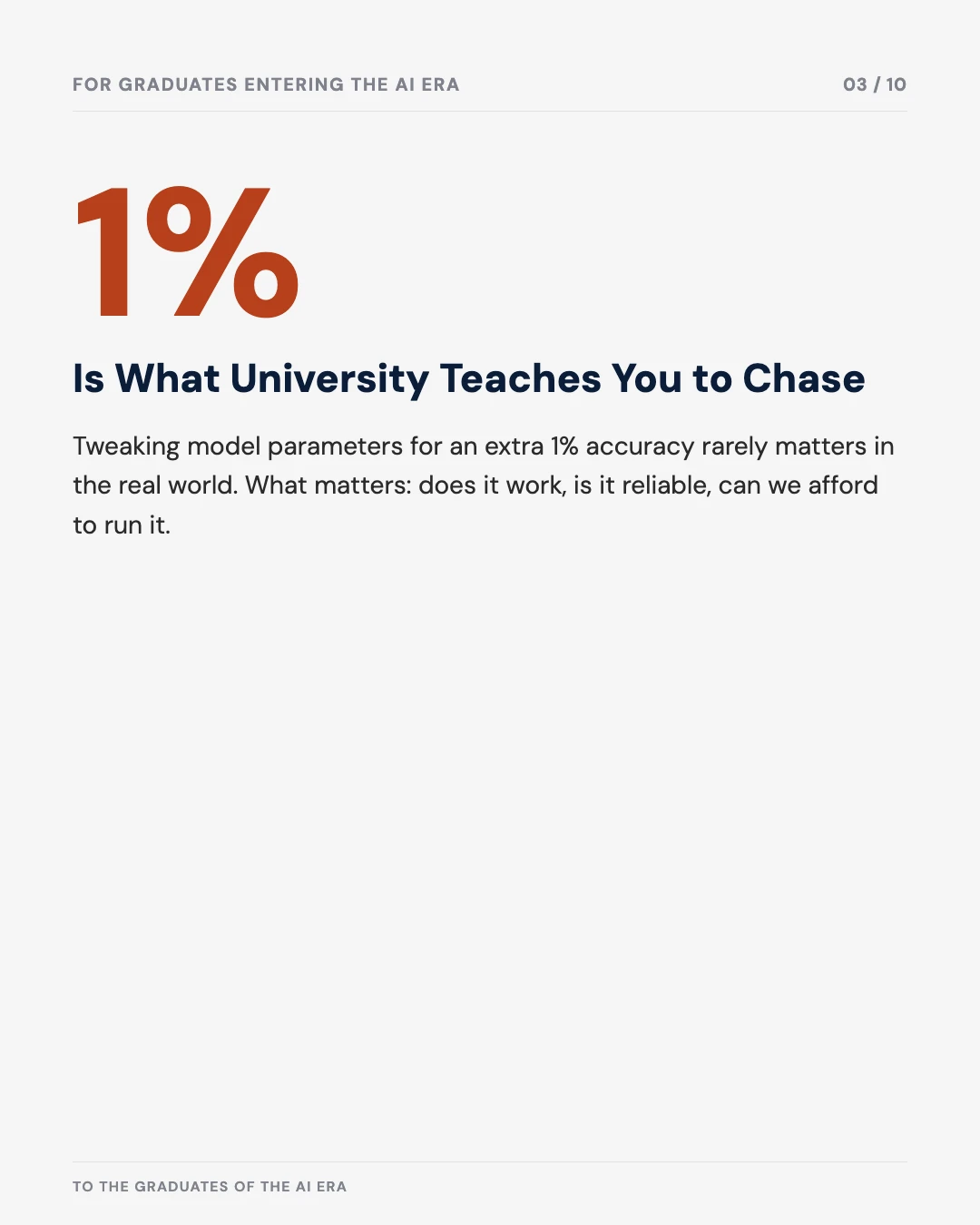
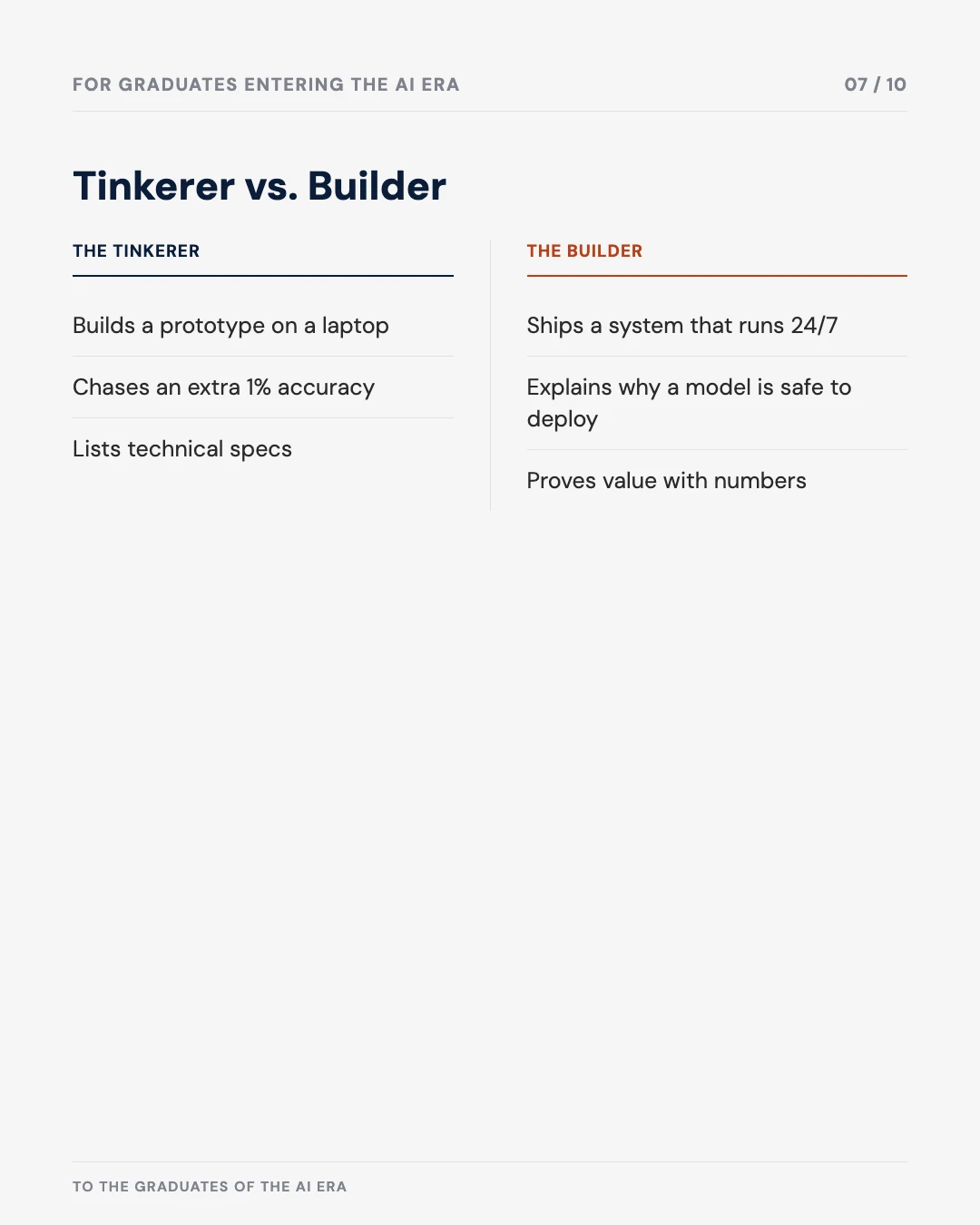
In university, you probably spent weeks tweaking model parameters to get that extra 1% accuracy. In the real world, that rarely matters as much as you think.
What matters is: Does it work? Is it reliable? Can we afford to run it?
Shift your focus from “building models” to “building systems.” Learn how the data gets from the sensor to your model (Data Engineering). Learn how to deploy that model so it doesn’t crash when 10,000 people use it (MLOps). I’ve laid out a fuller framework for closing this exact gap for engineers who are still early in their careers.
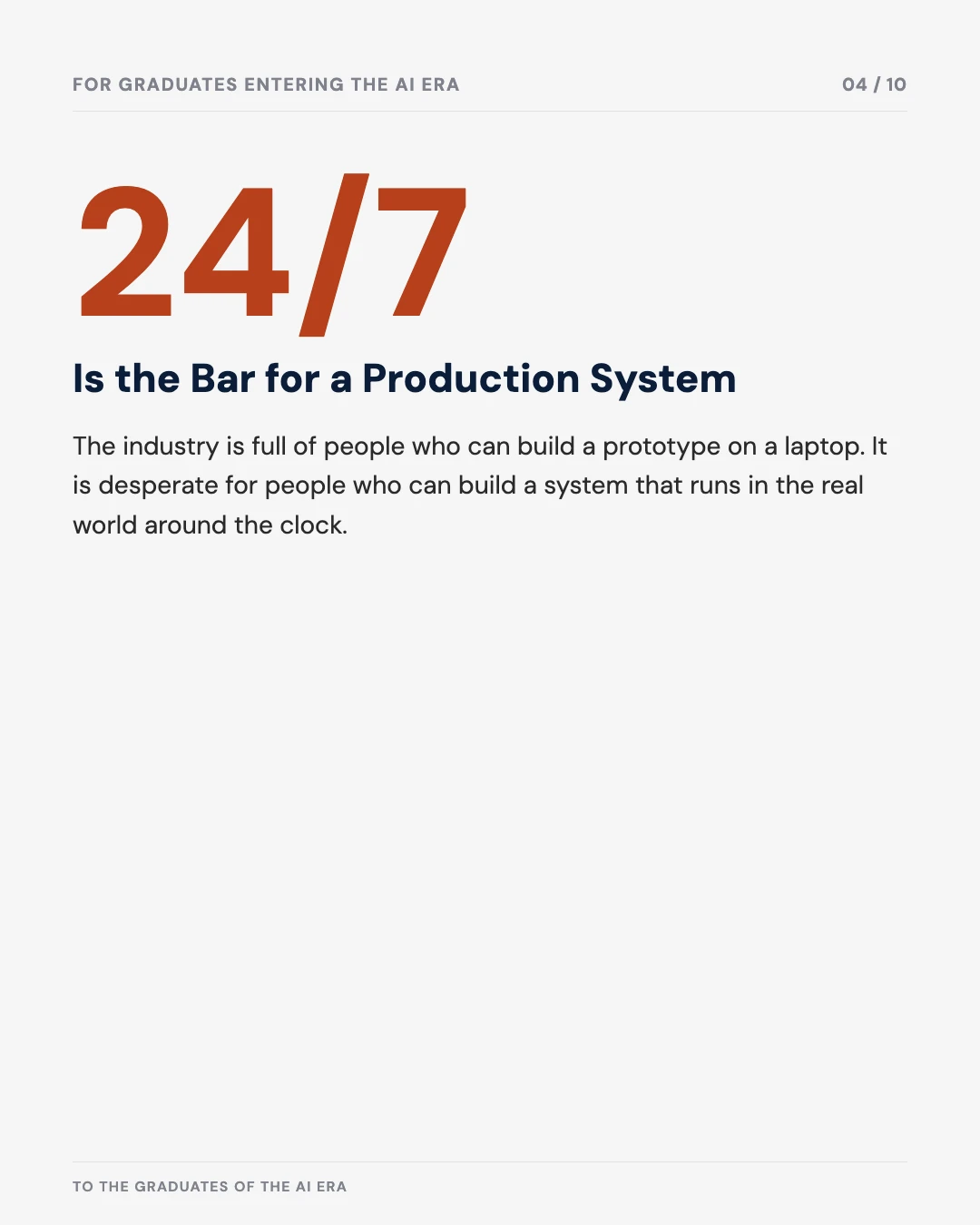
The industry is full of people who can build a prototype on a laptop. We are desperate for people who can build a robust system that runs in the real world 24/7. Be the builder, not just the tinkerer.
Be the Guardian of Trust
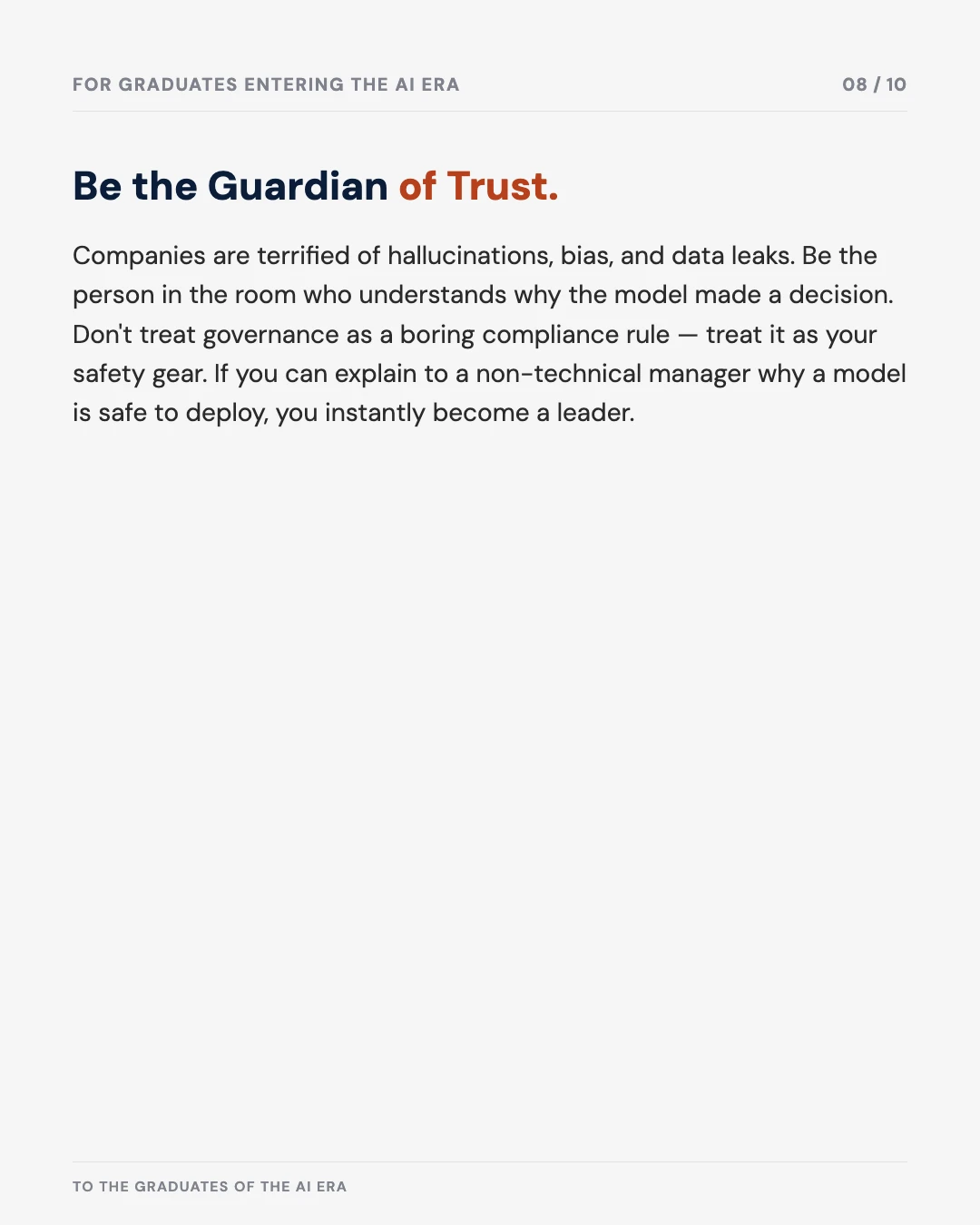
We are moving past the “move fast and break things” phase. Now, companies are terrified of AI hallucinations, bias, and data leaks.
This is your massive opportunity. Be the person in the room who understands why the model made a decision. Learn about AI ethics and governance. Don’t look at these as boring compliance rules; look at them as your safety gear.
If you can explain to a non-technical manager why a model is safe to deploy, you instantly become a leader. You bridge the gap between “magic code” and “trusted business asset.”
Speak the Language of Value
Finally, remember that technology is just a tool to solve human problems.
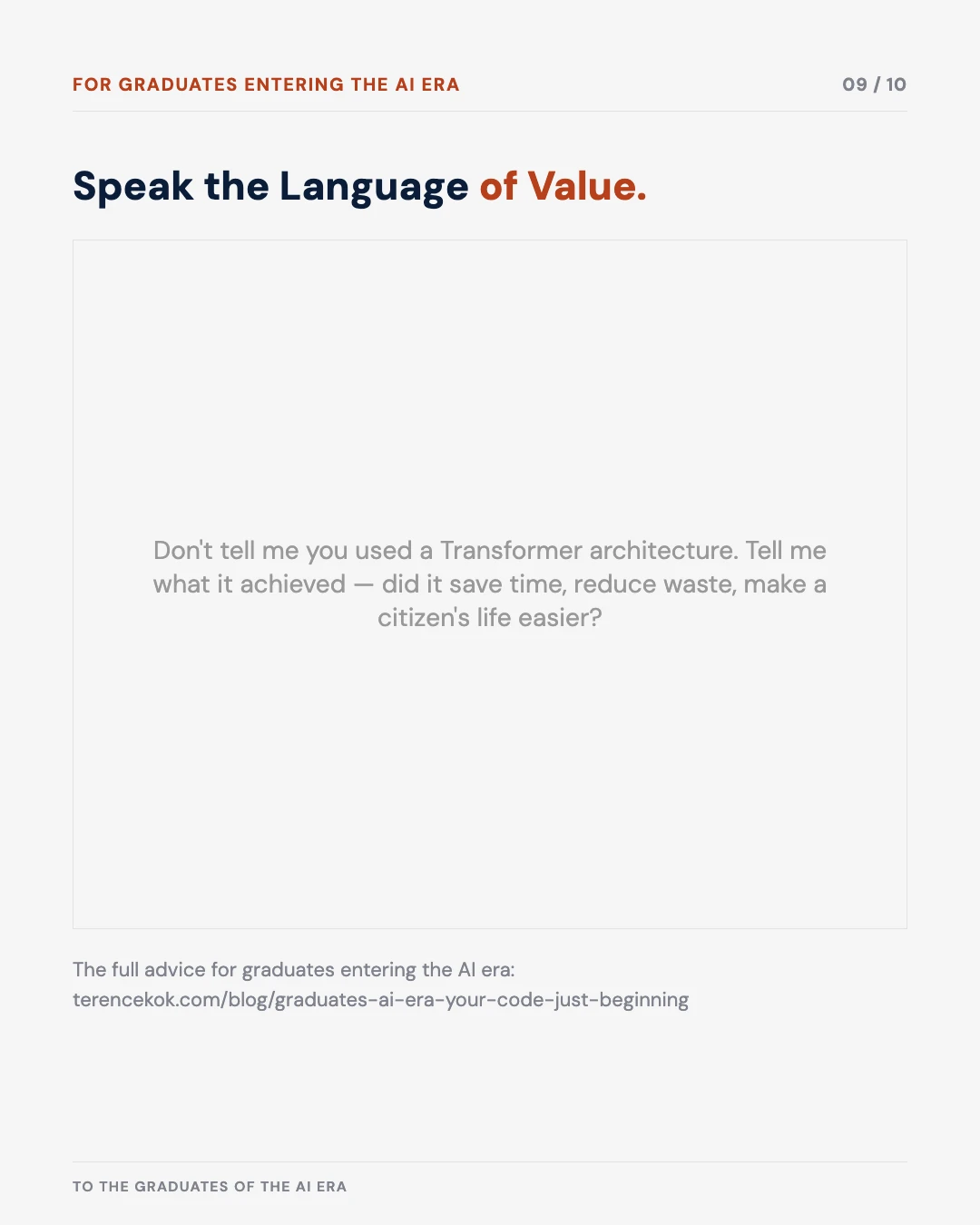
When you talk about your work, don’t just list technical specs. Don’t just tell me you used a Transformer architecture. Tell me what it achieved. Did it save time? Did it reduce waste? Did it make a citizen’s life easier?
The most successful engineers I know aren’t just technical wizards; they are the ones who can look at a business problem and say, “I know how to fix this,” and then prove it with numbers, not just code.
The Bottom Line
Don’t let the headlines scare you. This is the most exciting time in history to be starting a career in technology. You have tools at your fingertips that my generation could only dream of. And the entry-level door that AI is closing on one side is opening a different one that founders and mentors are already watching.
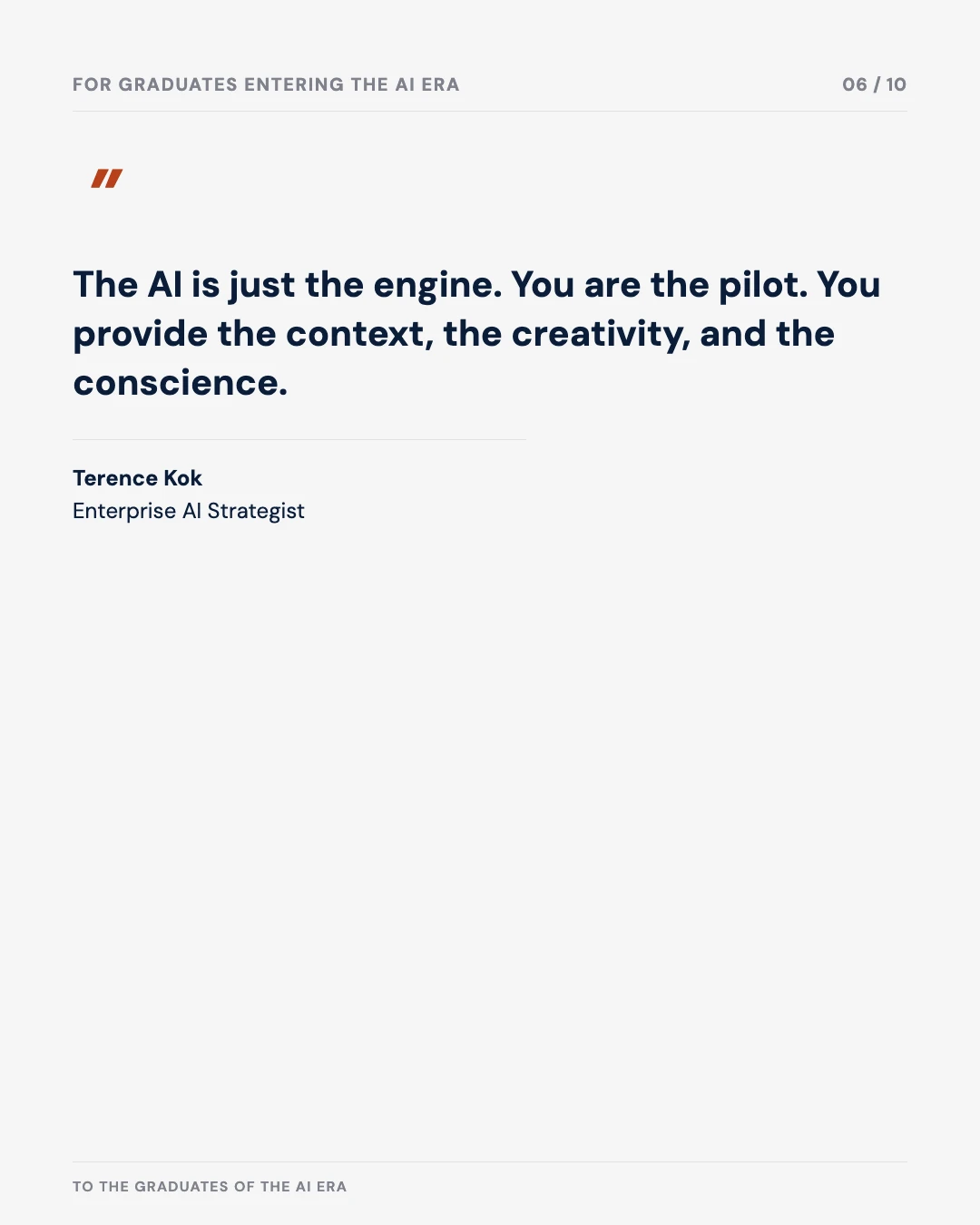
But remember: the AI is just the engine. You are the pilot. You provide the context, the creativity, and the conscience.
Welcome to the trade. We’re glad to have you.