
Executive Summary
The barrier to building an AI product has collapsed; the barrier to building one that endures has risen. Defensibility no longer comes from features or model access. It comes from data, integration depth, trust, and economics that platforms can’t trivially replicate.
Core conclusions
- Sign-up spikes and short-term usage are weak signals. Depth of integration, frequency of use on critical tasks, and renewal rates are what actually indicate sustainable traction.
- Surface-level differentiation decays fast because most products sit on the same foundation models; the effective window before a feature is replicated or absorbed natively can be measured in months, not years.
- A launch should be treated as the start of a sustained integration-and-adoption campaign, not a moment. The real question is whether a product can become operationally indispensable, not whether it can be built and shipped.
The argument, in ten slides
Save it before your next product review, or send it to whoever is planning the launch.
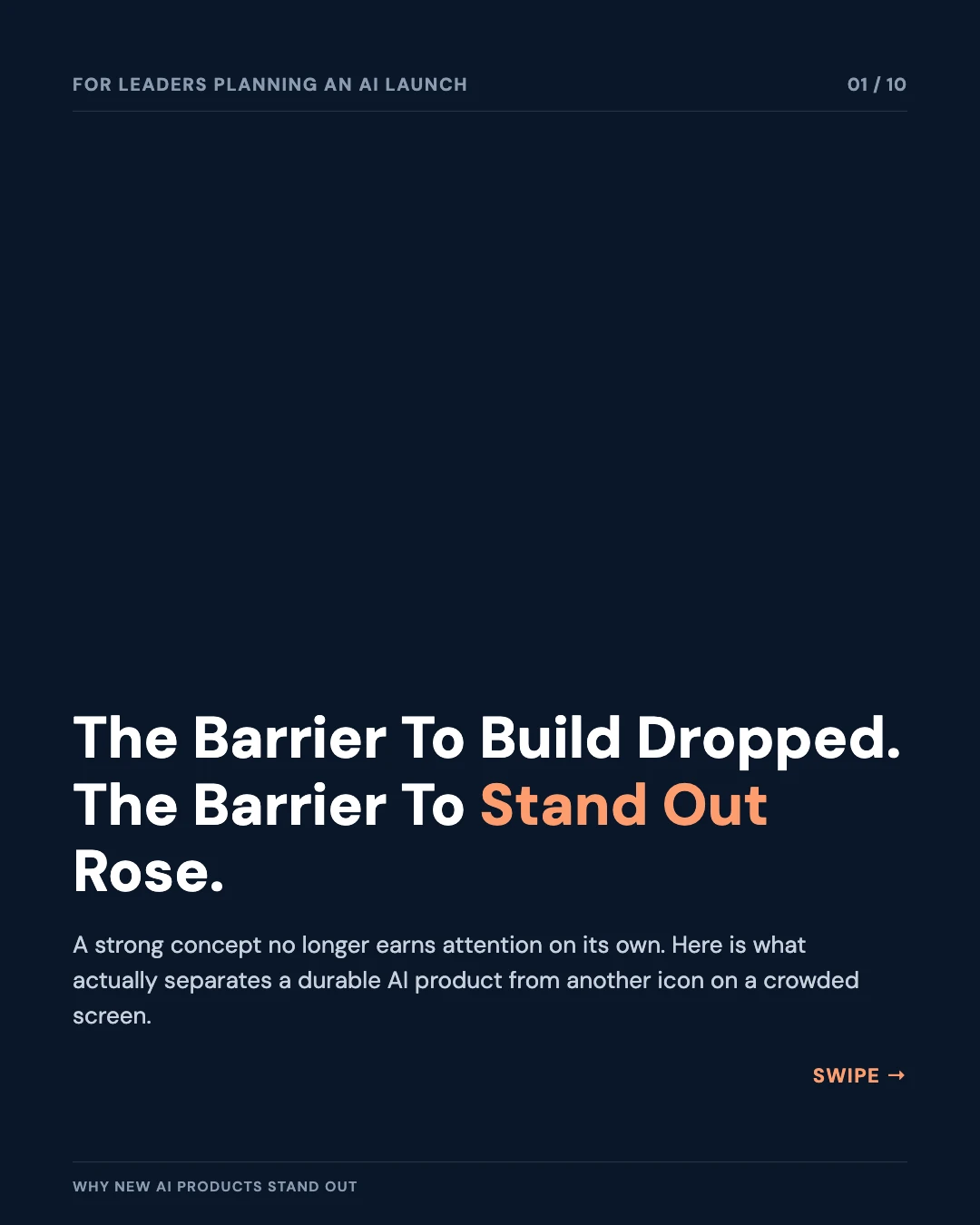
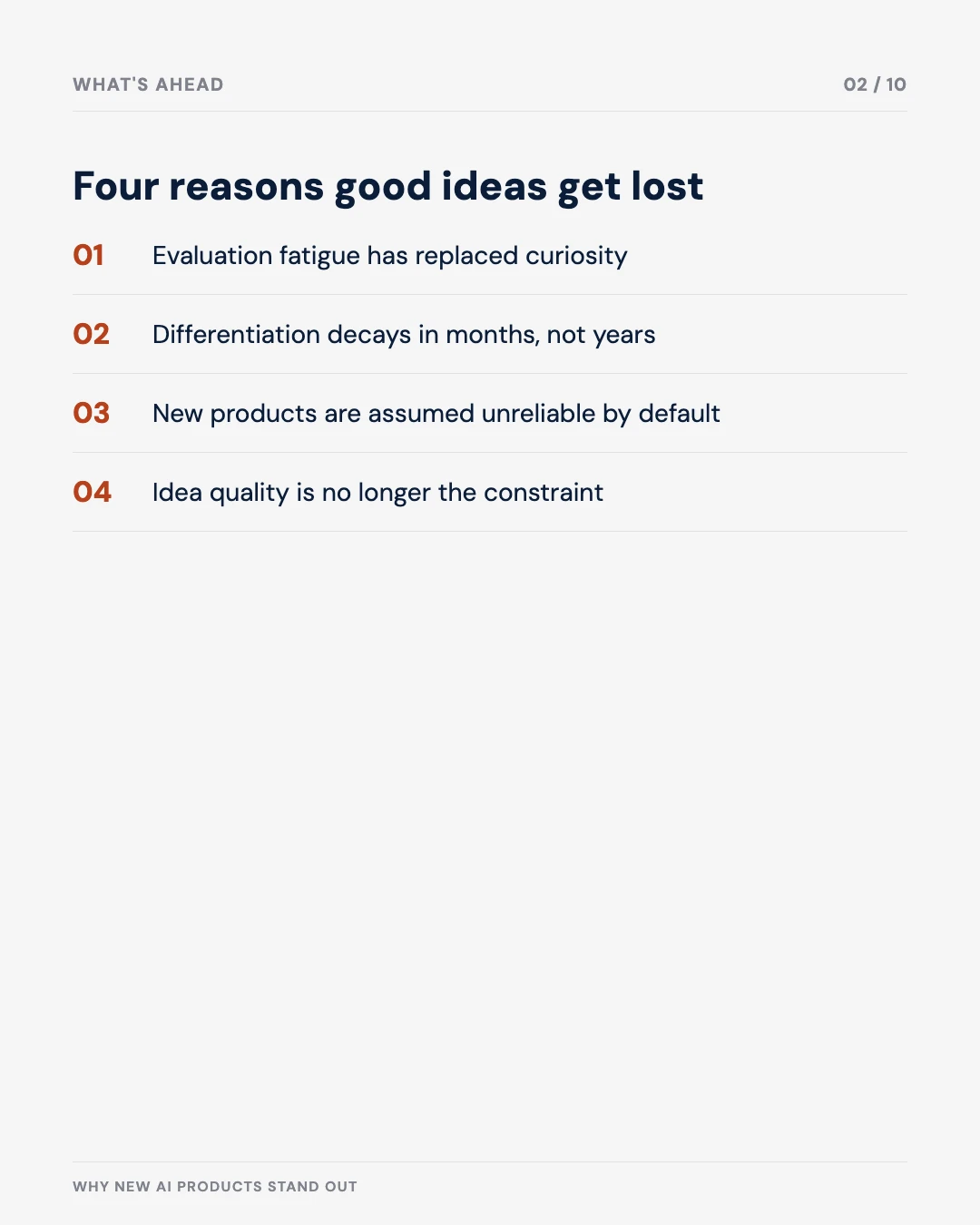
The current AI market is characterised by rapid iteration, short product lifecycles, and an overwhelming number of seemingly similar offerings. The barrier to building AI-powered applications has dropped dramatically, but the barrier to building enduring AI products has risen. In this environment, even well-conceived solutions are at high risk of being lost in the noise.
For leaders planning new AI launches, this is not just a marketing challenge. It is a structural shift in how products are discovered, evaluated, adopted, and ultimately commoditised.
Getting Seen Is Harder Than It Looks
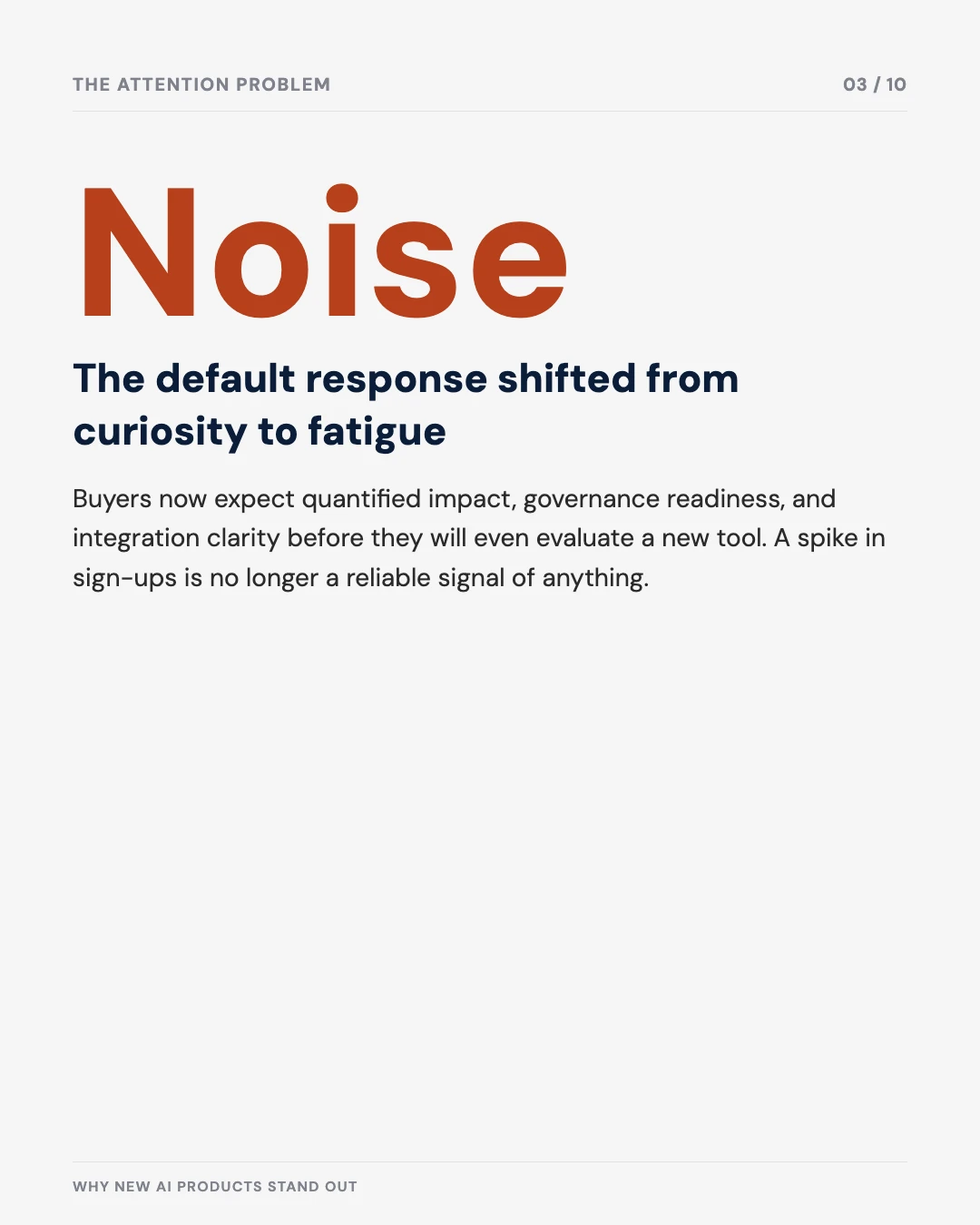
User and buyer attention is fragmented across a constant stream of new AI tools, many promising similar value: copilots, assistants, automation of routine tasks, or “AI for X” propositions. Evaluation cost has increased: each new product requires time to understand, test, and compare. The default response has shifted from curiosity to fatigue. Many buyers now treat new AI launches as noise until proven otherwise.
A strong concept is no longer sufficient to secure attention at launch. Without a highly targeted and credible route to the right users, even well-designed products struggle to achieve basic visibility.
The go-to-market challenge has hardened considerably. Acquisition costs are higher, audiences more sceptical, and generic AI messaging gets lower response than it did eighteen months ago. In B2B and public sector, buyers now expect quantified impact, governance readiness, and integration clarity before committing. A spike in sign-ups is therefore not a reliable indicator of success. The real constraint lies in establishing sustained, embedded usage.
Differentiation Degrades Faster Than Expected
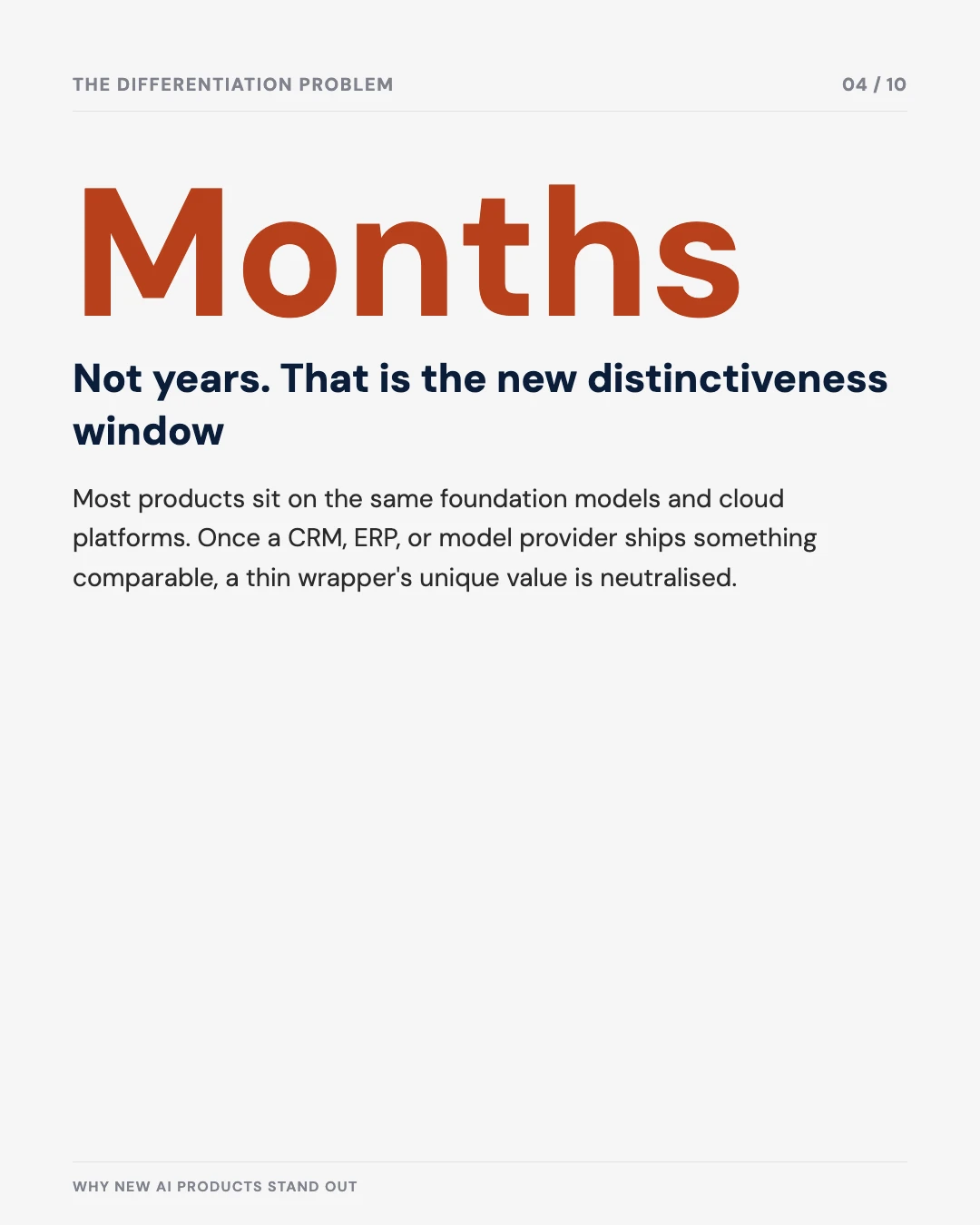
Most new AI products are built on the same underlying primitives: a small number of foundation models and cloud platforms. Features converge quickly, and surface-level differentiation (UI tweaks, prompts, or minor workflow variations) is easily replicated. “Wrapper” products are rapidly commoditised once platforms expose similar capabilities natively. I set out the architectural moves that actually survive this shakeout in Not Every Problem Needs a Model. Narrative convergence (“copilot for…”, “AI assistant for…”) makes offerings look interchangeable at the top of the funnel.
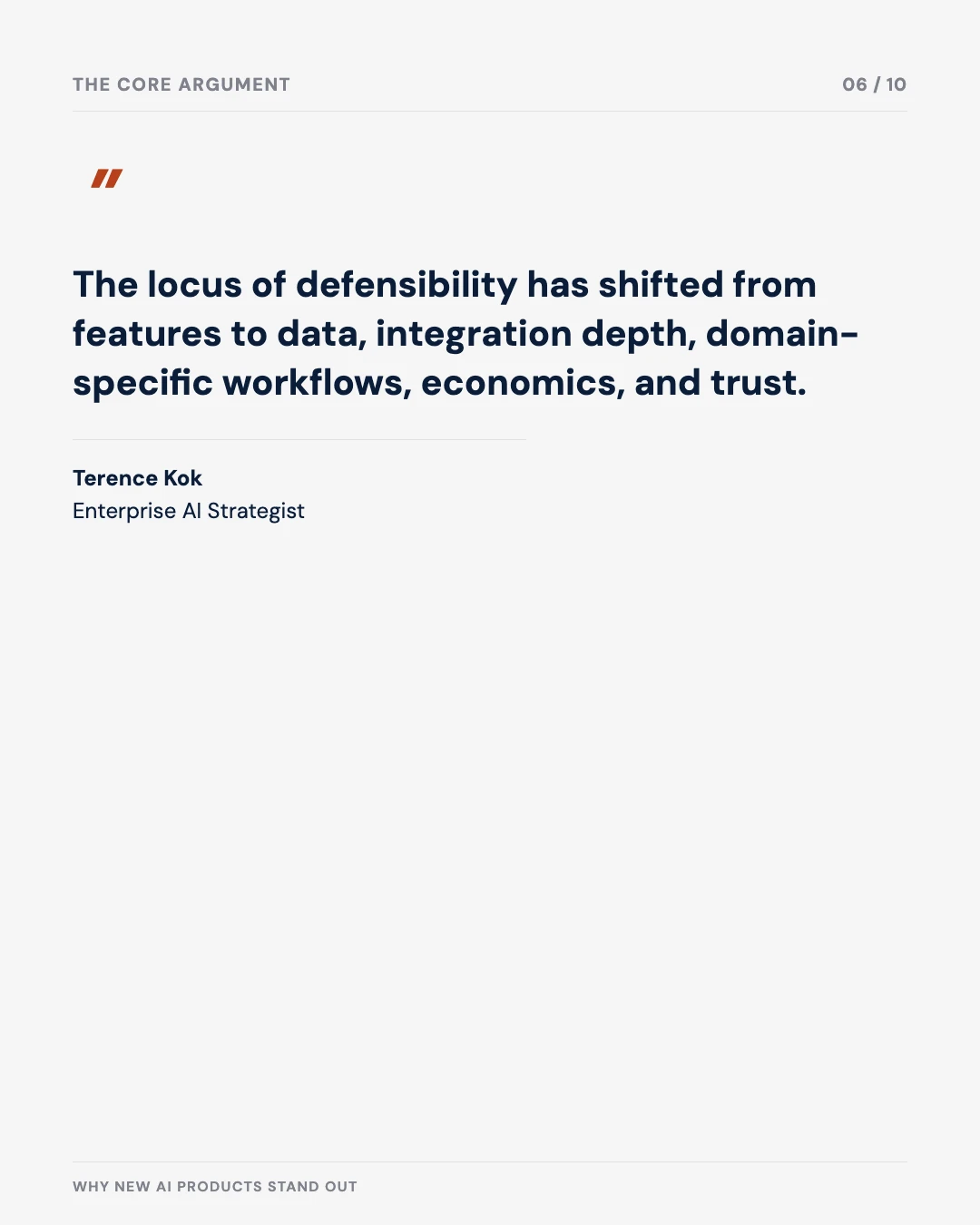
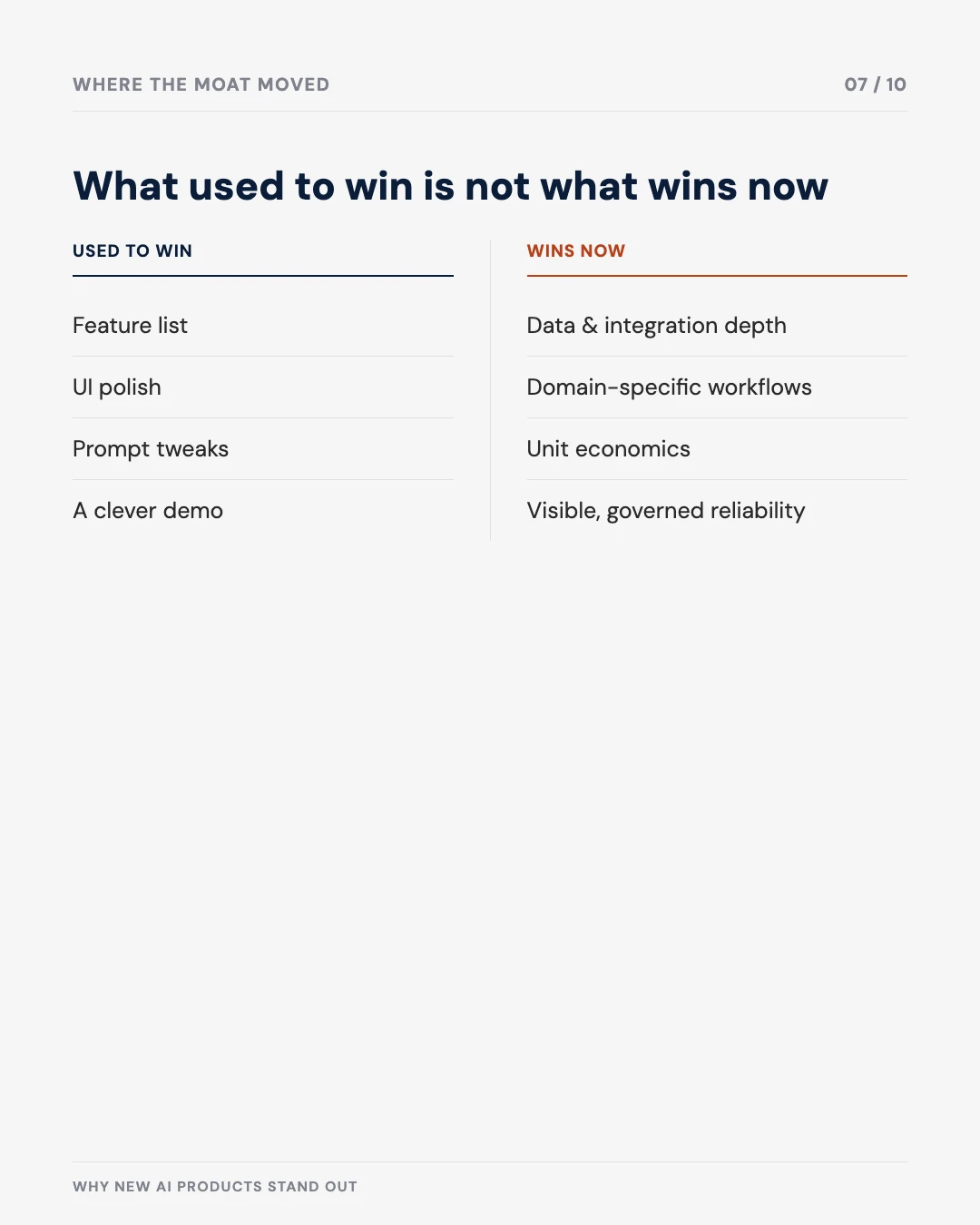
The locus of defensibility has shifted from features to data, integration depth, domain-specific workflows, economics, and trust. A good idea that is not anchored in structural differentiation is treated as transient, regardless of its conceptual quality.
The locus of defensibility has shifted from features to data, integration depth, domain-specific workflows, economics, and trust.
Platform risk compounds this. Because foundation model providers and productivity suites iterate quickly, they can absorb many standalone innovations as native features. When a new AI product is primarily a thin layer over a general model, its unique value can be neutralised as soon as the underlying model improves, or as soon as a CRM, ERP, or cloud vendor ships something comparable. The effective window in which a new AI feature is genuinely distinctive can be measured in months, not years. Product strategy must therefore assume a high probability of imitation or substitution by incumbent platforms.
Trust Takes Longer to Build Than Before
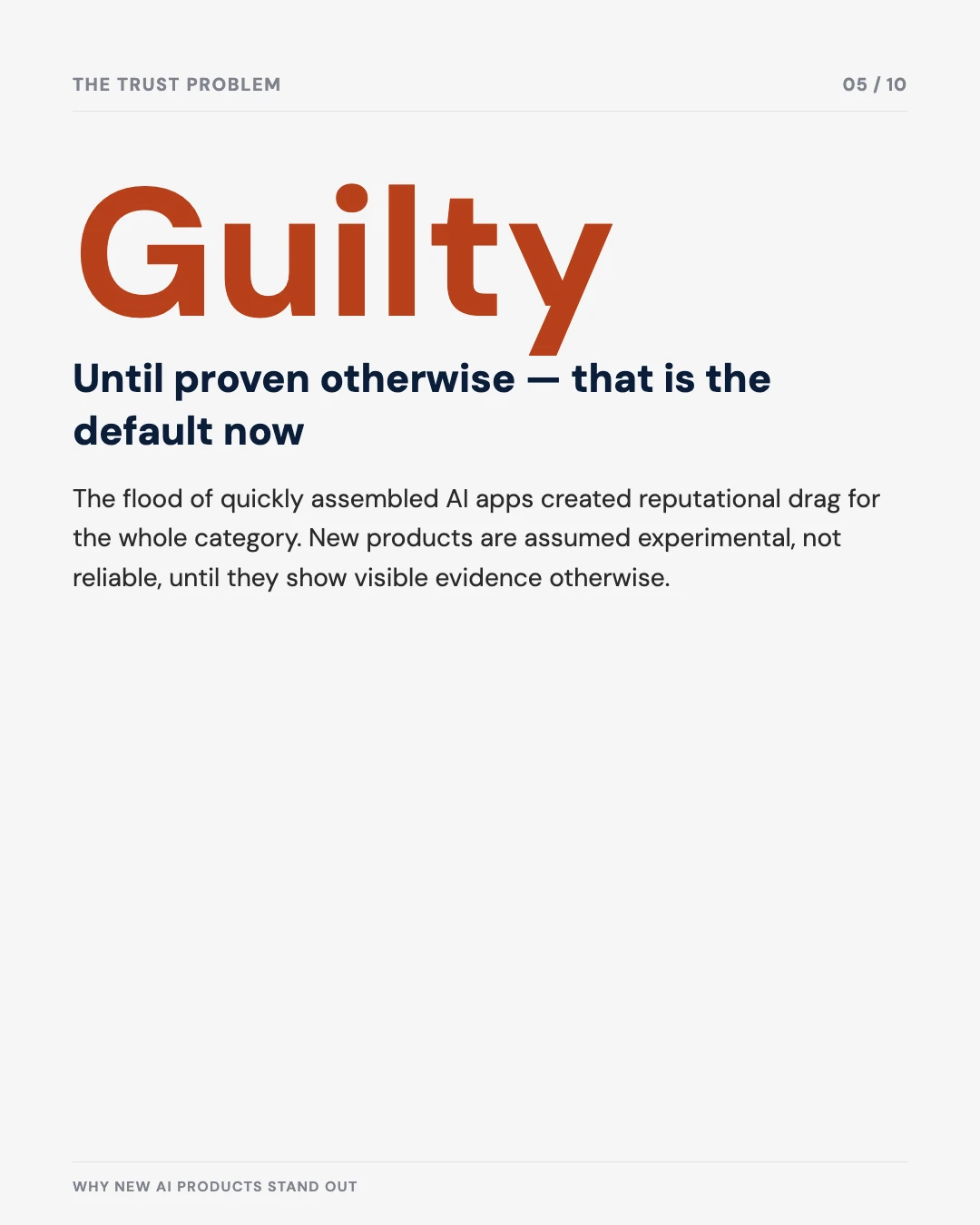
The flood of quickly assembled applications has created a reputational drag for the entire category. Many users have already experienced unreliable outputs, hallucinations, brittle performance, poorly considered UX, and weak security or governance postures. New products are often assumed to be experimental by default. Overcoming that assumption now requires visible evidence of reliability, clear risk controls, and coherent product governance, not marketing claims. This is precisely the evidentiary gap AI Assurance is built to close.
Adoption patterns reinforce this challenge. Experimentation with AI tools is easy; commitment is not. Users frequently try multiple tools in parallel for the same job, use them sporadically, and abandon most once initial curiosity fades. Sign-ups and short-term usage spikes are weak indicators of sustainable traction. More meaningful measures are depth of integration into existing systems, frequency of use on critical tasks, and renewal rates. Many “successful launches” fail to translate into sustainable products precisely because they never cross this threshold.
Idea Quality Is No Longer the Constraint
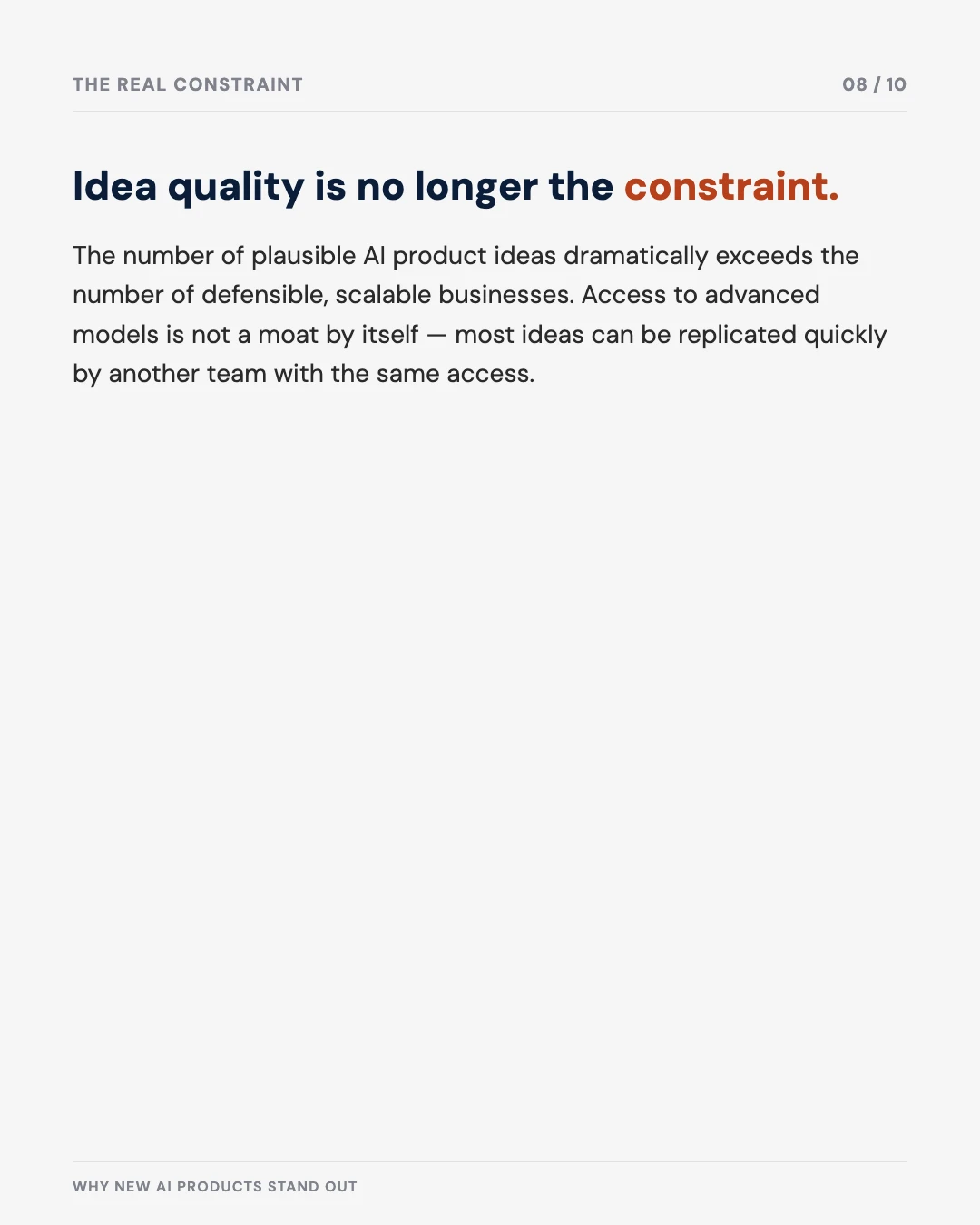
In the current environment, the number of plausible AI product ideas dramatically exceeds the number of defensible, scalable businesses. Access to advanced models is not, by itself, a moat. Most ideas can be replicated quickly by other teams with similar access. Distribution, integration depth, data strategy, and unit economics are more predictive of longevity than conceptual novelty.
Even strong concepts fail to attract sustained attention, capital, or adoption if they cannot demonstrate a credible path to defensible differentiation, a clear role within an existing architecture and operating model, and quantified impact that justifies the displacement of current tools or processes.
A launch should be treated less as a public “moment” and more as the start of a sustained, highly targeted integration-and-adoption campaign. The real design problem is not “Can this be built and launched?” but “Can this become an indispensable part of a particular operational stack, with measurable and defensible impact, in a way that platforms cannot trivially replicate?”
The real design problem is not “Can this be built and launched?” but “Can this become an indispensable part of a particular operational stack in a way that platforms cannot trivially replicate?”
The primary consequence of launching today is that the market will not reward a good concept on its own. It will only reward concepts that become deeply integrated, operationally critical, and economically justified products. Everything else, however clever, risks becoming just another icon on an already crowded screen.
The market will not reward a good concept on its own. It will only reward concepts that become deeply integrated, operationally critical, and economically justified products.