
Executive Summary
AI deployment safety in 2026 is no longer a yes/no question. It varies by industry, application, and regulatory tier, and the organisations capturing real returns are the ones matching deployment scope to data readiness, regulation, and the right level of human oversight.
Core conclusions
- Deployment safety splits into risk tiers, not a single standard: healthcare, financial credit scoring, law enforcement, and critical infrastructure sit in the EU AI Act’s high-risk tier, requiring documented human oversight and audit trails.
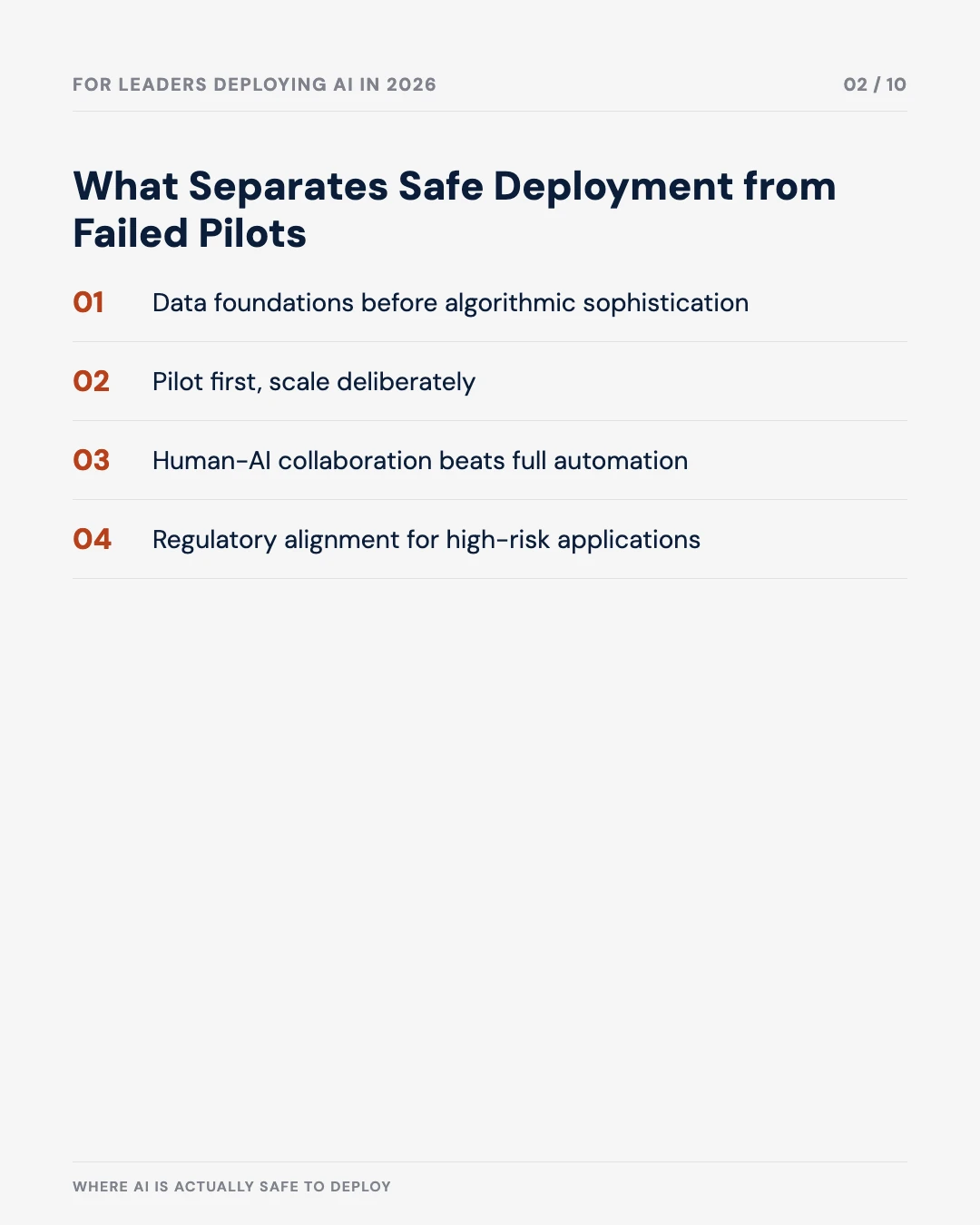
- The pattern separating successful deployments from failed pilots is consistent across sectors: solid data foundations before the AI layer, constrained pilots that scale deliberately, and human-AI collaboration over full automation.
- Responsible deployment requires bias and fairness assessment, human escalation pathways, data security, explainability, and continuous monitoring, treated as governance requirements rather than optional extras.
The sector-by-sector guide, in ten slides
Save it, share it, or send it to whoever owns your deployment roadmap.
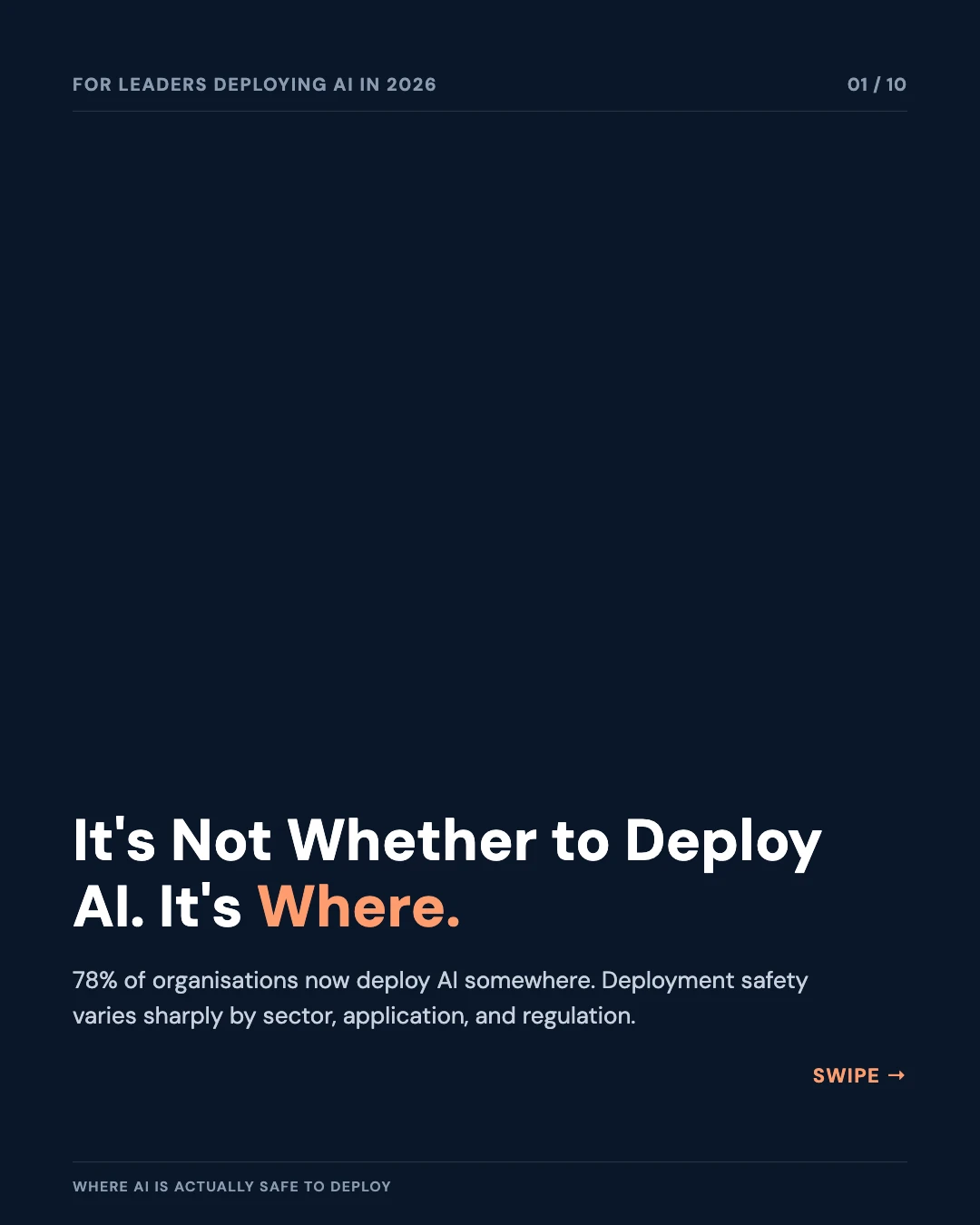
The question for technology leaders, public sector executives, and infrastructure operators has shifted. It’s no longer a question of whether to deploy artificial intelligence, but of where deployment is operationally viable, financially defensible, and regulatory-compliant.
It’s no longer a question of whether to deploy artificial intelligence, but of where deployment is operationally viable, financially defensible, and regulatory-compliant.
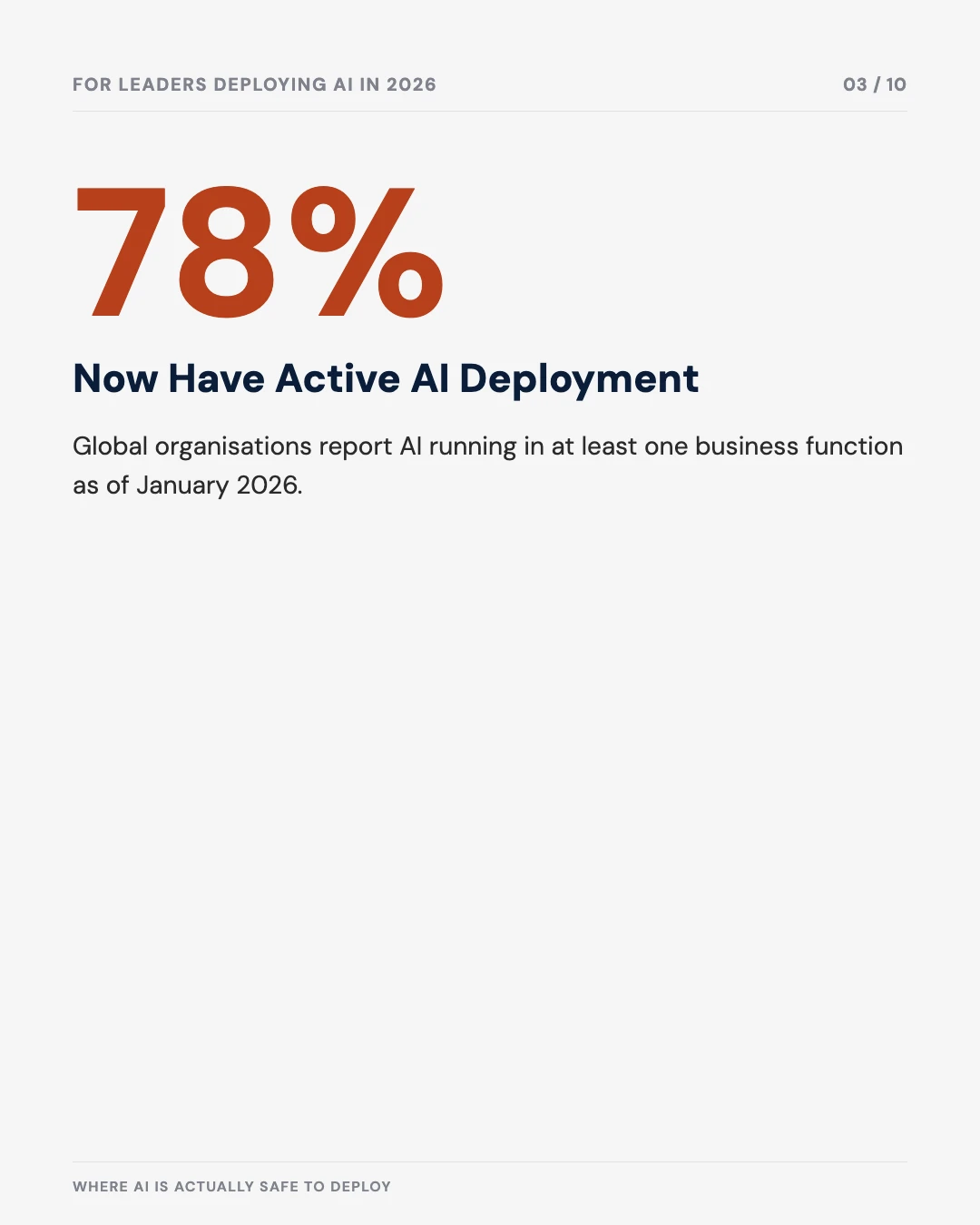
As of January 2026, artificial intelligence has crossed a critical threshold, moving from experimental technology to operational infrastructure. 78% of global organisations now report active AI deployment across at least one business function. But here’s the reality: deployment safety varies significantly across industries, applications, and regulatory contexts. This analysis examines AI applications that have demonstrated technical robustness, regulatory acceptance, and quantifiable return on investment across fourteen sectors.
The Regulatory Baseline
Before examining sector-specific applications, clarity on the regulatory environment governing AI deployment in 2026 is essential.
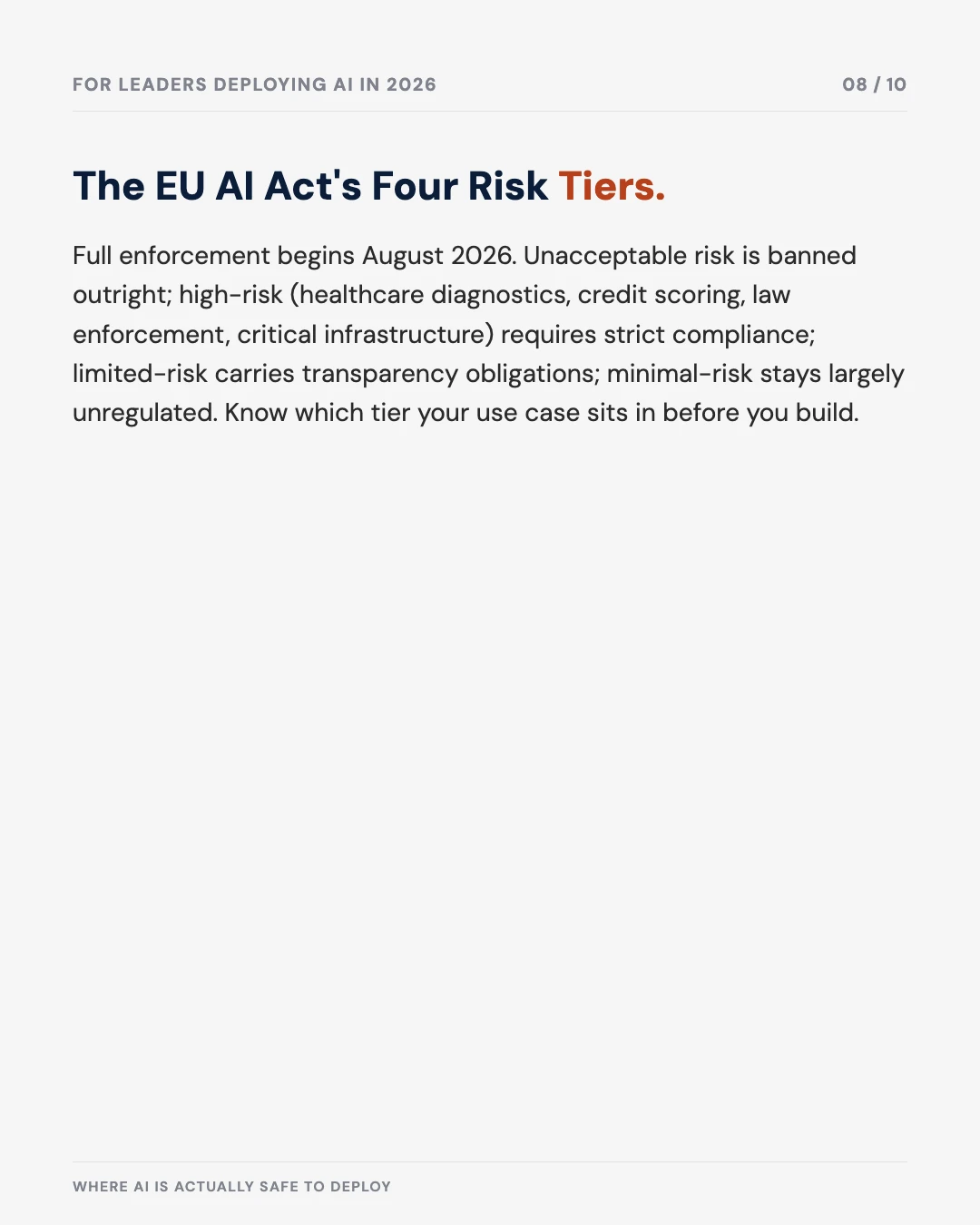
The European Union AI Act now represents the most comprehensive regulatory framework globally, with full enforcement beginning August 2026 for high-risk systems. The Act categorises AI applications into four risk tiers: unacceptable (banned outright), high-risk (requiring strict compliance including risk assessments, human oversight, and documentation), limited-risk (transparency obligations), and minimal-risk (largely unregulated). Critical applications fall under high-risk classification: this includes healthcare diagnostics, financial credit scoring, law enforcement, and critical infrastructure management.
The United States regulatory landscape remains fragmented but increasingly structured. The FDA has authorised over 1,200 AI/ML-enabled medical devices since 1995, with accelerated approvals via the 510(k) pathway. NIST’s AI Risk Management Framework provides federal agencies and contractors with implementation guidance. Singapore introduced MAS Guidelines for AI Risk Management in November 2025, with CSA Guidelines on Securing Artificial Intelligence systems addressing cybersecurity dimensions. Both frameworks emphasise governance, explainability, and continuous monitoring.
AI systems that affect fundamental rights, safety, or critical infrastructure must have clear governance, human oversight, and the ability to audit. Ensuring safe deployment relies not just on technical performance but also on meeting these changing regulatory requirements.
Where AI Is Working and How to Measure It
The following patterns distinguish successful implementations from failed pilots across industries.
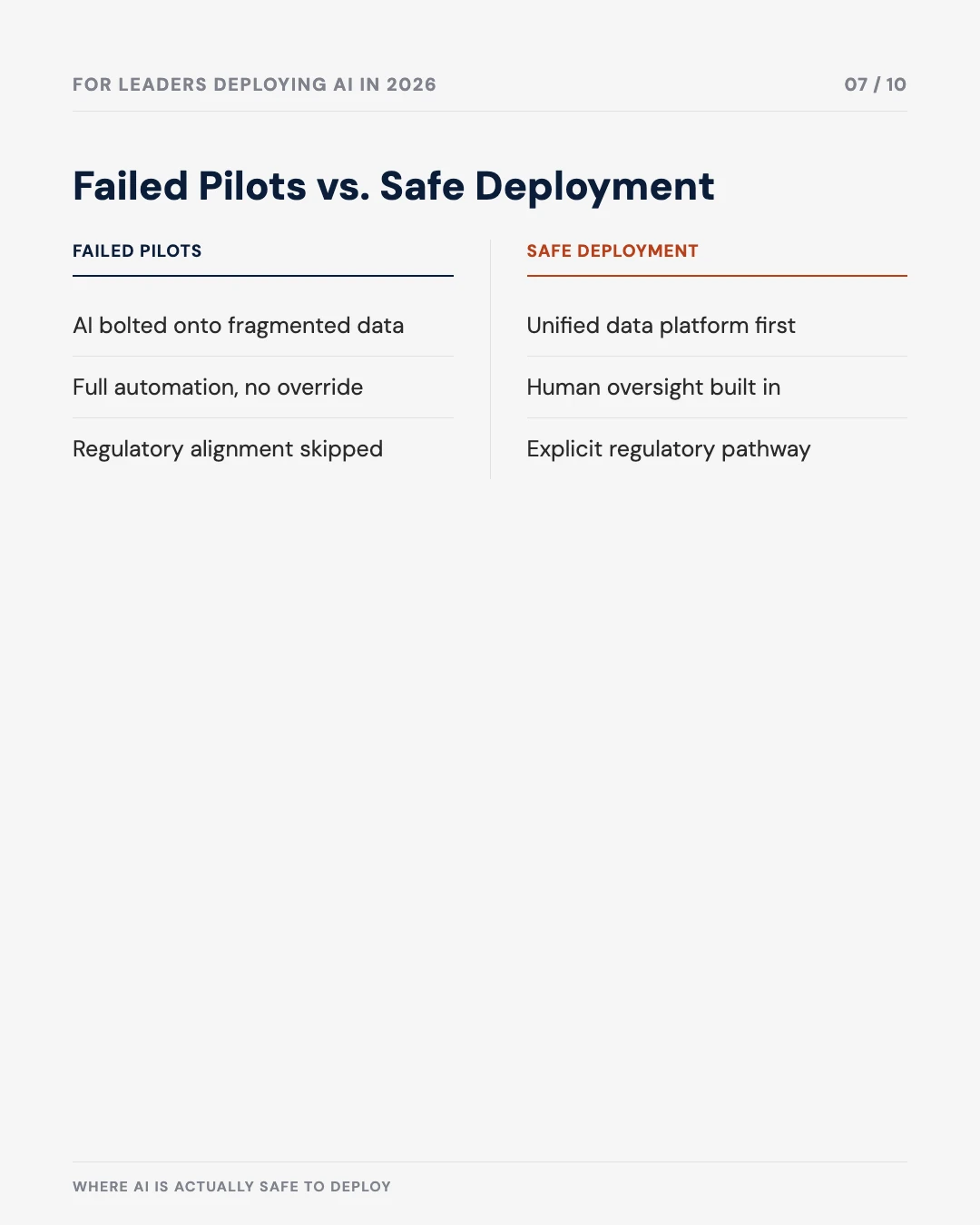
Data foundations precede algorithmic sophistication. Organisations achieving measurable ROI invested in unified data platforms, master data management, and data quality frameworks before deploying AI models. Retail inventory optimisation requires integration of POS transactions, e-commerce activity, supplier lead times, and promotional calendars into a shared environment. Attempts to “bolt AI onto” fragmented data landscapes consistently underperform. This is the same lesson I learned the expensive way: stop tuning prompts, start cleaning data.
Pilot-first, scale deliberately. High-performing organisations initiate AI deployment with constrained pilots targeting measurable business outcomes, then scale iteratively. Manufacturing deployments typically begin with predictive maintenance on the most critical assets where downtime costs are highest, validate ROI over 6–9 months, then expand.
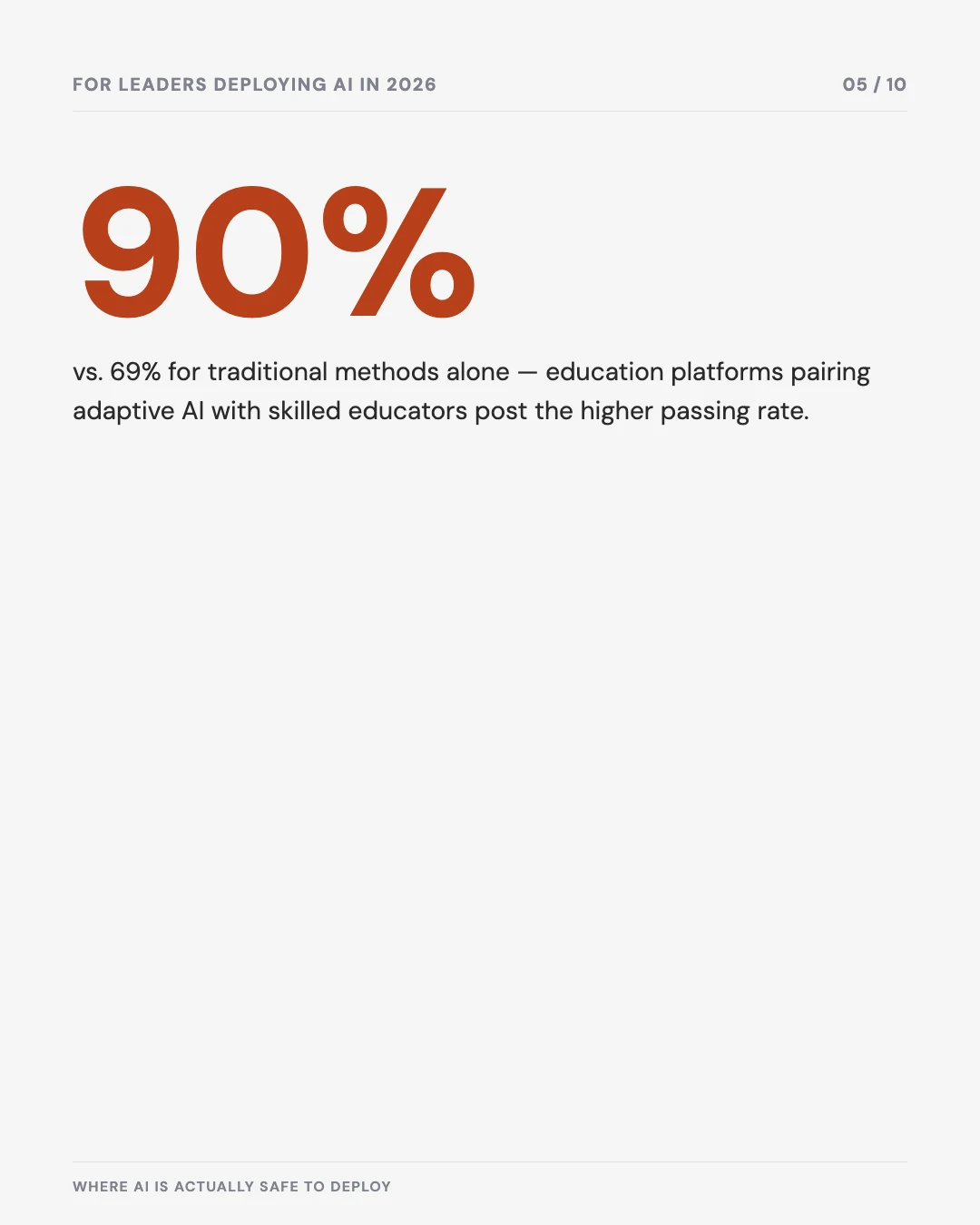
Human-AI collaboration outperforms full automation. Applications that combine AI-generated insights with human judgment and domain expertise achieve superior outcomes compared to fully automated systems. Clinical decision support augments physician expertise rather than replacing clinical judgement. Education platforms that use adaptive AI alongside skilled educators achieve 90% passing rates, compared with 69% for traditional methods.
Regulatory alignment is non-negotiable for high-risk applications. Healthcare, financial services, and public safety deployments require explicit regulatory pathways. Organisations bypassing regulatory compliance face implementation barriers, liability exposure, and reputational risk.
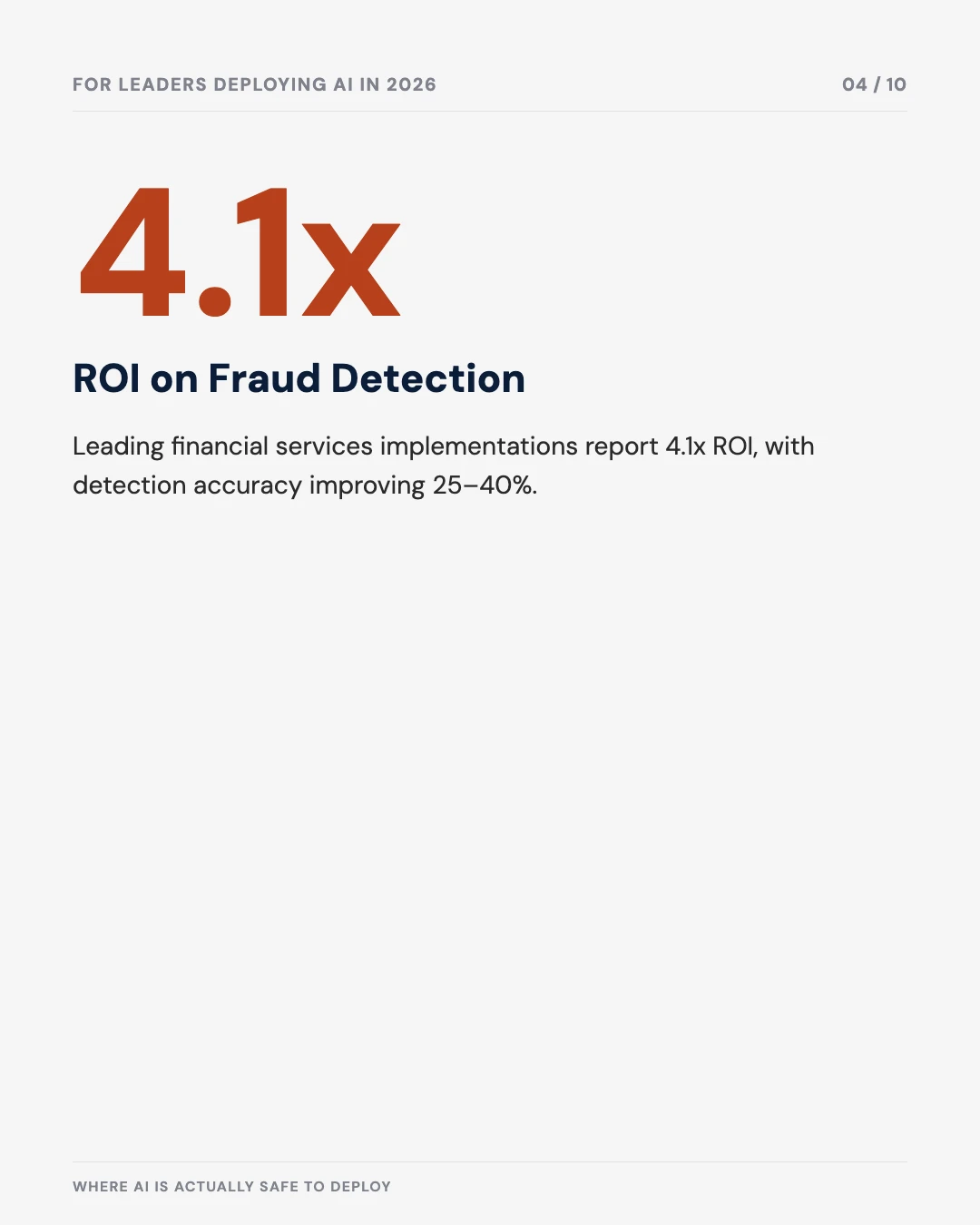
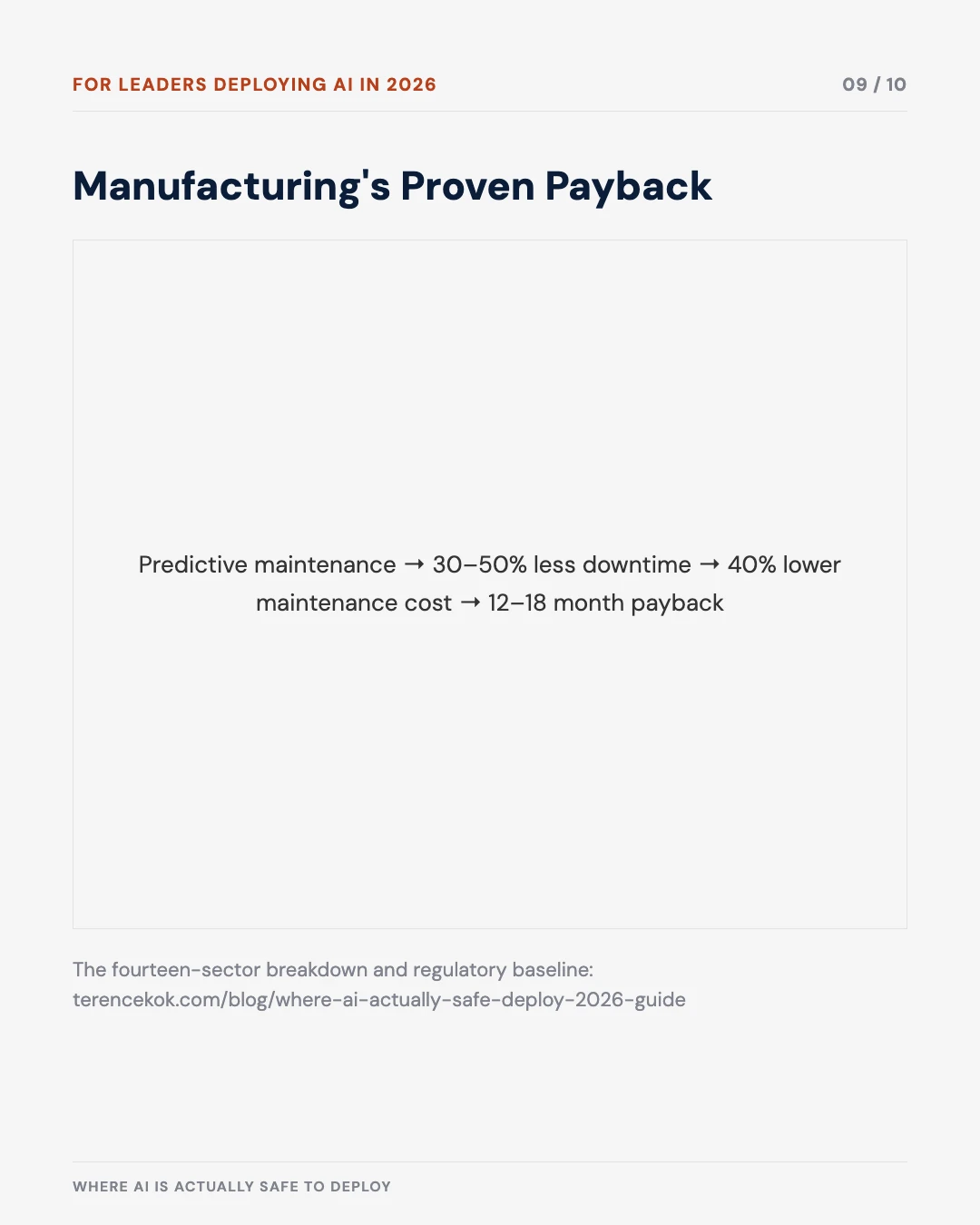
Return on investment demonstrates consistent measurement frameworks across sectors. Healthcare ROI centres on improvements in diagnostic accuracy and reduced physician workload, with clinical decision support systems achieving 3.2x ROI. Financial services measures fraud detection ROI through loss prevention, with leading implementations reporting 4.1x ROI and fraud detection accuracy improvements of 25–40%. Manufacturing predictive maintenance reports 30–50% downtime reduction and 40% lower maintenance costs, with payback periods typically ranging 12–18 months.
Deploying Responsibly
Safe AI deployment in 2026 requires structured risk management addressing technical, operational, and governance dimensions.
Algorithmic bias and fairness assessment are mandatory for high-risk applications. Healthcare AI requires validation across demographic subgroups. Financial services credit models demand explainability and fairness testing to comply with consumer protection regulations. Organisations deploy continuous monitoring frameworks detecting model drift and performance degradation across protected classes.
Human oversight and escalation pathways remain essential for safety-critical and rights-impacting applications. Clinical decision support systems incorporate physician override mechanisms with documentation requirements. Emergency dispatch AI operates under human dispatcher supervision with mandatory human confirmation for resource allocation. Getting that supervisory layer right as systems mature is its own design problem, one I unpack in Redesigning Oversight Architectures.
Data security and privacy protection are foundational, especially for systems processing personal, health, or financial data. Smart city applications balance operational benefits against citizen privacy rights, often adopting edge computing architectures and minimising centralised data retention.
Model transparency and explainability enable trust and regulatory compliance. The EU AI Act mandates transparency for high-risk systems. Organisations adopt explainable AI techniques, model documentation standards, and performance reporting frameworks satisfying regulatory and operational requirements.
Continuous monitoring and performance validation prevent degradation and ensure ongoing safety. Manufacturing predictive maintenance systems track prediction accuracy, alert precision, and false alarm rates. Regulatory compliance AI undergoes periodic audits validating alignment with evolving requirements.
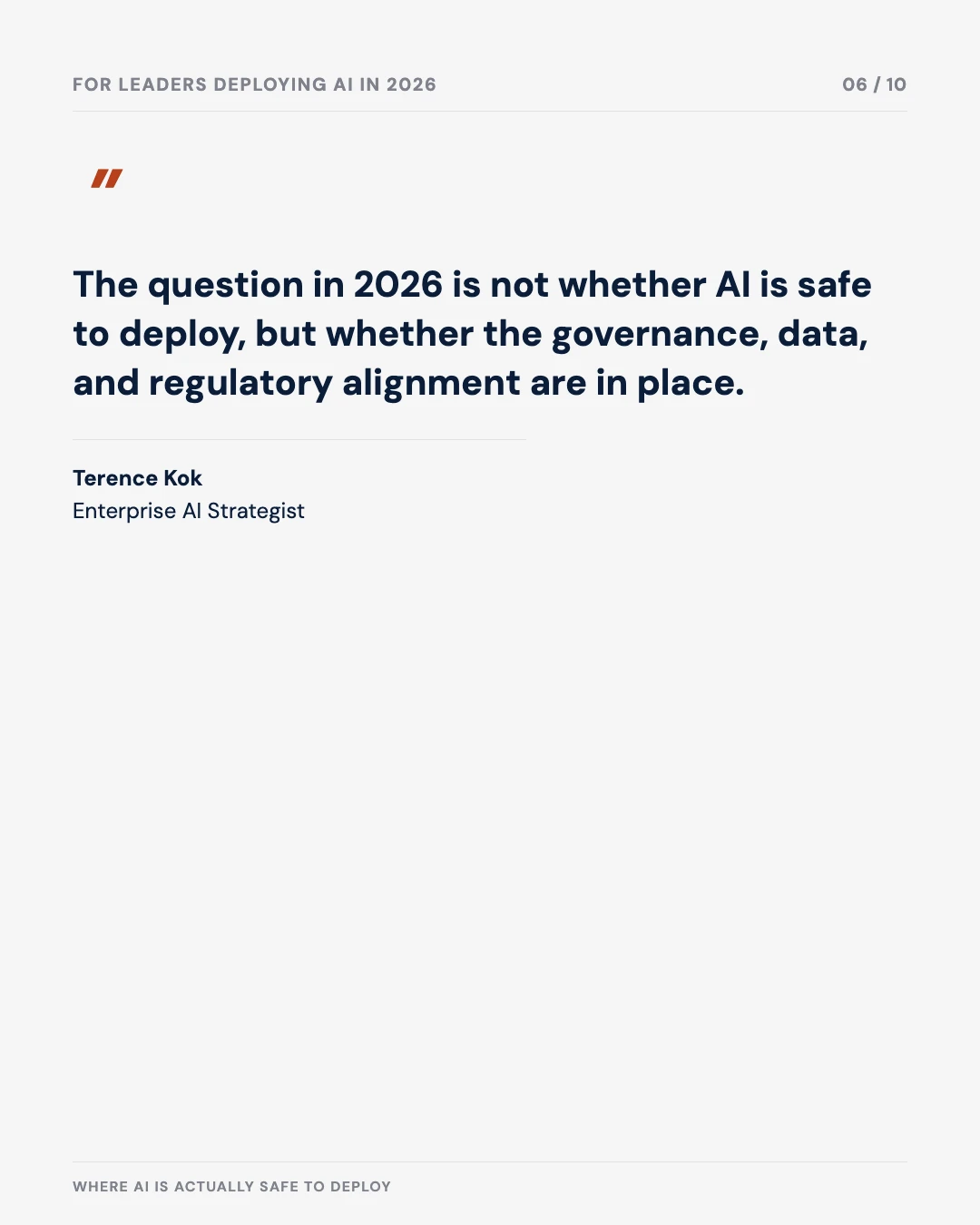
The question in 2026 is not whether AI is safe to deploy, but whether organisations have established the governance, data foundations, regulatory alignment, and operational capabilities required for responsible deployment. Those that have are capturing measurable returns, enhancing operational resilience, and building sustainable competitive advantage. Those that have not risk operational disruption, regulatory non-compliance, and competitive disadvantage.
The question in 2026 is not whether AI is safe to deploy, but whether organisations have established the governance, data foundations, regulatory alignment, and operational capabilities required for responsible deployment.
Note: This analysis synthesises deployment data, regulatory guidance, and performance metrics from over 100 industry sources current as of January 2026. Deployment decisions should be validated against organisation-specific contexts, regulatory requirements, and risk tolerance.
Free tool
ISO 42001 AIMS Readiness Checklist
Walk through the 36 checks tied to the governance requirements this guide treats as non-negotiable for high-risk deployments.
Free tool
AI Trust, Risk & Governance Dashboard
Monitor the bias, fairness and drift indicators this guide names as mandatory for regulated-sector AI.