
Executive Summary
The software AI market is saturated and margins are compressing. The next large commercial opportunity is embedded AI: intelligence built directly into hardware, appliances, and physical infrastructure, a category that has not yet been reinvented.
Core conclusions
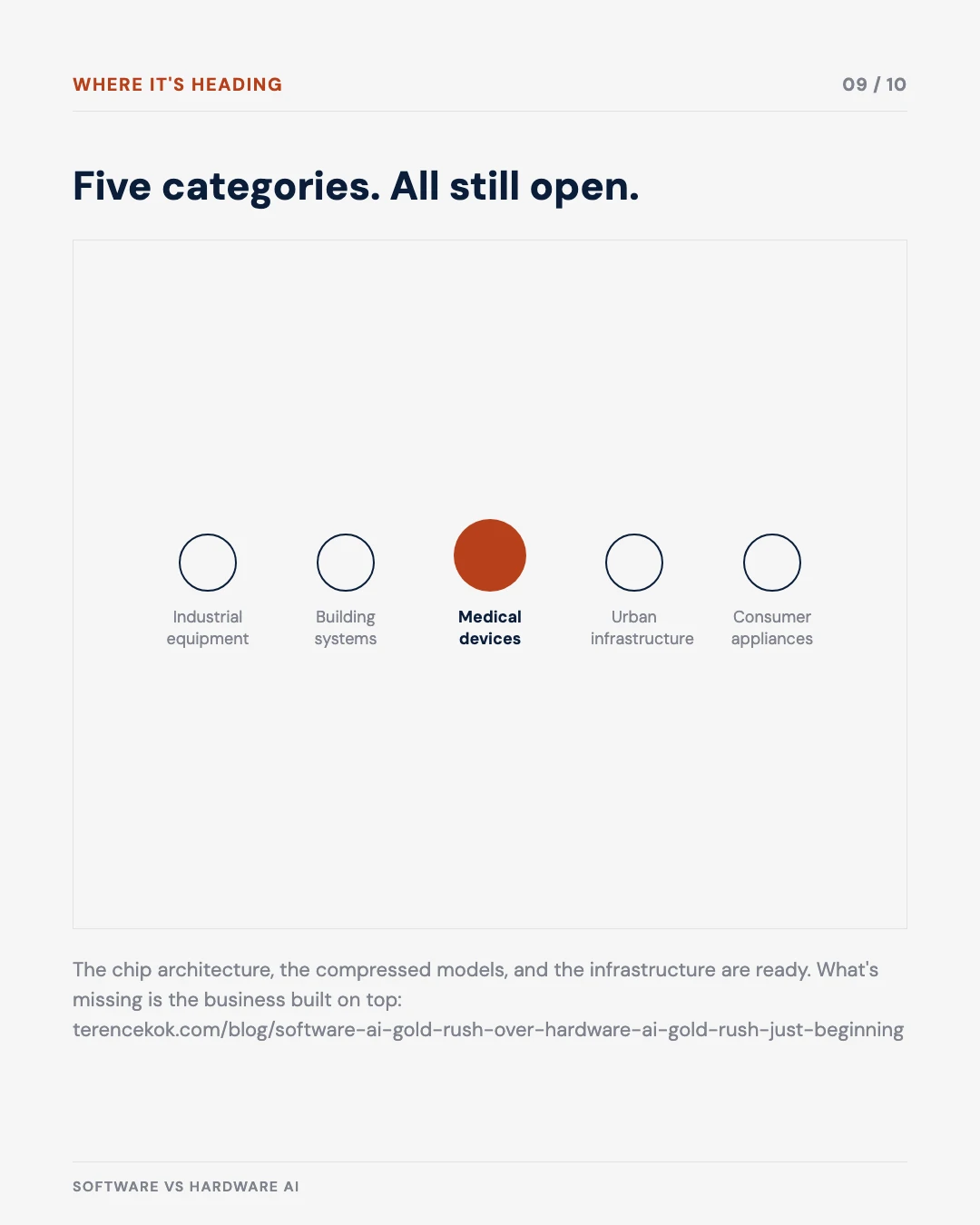
- Five physical categories remain genuinely open: industrial equipment, building systems, medical devices, urban infrastructure, and consumer appliances. The hardware, chip architecture, and edge-model compression are all mature; what’s missing is the business built on top.
- The business model shifts from licence renewal to operational partnership: every autonomous decision the embedded system makes is a data asset and a service touchpoint, which makes it stickier and more defensible than the current software AI stack.
- Organisations entering this category over the next 24 months won’t be competing for share of a crowded market. They’ll be defining the category itself.
The blue ocean, in ten slides
Save it, share it, or send it to whoever’s deciding where to place the next bet.
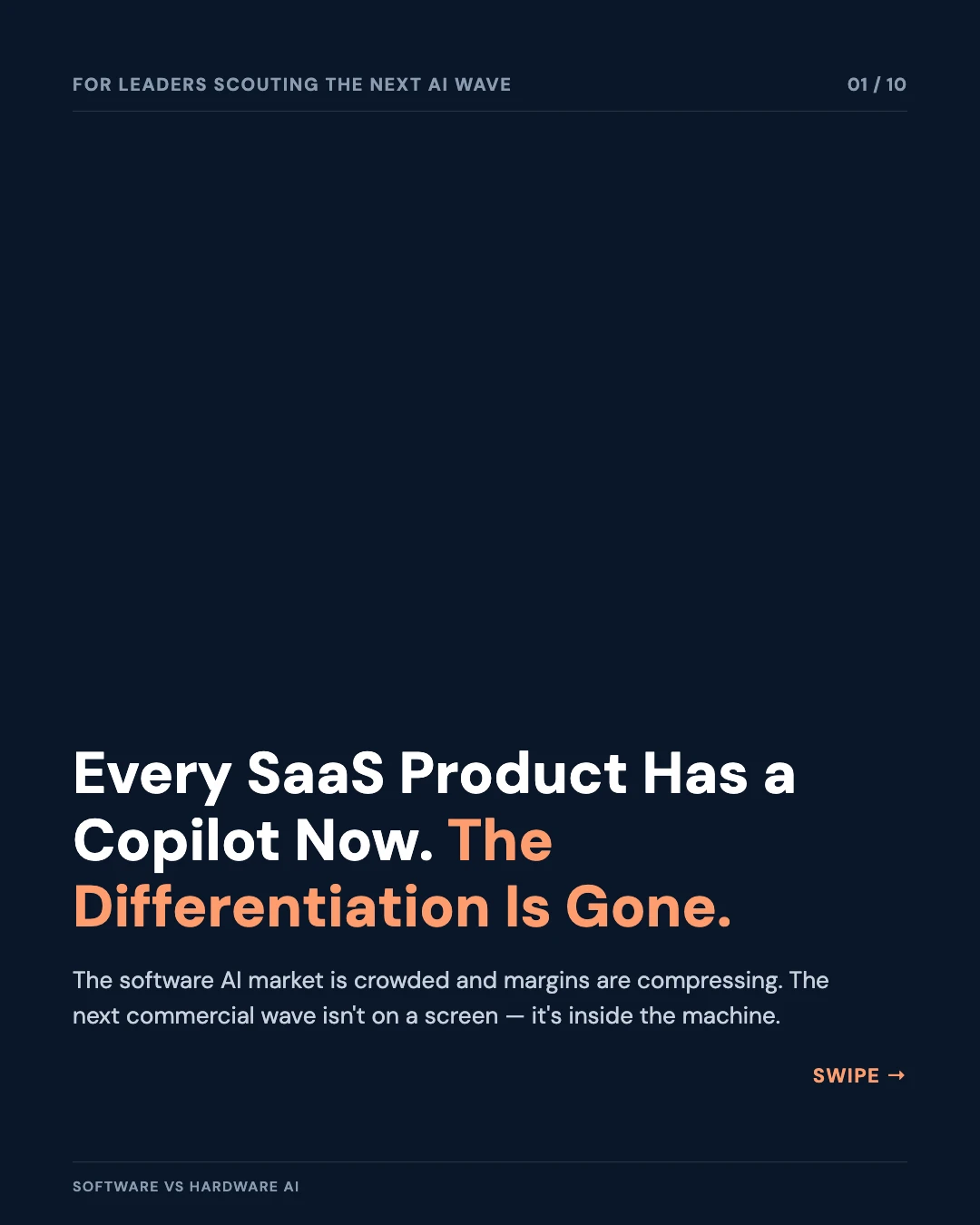
The software AI market is getting crowded. Fast.
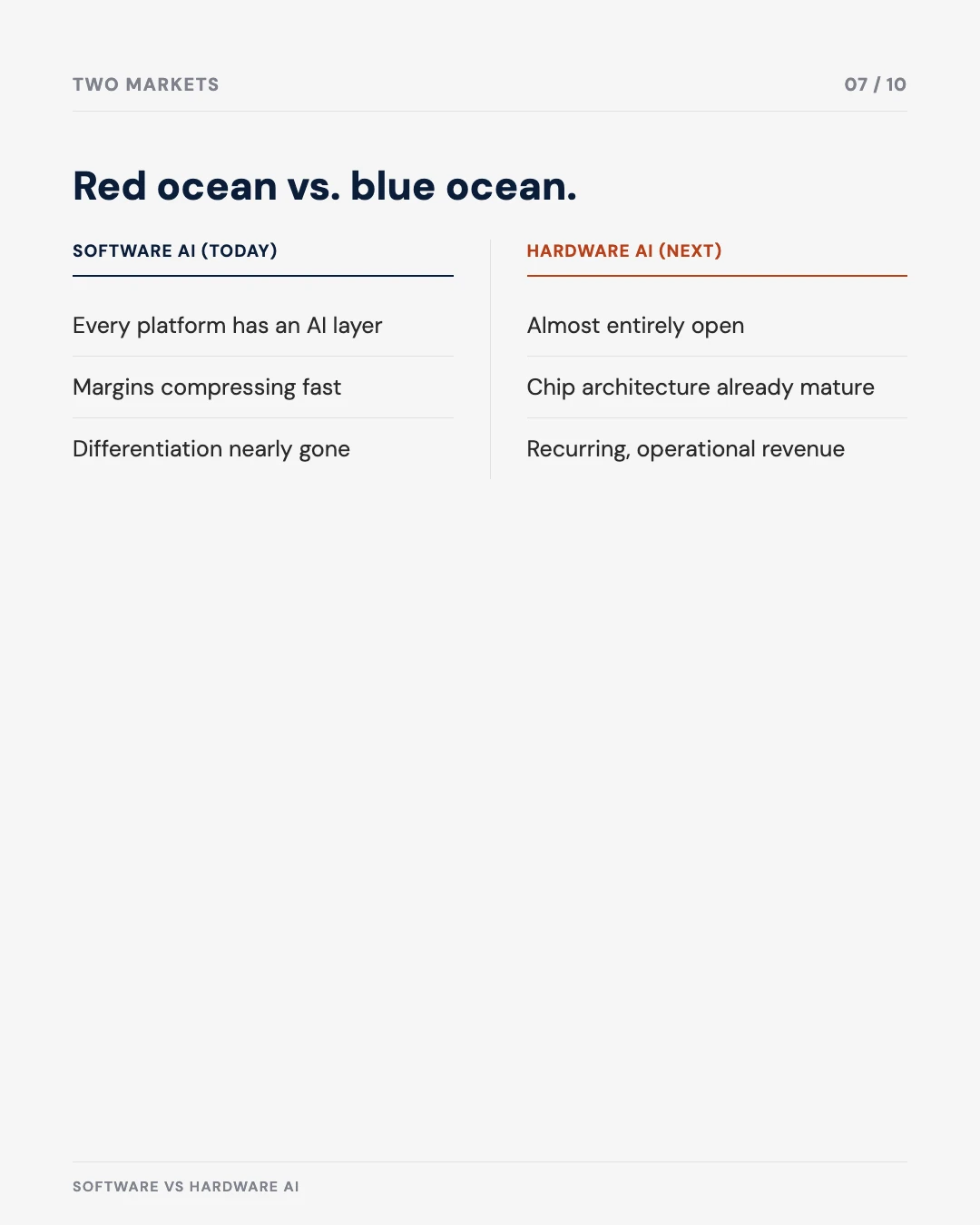
Every enterprise platform has an AI layer. Every SaaS product has a copilot. Every consultant has an AI strategy deck. The differentiation is narrowing, margins are compressing, and the competition is brutal.
So where’s the white space?
It’s not on a screen. It’s in the physical world.
Embedded AI (intelligence built directly into hardware, appliances, and physical infrastructure) is one of the largest untapped commercial opportunities in technology right now.
We’re talking about AI that lives inside the device itself. No cloud dependency. No latency. Just on-device inference running inside the machines, systems, and infrastructure that the world actually runs on.
The market is enormous. And it is almost entirely open.
Think about what’s in front of us:
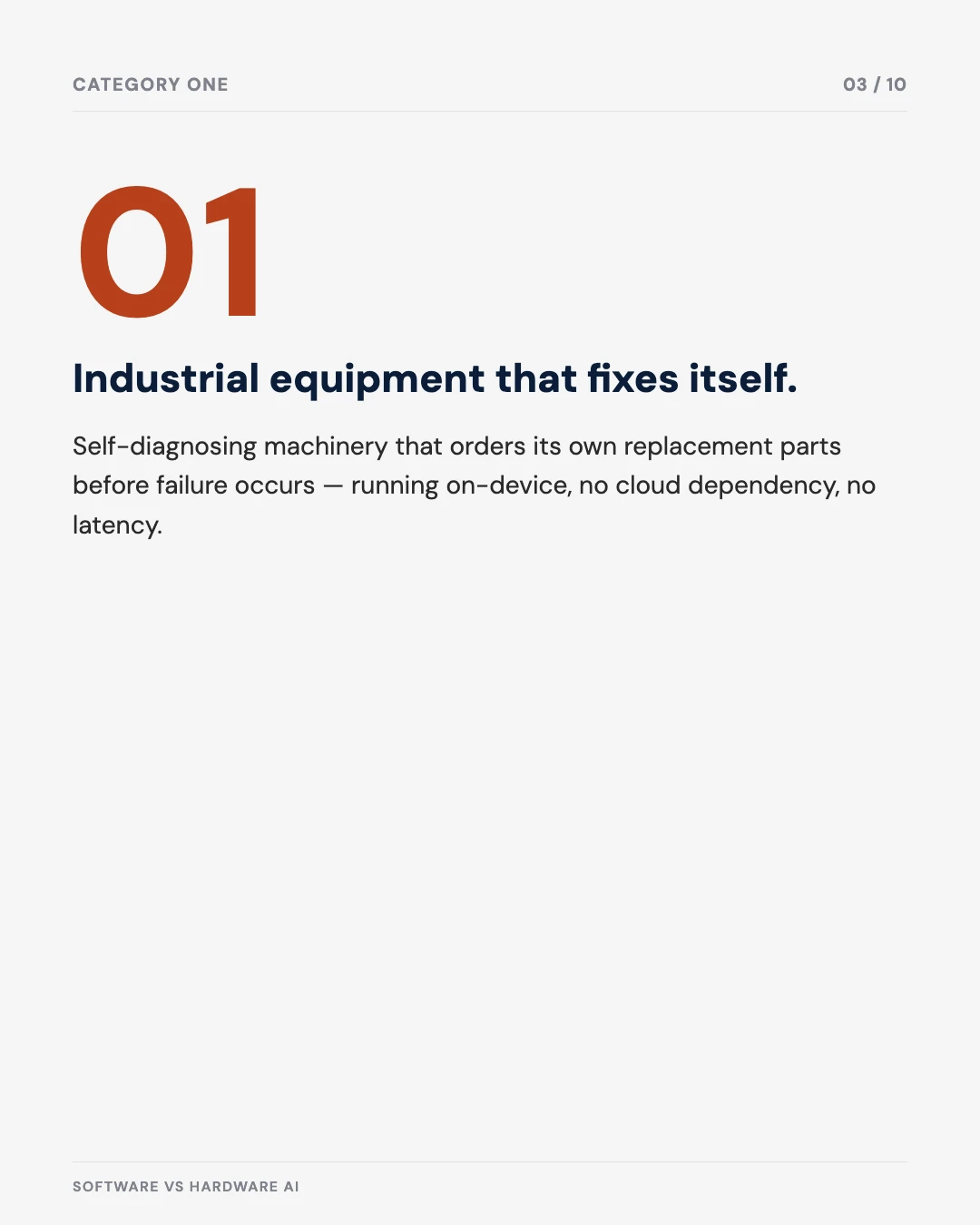
- Industrial equipment that self-diagnoses and orders its own replacement parts before failure occurs.
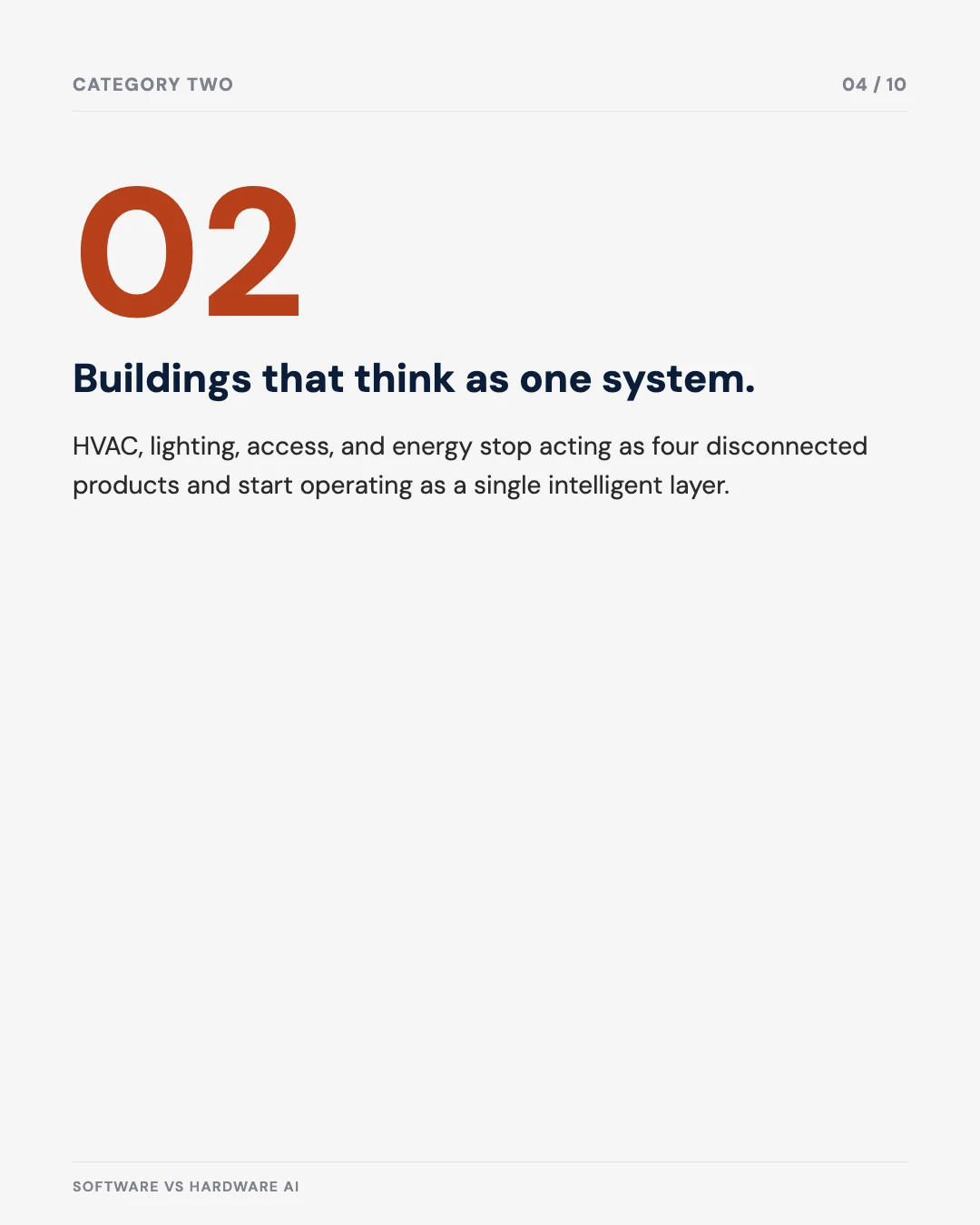
- Building systems (HVAC, lighting, access, energy) operating as a single intelligent layer rather than four separate, unconnected products.
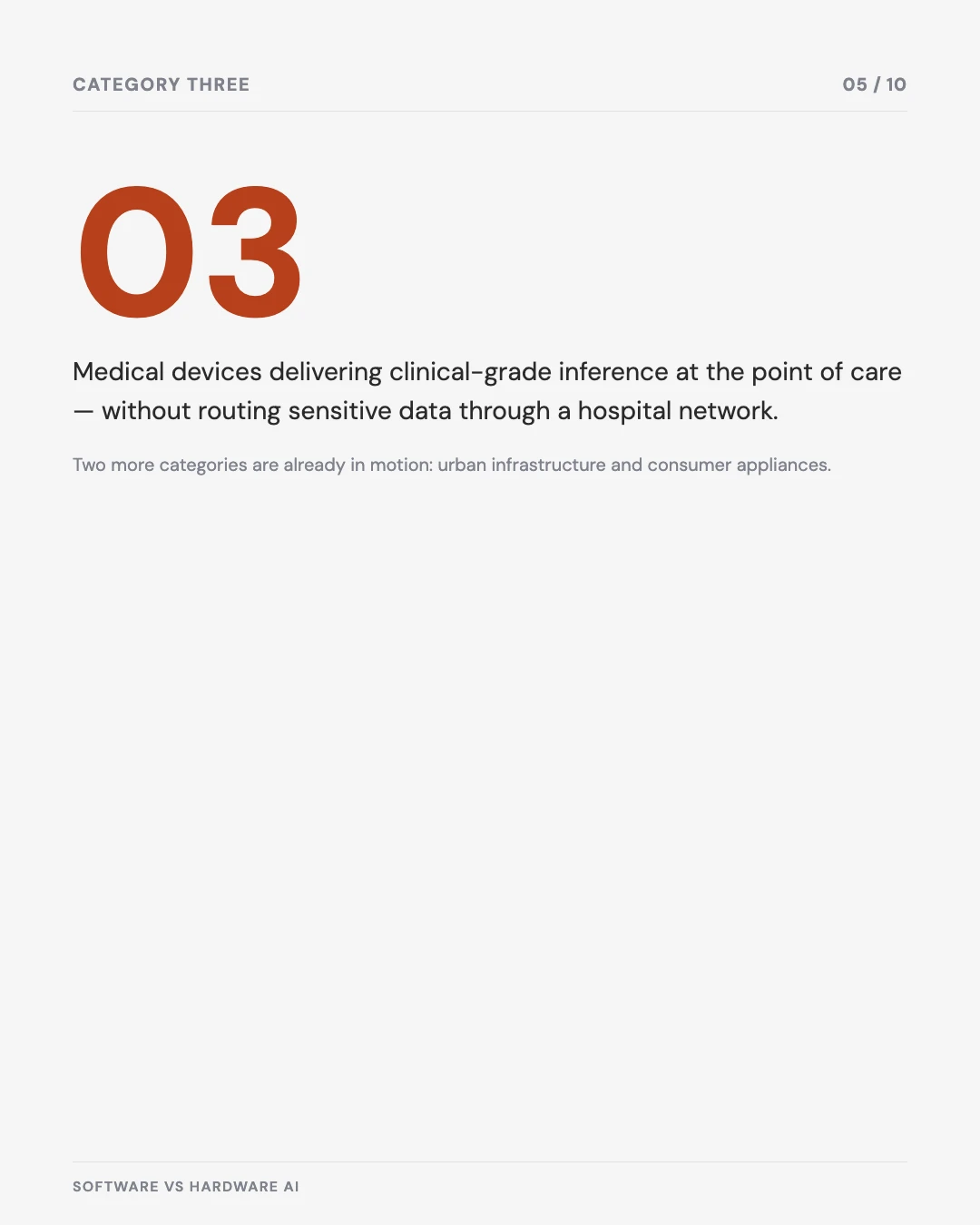
- Medical devices delivering clinical-grade AI inference at the point of care, without routing sensitive data through a hospital network.
- Urban infrastructure (water, power, transport) that optimises autonomously in real time, reducing operating costs for governments running on constrained budgets.
- Consumer appliances that learn usage patterns, reduce energy consumption, and extend their own operational lifespan.
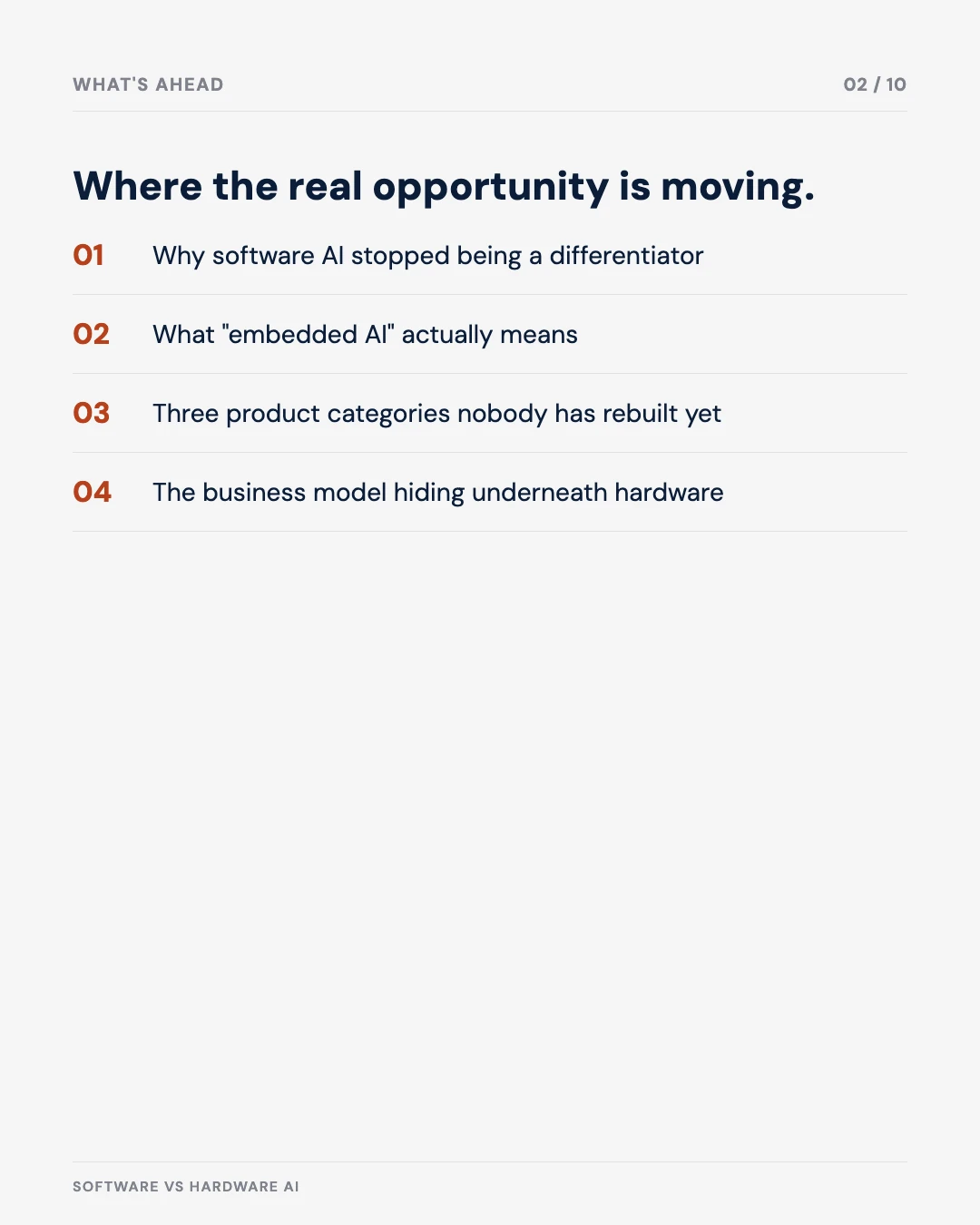
Every single one of these is a product category that has not been fundamentally reinvented yet. The hardware exists. The chip architecture for on-device AI is mature. The models can be compressed and quantised for edge deployment. The infrastructure is ready.
What’s missing is the business building on top of it.
Hardware AI Isn’t Just a Product Opportunity. It’s a Business Model Opportunity.
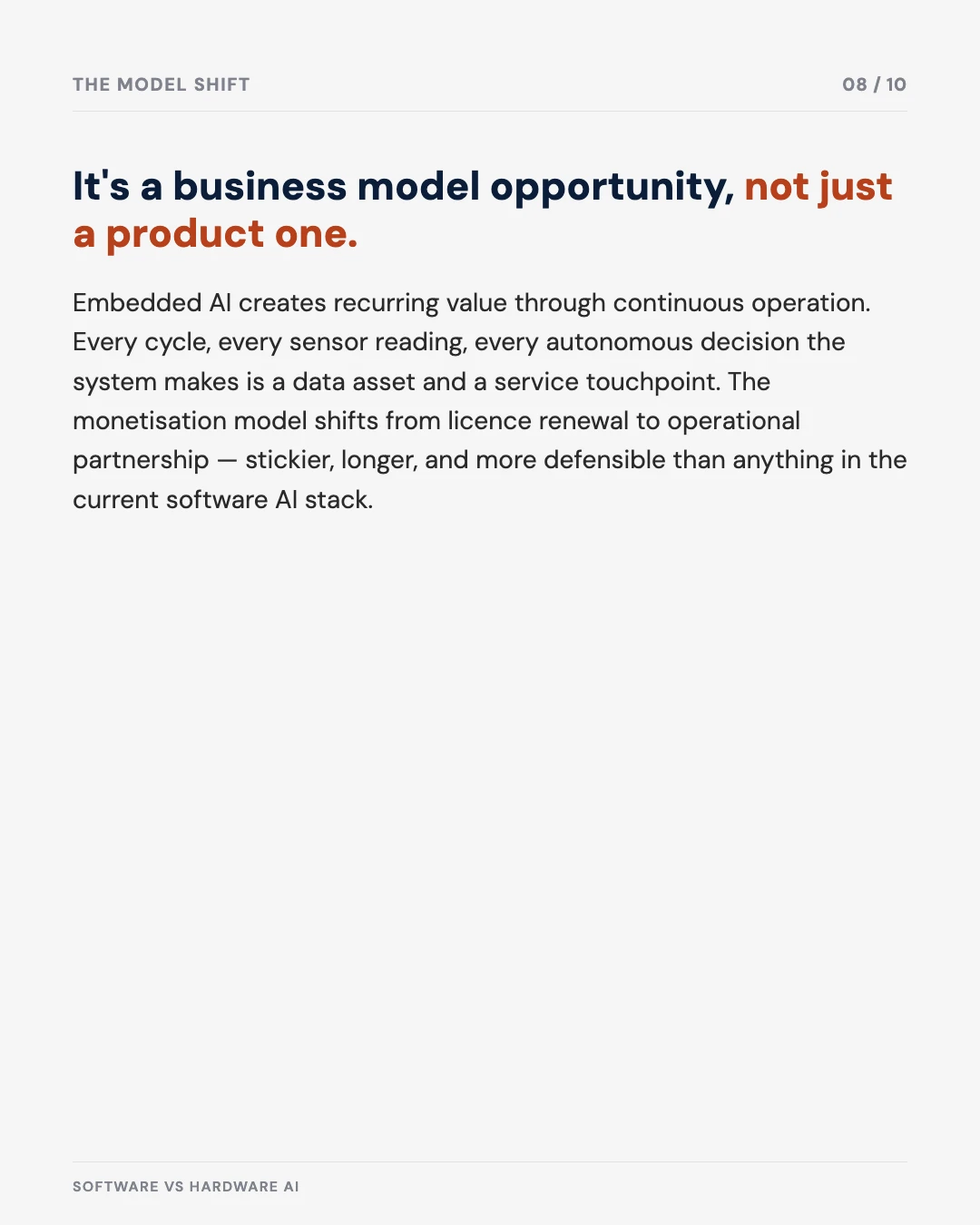
Embedded AI creates recurring value through continuous operation: every cycle, every sensor reading, every autonomous decision the system makes is a data asset and a service touchpoint. The monetisation model shifts from licence renewal to operational partnership. That’s a stickier, longer, and more defensible commercial position than anything in the current software AI stack.
The red ocean is loud right now. Everyone is fighting over enterprise AI software, LLM wrappers, and automation tooling. The margins are thinning and the differentiation is disappearing.
The blue ocean is quieter. It’s in the factory, the hospital ward, the substation, and the smart building. It’s in hardware that thinks, and the businesses built around operating it.
The organisations that enter this space over the next 24 months will not be competing. They will be defining the category.
Free tool
AI Build vs. Buy vs. Partner
Deciding whether to build embedded-AI capability internally, acquire it, or partner with a systems integrator isn’t obvious. Seven questions get you a structured recommendation.
That’s exactly the kind of strategic positioning conversation I have in my consulting work.