
Executive Summary
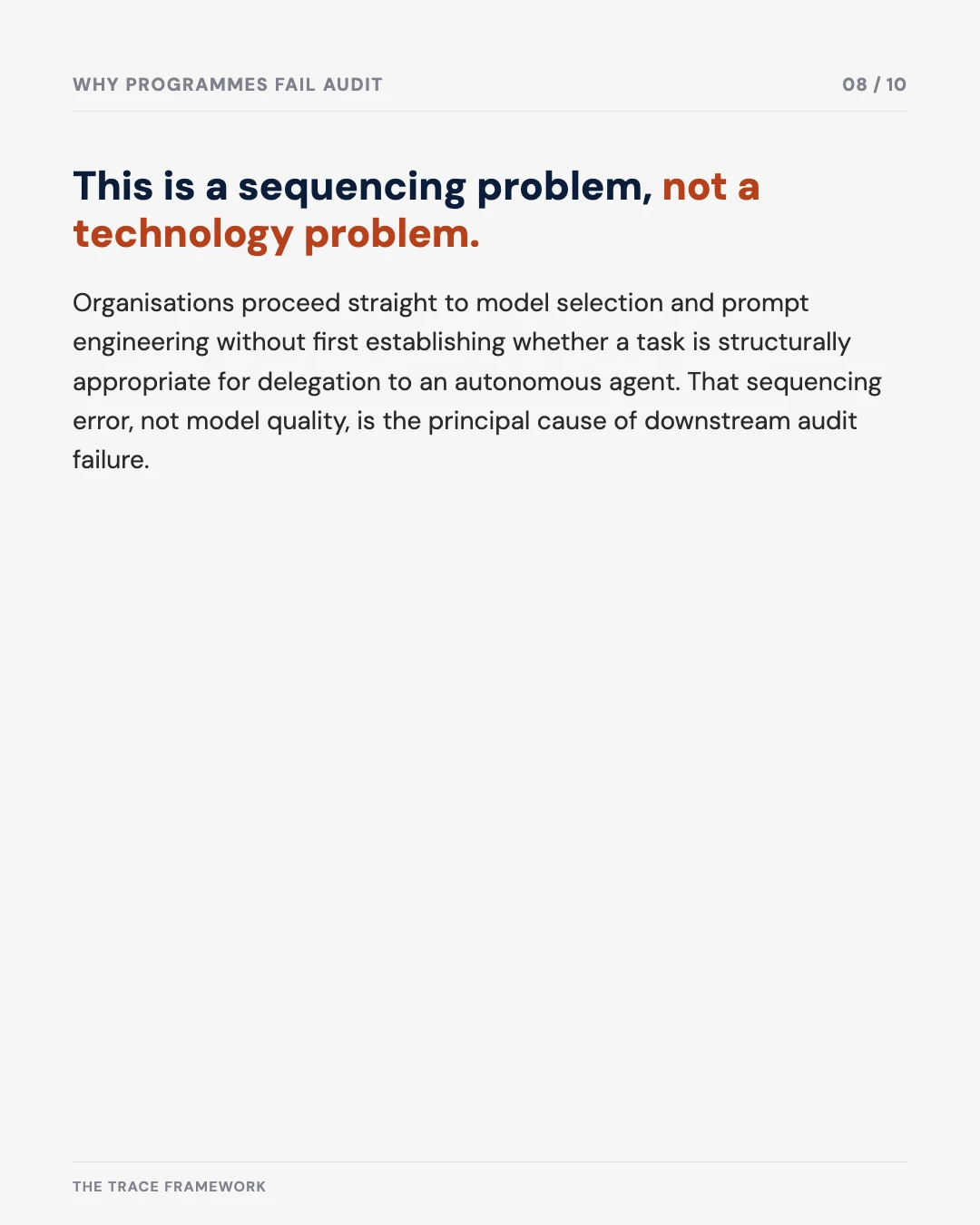
Agents are often ordered before anyone has defined what quality, traceability and auditability mean for the task. That’s a problem of doing things in the wrong order, not a technology gap, and it’s the main reason agents later fail audits.
Core conclusions
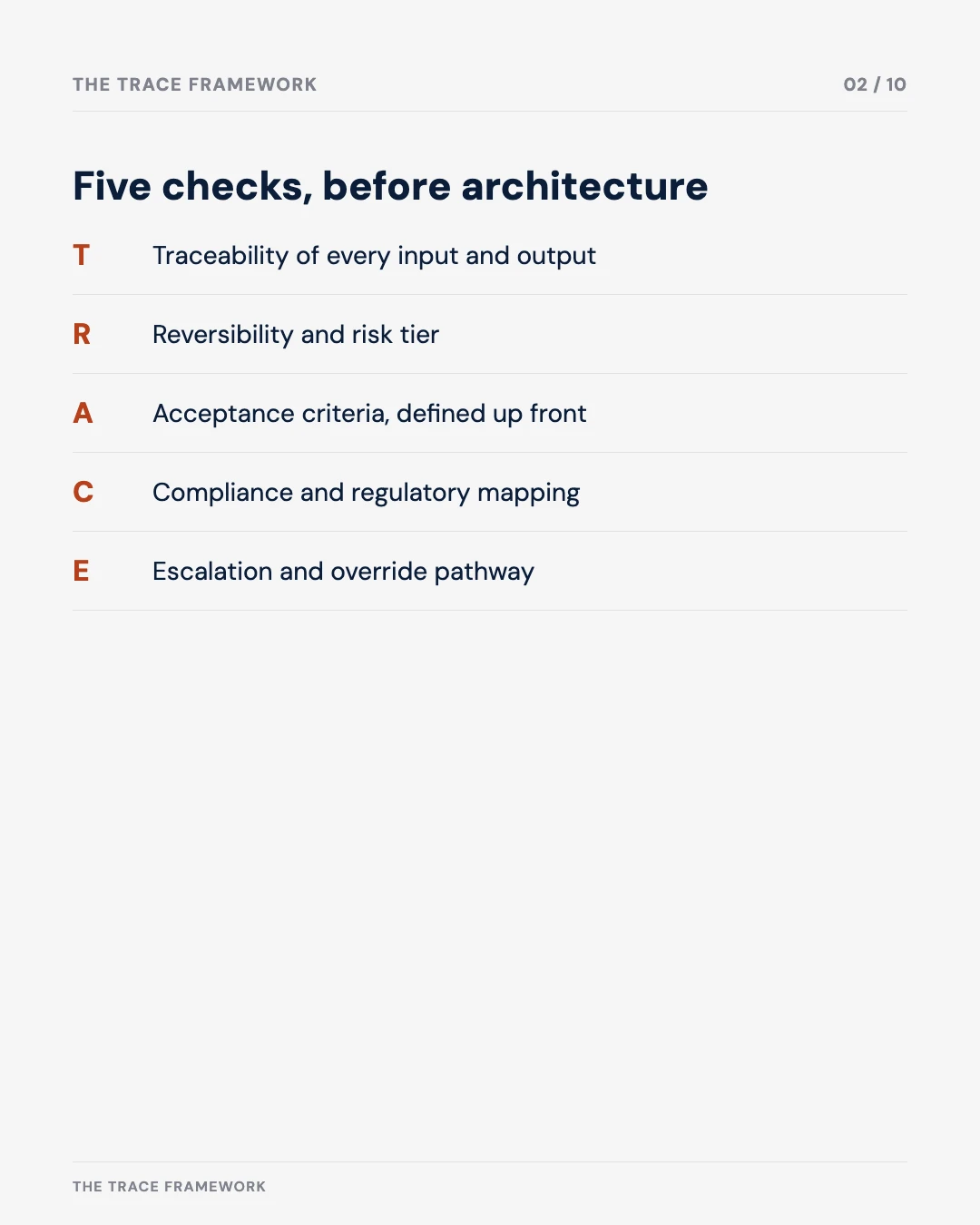
- The TRACE framework (Traceability of inputs/outputs, Reversibility and risk tier, Acceptance criteria, Compliance mapping, Escalation pathway) gives a clear pass or fail test of whether a task is ready for an agent. You run it before choosing any model or vendor.
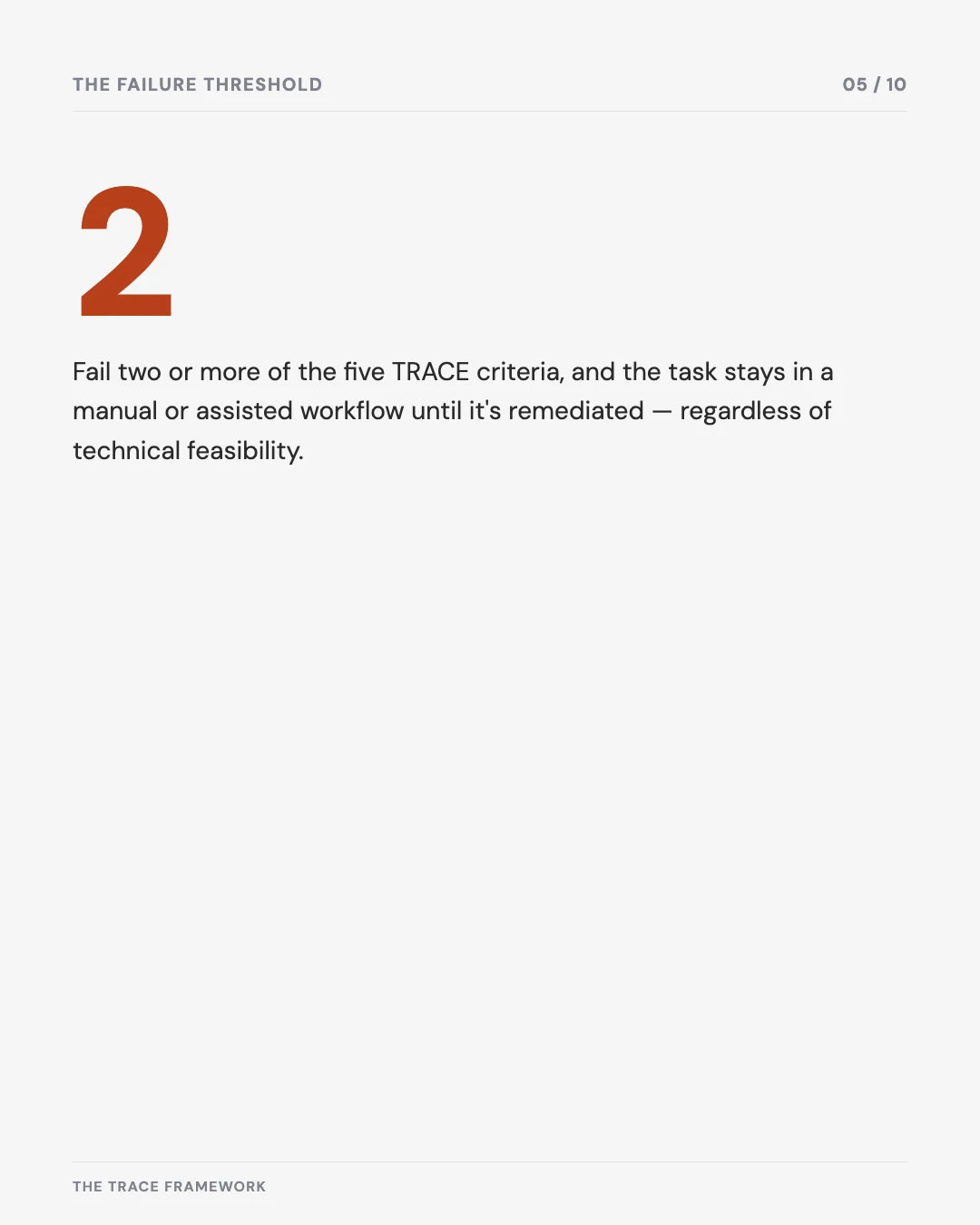
- A task that fails two or more TRACE criteria should stay manual or assisted, however well the model does in testing.
- The leader’s job here is to chair the risk rating for the first group of tasks and to require reviews at a fixed interval. That turns auditability from a hope at design time into a habit in daily operations.
The framework, in ten slides
Save it, share it, or send it to whoever is about to sign off your first agent deployment.
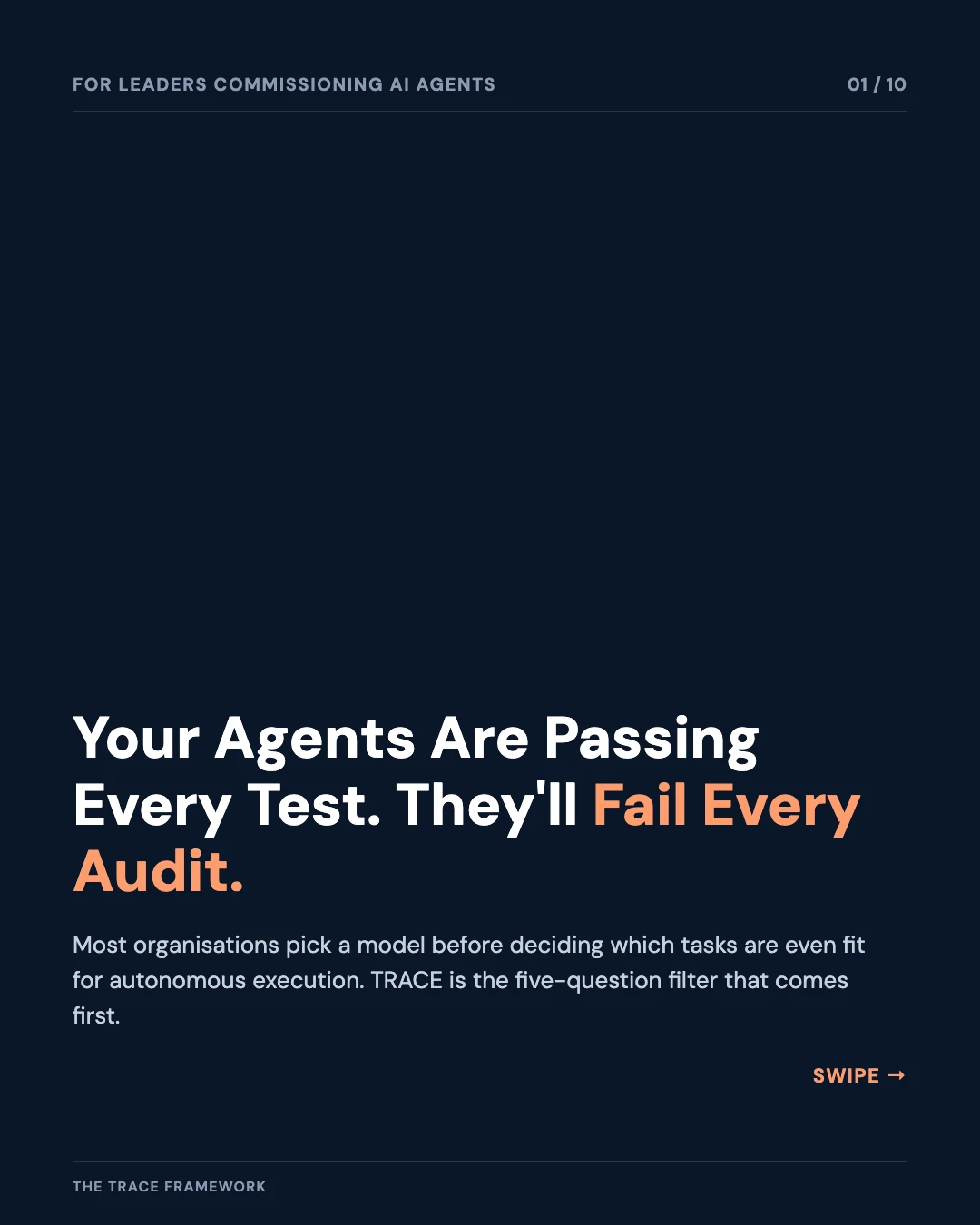
Organisations are moving AI from pilots into live use. The move keeps showing up the same gap: agents are ordered before anyone has pinned down what “quality”, “traceability”, and “auditability” mean in day-to-day operations.
The leadership stake
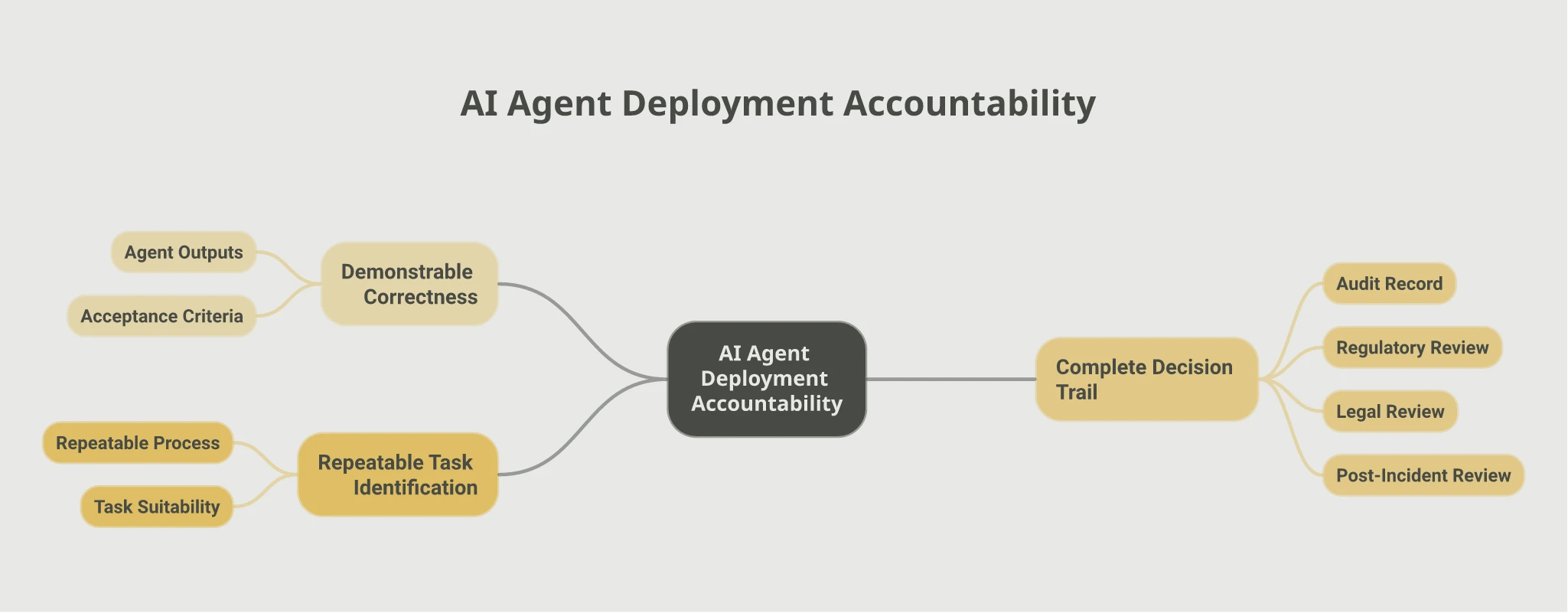
An AI agent working in a regulated or public-facing setting must be governed like any other system the business runs on, with one difference. It decides on probabilities, and the way it decides may change when it is retrained or fine-tuned. Leaders answer for three outcomes:
- Proof that the agent’s outputs are correct against the agreed acceptance criteria.
- A full record of each decision, good enough for a regulatory, legal or post-incident review.
- A repeatable way to decide which tasks should go to an agent in the first place.
The third point is often missed. Teams go straight to choosing a model and writing prompts. They never first check whether the task is the kind of work that can be handed to an autonomous agent. Doing things in this order is the main reason agents later fail audits.
A Framework for Task Identification
The framework below, called TRACE, gives you a clear way to test candidate tasks before you design an agent.
- T for Traceability of Inputs and Outputs: Check whether every input the task uses and every output it produces can be logged, time-stamped and traced to a specific data source or upstream system. Tasks that rely on unstructured or unchecked data should wait until you have controls on where the data comes from.
- R for Reversibility and Risk Tier: Rate the task by what happens if the output is wrong: it can be undone with no real harm, it can be undone at a cost, or it cannot be undone. Tasks that cannot be undone need human-in-the-loop checkpoints before the agent is given any freedom to act alone.
- A for Acceptance Criteria Definition: Confirm that the task has success criteria that are measurable, agreed in advance and separate from the agent’s own output. If a task has no outside ground truth or way to check results, it is not yet ready for an agent, even if the technology could do it.
- C for Compliance and Regulatory Mapping: List which regulations, sector codes or internal governance policies apply to the task. Do this before any design decisions.
- E for Escalation and Override Pathway: Check that there is a clear, tested way for a human operator to step in, override or stop the agent mid-task. Without it, the task cannot run on its own, however well the model performs.
A task that meets all five TRACE criteria is a reasonable candidate for an agent.
A task that fails two or more criteria should stay manual or assisted (non-autonomous) until the gaps are fixed.
Three candidate tasks run through the five TRACE criteria
The three tasks are illustrative. Verdict rules are the post's: all five criteria met is a reasonable candidate; two or more failures keep the task in a manual or assisted workflow; an absent escalation and override pathway disqualifies autonomous execution whatever the model's performance.
The TRACE Agent Evaluation tool lets you score one candidate task against all five criteria. You get a deployment verdict with advice on each criterion, before any design or vendor decision begins.
Checklist for Leaders Beginning This Journey
Before starting agent design or choosing a vendor, leaders should confirm the following:
- A list of tasks has been drawn up and scored against the TRACE framework.
- For each candidate task, you have written down where the data comes from: the source system, how often it updates, and who owns it.
- A logging set-up exists or is planned. It records the agent’s inputs, reasoning steps (where the model allows them to be pulled out), outputs and time stamps in a store that cannot be changed or can be written only once.
- The task’s business owner has agreed the acceptance criteria and quality bars in writing before any model work starts.
- Each task has a risk rating, and you have named who can approve tasks at each tier.
- The ways to escalate and override have been written up and tested outside the live system.
- Someone has been named to own ongoing monitoring, spotting drift and re-checking the agent at set intervals.
- You have decided how long to keep agent logs, in line with the data protection and sector rules that apply.
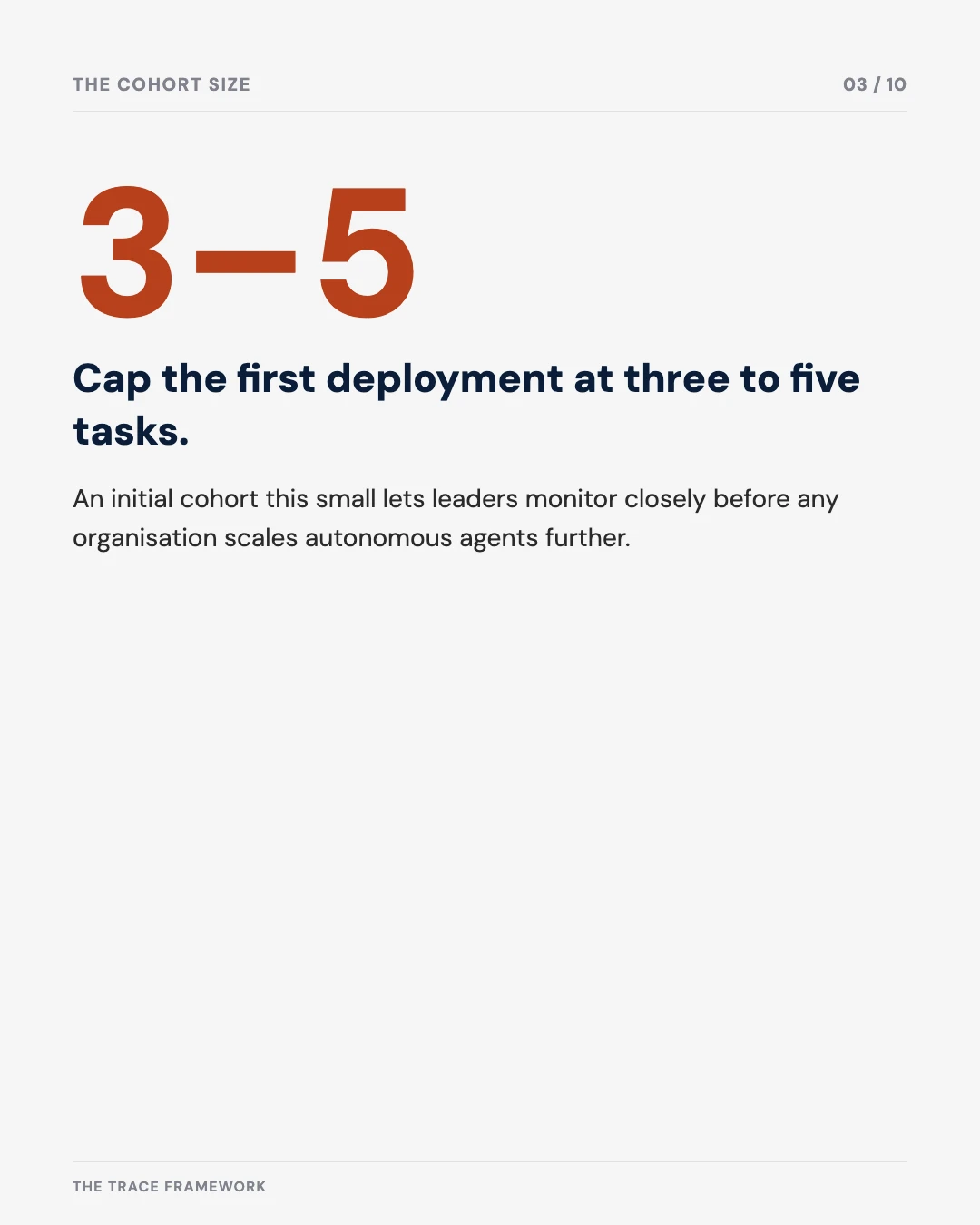
- A first group of no more than three to five tasks has been chosen for the first phase, so you can watch them closely before scaling.
The leader’s role in the process
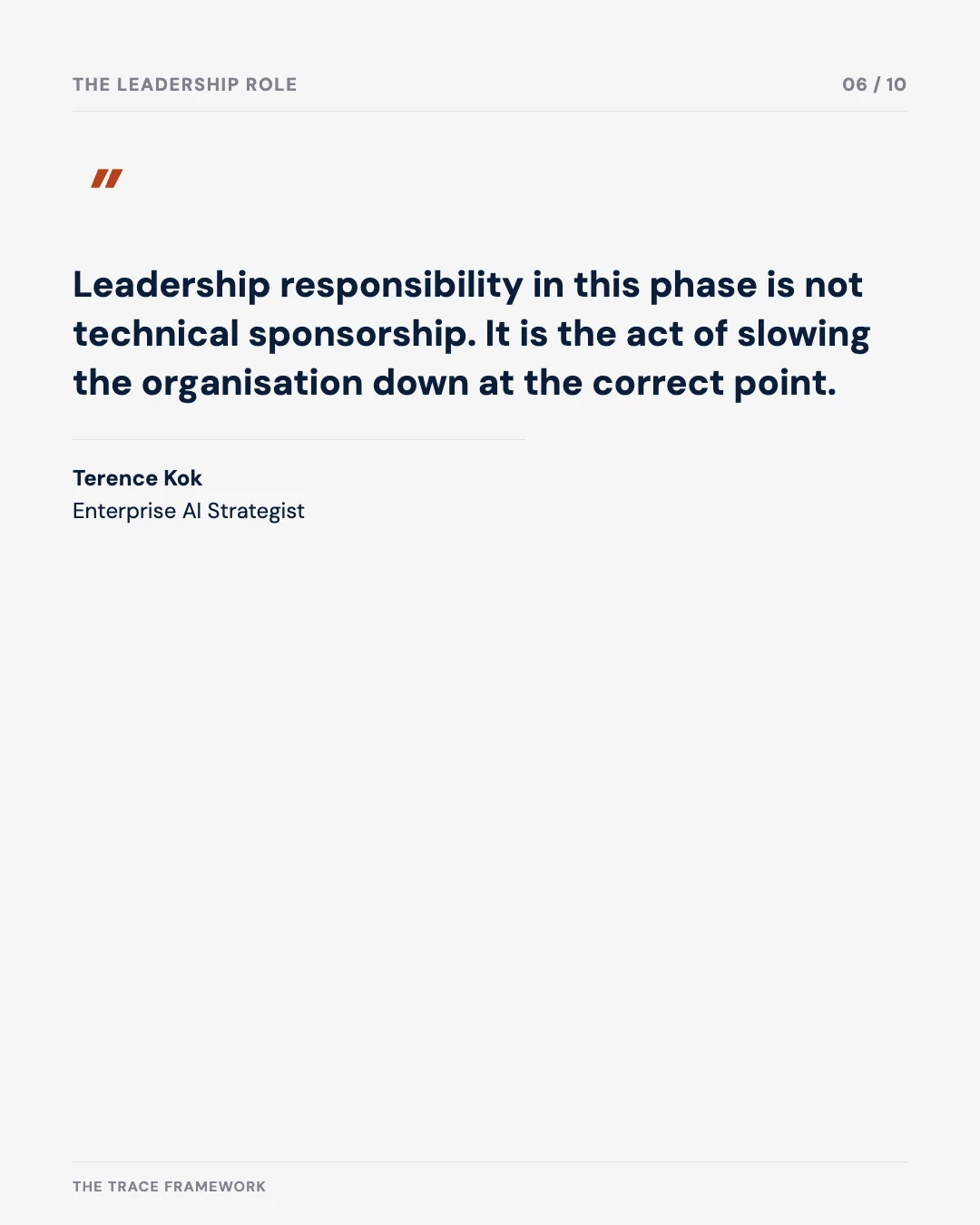
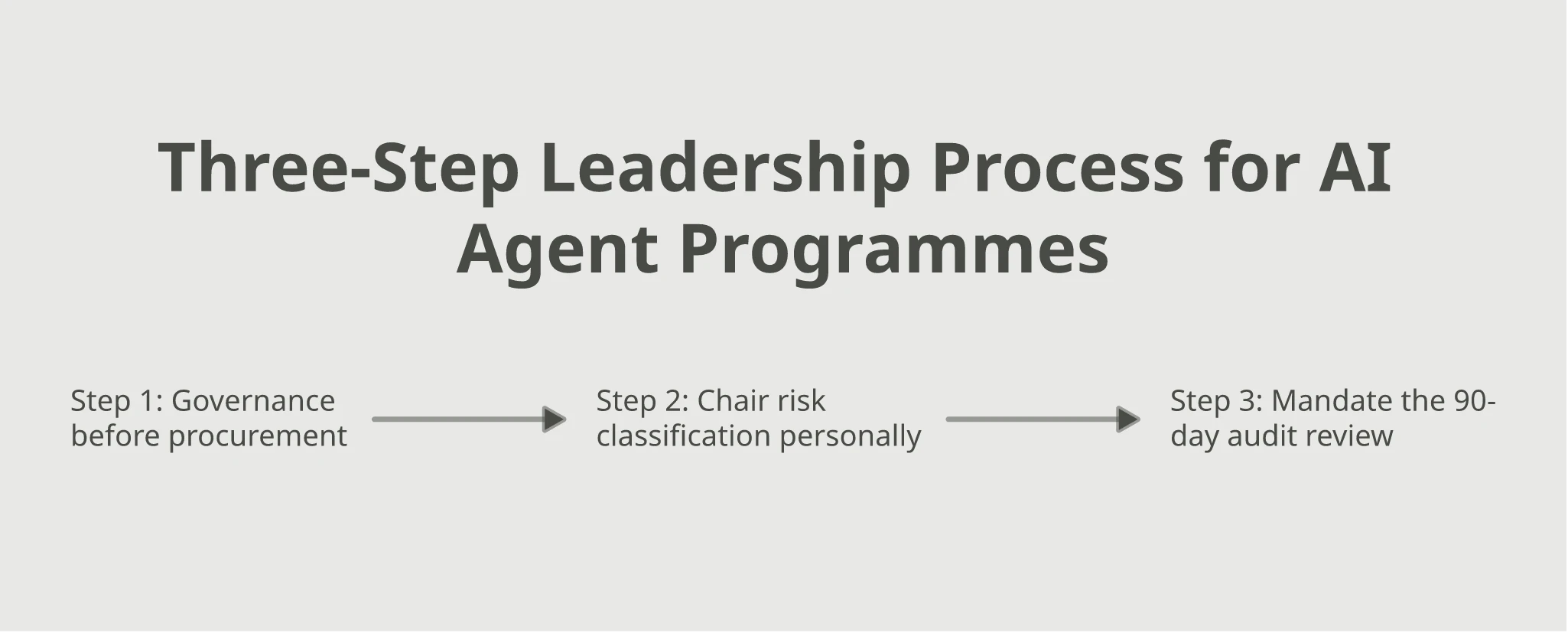
Leadership responsibility in this phase is not technical sponsorship; it is the act of slowing the organisation down at the correct point. Three actions in particular mark good leadership here:
Leadership responsibility in this phase is not technical sponsorship; it is the act of slowing the organisation down at the correct point.
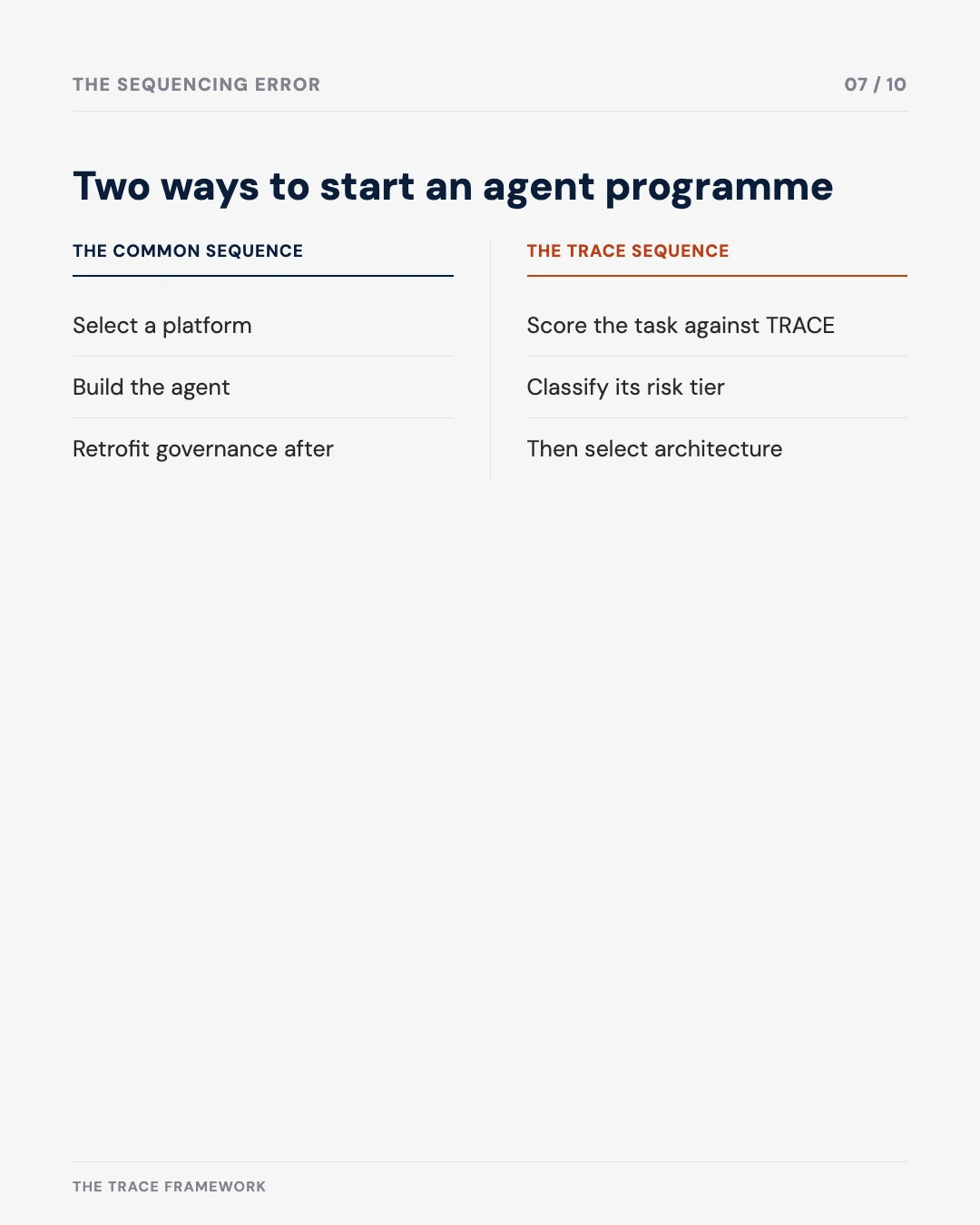
First, leaders should ask to see the task list and TRACE scores before any buying or build decision. This flips the usual order in many organisations, where a platform is chosen first and governance is bolted on later.
Second, leaders should chair the risk rating of the first group of tasks themselves, rather than handing it all to technical teams. Setting risk tiers carries accountability to the organisation and, in government or infrastructure, to the public. That should not sit with engineering alone.
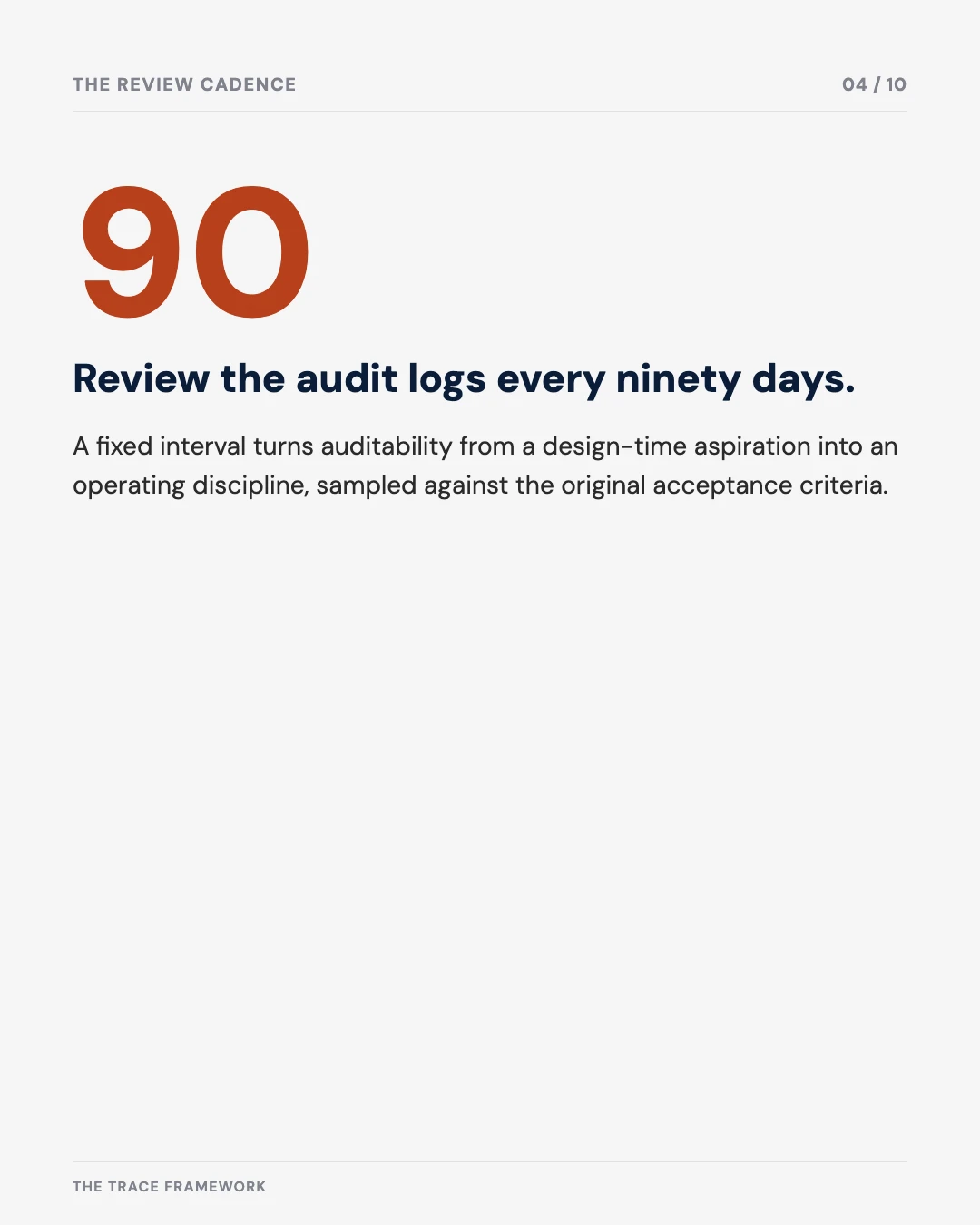
Third, leaders should require a review at a fixed interval (every ninety days, for example). At each one, a sample of the live agents’ audit logs is checked against the original acceptance criteria. This turns auditability from a hope at design time into a habit in daily operations.
The identification of suitable tasks is the foundation of a defensible AI agent programme. Teams that start with what the model can do, rather than whether the task suits an agent, tend to build agents that do well enough in testing and then fail when a regulator or an incident review looks closely.
The identification of suitable tasks is the foundation of a defensible AI agent programme.
Free tool
TRACE Agent Evaluation
Score a specific candidate task against all five TRACE criteria and get a deployment verdict with per-criterion guidance, before any architecture or vendor decision begins.
Free tool
Advanced AI Agent Builder
Build a Supervisor and Specialist team, watch it plan, pause at a checkpoint for your approval, recover from a failure, and produce the governance record TRACE calls for.
The TRACE framework itself is published in full on the Frameworks page.